
Seegene announces comprehensive PCR-based reproductive tract infection testing strategy
Seegene promotes comprehensive HPV and STI PCR testing through the Global Million Clinical Study (GMCS) to advance reproductive tract infection diagnostics
24 Aug 2026Seegene Inc. has announced a comprehensive syndromic PCR-based testing approach for reproductive tract infections (RTIs), combining simultaneous detection of sexually transmitted infections (STIs) and human papillomavirus (HPV).
Based on approximately 60,000 co-testing results analyzed over 42 months using its STAgora™ real-time test data analytics and statistical platform, Seegene aims to validate this integrated HPV and STI testing strategy through the Global Million Clinical Study (GMCS) to establish scientific evidence for new global standards of PCR testing.
Emerging evidence linking HPV, STIs and vaginal microbiome changes
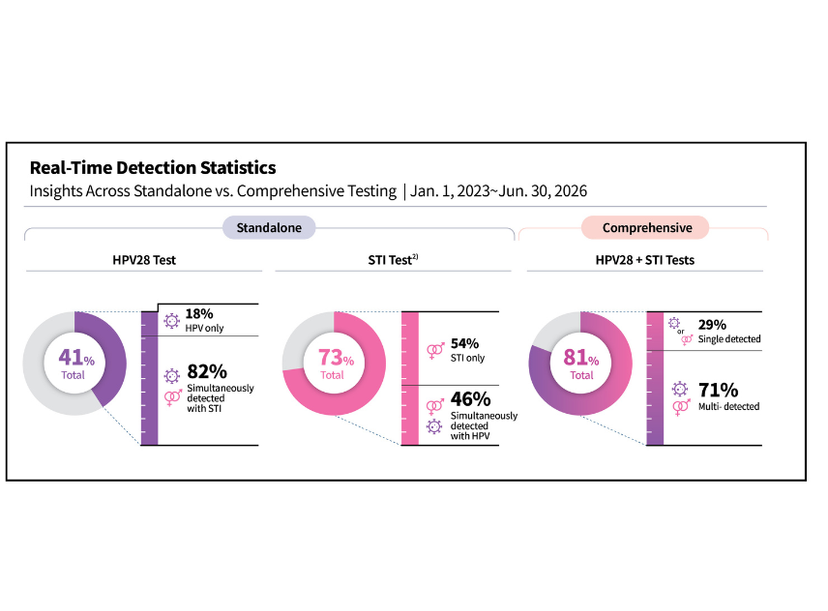
Analysis of approximately 60,000 HPV and STI co-testing results generated over a 42-month period
Recent studies have suggested that STIs and vaginal dysbiosis may be associated with changes in the local inflammatory, immune and microbial environment of the cervix. These changes may influence HPV acquisition, persistence or clearance. This growing body of evidence underscores the importance of interpreting HPV and STI findings within the broader clinical context, including the patient’s age, symptoms, sexual history and exposure risk, pregnancy plan, prior infection history and the specific organism detected.
Together, these findings provide a scientific rationale for further evaluating a comprehensive HPV and STI testing approach that assesses HPV risk alongside concurrent sexually transmitted and reproductive tract infections. By integrating pathogen detection with clinical context, laboratories and clinicians may be better equipped to stratify risk, tailor follow-up strategies and support reproductive health.
STAgora analysis of 60,000 HPV and STI co-testing results
Using STAgora™, Seegene’s real-time test data analytics and statistical platform, the company internally analyzed approximately 60,000 HPV and STI co-testing results generated over a 42‑month period.
The analysis showed that:
- STI pathogens were detected in 82% of HPV-positive cases
- HPV was detected in 46% of STI-positive cases
- Co-detection of HPV and STI pathogens was observed in 71% of positive cases identified through comprehensive HPV and STI testing
These data highlight the frequent co-occurrence of HPV and STI pathogens in reproductive tract infections and support the potential value of concurrent testing. The findings suggest that a significant proportion of individuals with HPV may also harbor one or more STI pathogens, and vice versa, reinforcing the need for integrated diagnostic strategies.
Potential clinical applications of comprehensive HPV and STI testing
The findings from the STAgora analysis demonstrate the potential application of concurrent STI testing with HPV screening in a range of clinical scenarios. Promising applications may include:
- Identifying asymptomatic STIs in individuals undergoing HPV screening
- Assessing co-infections in HPV-positive individuals to inform risk assessment and follow-up
- Supporting reproductive health evaluations during pregnancy planning or infertility assessment
By providing both HPV genotype information and detailed STI pathogen profiles, comprehensive PCR-based testing may help clinicians better understand the overall reproductive tract infection status, guide appropriate treatment and counseling, and support long-term reproductive health outcomes.
Global Million Clinical Study to validate comprehensive PCR testing approach
The announcement of Seegene’s comprehensive RTI testing strategy follows the launch of the Global Million Clinical Study on July 8. This initiative aims to generate scientific evidence for a Global New Standard of PCR testing by accumulating real-world clinical data from healthcare institutions worldwide and evaluating the clinical utility of disease-specific diagnostic testing strategies.
Through GMCS, Seegene plans to continue accumulating clinical evidence on comprehensive HPV and STI testing and to statistically evaluate its clinical utility and applicability using STAgora. By leveraging large-scale, real-world data, the company seeks to establish robust scientific evidence to support new global standards for PCR-based reproductive tract infection diagnostics.
STI test target analytes in comprehensive RTI panels
Seegene’s comprehensive reproductive tract infection testing approach targets a broad range of STI and related pathogens, including:
- Chlamydia trachomatis (CT)
- Neisseria gonorrhoeae (NG)
- Mycoplasma genitalium (MG)
- Trichomonas vaginalis (TV)
- Mycoplasma hominis (MH)
- Ureaplasma urealyticum (UU)
- Ureaplasma parvum (UP)
- Herpes simplex virus type 1 (HSV-1)
- Herpes simplex virus type 2 (HSV-2)
- Treponema pallidum (TP)
- Gardnerella vaginalis (GV)
- Candida albicans (CA)
By including these analytes alongside HPV genotyping in a single PCR-based testing strategy, laboratories can obtain a comprehensive view of reproductive tract infections that may influence cervical health, fertility and overall reproductive outcomes.
Want the latest science news straight to your inbox? Become a SelectScience member for free today>>
Links
Tags
Frequently asked questions
Show frequently asked questions
How does Seegene’s syndromic PCR-based approach integrate HPV and STI testing for reproductive tract infections?
Seegene Inc. has developed a comprehensive syndromic PCR-based testing strategy that simultaneously detects human papillomavirus (HPV) genotypes and a broad panel of sexually transmitted infection (STI) pathogens in a single assay. Using its STAgora™ real-time data analytics platform and approximately 60,000 HPV/STI co-testing results, Seegene aims to validate this integrated reproductive tract infection (RTI) approach through the Global Million Clinical Study (GMCS).
What did the STAgora analysis of 60,000 HPV and STI co-testing results reveal about co-infections?
STAgora™ analysis of around 60,000 HPV and STI co-testing results over 42 months showed frequent co-occurrence of pathogens. STI pathogens were detected in 82% of HPV-positive cases, while HPV was found in 46% of STI-positive cases. Overall, co-detection of HPV and STI pathogens occurred in 71% of positive cases, supporting the clinical value of concurrent PCR-based HPV and STI testing for reproductive tract infections.
Which STI pathogens are targeted in Seegene’s comprehensive reproductive tract infection PCR panels?
Seegene’s comprehensive RTI testing panels target multiple STI and related pathogens: Chlamydia trachomatis (CT), Neisseria gonorrhoeae (NG), Mycoplasma genitalium (MG), Trichomonas vaginalis (TV), Mycoplasma hominis (MH), Ureaplasma urealyticum (UU), Ureaplasma parvum (UP), Herpes simplex virus type 1 (HSV-1), Herpes simplex virus type 2 (HSV-2), Treponema pallidum (TP), Gardnerella vaginalis (GV), and Candida albicans (CA), alongside HPV genotyping.