
Roche Researchers Sequence Complete Genome of Cynomolgus Monkey and Develop Novel Gene Expression Microarray for Drug Safety Assessment
22 Sept 2011A team of researchers from Roche, scientists from Roche Pharma Research and Early Development and Roche NimbleGen, reported in 'Genome Research' that they have generated the first draft genome sequence of the cynomolgus monkey (Macaca fascicularis) and developed a novel microarray design for in depth expression profiling for use in preclinical drug safety research.
The cynomolgus macaque is known to be one of the most important and widely used non-human primate animal models in basic and applied biomedical research. Compared to other species, non-human primates have a closer evolutionary relationship to humans and exhibit high physiological similarity well suited to serve as translational models for preclinical drug safety assessment.
To improve the predictive power of primate experiments for humans, Prof. Ulrich Certa, Global Head Molecular Toxicology, and his team first applied a shotgun sequencing strategy using the Genome Sequencer FLX System from Roche’s 454 Life Sciences division in combination with other next generation sequencing technologies to decode the entire genome of a Macaca fascicularis female of Mauritian origin with 6-fold coverage. In addition, roughly two million potential single-nucleotide polymorphisms (SNPs) were discovered which, for the first time, will allow high-resolution genotyping of individuals in this species.
Using a combination of sequence alignment and exon size conservation, more than 20,000 transcripts in the cynomolgus monkey genome were predicted and used to build a M. fascicularis-specific gene expression microarray on the Roche NimbleGen 12x135K platform, in less than two months enabling comprehensive yet economical transcriptome analysis. The 12-plex expression array format contains 135,000 oligonucleotide features per array with six 60-mer probes interrogating each transcript with more probe space available for either including additional targets of M. fascicularis or other custom desired content.
The comparative expression analysis of liver samples from 36 animals of different geographic origin resulted in the identification of over 700 genes with highly variable expression while the majority of the transcriptome showed relatively stable expression with low inter-animal variation. Interestingly enough, considerable inter-individual as well as inter-species variability was found in gene expression levels of a number of drug safety and response related genes. Variation in gene expression among individuals can be critical for the interpretation of drug safety data and genome-wide gene expression profiling can now be used to improve drug safety studies and discover the mode of action of novel drugs in a relevant animal model.
“The flexibility and accuracy of the NimbleGen expression microarray platform allowed us to develop a novel microarray based on our genome sequencing effort. For the first time, gene expression can be monitored with high-specificity in this animal model to answer mechanistic or safety related questions based on transcriptional responses. Furthermore, we plan to design additional arrays for copy-number-variation and SNP analysis on the NimbleGen array platform. These combined efforts will hopefully improve the translational value of non-human primate experiments for humans. As in humans, it might become possible in the future to discover polymorphisms in drug-response genes that differentiate poor and good metabolizers for instance” explained Prof. Ulrich Certa, principle lead of the project.
“The knowledge we obtained from the cynomolgus genome and gene expression profiling using NimbleGen microarrays is an important contribution towards the better use of this species as a drug safety model for the assessment of novel human drugs. In particular, the published research data represents a significant contribution to the global “3R” animal welfare initiative, which has the goal to reduce, refine and replace animal experiments” stated Thomas Singer, Global Head of Non Clinical Safety Pharma Research and Early Development (pRED).
Related products
Request Quote for All Products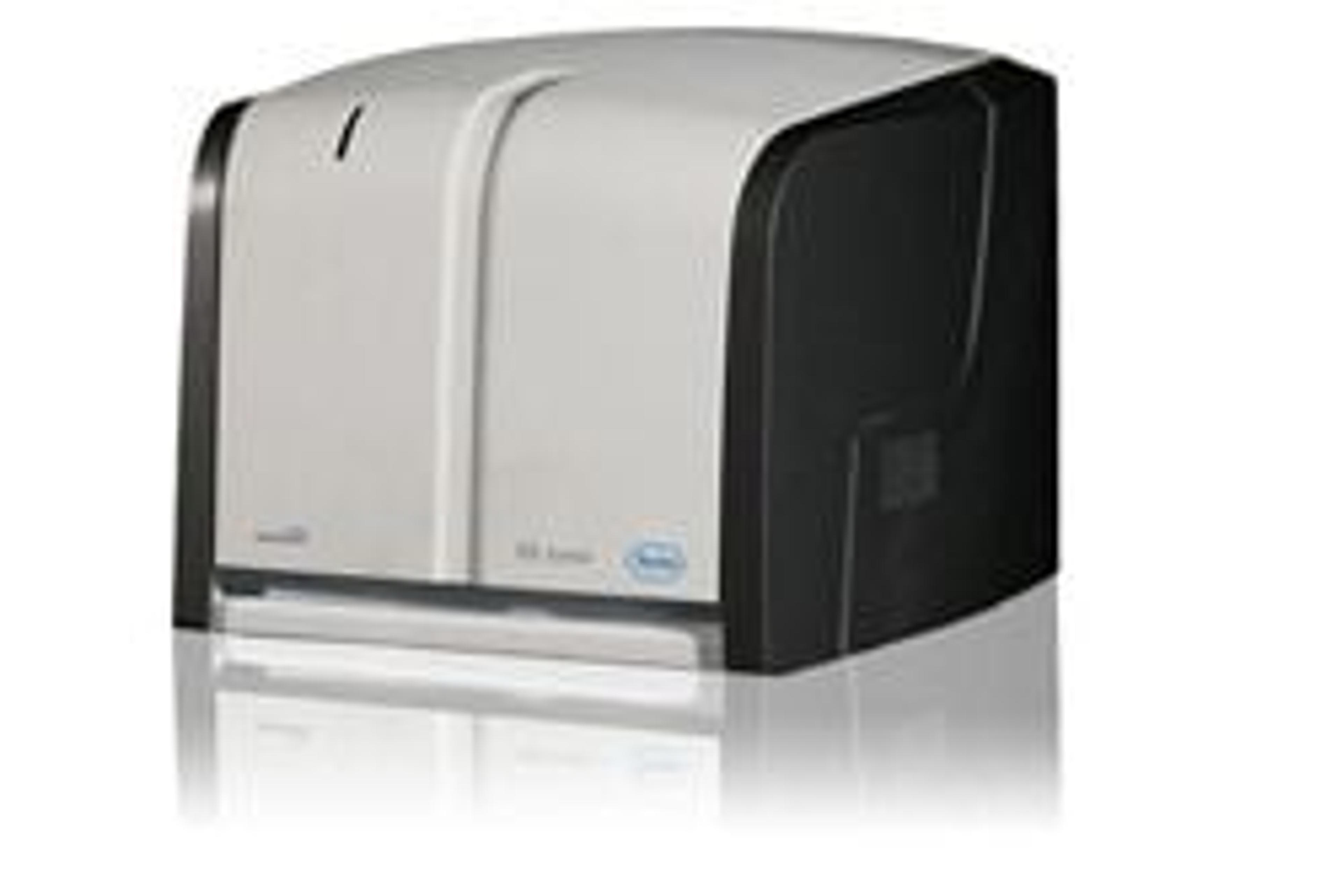
GS Junior System
The power of next-gen sequencing in your hands. The GS Junior System brings the power of 454 Sequencing Systems directly to the laboratory benchtop. Get comprehensive genome coverage with long 400 bp sequencing reads and quickly proceed from DNA to discovery with fast sequencing runs and straightforward data analysis on the attendant computer.GS Junior System Features: Powered by proven technology: Uses GS Junior Titanium chemistry to deliver high-quality, bioinformatics-friendly, long read data Fits in your lab: Small instrument size, along with low entry and operating costs, enables labs with limited budget and infrastructure to take advantage of next gen sequencing Easy to use: Manageable data size allows processing and analysis right on the attendant computer without the need for specialized computing or network infrastructures Point-and-click data analysis: Includes the GS Data Analysis Software for de novo assembly, reference mapping and amplicon variant analysis Applications: Amplicon Sequencing: Targeted sequencing of 10's - 100's of samples and loci Sequence Capture: Targeted sequencing of custom array regions Whole Genome Sequencing: De novo sequencing and resequencing of microbial organisms (bacteria, fungi, viruses) Metagenomics: Characterization of complex environmental samples; pathogen discovery Transcriptome Sequencing: Full-length sequencing and de novo assembly of transcripts