
Protecting the specialist knowledge behind patient care
CLINICAL24 Ambassador Daniel Monteiro explores the pressures facing the laboratory workforce and explains why accessible education, meaningful competency assessment, and critical thinking are essential to its future
1 Oct 2026
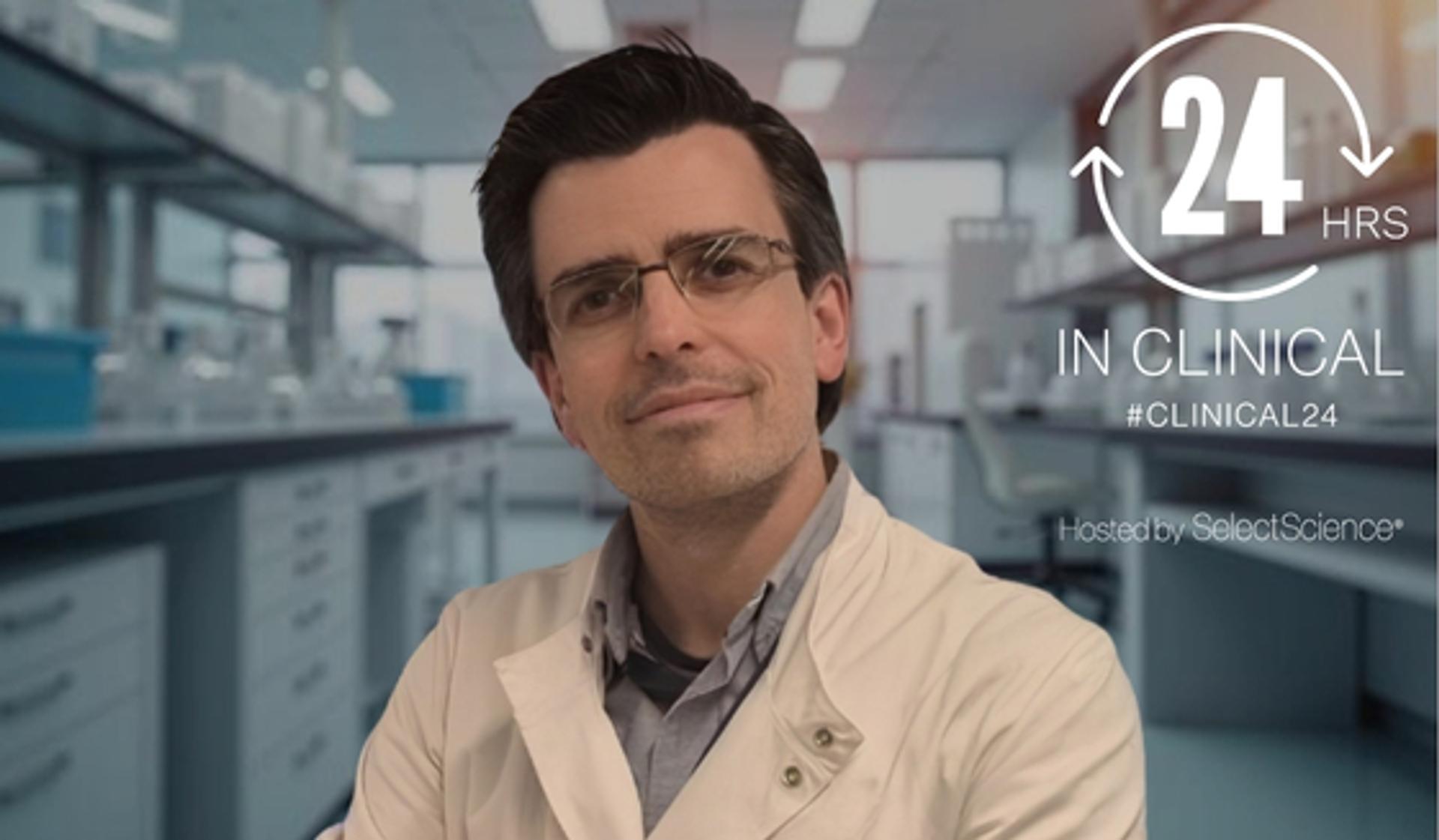
Daniel Monteiro, Principal Biomedical Scientist at Synnovis and founder of Haemopaedia.
Clinical laboratories depend on specialist knowledge. Yet as workloads rise and experienced professionals are asked to do more, finding the time and resources to share that expertise with the next generation is becoming increasingly difficult.
For Daniel Monteiro, Principal Biomedical Scientist at Synnovis, that challenge is particularly visible in hemoglobinopathies, the inherited disorders of hemoglobin that include sickle cell disease and thalassemia. Results in this specialized area can inform antenatal decisions, family testing, and lifelong diagnoses, making scientific judgment and consistent training vital to patient care.
Having spent more than a decade teaching hemoglobinopathy screening and diagnosis, Daniel recognized that access to regular, reliable education remained uneven. He founded Haemopaedia to help close that gap, creating a free laboratory education platform offering weekly videos, case materials, and additional continuing professional development resources.
As a CLINICAL24 Ambassador, Daniel is using his experience to highlight not only the expertise behind laboratory results, but the urgent need to protect and pass on that knowledge.
The scientific judgment behind every result
Daniel's working day brings together service delivery, scientific interpretation, and laboratory improvement. “My day usually starts with my inbox,” he explains. “I set priorities for the day, work through queries, and make sure the laboratory has what it needs.”
A significant part of his role involves reviewing and releasing results, work he particularly enjoys because of the intellectual challenge involved. “The constant puzzle-building, linking all the pieces together, never gets old.”
That process is particularly important in hemoglobinopathies, where an analyzer result may be only the beginning of the investigation. Laboratory professionals must assess the available evidence, consider which follow-up tests are needed, and interpret the findings within their wider clinical and family context.
“I think people often assume a laboratory result comes straight off an analyzer,” says Daniel. “In hemoglobinopathies, a result can carry real weight. It might inform antenatal decisions, family testing, or a lifelong diagnosis, and there's a lot of scientific judgment behind it.” This expertise is rarely visible to patients, but it is fundamental to the quality and reliability of the final report.
“We look at the whole picture, choose the right follow-up tests, and consider the clinical and family context before a report goes out.” For Daniel, this is one of the clearest links between training and patient care. Expertise cannot be maintained unless it is actively shared. “Much of the laboratory's value lies in that interpretation, and patients rarely see it. It's one of the reasons I care so much about training: that expertise only exists if we keep passing it on.”
A growing gap in specialist education
Alongside his work at Synnovis and his scientific advisory role within the NHSE Sickle Cell and Thalassaemia Screening Program, Daniel has taught biomedical scientists, hematology trainees, nurses, and doctors for more than 10 years. Through this work, Daniel identified a shortage of accessible, ongoing education in hemoglobinopathies.
“I could see a huge gap in hemoglobinopathy training,” he says. “It wasn't just biomedical scientists who lacked it, but nurses, doctors, and students too. I wanted to give people regular, consistent education they could rely on.”
That ambition led him to establish Haemopaedia. What began as a small initiative has developed into an engaged learning community centered on open and regularly updated educational content.
“People are engaging and asking questions, and I think that's because they aren't used to seeing something regular, open, and free,” he says. “Seeing it have a positive impact is honestly one of the most rewarding parts of what I do.” His evenings are often devoted to deciding which topic to cover next, before filming, editing, and publishing new material.
The platform reflects Daniel's belief that professional education should not be restricted to a single training session or become available only when an assessment is approaching. Instead, people should be able to return to learning materials whenever they need to reinforce their understanding.
When service pressure limits training
Daniel identifies workforce shortages and retention as among the most significant challenges facing today's clinical laboratories.
As testing demands increase, laboratory professionals are being asked to process and release more work. The pressure can leave staff feeling as though they are working within a production line rather than a scientific service, while the specialist skills certain disciplines depend upon become increasingly difficult to maintain.
“One consequence worries me a lot: we're losing the specialist skills that some areas depend on,” he says. “I see it in hemoglobinopathies, but in plenty of other disciplines too.” Training capacity is closely connected to that problem.
In many laboratories, training still depends heavily on one experienced member of staff teaching another person individually. Daniel acknowledges the value of one-to-one learning, but believes that it can become inconsistent when those expected to train others are simultaneously managing a demanding workload.
“Training is only as consistent as the trainer's time allows,” he explains. “If the trainer is under pressure and juggling 10 other things, the trainee won't get the same experience as the person trained before them.”
This is where structured, reusable educational resources can add value. They are not a replacement for expert mentorship or practical experience, but they can provide every learner with access to the same foundational information.
“A video delivers the same information, to the same standard, every time,” says Daniel. “It's always available, not just at the moment someone is being trained, but whenever they want to revisit or refresh a topic.”
Rethinking competency and professional development
For Daniel, protecting expertise requires more than delivering information. Laboratories must also consider how they assess whether knowledge has been understood and can be applied safely. He would like to see competency assessment extend beyond meeting formal requirements, using varied and regularly refreshed material that encourages people to think rather than simply select the correct answer.
“The goal is an assessment that makes people think, progress, and genuinely learn the topic, rather than a tick-box or multiple-choice exercise.”
This emphasis on critical thinking matters because laboratory practice does not always present straightforward answers. Professionals must be able to recognize an unexpected pattern, question whether the available evidence fits, and determine the appropriate next step.
“Critical thinking is what protects patients,” he says.
Daniel believes continuing professional development deserves a similar rethink.
Biomedical scientists are required to maintain their CPD, but learning can become another obligation to accommodate around a busy service. If training were sufficiently accessible, consistent, and engaging, he believes it could change how laboratory professionals experience professional development.
“Training should happen all year round, not just when a competency assessment is due.”
His ambition is not simply to make more content available. It is to make learning something scientists want to engage with.
“If we could streamline it, make it accessible, and make it enjoyable, rather than one more thing to squeeze into the job, I think it would transform how people feel about learning.”
Preparing for innovation without losing scientific rigor
Daniel also sees considerable potential for artificial intelligence across the clinical laboratory. However, he believes AI should be introduced with the same scientific scrutiny applied to any other laboratory system.
“We should treat it the way we treat any new piece of equipment,” he says. “Nothing goes into use in a clinical lab without verification, and AI tools should be no different.”
Laboratories must understand what a system can do, how its performance has been evaluated, and where its limitations lie. Human expertise, therefore, becomes more important rather than less.
Clinical laboratories cannot safely adopt emerging technologies if specialist knowledge is allowed to erode. The workforce must be equipped to assess new systems critically, recognize their limitations, and apply their outputs appropriately within patient care.
This returns to the central idea running through Daniel's work: the future laboratory will depend on its ability to preserve knowledge while making learning more consistent and accessible.
Through Haemopaedia and his work as a CLINICAL24 Ambassador, Daniel is helping to show that laboratory education is not peripheral to diagnostics. It is one of the foundations on which safe interpretation, meaningful innovation, and better patient care are built.
Daniel Monteiro spoke with Lucy Lawrence, Science Editor at SelectScience, as part of the CLINICAL24 campaign exploring the people, technologies, and innovations shaping modern clinical laboratories.
🔗Connect with Daniel on LinkedIn: www.linkedin.com/in/daniel-pereira-monteiro
🔗 Explore Haemopaedia on YouTube: www.youtube.com/@haemopaedia
Tags
Frequently asked questions
Show frequently asked questions
What are hemoglobinopathies?
Hemoglobinopathies are inherited disorders that affect hemoglobin, the protein in red blood cells responsible for carrying oxygen. They include conditions such as sickle cell disease and thalassemia and often require specialist laboratory testing and interpretation.
Why is specialist expertise important in hemoglobinopathy testing?
Laboratory professionals do much more than generate results. They interpret complex findings, recommend follow-up investigations, and consider clinical and family history to ensure patients receive accurate diagnoses and appropriate care.
What is Haemopaedia?
Haemopaedia is a free educational platform founded by Daniel Monteiro to support learning in hemoglobinopathies. The platform provides videos, case studies, and continuing professional development (CPD) resources for laboratory and healthcare professionals.
What challenges are currently facing the clinical laboratory workforce?
Many laboratories are experiencing increased workloads, staffing shortages, and difficulties retaining specialist expertise. These pressures can reduce the time available for training and professional development.
How can laboratories improve training consistency?
Monteiro advocates combining expert mentorship with structured educational resources. Accessible, reusable training materials can help ensure all staff receive consistent foundational knowledge regardless of local staffing pressures.