
Promega Introduces New Mass Spec Reagents, IdeS Protease and Human and Yeast Protein Extracts
25 Jun 2014
Promega Corporation announces the launch of new products for scientists working with mass spectrometry. The IdeS Protease enables fast, easy, high performance digestion of immunoglobulin, while the Human and Yeast Protein Extracts provide a test material for optimizing mass spec sample preparation. The new products add to the company’s existing range of proteases and services to improve mass spec sample prep workflows.
IdeS Protease is a recombinant, engineered version of the immunoglobulin-degrading enzyme from Streptococcus pyogenes. It is a highly specific protease that slices Immunoglobulin G (IgG) at a single, targeted site, offering 100% digestion in 30 minutes with no optimization. IdeS can be used to characterize therapeutic antibody candidates using LC/MS, and contains a histidine tag for easy removal. The versatile Promega IdeS enzyme cuts IgGs from a range of species, as well as Fc-fusion proteins.
The new yeast and human protein extracts are designed specifically for mass spectrometry applications Available in either predigested, cleaned form for immediate use in LC/MS analysis or intact, undigested form to provide a test material for optimizing mass spec protein sample preparation, the extracts provide clean, consistent, quantified, model system samples for LC/MS method development and instrument monitoring. The yeast extracts are beneficial for users who prefer working with a relatively compact and well-studied proteome, whereas the human extract, with large dynamic range, provides the opportunity to work with complex proteomes. The new products are: MS Compatible Yeast Protein Extract, Digest; MS Compatible Human Protein Extract, Digest; MS Compatible Yeast Protein Extract, Intact; and MS Compatible Human Protein Extract, Intact.
Related products
Request Quote for All Products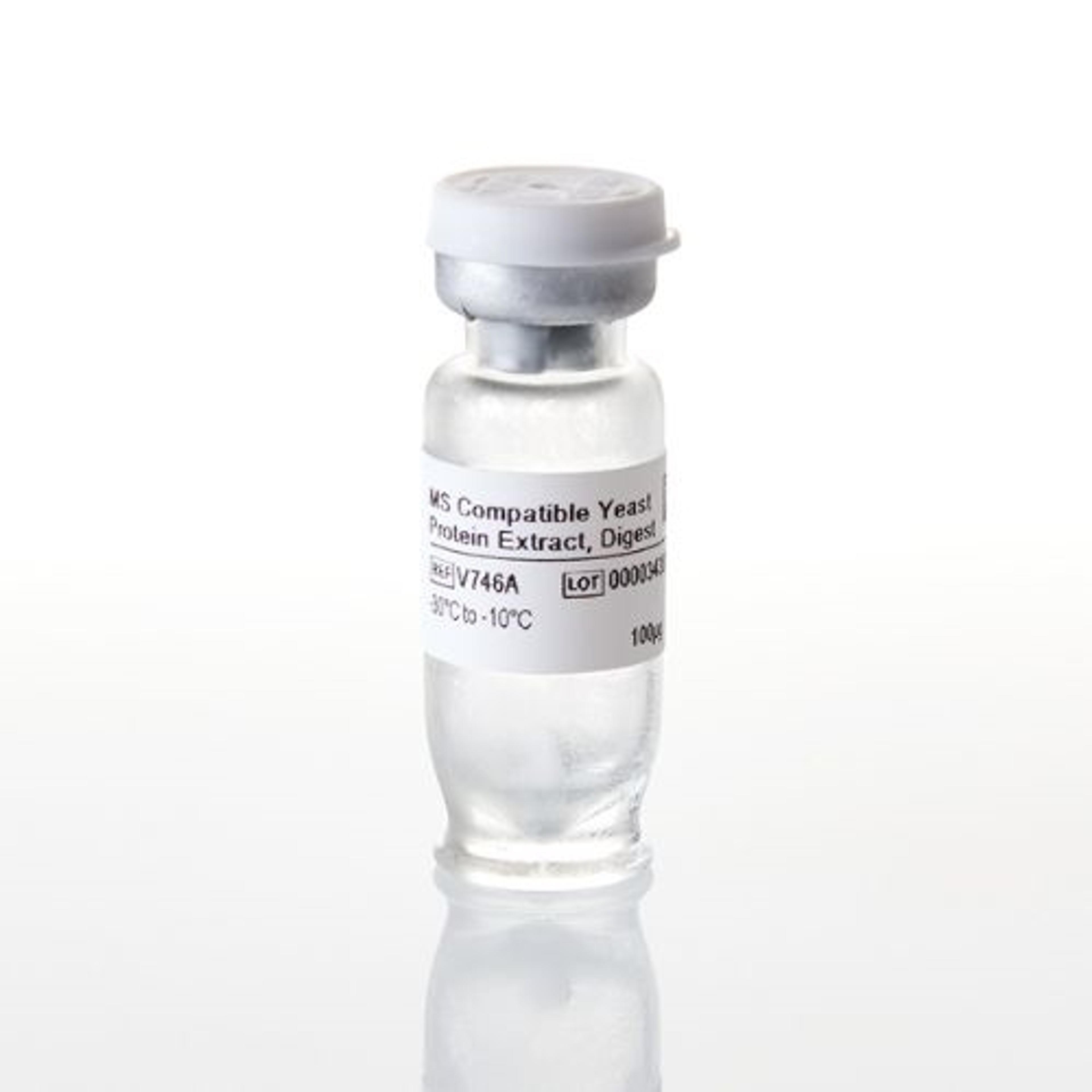
Mass Spec-Compatible Yeast and Human Protein Extracts
Promega Corp.The mass spectrometry-compatible yeast and human protein extracts are designed specifically for mass spectrometry applications. The extracts are predigested and cleaned up by solid-phase extraction for immediate use in liquid chromatography/mass spectrometry (LC/MS) analysis. Both the yeast and human extracts also are available in an intact undigested form to provide a test material for optimizing mass spec protein sample preparation. The yeast extracts are beneficial for users who prefer working with a relatively compact and well studied proteome, whereas the human extract provides opportunity for working with a complex proteome having a large dynamic range. Consistent extract protein composition is ensured by tight control over cell culture conditions and manufacturing process. Lot-to-lot consistency of extracts is monitored by various protein and peptide qualitative and quantitation methods, including LC/MS and amino acid analysis (Table 1). Our manufacturing process assures compatibility with reverse phase liquid chromatography and mass spectrometry by monitoring nonspecific protein fragmentation, nonbiological post-translational modifications and, for digested extracts, minimal undigested peptides. Features & Benefits: Compatible with LC/MS instrumentation platforms. Minimal nonbiological post-translational modifications. Peptide quantity measured by AAA. Model systems for method development/instrument monitoring. Multiple formats (digest/intact).