
Waters introduces Cyclic IMS P20 Mass Spectrometer at ASMS 2026
Next-generation system combines ion mobility, advanced fragmentation, and imaging to enable deeper insight into disease biology
2 Jun 2026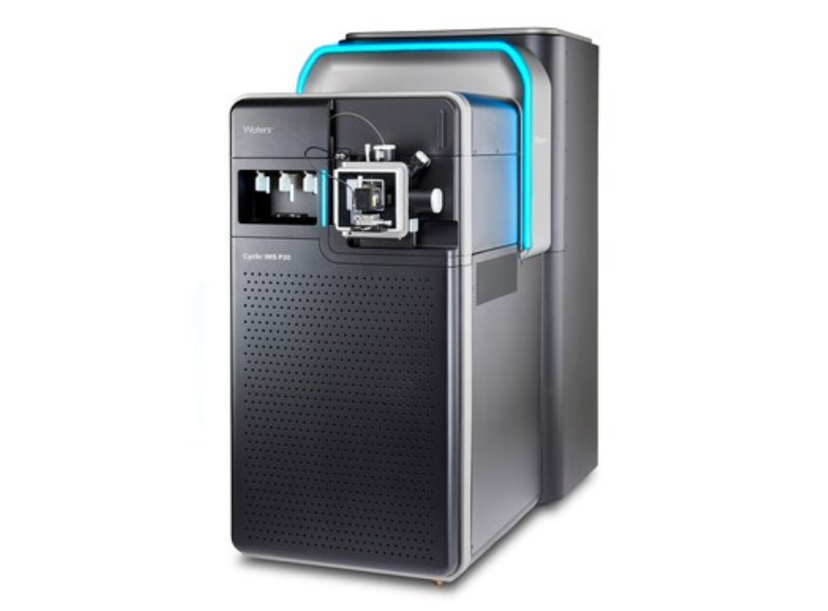
The Waters Cyclic IMS P20 Mass Spectrometer
At the 74th ASMS Conference on Mass Spectrometry and Allied Topics in San Diego, USA, Waters Corporation has launched the Waters Cyclic IMS P20 Mass Spectrometer™, a high-resolution structural and spatial omics platform designed to help scientists detect disease signals earlier, accelerate biotherapeutic development, and better understand complex biology.
New benchmark in sensitivity and structural resolution
The Waters Cyclic IMS P20 Mass Spectrometer delivers more than a 10-fold increase in MS/MS sensitivity compared to its predecessor, enabling the detection of subtle biological differences and low-abundance molecular species that were previously difficult to observe. The system extends the upper mass range by more than 50% to over 100 kDa, supporting the analysis of larger and more heterogeneous therapeutic targets.
By combining multipass cyclic ion mobility spectrometry (IMS) with an enhanced suite of fragmentation and structural probing capabilities, the Cyclic IMS P20 MS provides a comprehensive spatial and structural molecular view within a single platform. This supports earlier, previously unattainable detection of disease signals, from protein misfolding to post-translational modifications.
Advanced tools for structural and spatial omics
Waters has developed the Cyclic IMS P20 MS to address the growing need for higher sensitivity, higher structural resolution, and easier-to-adopt analytical workflows in structural and spatial omics.
The platform integrates:
- Multipass cyclic ion mobility spectrometry for high-resolution separation of molecular species
- Tandem ion mobility spectrometry (IMSⁿ) for complex structural analysis
- Electron-capture dissociation (ECD), surface-induced dissociation (SID), and collision-induced unfolding (CIU) for complementary structural probing
These capabilities enable scientists to obtain confident insights into protein structure, conformational changes, and molecular interactions within a single experiment.
Supporting next-generation biotherapeutic development
As researchers pursue larger and more heterogeneous therapeutic targets, the Cyclic IMS P20 Mass Spectrometer is designed to support the development of next-generation biotherapeutics. The extended upper mass range to over 100 kDa and the comprehensive suite of structural tools help characterize complex biologics, including large proteins and protein complexes.
The system’s ability to reveal subtle structural differences and post-translational modifications supports more precise characterization of candidate therapeutics, helping to de-risk development and improve understanding of mechanism of action.
Enabling earlier detection of disease signals
The >10x step-change in MS/MS sensitivity of the Cyclic IMS P20 MS allows researchers to probe low-abundance molecular species that are often critical to disease mechanisms. This is particularly important for studying protein misfolding and other subtle structural changes associated with human disease.
By providing high sensitivity and high structural resolution, the Cyclic IMS P20 Mass Spectrometer supports earlier and more detailed detection of disease-relevant molecular signatures.
Integrated MALDI and DESI imaging for spatial omics
The Cyclic IMS P20 Mass Spectrometer brings matrix-assisted laser desorption/ionization (MALDI) and desorption electrospray ionization (DESI) imaging sources together in one system. This integration, combined with advanced multipass cyclic ion mobility and IMS separation, enables high-resolution spatial omics directly from tissue samples.
This approach allows researchers to:
- Visualize small molecules, lipids, peptides, and proteins directly in tissue
- Separate isobaric and stereoisomeric compounds
- Generate multi-dimensional molecular images that link molecular composition to the tissue microenvironment
The system’s full-spectrum molecular imaging capabilities support biomarker identification directly from tissue, providing rich, easily interpreted molecular maps. These maps increase confidence in lipidomics, drug and metabolite localization, translational research, and other experiments that require spatial visualization of molecular distributions.
Improving understanding of disease at the cellular level
By integrating high-resolution ion mobility with MALDI and DESI imaging, the Cyclic IMS P20 MS enables direct visualization of molecules in tissue, improving understanding of how disease develops at the cellular level. Researchers can explore how molecular changes correlate with histological features and tissue architecture, supporting more informed hypotheses about disease mechanisms and progression.
The combination of structural and spatial omics capabilities within a single platform is designed to accelerate discovery and development, providing scientists with a powerful tool to see biology more clearly and act on it faster.
Want the latest science news straight to your inbox? Become a SelectScience member for free today>>
Links
Tags
Frequently asked questions
Show frequently asked questions
What is the Waters Cyclic IMS P20 Mass Spectrometer and how does it advance structural and spatial omics research?
The Waters Cyclic IMS P20 Mass Spectrometer is a high-resolution structural and spatial omics platform launched by Waters Corporation at ASMS 2026. It delivers more than a 10-fold increase in MS/MS sensitivity compared to its predecessor and extends the upper mass range by more than 50% to over 100 kDa.
By combining multipass cyclic ion mobility spectrometry (IMS) with tandem ion mobility spectrometry (IMSⁿ), electron-capture dissociation (ECD), surface-induced dissociation (SID), and collision-induced unfolding (CIU), the system provides a comprehensive structural and spatial molecular view within a single platform. These capabilities support earlier detection of disease signals, detailed analysis of protein misfolding and post-translational modifications, and improved understanding of complex biology.
How does the Cyclic IMS P20 Mass Spectrometer support next-generation biotherapeutic development and complex biologics characterization?
The Cyclic IMS P20 Mass Spectrometer is designed to support the development of next-generation biotherapeutics by enabling high-sensitivity, high-resolution analysis of larger and more heterogeneous therapeutic targets. Its extended upper mass range to over 100 kDa and comprehensive suite of structural tools allow detailed characterization of complex biologics, including large proteins and protein complexes.
The system’s ability to reveal subtle structural differences and post-translational modifications enables more precise characterization of candidate therapeutics, helping to de-risk development and improve understanding of mechanism of action. This makes it particularly valuable for researchers working on advanced biotherapeutics and complex protein-based drugs.
How do integrated MALDI and DESI imaging on the Cyclic IMS P20 Mass Spectrometer enhance spatial omics and disease research?
The Cyclic IMS P20 Mass Spectrometer integrates matrix-assisted laser desorption/ionization (MALDI) and desorption electrospray ionization (DESI) imaging sources in a single system, combined with advanced multipass cyclic ion mobility and IMS separation. This configuration enables high-resolution spatial omics directly from tissue samples, allowing researchers to visualize small molecules, lipids, peptides, and proteins in situ.
It supports separation of isobaric and stereoisomeric compounds and generates multi-dimensional molecular images that link molecular composition to the tissue microenvironment. These full-spectrum molecular imaging capabilities facilitate biomarker identification directly from tissue, increase confidence in lipidomics and drug/metabolite localization, and improve understanding of how disease develops at the cellular level by correlating molecular changes with histological features and tissue architecture.