Meeting the Demands of the Food Safety Laboratory Using Versatile Columns
SelectScience speaks to Dr. B.J. Bench of Tyson Foods to learn about the separations technology advancing food and animal nutrition testing for food safety and quality assurance
23 Feb 2018

Ensuring human and animal food products meet safety standards is a crucial step for food manufacturers that requires the accurate analysis of multiple compounds in various matrices. This editorial article explores the work of Dr. B.J. Bench, who is the Director of Food Safety and Quality Assurance for the Animal Nutrition and Specialty Products Groups at Tyson Foods, Inc., to learn about the importance of the Tyson Foods Food Safety & Research Laboratories’ (TFSRL) work and the technologies enabling the detection of important compounds of interest in even the most complex matrices. Prior to his current role, Dr. Bench was Tyson Foods’ Senior Chemist, responsible for oversight of nutritional labeling, quality control testing, and research and development activities including novel method developments and optimization of routine methodologies to be streamlined into production style analyses.
Bench’s current role involves oversight of products destined for the pet food industry and animal husbandry. This includes everything from rendered meals and rendered fats, to wet pet food ingredients, as well as flavorings and nutraceuticals. Tyson Foods takes a strong stance on food safety and quality assurance – as one of the largest protein production companies in the world it is essential that the products it distributes are safe to consume and meet customer specifications. “Tyson is very unique in that it has invested in a lab network of 18 laboratories throughout the United States for various chemical and microbial services,” Bench comments. The work of these labs is important for both quality assurance and food safety – to ensure that customers are buying what’s on the label and that nothing harmful enters the food stream.
The day-to-day work of the TFSRL utilizes a range of analytical techniques, such as gas chromatography (GC) coupled to various detectors including flame ionization (FID), electron capture (ECD), mass spectrometry (MS) and liquid chromatography coupled with tandem mass spectrometer (LC-MS-MS). These techniques are used for routine testing of various analytes, such as pesticides, antibiotics, growth hormones, mycotoxins, and many other analytes of interest to meet customer needs as well as domestic and international regulatory guidelines. Bench continues to be involved in developing new methods to optimize ingredients and products, as well as troubleshooting in cases of suspected contamination to validate that products are safe, in continued support of the TFSRL.
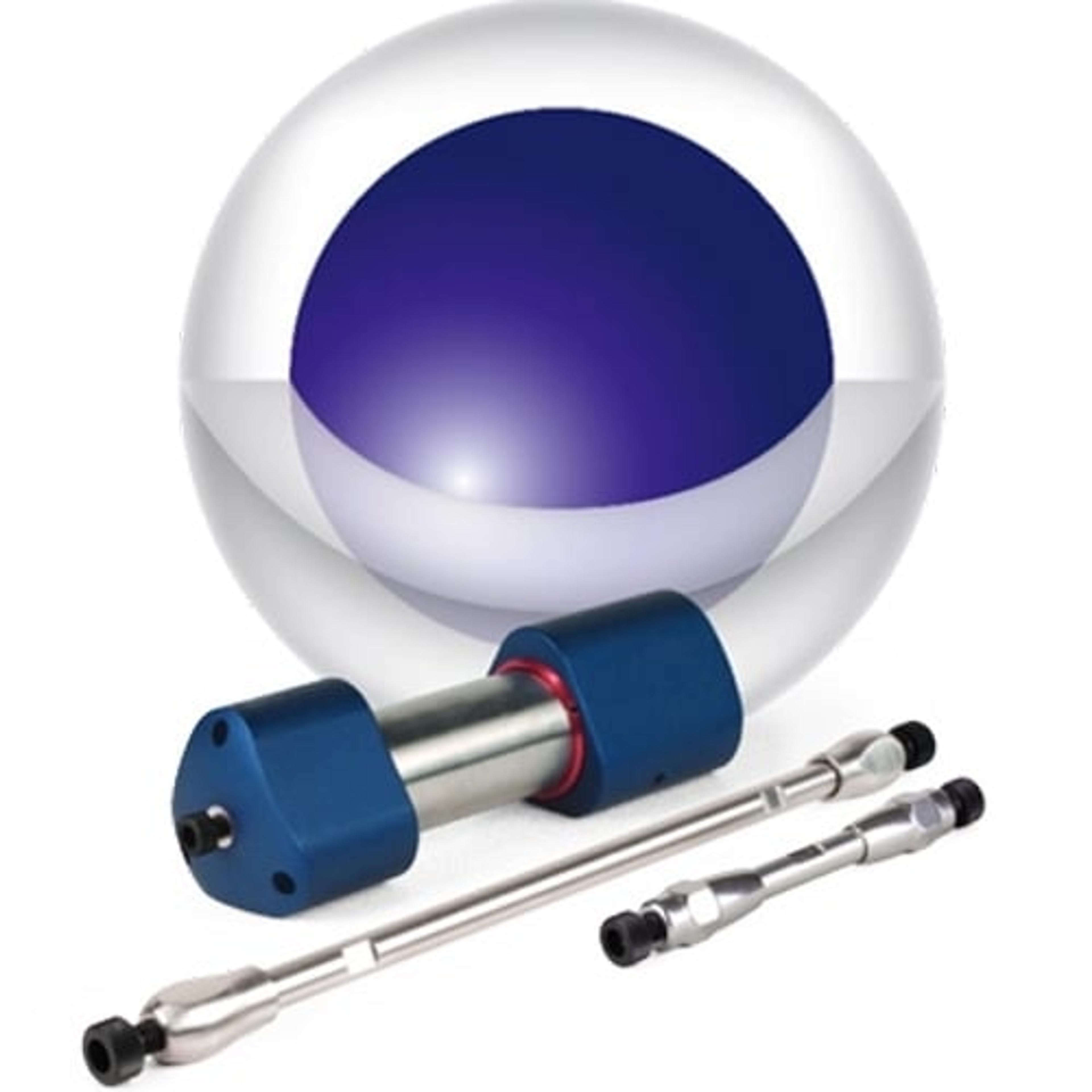
This involves the testing of various matrices at all stages of food production, ranging from feed ingredients – including soy, wheat, corn, dried distillers grains (DDG), oils and fats, and finished feed formulations – to the finished products, including raw and part-cooked products, and fully cooked products. With such a vast and diverse range of samples to test, versatile equipment that can handle repeated use is highly desirable. To achieve this, the TFSRL utilizes numerous chromatographic columns, but one that is commonly used is the Phenomenex Kinetex Core-Shell liquid chromatography column. Bench and the TFSRL team say that these columns are vital to their work as the columns are robust, maintaining good resolution and separation of the complex samples tested over longer periods of time.
Understanding product shelf life
While using numerous brands and phases, the Kinetex columns have proven to be versatile for multiple analyses and very durable over time for the harsh matrices that we put through them.
Jessica Lance Chemist, Tyson Foods
TFSRL is committed to improving shelf life and understanding rancidity. TFSRL is currently leading initiatives for routine method improvements including a consortium for peroxide value fat extraction to developing high-throughput methods of detection for fat and protein degradation by-products. To do this, the team is utilizing solid phase extraction (SPE) and chromatographic columns from Phenomenex and other companies to aid in research into rancidity in food and the understanding of product shelf life from the microbial to the chemical standpoint.
“No one really understands the whole rancidity phenomenon – from lipid oxidation to protein degradation,” Bench explains. This process is responsible for creating secondary lipid oxidation by-products along with biogenic amines, causing the product to smell “off”. Biogenic amines are a focus as the decreased amino acid availability associated with the protein degradation process is of concern for animal diets, which are formulated to contain the specific amino acids required for proper growth.
As part of this research, Bench and the laboratory team have developed a unique method using Phenomenex SPE columns for the capture of underivatized biogenic amines. Traditional methods use dansyl chloride derivatization followed by separation and determination of biogenic amines, however there are often issues with the derivatization of multiple analytes – looking at various reaction rates and ensuring you have enough substrate to react all the analytes of interest. TFSRL’s method takes a different approach, whereby biogenic amines are eluted and directly analyzed by liquid chromatography coupled with mass spectrometry. This enables many biogenic amines to be detected. Bench hopes that understanding this process will help to determine ways in which product shelf life can be improved by controlling protein degradation.
A collaborative approach to the future
“We work with numerous analytical solution companies and Phenomenex delivers on customer service,” Bench comments, highlighting that he has a very good relationship with both the company’s sales and method development team. Bench commends the company’s fast technical support and describes how they work together to address the latest global issues in food safety and quality.
Looking to the future, Bench envisions this collaboration continuing to help develop new methods for the detection of antibiotic testing and growth hormones, which remain a concern for the food and feed industry. Bench and his team know the importance of keeping abreast of new trends, including new compounds of interest, as well as the need for the ability to determine multiple analytes or multiple classes of compound in one separation method.
Do you use Phenomenex Kinetex columns in your work? Write your own review for the chance to win a $400 Amazon voucher or iPad.