
Eppendorf Launches 30-Place Microcentrifuge 5430 R
7 Jul 2009Eppendorf sets new standards in the range of refrigerated microcentrifugation. The new 30 place refrigerated microcentrifuge 5430 R convinces brilliantly by its versatility and features: You have the choice of eight different rotors, for tubes from 0.2 ml up to 50 ml, micro test plates, deep well plates and slides. With the according adapters all commonly used blood collection tubes and 10 to 50 ml Oak Ridge Tubes can be centrifuged as well.
A constantly kept temperature of 4°C at max. g-force of 30.130 x g is a further outstanding feature of this centrifuge. With this and further valuable features the centrifuge 5430 R covers a vast applicational field. Furthermore this centrifuge offers a variety of four operational languages.
One of the key factors, why this multitalented refrigerated microcentrifuge will find its way into every lab is the size of the centrifuge. The footprint is as small as 38 cm x 64 cm (W x D). The low loading height of 30 cm offers a maximum loading and unloading comfort.
Related products
Request Quote for All Products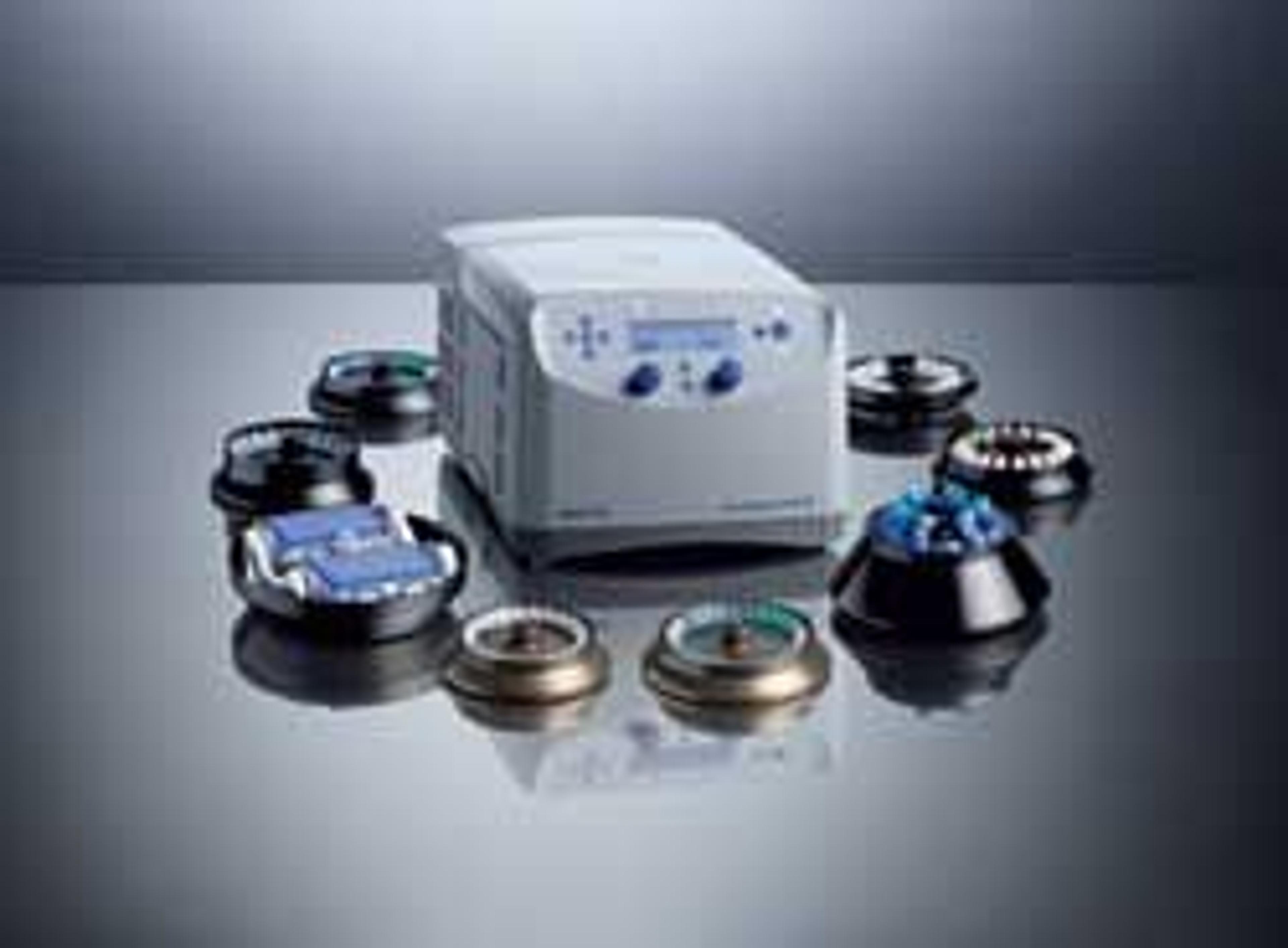
Microcentrifuge 5430 R
EppendorfMicrocentrifuge 5430 R from EppendorfCombining two completely different sets of requirements into one centrifuge: the rotor options of a benchtop Centrifuge with the small footprint of a microcentrifuge. The air cooled Centrifuge 5430 and the refrigerated Centrifuge 5430 R! The compact design of this 30-place Eppendorf microcentrifuge also performs an impressive range of applications. Virtually any tube or plate you want to centrifuge can be accommodated in one of the eight rotors of the Microcentrifuge 5430 R: from an Eppendorf Tube at 30,000 × g to MTP plates and slides in the swing bucket rotor, from 15 ml and 50 ml Falcon® tubes in the fixed-angle rotor to blood collection tubes - without changing the rotor, only the corresponding adapters.