
Developing the next generation of laboratory professionals
CLINICAL24 Ambassador Tahmina Hussain discusses why education, workforce development, and professional support must evolve alongside the future of laboratory diagnostics
1 Oct 2026
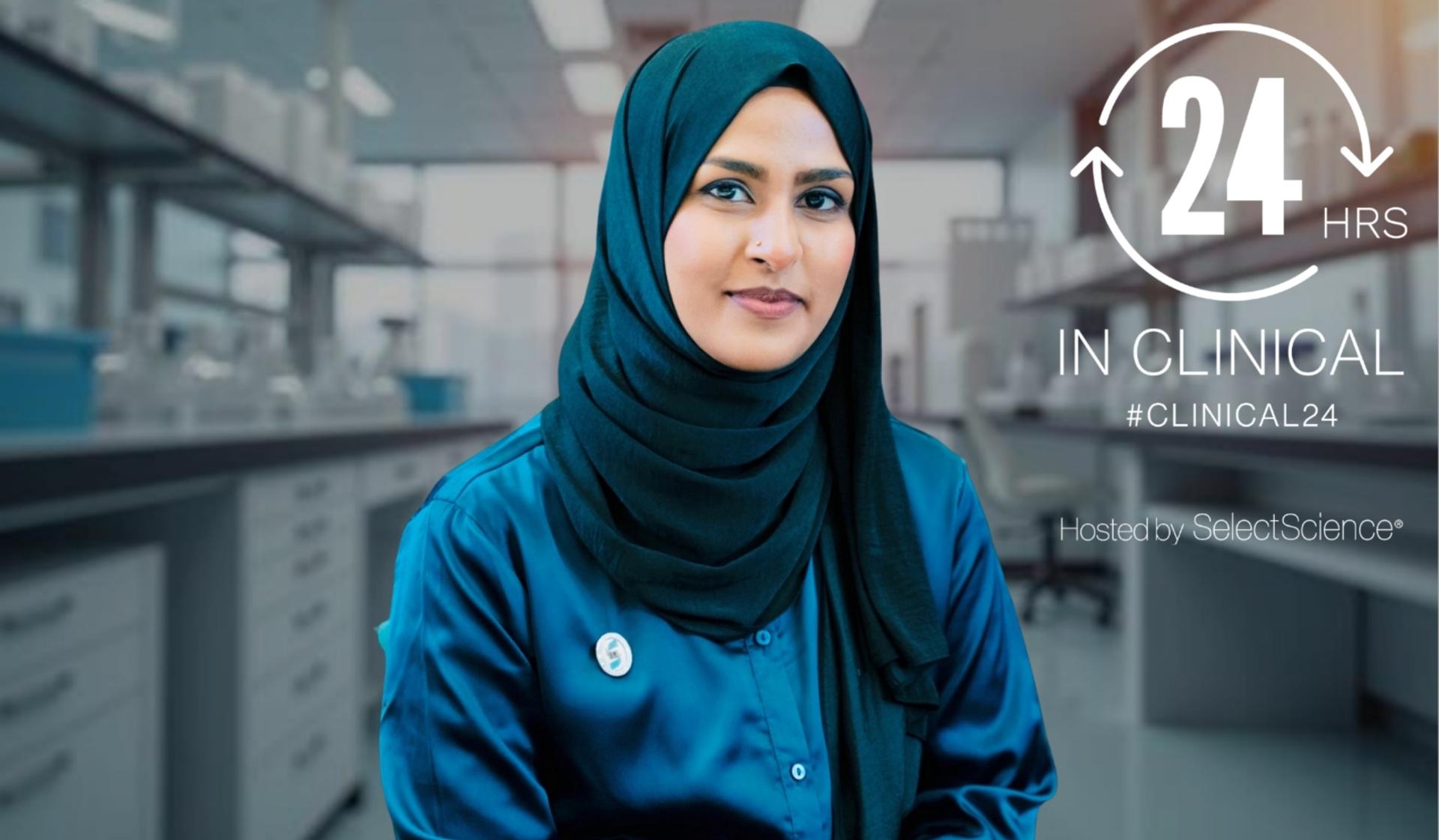
Tahmina Hussain, Senior Lecturer in Biomedical Science, Programme Lead for the Applied Biomedical Science Degree Apprenticeship at the University of Salford, and HCPC Registered Biomedical Scientist.
Clinical laboratories rely on advanced technology, specialist expertise, and highly skilled professionals working behind the scenes to deliver results that support patient care. Yet as diagnostic services continue to evolve, one of the biggest challenges facing the profession is ensuring the next generation of biomedical scientists is ready to meet those demands.
As part of SelectScience's CLINICAL24 campaign, we spoke with Tahmina Hussain, Senior Lecturer in Biomedical Science, Programme Lead for the Applied Biomedical Science Degree Apprenticeship at the University of Salford, and HCPC Registered Biomedical Scientist.
A CLINICAL24 Ambassador and long-standing advocate for biomedical science education, Hussain shared her perspectives on workforce development, emerging technologies, and the importance of keeping people at the heart of laboratory transformation.
From the laboratory to the Lecture Theatre
Hussain's career spans clinical practice, laboratory leadership, training, and higher education. Before moving into academia, she worked as a Specialist Biomedical Scientist in Haematology and Transfusion, Biomedical Scientist Team Manager, Training Officer, and Pathology Training Coordinator.
Those experiences continue to shape her work today. "My role now sits across clinical practice, education and professional development," says Hussain. "I'm passionate about preparing the next generation of biomedical scientists for a profession that is changing rapidly, while ensuring that education remains connected to the realities of clinical laboratory practice."
Alongside her work at the University of Salford, Hussain contributes to the profession through several roles with the Institute of Biomedical Science (IBMS), including Council Member, verifier, examiner, Deputy Chair of the Education and Professional Standards Committee, and Equality, Diversity and Inclusion Lead.
While her day-to-day role looks very different from her time working in a clinical laboratory, the laboratory remains central to everything she does. "I haven't moved away from the laboratory; my role has changed from delivering the service to helping develop the people who will deliver it in the future."
Whether teaching specialist modules, supporting apprentices, overseeing placement experiences, or helping students build professional competence, her focus remains firmly on ensuring learners are prepared for the realities of modern laboratory practice.
The challenge of balancing service delivery and training
Asked about the pressures currently shaping laboratory practice, Hussain highlights a challenge that sits at the intersection of workforce development and service delivery. "I think one of the biggest challenges is finding the space to develop people while simultaneously delivering an increasingly demanding clinical service."
Throughout her career in training and workforce development, Hussain has seen how education responsibilities are often carried by staff already managing busy operational workloads. "We need experienced staff to train the next generation, but those same experienced staff are under pressure to deliver today's workload."
In her view, workforce development should be recognised as a core component of laboratory practice rather than a secondary responsibility. "Training should not be something that happens when the workload allows it. It is part of maintaining a safe and sustainable diagnostic service."
As workforce pressures continue to affect healthcare systems worldwide, she believes laboratories must think differently about how training is embedded into practice and how educators, mentors, and training officers are supported.
Technology will change laboratories, but people remain central
The future laboratory will undoubtedly be shaped by technological innovation. Automation, artificial intelligence, and digital laboratory systems are already transforming the way diagnostic services operate.
While technological innovation will continue to reshape laboratory operations, Hussain believes its greatest value lies in supporting and strengthening professional practice. "I don't see this as a question of technology replacing laboratory staff. I see it as an opportunity to allow professionals to focus more on the areas where human expertise adds the greatest value."
Despite the opportunities these technologies create, successful implementation requires careful planning and oversight. "We need to understand how technologies perform in real clinical environments, ensure appropriate governance and validation, and make sure that the workforce is trained to use them effectively."
For educators and training providers, keeping pace with this change presents its own challenge. "If we are preparing today's students for yesterday's laboratory, we aren't preparing them for the laboratory they will actually enter."
According to Hussain, future biomedical scientists will require a broader range of skills than ever before, including knowledge of automation, digital systems, data analysis, quality management, communication, and the limitations of emerging technologies. "Adaptability will be one of the defining skills of the future workforce."
The expertise patients do not always see
One of the themes at the heart of CLINICAL24 is highlighting the expertise that exists behind every laboratory result. For Hussain, this remains one of the most misunderstood aspects of laboratory medicine. "There can be a perception that a laboratory test is simply a sample going into a machine and a number coming out." In reality, she explains, laboratory professionals are involved in a wide range of activities that patients may never directly see.
Biomedical scientists and pathology teams contribute to quality assurance, troubleshooting, validation, competency management, investigation of unexpected findings, critical result management, and continuous service improvement. "This workload isn't widely seen but is absolutely fundamental to providing safe patient care."
The result that appears on a screen or in a patient record represents only a small part of a much larger process involving scientific expertise, professional judgement, and rigorous quality systems.
Looking ahead: Building a stronger profession together
When thinking about the future of clinical diagnostics, Hussain believes discussions should focus as much on people as technology. While automation, new diagnostic platforms, and digital transformation will continue to shape laboratory services, she argues that lasting progress depends on how effectively the profession develops and supports its workforce.
"We often talk about transformation in terms of new technology, automation, consolidation or new diagnostic platforms. All of those things are important, but transformation will only succeed if we also transform how we develop and support the workforce delivering those services." She would like to see stronger connections between pathology disciplines, greater collaboration between laboratories and universities, and more opportunities for professionals to develop broader career pathways.
Importantly, she believes education and workforce planning should be integral parts of discussions about the future of diagnostics. "We need to ask: What skills will we need, who will provide them, and how are we going to develop those people?" Her work with degree apprenticeships, simulation-based learning, employability initiatives, and placement development has reinforced the importance of creating accessible pathways into the profession and supporting individuals throughout their careers.
Through her work as an educator, professional leader, and CLINICAL24 Ambassador, Hussain continues to champion a vision for pathology that places people, learning, and collaboration alongside technological innovation. As laboratories evolve, she believes the most successful services will be those that recognize a simple truth: technology and people must develop together.
Tahmina Hussain spoke with Lucy Lawrence, Science Editor at SelectScience, as part of the CLINICAL24 campaign exploring the people, technologies, and innovations shaping modern clinical laboratories.
Tags
Frequently asked questions
Show frequently asked questions
What challenges are clinical laboratories facing today?
Many laboratories are balancing increasing service demands with the need to train staff. Finding time for workforce development while managing daily workloads remains a significant challenge across the profession.
Why is training important for biomedical scientists?
Training helps ensure laboratory professionals have the scientific knowledge, practical skills, and professional competence required to support high-quality patient care and adapt to new technologies.
How is artificial intelligence changing clinical laboratories?
AI has the potential to support areas such as workflow optimization, data analysis, and decision-making. However, it must be properly validated and implemented alongside workforce training and governance.
Will automation and AI replace biomedical scientists?
According to Hussain, technology should enhance rather than replace laboratory professionals. Human expertise, judgement, and oversight remain essential to interpreting results and maintaining quality.
What skills will future biomedical scientists need?
Future professionals will need expertise in automation, digital systems, data analysis, quality management, communication, and the ability to critically assess emerging technologies.
What role do biomedical scientists play in patient care?
Biomedical scientists contribute far more than producing test results. They support quality assurance, validation, troubleshooting, competency management, service improvement, and the investigation of unexpected findings.
Why are laboratory professionals often described as the hidden workforce?
Much of the work performed by pathology and laboratory teams happens behind the scenes. Patients may only see the final result, not the expertise, judgement, and quality processes that support it.