Analytik Jena AG Expands its Product Range
25 Feb 2015
Product news
At the European Winter Conference on Plasma Spectrochemistry in Münster the Company launches two new mass spectrometers for its global sales.
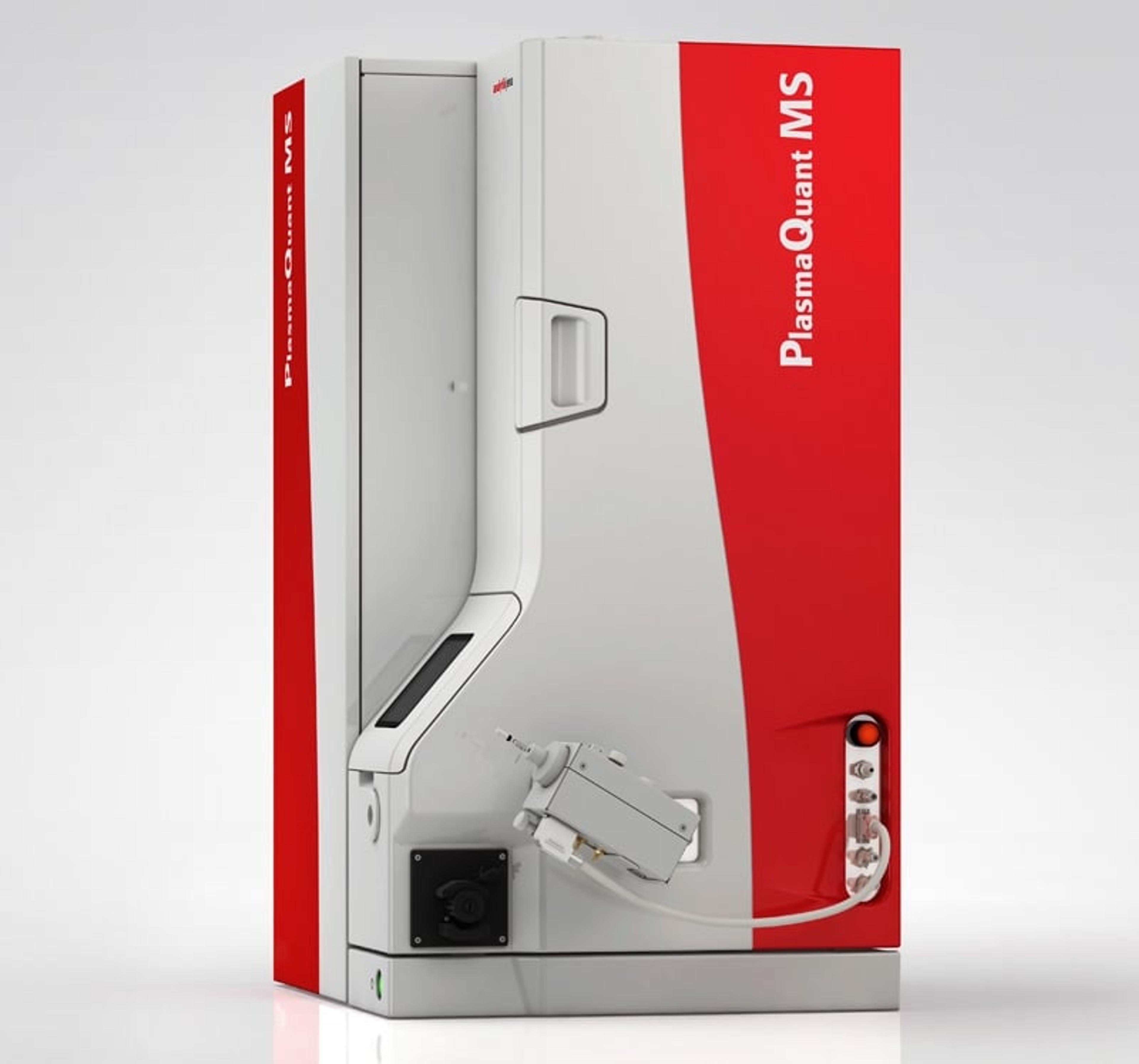
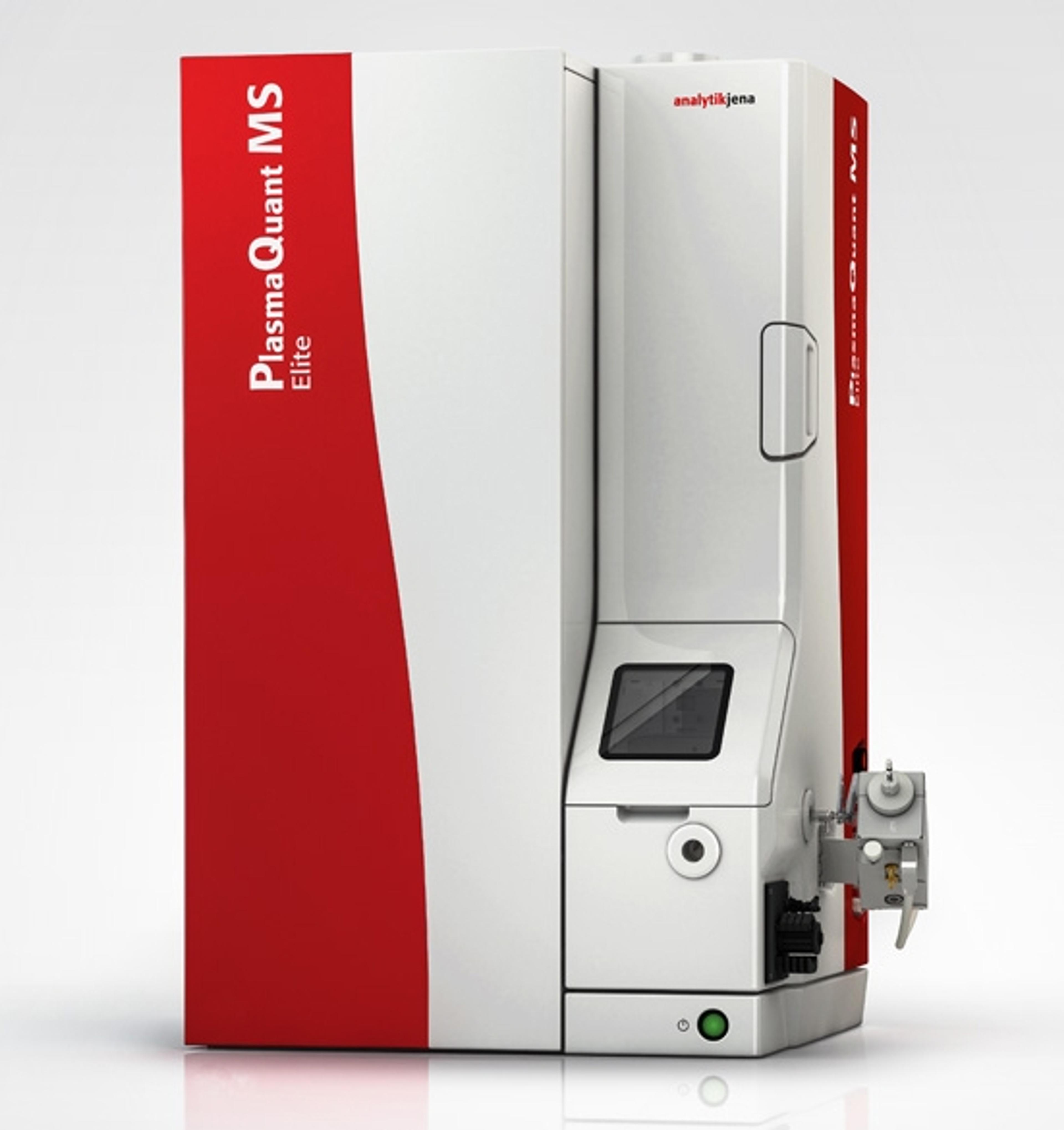
Analytik Jena AG expands its product range: only half a year after the acquisition of the ICP-MS business of the Bruker Corporation in September 2014, Analytik Jena introduces two new ICP-MS products (inductively coupled plasma for use in mass spectronomy) PlasmaQuant ® MS and PlasmaQuant ® MS Elite. The instruments will be unveiled at the European Winter Conference on Plasma Spectrochemistry (EWCPS), February 22-26, 2015, in Münster, Germany.
ICP-MS technology measures the quantity of ions striking a detector, after the sample is ionized in argon plasma. The PlasmaQuant ® MS series boasts a major technological advancement in its RF generator, producing an extremely robust plasma that can handle any matrix but using only half the amount of argon gas of competitive ICP-MS. As Klaus Berka, Chief Executive Officer of Analytik Jena AG, explained, “Alone, this single advancement will set new standards for the industry with significant annual gas cost savings for our customers. But the new benchtop system features a whole series of analytical parameters that provide high customer benefit. This is an important step to complete our product portfolio of the Analytical Instrumentation business unit."
The PlasmaQuant ® MS is a universal workhorse, suitable for a wide range of routine applications in environmental analysis, food safety, agriculture, pharmacy, mining, chemistry and petrochemistry. The PlasmaQuant ® MS Elite is Analytik Jena’s premium offering with unprecedented 1.5 gigahertz sensitivity making it the most sensitive ICP-MS instrument on the market and up to 5 times more sensitive than competitive systems. This incredible sensitivity makes it perfect for semiconductor and research applications in geochemistry, environmental, materials science and metallomics. It is the instrument of choice for applications that require specialized sample introduction accessories, including laser ablation for the direct analysis of solid samples and liquid chromatography, which offers the capability to measure different chemical forms of a specific element in a sample. The high sensitivity of the Elite model even allows laboratories in the field of single-particle analysis to detect nanoparticles at less than 10nm diameter – a limit that, until now, has been difficult to reach.
The twin-position, bench mounted design offers complete flexibility for customers to configure the system to their laboratory requirements. Dual entry ports allow for fast and easy connection of third-party accessories while the incredibly small 0.4m2 footprint requires very little lab space.
Both models include the integrated collision reaction cell, the ReflexION ion mirror, the high-definition quadrupole, and the all-digital detection system. The integrated collision reaction cell (iCRC), with innovative BOOST technology, uses simple collision and reaction gases to quickly and effectively remove spectroscopic interferences produced by the argon plasma and sample matrix. For example, a small flow of hydrogen gas can be introduced into the iCRC to remove Argon based interferences on the important environmental elements of As and Se. Then quickly switch to helium gas for easy and effective removal of sample matrix based
interferences.
At the heart of the PlasmaQuant ® MS is the ReflexION ion mirror. The original and patented 90-degree optical design differs from its competitors by reflecting, not deflecting the ions. Three-dimensional focusing allows for full control of the ion beam, producing a tight focal point for all ions, irrespective of their size and energy, before they enter the high-definition quadrupole. “The high efficiency of the innovative ReflexION is how we achieve such tremendous sensitivity and for all elements across the entire mass range”, says Torsten Olschewski, General Manager of the Analytical Instrumentation business unit at Analytik Jena.
The PlasmaQuant® MS is also the only ICP-MS to offer an all-digital detection (ADD10) system, providing ten orders of linear dynamic range in pulse-counting mode only. This eliminates the need for a regular and inaccurate cross-calibration associated with inferior digital-analog detectors. The ADD10 accurately attenuates strong signals without requiring a separate analog measurement. The benefit is exceptional detector lifetime and fast, accurate multi-element analysis from ultra-trace to major levels in a single measurement.