
How genomics, AI, and quality are shaping the future of healthcare
19 Aug 2026
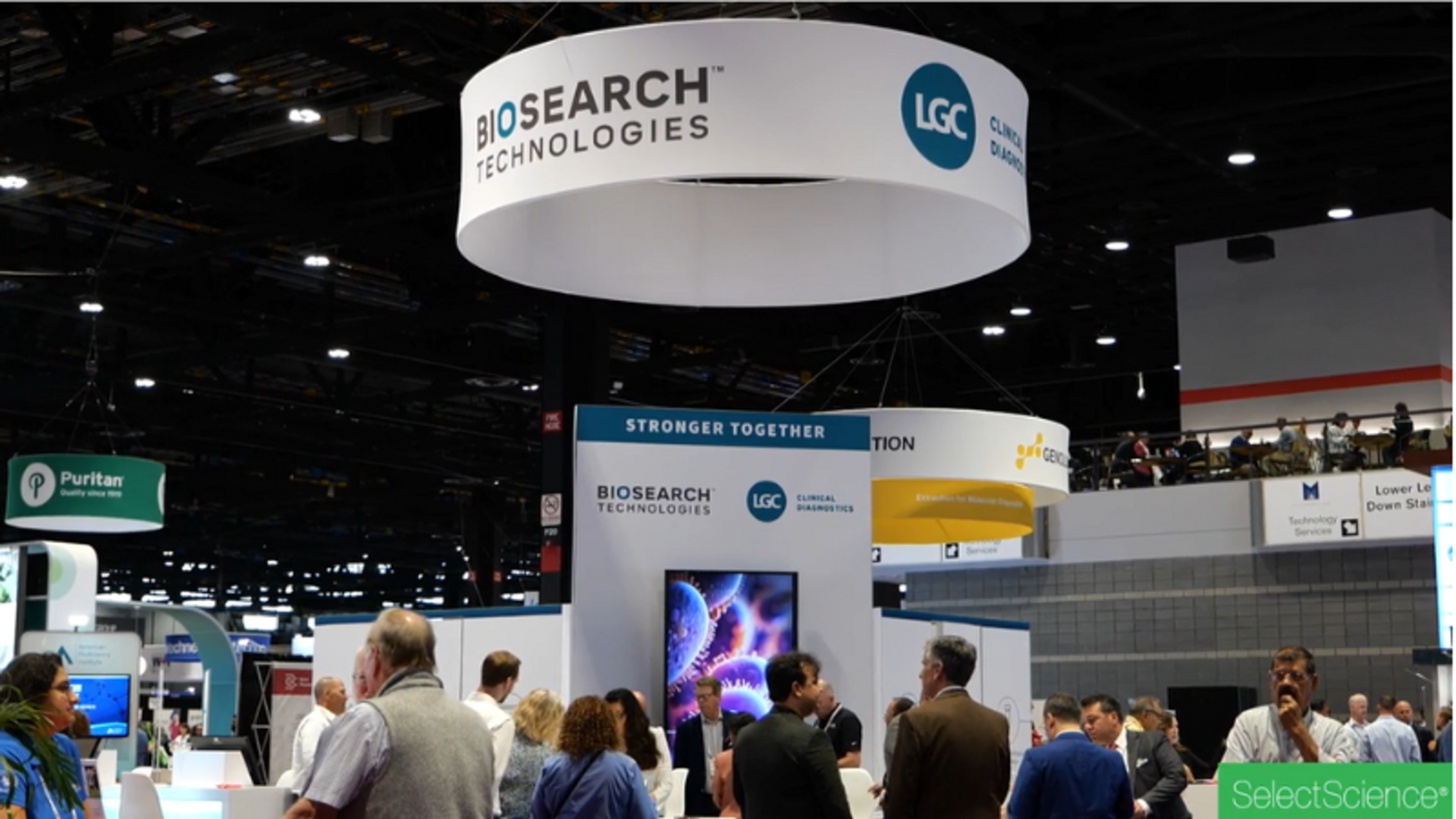
Precision medicine is opening new possibilities for how disease is detected, monitored, and treated, bringing healthcare closer to truly personalized patient care. In this SelectScience interview, Colin Hill, Chief Commercial Officer for the Diagnostics and Genomics division at LGC, discusses the trends shaping healthcare, from genomic testing and minimal residual disease (MRD) monitoring in oncology, to the growing role of AI in clinical decision support. He also explains how LGC is helping advance the future of diagnostics through quality assurance, standardization, and innovative raw materials that support more confident clinical decisions and better patient outcomes.
This interview was recorded at ADLM 2026, Anaheim, California.
About the company

LGC Diagnostics & Genomics - SeraCare Clinical Diagnostics
LGC Clinical Diagnostics & Genomics
At LGC Diagnostics & Genomics, we drive scientific progress by making our trusted life science solutions both simpler and more innovative.
Partnering with our customers to provide a portfolio of cutting-edge life science tools that diagnose, treat and feed our growing population, delivering on our core mission of Science for a Safer World.
SeraCare Clinical Diagnostics
Quality Controls, Reference Materials, Biological Materials, reagent components
Empower your results and challenge your methods with SeraCare’s ACCURUN® molecular and serology controls and reference materials. ACCURUN controls and reference materials are whole-cell or whole-organism external controls that help you monitor all aspects of your molecular or serology testing methods and provide additional confidence in your laboratory test results. A well-designed QC program can help you avoid costly false-negative or false-positive results.
Seraseq® next-generation sequencing (NGS) reference materials enable the promise of precision medicine by supporting NGS assay development and validation in analyzing actionable and challenging variants in patient samples. Using innovative technologies, SeraCare designs and manufactures a comprehensive portfolio of highly multiplexed patient-like reference materials used by assay developers and clinical laboratories to ensure consistency, reproducibility, and confidence of oncology and genomic health assays.
Video transcript
Show transcript
My name's Colin Hill. I'm the Chief Commercial Officer at LGC for the Diagnostics and Genomics Division.
The trends in the market for diagnostics and genomics have been relatively consistent over what is now nearly a three-decade career. They accelerate and they decelerate at times, but they are consistent. The first is that all customers and partners require quality of product and quality of performance. They may define it differently, but quality is number one. Number two is that they require workflows that specifically improve the ease of use for the end users and drive outcomes. And the third, and it is always consistent, is economics. Price and value are intrinsically linked, but everybody is trying to do more with less on a consistent basis.
Precision medicine has been asked about for five, six, seven decades. How do we improve patient outcomes using diagnostics, whether it's laboratory diagnostics or imaging diagnostics? How do we drive outcomes? So there are three areas where it's already been demonstrated as working.
The first was microbiology and antimicrobial resistance and antimicrobial stewardship. How do we manage the antibiotics available to us? The second has been in the viral space, where HIV management and hep C management are prime examples where diagnostics guided and drove therapy and drove patient outcomes by giving physicians the critical data and insights they needed to better treat and manage patients.
We're now in what I'd consider to be the third era, which is the genomics era, very heavily focused on oncology, where we have made gradual steps over the last decade. I think we're at the juncture today whereby minimal residual disease will mimic what happened in virology in HIV and will start to measure the clearance of the disease, measure the efficacy of the therapy, and be able to tailor it to the individual.
Genomic testing has come on in leaps and bounds in the last decade, but part of that is ensuring that quality management and quality controls are an integral part of these newly developed tests. LGC has a specific role to play in that, but the materials themselves are critical.
The constraints under which we deliver clinical results and deliver confidence in patient results are always contingent on the quality of the method being used. We have to test that from inception. So, from the moment the sample is taken until the result is generated, we need to know that the quality controls are in place, that the science is working the way it is meant to, and that the results delivered are accurate, precise, consistent, and harmonized, so the patient gets the best possible chance of the right diagnosis and the physician is armed with the right data.
Quality control and standardization across those different stages is something we can bring as LGC every day to the market and ensure that our customers are armed with the right materials to validate and verify that their methods are delivering the quality of results they want to for their patients.
New technologies have always been the underpinning of the diagnostics industry, and their adoption and the tests we put on them have been instrumental in changing how clinical practice is delivered and how we deliver patient outcomes as a whole. The challenge, though, that comes with that is ensuring that they're not adopted too early, but that they're adopted at a time where the results they're generating are relevant, drive patient outcomes, support physicians in decisions, and, honestly, from an operational perspective, are at a good enough level to have health economic impact, which is what will govern them being reimbursed.
That's what makes us able to adopt new technologies rapidly into healthcare, and that's supported every day by ensuring that the quality of the results, and the consistency of the results, is driven from the core.
AI has become a major buzz across all industries and all environments. In the healthcare environment in particular, the ability to use generative and agentic AI to support us from diagnosis through outcomes is critical.
Physicians have probably one of the hardest jobs in the world, and they have to recognize every disease, manage it, and recognize the variances and the criticalities. Where their knowledge base can be supplemented and supported through clinical decision software that uses AI and large language models in the background, we can get to more confident decisions. Physicians would get to the right decision, but will get to more confident decisions more quickly by supporting them.
Area two is how AI capability can be used to identify new targets, new capabilities, and new molecules that are relevant to the detection and management of disease. The use of AI in R&D at this point in time is still in its earlier stages, but it's accelerating rapidly, and it's changing the cycle time with which we develop new capabilities.
The third area really comes to the use of large data sets in diagnostics. If we think about the fact that each of us, every patient, has multiple tests through the course of our life, we can look at our data longitudinally. We can look at us compared to other patients. We can start to normalize, harmonize, and see patterns that are more and more predictively indicative of disease risk or outcome risk.
LGC's role in driving innovation and driving the next stage of diagnostics really falls into three categories today. Category one is supporting the continued quality and quality measures in the industry, both in existing technologies and in future and new technologies that are already out there.
Piece number two of where LGC fits into it is as a manufacturer of critical raw materials that drive specificity in the performance of large assays in diagnostics. Our role of supplying quality, consistent, uninterrupted supply is critically important. Having worked and lived in this industry through the COVID era, I recognize the criticality and value that brings to our customers and to patients at the end of it.
The third area for LGC is really innovating in the raw material field itself and looking at how we can develop the next generation of raw materials that transform how tests are done and help transform the cost and value points at which they're done.
All three of those bring different levels of excitement for me, but securing the economic needs of our customers and patients, securing the innovation needs, and being directly involved in ensuring the quality of results drives patient outcomes all play into changing the human condition. And for me, that's the core.
What does this video cover?
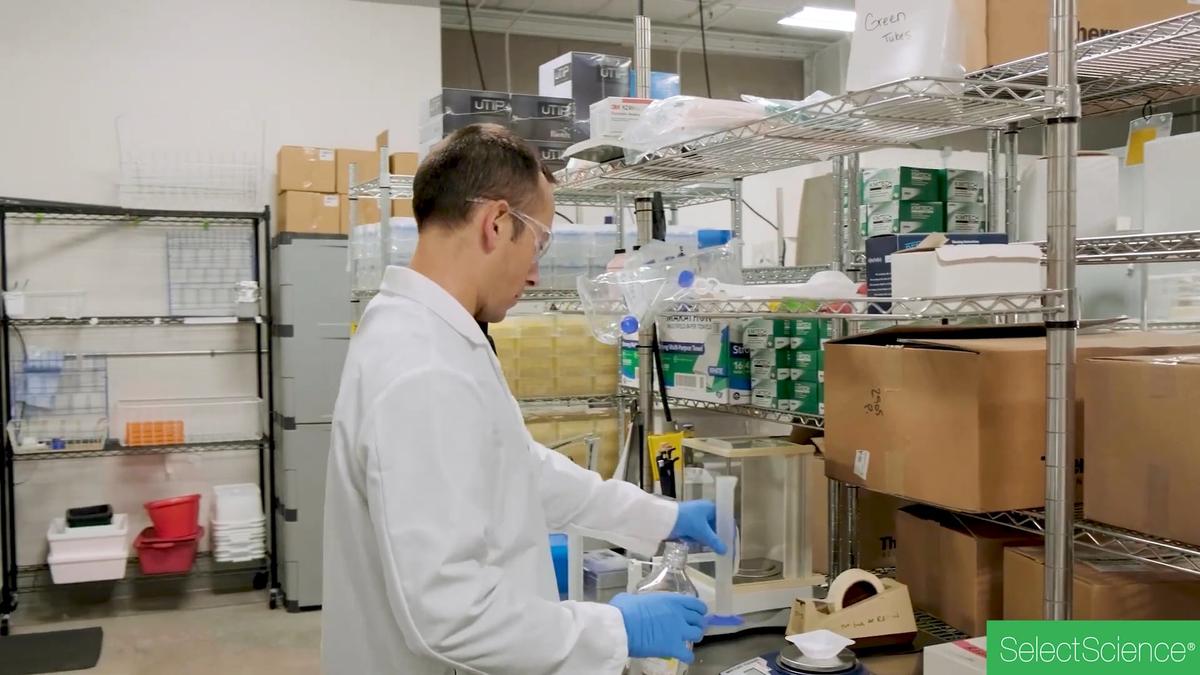
LGC Diagnostics & Genomics division ADLM video with Colin Hill
Topics covered in this video
- How is precision medicine evolving with genomics and AI at LGC Diagnostics and Genomics Division?
- What role does minimal residual disease testing play in modern precision oncology diagnostics?
- How is AI transforming clinical decision-making in precision medicine and patient care?
- Why are quality, standardization, and innovation critical for reliable diagnostic test results?
- What key diagnostics trends did Colin Hill highlight at ADLM 2026 in Anaheim, California?
Other videos from LGC Diagnostics & Genomics - SeraCare Clinical Diagnostics

Links
Tags
Frequently asked questions
Show frequently asked questions
How is precision medicine evolving with genomics and AI in modern diagnostics?
Precision medicine is entering a new era as genomics, artificial intelligence (AI), and quality assurance converge to enable more personalized and effective patient care. In this interview, Colin Hill of LGC’s Diagnostics and Genomics Division explains how these technologies are reshaping diagnostics, supporting precision oncology, and improving clinical decision-making while maintaining a strong focus on quality and standardization.
What role does minimal residual disease testing play in precision oncology and patient outcomes?
Colin Hill discusses minimal residual disease (MRD) testing as a key trend in precision oncology. MRD testing helps clinicians better understand a patient’s disease status, enabling more tailored treatment decisions. By integrating MRD testing into diagnostics with robust quality assurance and standardization, laboratories can generate more reliable results that support improved patient outcomes in oncology settings.
Why are quality, standardization, and innovation critical in diagnostics and genomics at LGC?
In the interview recorded at ADLM 2026 in Anaheim, California, Colin Hill emphasizes that quality, standardization, and innovation are essential for trustworthy diagnostics. Within LGC’s Diagnostics and Genomics Division, these principles underpin the development of assays and workflows, ensuring that genomics and AI-driven tools deliver consistent, reliable results that ultimately enhance clinical decision-making and patient care.