
Functional genomics and AI drive novel target discovery at AstraZeneca
9 Jun 2026
AstraZeneca's Functional Genomics Group strives to advance drug discovery using cutting-edge genomic technologies. Here, James Pilling shares how this team identifies and validates novel drug targets and discusses the need for complex, human-relevant disease models to prioritize the most promising hits. Pilling also highlights how AI is transforming the group's work by integrating functional genomics data with clinical and other internal datasets across AstraZeneca, enabling deeper insight into disease biology and target relevance, while fostering innovative science and funding for high-potential ideas.
This SelectScience interview was filmed at SLAS Europe 2026.
Video transcript
Show transcript
In the Functional Genomics Group of AstraZeneca, our primary goal is to discover new targets, mainly through new target identification. But alongside that, we also impact on projects in many other ways by elucidating the mechanisms of action in targets, looking at new combination strategies, new armoring strategies, hit characterization, and validating the targets that are coming out of various other screens as well.
Our main challenge is finding novel targets for disease and I think that's a challenge that applies across the whole of drug discovery. Novelty is obviously a big thing for us. In terms of how we do that, looking for more complex models and applying more complex disease models to our projects is a technical challenge. How we then deploy technologies to understand how our functional genomics screens apply to disease and combining data from across those modalities is also incredibly challenging.
Applying more human relevant models is having a great impact on how we're prosecuting our projects in terms of validating the targets that we're finding from our higher throughput screens. It's enabling us to understand very quickly which targets to prioritise and which targets are having the most desirable effect within a very human relevant and importantly disease relevant model.
So, I couldn't go through this interview without mentioning AI. So, that's having a huge impact on our work, both in terms of how we're interpreting data and how we're integrating data from our screens with data that's coming from work across AstraZeneca and across the AstraZeneca groups, so we're working very closely with the relevant disease areas with the Center for Genomics, as well to bring clinical data into our analysis, and AI is helping us integrate that and understand what it's telling us.
At AstraZeneca my main role is within the Functional Genomics Group but what I love about working there is the ability to develop outside of that role. One of my real passions is pushing forward innovative science and providing opportunities for great ideas to have funding and to be tested and applied and hopefully impact.
What does this video cover?
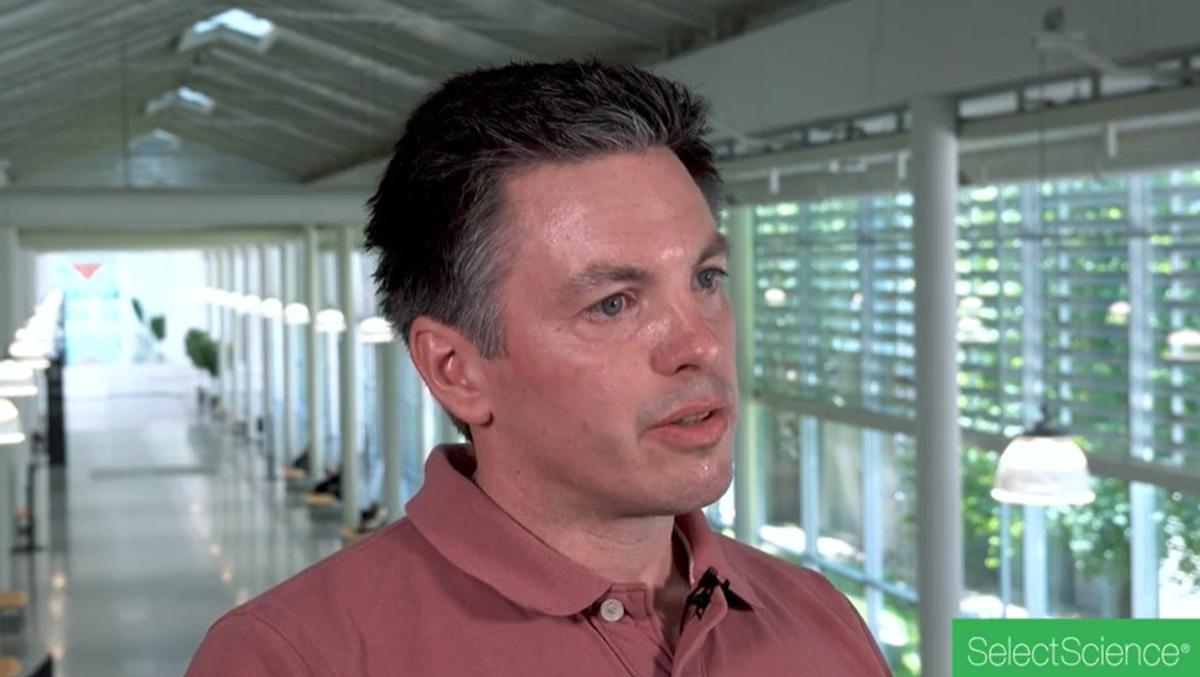
James Pilling was the co-chair of SLAS Europe 2026
Topics covered in this video
- How is AstraZeneca’s Functional Genomics Group using complex, human-relevant disease models to discover and validate novel drug targets?
- In what ways is AI transforming functional genomics screens and target selection at AstraZeneca?
- What are the main challenges AstraZeneca faces in identifying novel disease targets through functional genomics and high-throughput screening?