Determining Biological Significance in Targeted Proteomics at Duke University
9 Dec 2015Watch this video to hear Arthur Moseley, Director of the Proteomics and Metabolomics Core Facility at Duke University, discuss their LC/MS assay for tumor associated antigens. By combining multiple modes of chromatography Arthur Moseley and his team can exploit the different mechanisms to produce as thorough a separation as possible. In doing so, they can perform LC-LC in a reproducible manner, which allows clear differentiation between any variances that are due to analytical noise versus what is to do with a biological signal.
About the company

Waters
Waters Corporation, the premium brand in the analytical instruments industry since 1958, creates business advantages for laboratory-dependent organizations by delivering practical and sustainable scientific innovation to enable significant advancements in such areas as: healthcare delivery, environmental management, food safety, chemical materials analysis, and water quality worldwide. Waters helps customers make profound discoveries, optimize laboratory operations, deliver product performance, and ensure regulatory compliance by providing a connected portfolio of separations and analytical science, mass spectrometry, laboratory informatics, as well as thermal analysis products.
Related products
Request Quote for All Products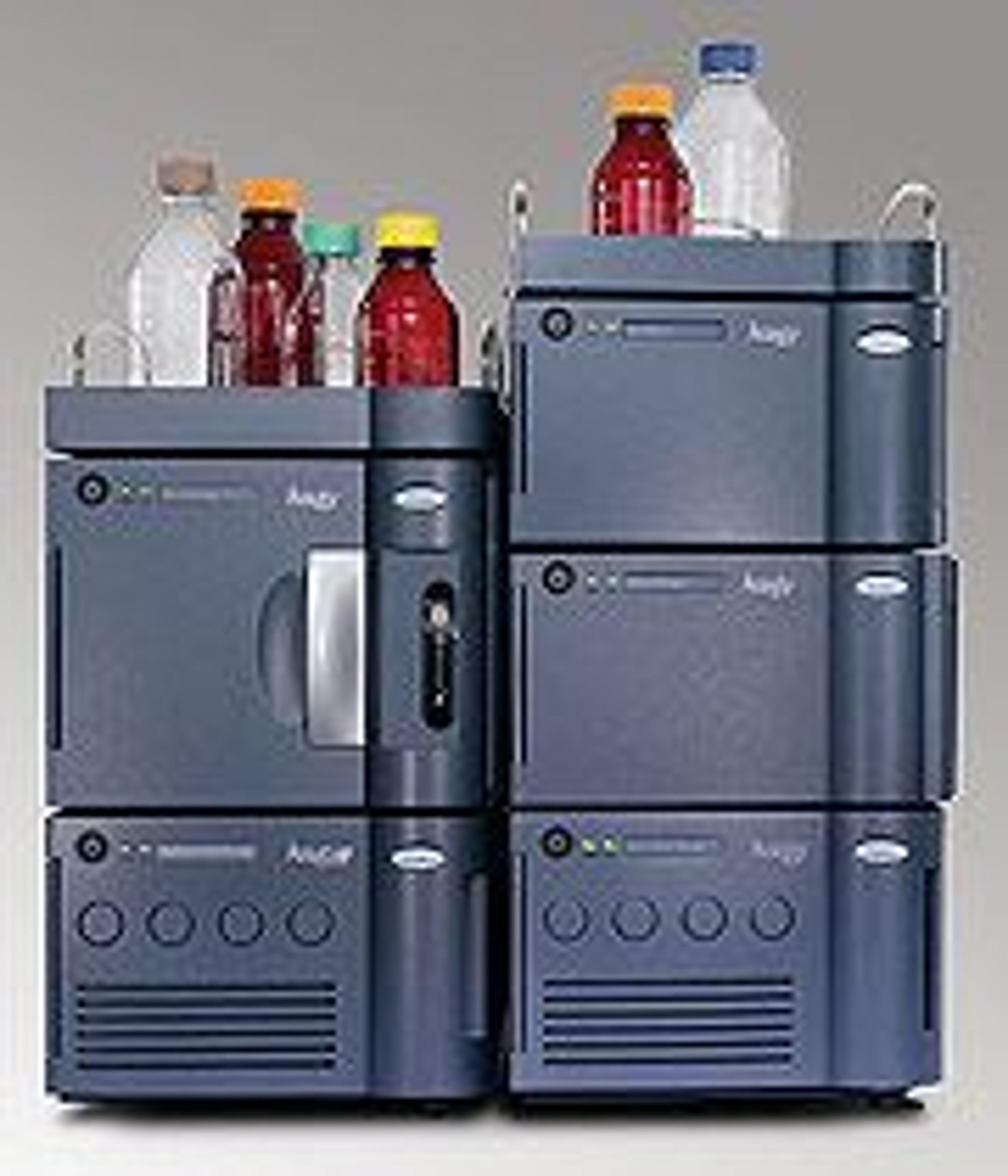
ACQUITY Systems with 2D Technology
WatersUPLC Technology Extends To Two Dimensions For chromatographers who require additional capabilities to increase their speed of analysis, gain sensitivity and selectivity, and perform orthogonal separations, ACQUITY UPLC® Systems can meet these needs by controlling multiple valves and pumps for 2D separations. The resolution, sensitivity, and throughput benefits of UPLC® Technology are even more important in 2D applications. Waters’ 2D Technology solutions for the ACQUITY UPLC, ACQUITY UPLC H-Class, and ACQUITY UPLC H-Class Bio systems are purpose-built, from plumbing to software to valve control, to provide reproducible and consistent results for specific applications. Features: • Ready-to-use configurations to get you to successful 2D UPLC experiments faster, with less troubleshooting and more confidence • ACQUITY UPLC systems and proven columns enable best-in-class selectivity and sensitivity