Combining Gene Editing with Functional Analysis to Elucidate Disease Pathways
24 Apr 2017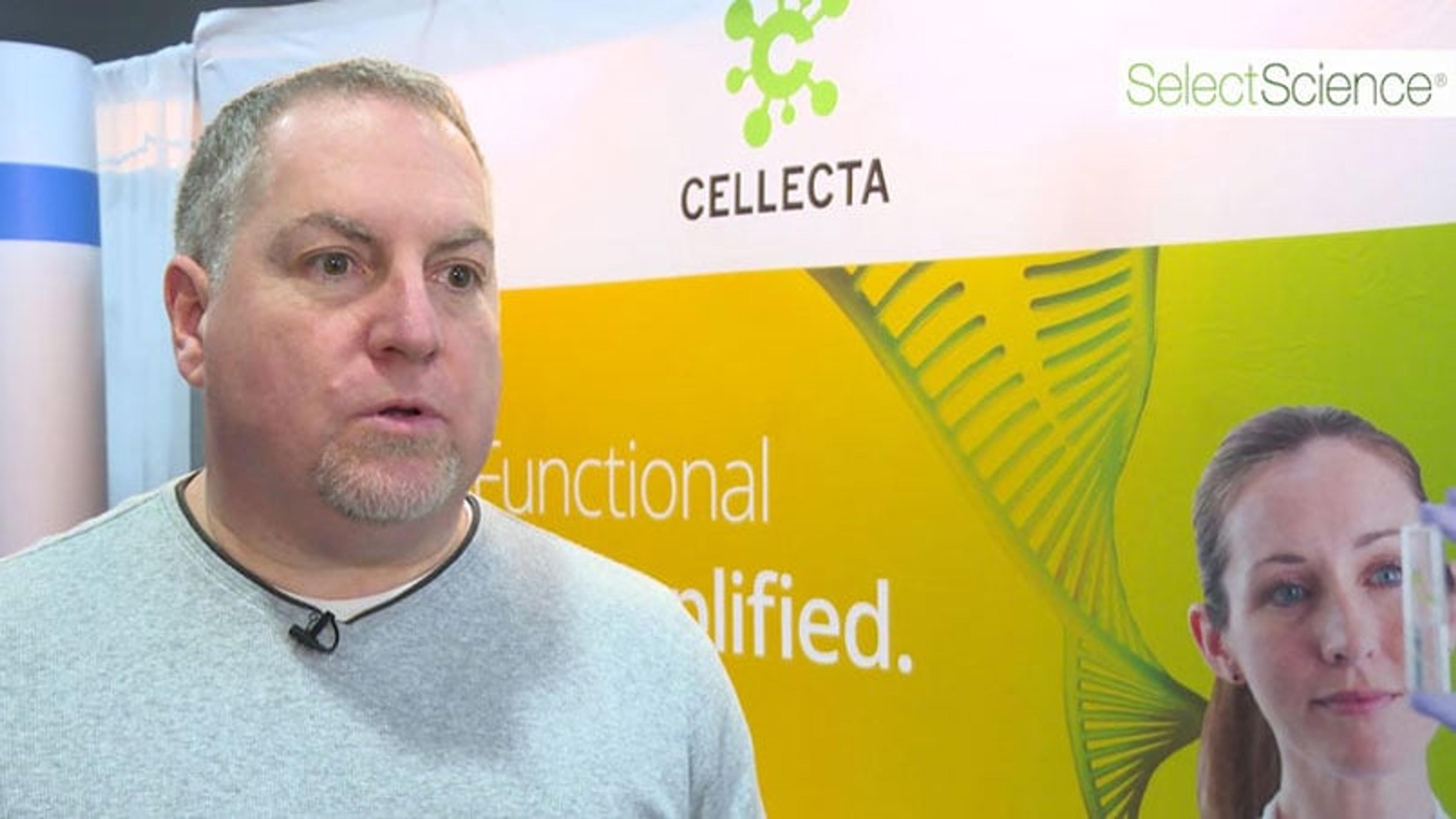
At AACR 2017, Paul Diehl, Ph.D., Chief Operating Officer, Cellecta, discusses how the company makes use of new technologies such as gene editing and gene synthesis in combination with next-generation sequencing to develop assays enabling researchers to investigate how gene function and gene expression are linked to tumorigenesis. He describes two approaches – loss-of-function screens and targeted RNA expression analysis – that Cellecta has developed to help investigators better understand that relationship.
Related Products
Request Quote for All Products
CRISPR Human Genome 80K Knockout Library (plasmid)
CellectaCellecta’s 80K Single-module Human Genome-Wide CRISPR Library was designed to be small enough (~80,000 constructs) to enable convenient genome-wide “dropout viability” screens with most standard human cell modules. With 4 sgRNAs targeting each gene, all of which have been designed using the latest criteria for effective guides described by Doench, et al. and containing the Cellecta-designed HEAT sgRNA structure which we have proven to generate more robust screening results than the standard sgRNA design, the library has deep enough gene coverage to generate efficient results. Genome-Wide Coverage with a Convenient Single 80K Module Single library with ~80,000 constructs targeting approximately 19,000 protein-coding genes Each gene is targeted by 4 sgRNAs designed based on Doench, et al. criteria Targets all human protein-coding genes—over 19,000 gene targets. The 80K Single-Module Human Genome-Wide CRISPR Library includes the following controls standard non-targeting controls non-specific control (sgRNA targeting introns throughout the genome) lethal sgRNA targeting generally essential genes (i.e., positive controls for dropout screens)

Driver-Map Human Genome-Wide Targeted Expression Profiling Kit (24 reactions)
CellectaThe DriverMap™ Human Genome-Wide Targeted Expression Profiling Assay enables researchers to simultaneously measure the expression level of almost 19,000 human protein-coding genes in a single assay. By combining highly multiplexed RT-PCR amplification with the depth and precision of next-generation sequencing (NGS) quantitation, the Driver-Map assay provides convenient, comprehensive, highly sensitive, and quantitative measurement of gene expression from total RNA. Don’t miss out on critical changes in gene expression. Capture the complete gene expression picture of your with Driver-Map targeted expression profiling kit. Easy-to-run, one-tube, single-day expression profiling directly from total RNA from any tissue, cell, or blood samples Efficient multiplex RT-PCR amplification for comprehensive profiles with greater detection of low abundant transcripts Robust, reproducible data from low-input RNA samples—start with as little as 10 pg total RNA