
Validation of In Vitro Assays to Measure Cytotoxicity in 3D Cell Cultures
28 Sept 2014This poster presents the results of experiments designed to improve performance of assays for 3D spheroids. The lytic capacity of assay reagents was enhanced by optimizing the detergent concentration and the parameters for physical disruption necessary to extract the desired markers. Improved protocols and reagents are described to measure ATP as a cell viability marker, caspase-3/7 activity as an apoptosis marker, glutathione as a marker of oxidative stress and HIF-1 promoter driven expression of luciferase as a hypoxia marker.
Related products
Request Quote for All Products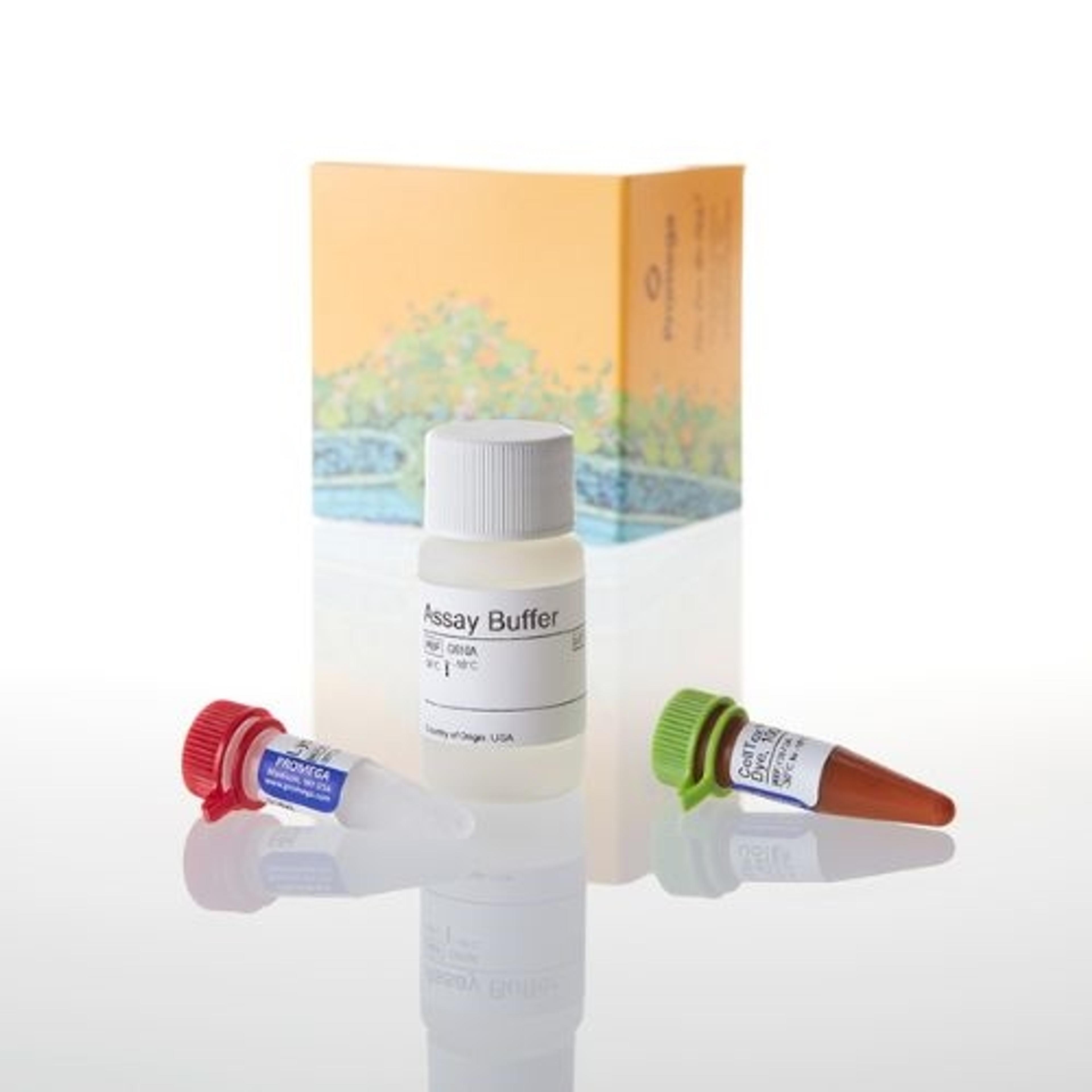
CellTox™ Green Cytotoxicity Assay
Promega Corp.The CellTox™ Green Cytotoxicity Assay measures changes in membrane integrity that occur as a result of cell death. The assay is intended to assess cytotoxicity in cell culture after experimental manipulation. The assay system uses a proprietry asymmetric cyanine dye that is excluded from viable cells but preferentially stains the DNA from dead cells. When the dye binds DNA released from cells, its fluorescence properties are substantially enhanced. Viable cells produce no appreciable increases in fluorescence. Therefore, the fluorescence signal produced by the binding interaction with dead cell DNA is proportional to cytotoxicity. The CellTox™ Green Dye is non-toxic to cells, and the signal remains constant after exposure of 72 hours, making it ideal for determining toxic effects of treatments throughout an extended exposure or as an endpoint determination. Features - Benefits • Accurate Cytotoxicity Determination: The CellTox™ Green Dye stably binds DNA of cells that have lost membrane integrity throughout 72-hour exposure and won’t underestimate cytotoxicity. • Kinetic Cytotoxicity Measures: Measure cytotoxicity at convenient time points from the same sample well to detect onset of toxicity with no duplication of plates. • Simple and Flexible Protocols: Add assay reagent directly to cells prior to plating or with dosing media to perform kinetic cytotoxicity measurements, eliminating a reagent dispensing step, or add diluted dye directly to cell culture wells as an endpoint add-mix-measure assay. • Multiplexing-Compatible: Get more informative data per well and reduce cell culture expenses by multiplexing with fluorescent and luminescent cell-based assays in the same well with no sample manipulation. • Easily Automated: Easily scale from 96- to 1536-well plate formats with “no-addition” or “single-addition” protocols. Applications Determine cytotoxic effects of treatments on cells in culture after long-term exposure.
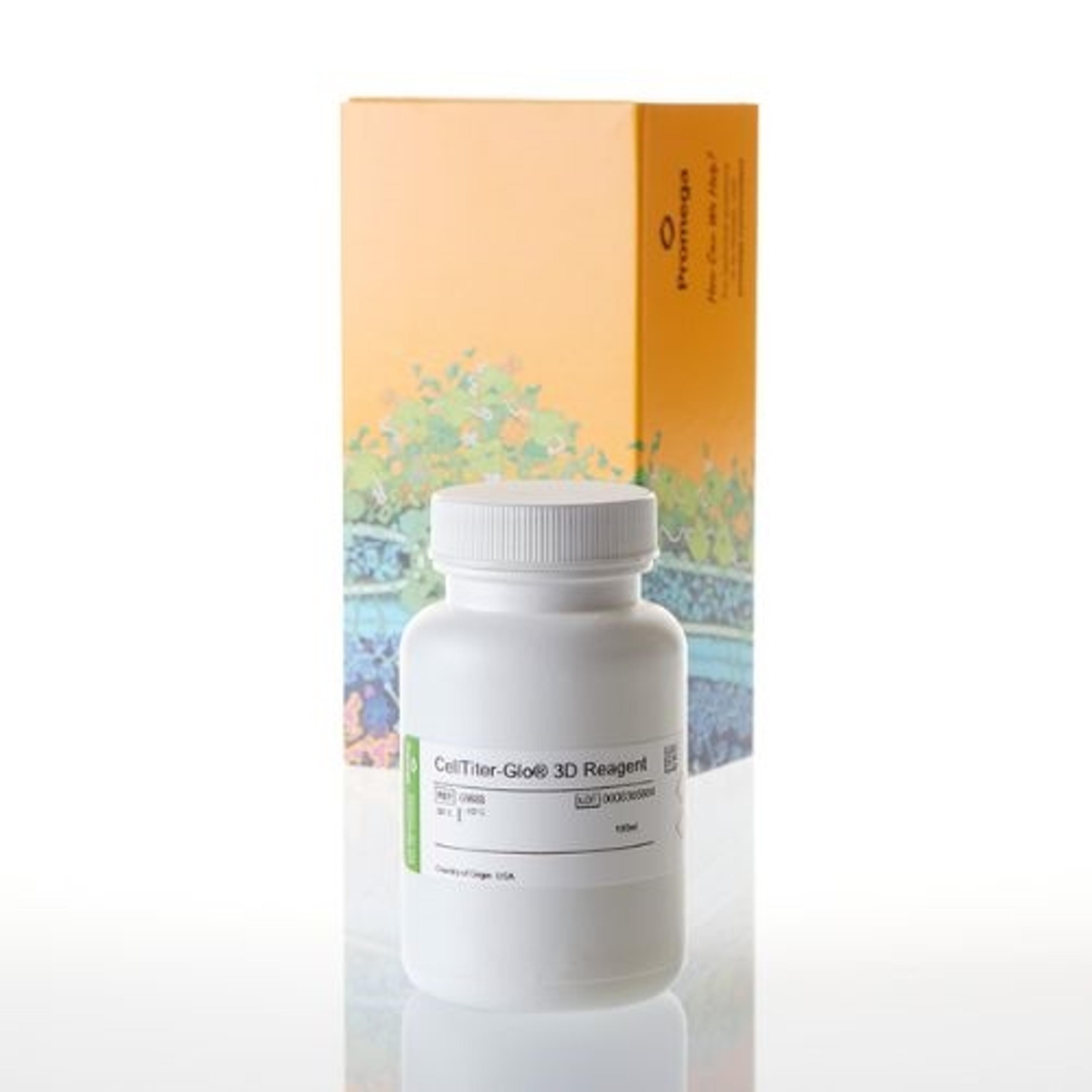
CellTiter-Glo® 3D Cell Viability Assay
Promega Corp.The CellTiter-Glo® 3D Cell Viability Assay is a homogeneous method to determine the number of viable cells in 3D cell culture based on quantitation of the ATP present, which is a marker for the presence of metabolically active cells. This ready-to-use reagent is based on the original CellTiter-Glo® Luminescent Cell Viability Assay chemistry and eliminates the need to combine buffer with lyophilized substrate when preparing reagent. The CellTiter-Glo® 3D Cell Viability Assay is formulated with more robust lytic capacity and is designed for use with microtissues produced in 3D cell culture. The homogeneous assay procedure involves addition of a single reagent (CellTiter-Glo® 3D Reagent) directly to cells cultured in serum-supplemented medium. Cell washing, removal of medium and multiple pipetting steps are not required. This assay is compatible with multiwell-plate formats, making it ideal for automated high-throughput screening (HTS). The CellTiter-Glo® 3D Assay has been used successfully with 3D microtissue cell culture produced via hanging-drop plates, ultra-low attachment plates, Matrigel®-coated plates, agarose-coated plates, cultures suspended in methylcellulose and Alvetex® plates. Features & Benefits: Robust Penetration into Microtissues - Improved lytic capacity allows use over a broad range of microtissue sizes compared to other viability assay methods. Ready-to-Use Reagent - No mixing of components required; simply thaw, equilibrate to room temperature and "add-mix-incubate-measure". Convenient for HTS applications. Fast Results - Data can be recorded in 30 minutes or less after adding reagent, quicker than when using colorimetric or fluorometric viability assays. Superior Sensitivity - The signal-to-background ratio of this assay applied to microtissues is much greater than that of standard colorimetric and fluorometric assays. Flexible Format - The assay can be used with various multiwell formats (96-well and regular or low-volume 384-well). Data can be recorded by luminometer, CCD camera or other imaging devices capable of reading luminescence in multiwell plates. Glow-Type Signal - Stable luminescent signal half-life >3 hours, depending on cell type and culture medium used, allows batch mode or consecutive processing of multiple plates. Applications: Cell viability assays with 3D microtissue cell culture or standard cell culture samples. Cytotoxicity assays with 3D microtissue cell culture or standard cell culture samples.