
Time-dependent plasticity in high-temperature pillar compression
24 Jul 2023Structural materials in demanding applications can be subject both to high stresses and high temperatures simultaneously. The combination of stress and temperature in metals often leads to time-dependent plastic responses, or creep, which can easily lead to premature failure. Creep at temperature is commonly studied with bulk-scale specimens, but can also be done at the microscale. In-situ SEM micro-pillar compression allows specific regions of the microstructure, such as individual grains, to be targeted and allows for high-resolution characterization of the deformation mechanisms.
In this application note, Bruker Nano discusses in-situ SEM micro-pillar compression tests of a Ni-based superalloy, IN718, at 650°C tested with three types of load functions designed to probe the time-dependent response. These include a linear quasistatic loading, a stress relaxation test, and a strain rate jump test. The use of in-situ SEM has additional synergy with high-temperature testing, as the high vacuum of the SEM helps protect the material from oxidation during testing.
Related products
Request Quote for All Products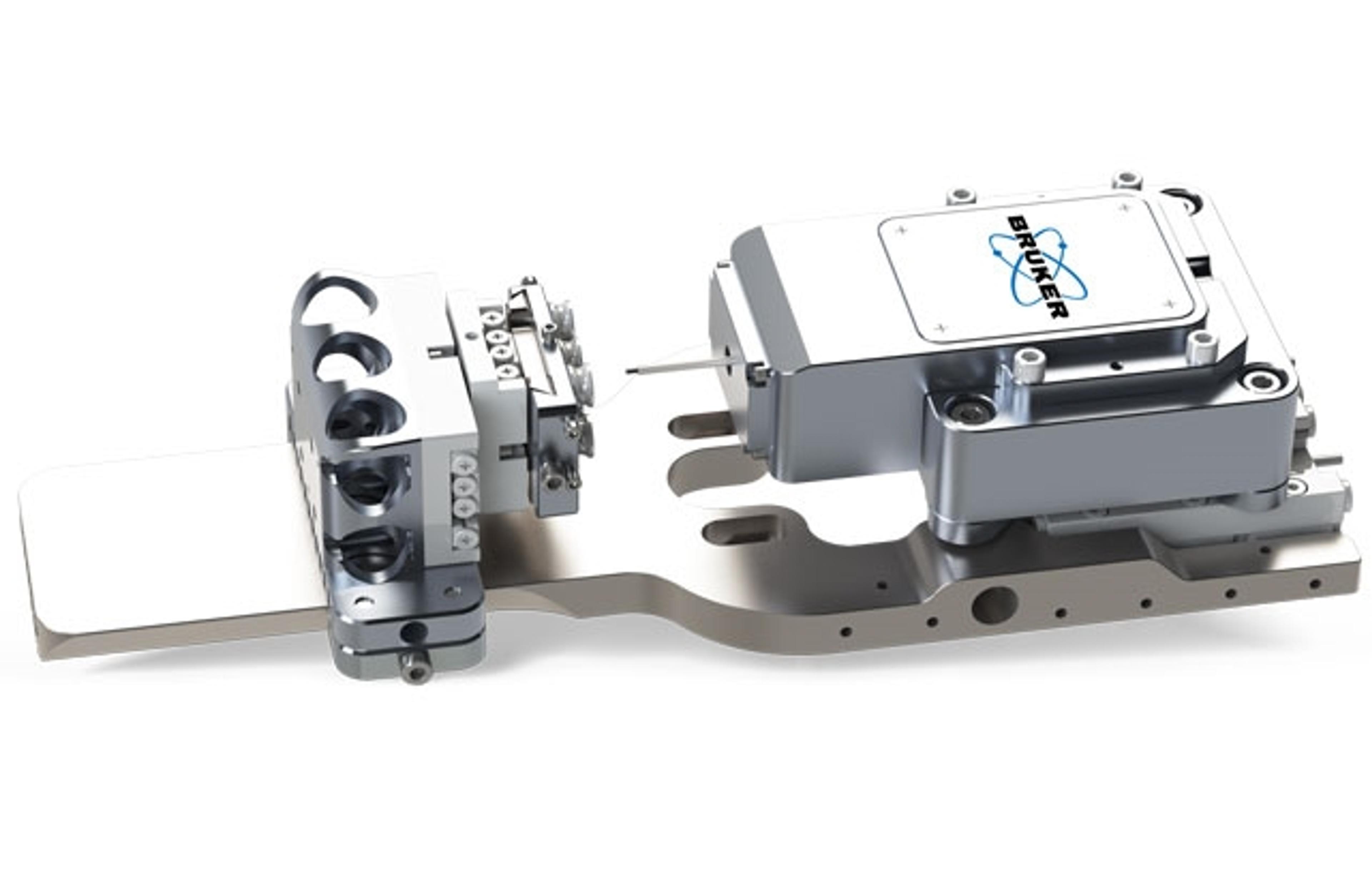
Hysitron PI 89
Bruker Nano Surfaces and MetrologyThe Hysitron PI 89 SEM PicoIndenter leverages the advanced imaging capabilities of scanning electron microscopes (SEM, FIBSEM, PFIB), making it possible to perform quantitative nanomechanical testing while simultaneously imaging. Enabled testing techniques include nanoindentation, tensile testing, pillar compression, particle compression, cantilever bending, fracture, fatigue, dynamic testing, and mechanical properties mapping.