
SUPELCO® Application Compendium: Forensic, Clinical and Bioanalytical Applications
17 Jul 2014This application compendium presents a series of technical articles covering forensic, clinical, and bioanalytical applications. Topics include SPME of VOCs in Breath, Analysis of Vitamin D Metabolite Critical Pairs in Serum, Chiral LC-MS of Methamphetamine, and more.
Related products
Request Quote for All Products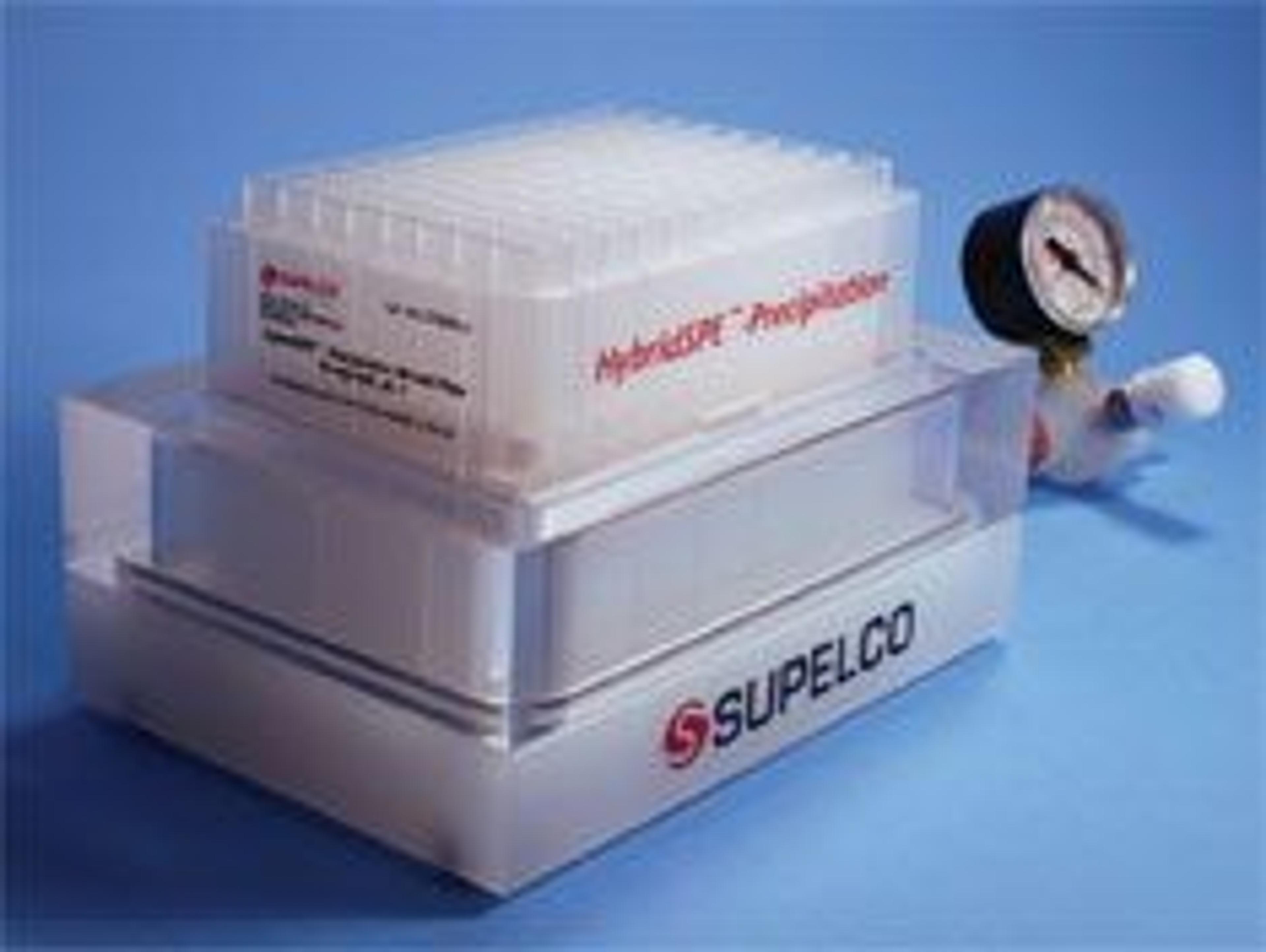
HybridSPE®-Precipitation, 96-well Plate, pk of 1
Sigma-Aldrich SupelcoPatent pending HybridSPE – Precipitation (HybridSPE-PPT) technology is a simple and generic sample prep platform designed for the gross level removal of endogenous protein and phospholipid interferences from biological plasma and serum prior to LC-MS or LC-MS/MS analysis. Biological plasma or serum is first subjected to protein precipitation via the addition and mixing of acidified acetonitrile. Precipitated proteins are then removed by centrifugation and the resulting supernatant is loaded on the HybridSPE-PPT 96-well plate or cartridge which acts as a chemical filter that specifically targets the removal of endogenous sample phospholipids. The phospholipid retention mechanism is based on a highly selective Lewis acid-base interaction between the proprietary zirconia ions functionally bonded to the HybridSPE-PPT stationary phase and the phosphate moiety consistent with all phospholipids. The resulting eluent is ready for immediate LC-MS or LC-MS-MS analysis. An alternative “In-well Precipitation” method is available for the HybridSPE-PPT 96-well version in which biological plasma/serum is first added to the 96-well plate followed by acidified acetonitrile (precipitation agent). After a brief mixing/vortexing step, vacuum is applied to the 96-well plate. Because the 96-well version contains a series of low porosity hydrophobic filters/frits, the packed-bed filter/frit assembly acts as a depth filter facilitating the concurrent removal of both phospholipids and precipitated proteins during the extraction process.

Astec CHIROBIOTIC™ V2 Chiral HPLC Column
Sigma-Aldrich SupelcoThe polar organic and the polar ionic modes have become increasingly popular largely because of their ideal compatibility with MS detection and preparative LC. Two years of extensive research at Astec in understanding these mechanisms has resulted in new possibilities for extending their effectiveness even further. Important changes in linkage chemistries and the silica and the silica have now led to the new CHIROBIOTIC V2 and T2 chiral stationary phases – columns of choice for those really difficult separations, and especially, for preparative LC. These new phases extend the capabilities of the series. They are designed to be used in the optimization process since they offer some distinct advantages in the polar ionic mode and polar organic mode. The standard CHIROBIOTIC phases remain the columns of choice for method development screening and for reversed phase separations. Read about the Astec CHIROBIOTIC being applied to Drug testing for Amphetamine and Methamphetamine Abuse here. Features: New extension for the CHIROBIOTIC series Enhanced selectivity and capacity in the polar organic mode and polar ionic mode Capacity increases of 2 to 20 fold over standard CHIROBIOTIC phases Most beneficial for basic molecules Neutral molecules can often be run in pure methanol
Ascentis® Express RP-Amide HPLC Columns
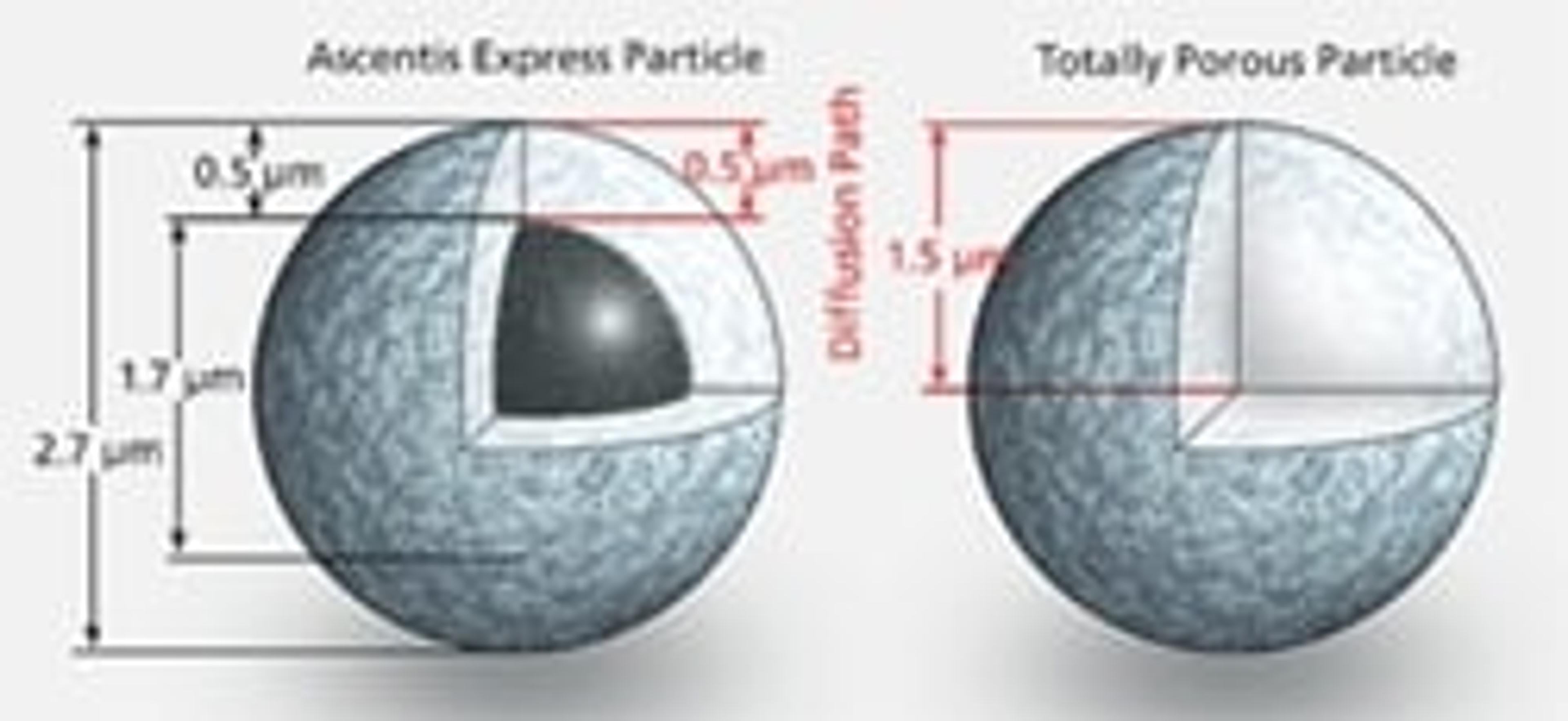
Sigma-Aldrich SupelcoAscentis Express RP-Amide HPLC columns are the most recent product additions to the Supelco HPLC product line. Combining an embedded polar group (EPG) stationary phase with the Fused-Core particles, Ascentis Express RP-Amide provides a host of useful benefits to the HPLC chromatographer. Ascentis Express RP-Amide is a blend of modern phase technology and innovative particle technology. The Fused-Core particle provides benefits in terms of speed, resolution, sensitivity, and ruggedness. The one-step RP-Amide bonding chemistry provides benefits in terms of selectivity, aqueous stability, and improved peak shape for bases. Read about how this product was used to analyze Riboflavin and impurities here. Benefits: Alternative reversed-phase selectivity to C18 Improved peak shape for bases 100% aqueous compatible reversed-phase column Column Details: Chemistry: RP-Amide Particle Size: 2.7, 5.0 μm Pore Size: 90 Å Length: 20, 30, 50, 75, 100, 150, 250 mm ID: 2.1, 3.0, 4.6 mm