
ResourceGeneral Lab
Particle Characterization: Flow Pressurization Eliminates Bubbles for More Accuracy
24 Nov 2014Bubbles create major issues when characterizing nanoparticles in solution because the characterization techniques typically utilize light scattering, specifically when determining size distribution and stability. Bubbles are much larger than nanoparticles and will scatter exponentially more light while interfering with particle movement, giving inaccurate results. This application note describes how the DelsaMax ASSIST can prevent these issues when using light scattering techniques.
Related products
Request Quote for All Products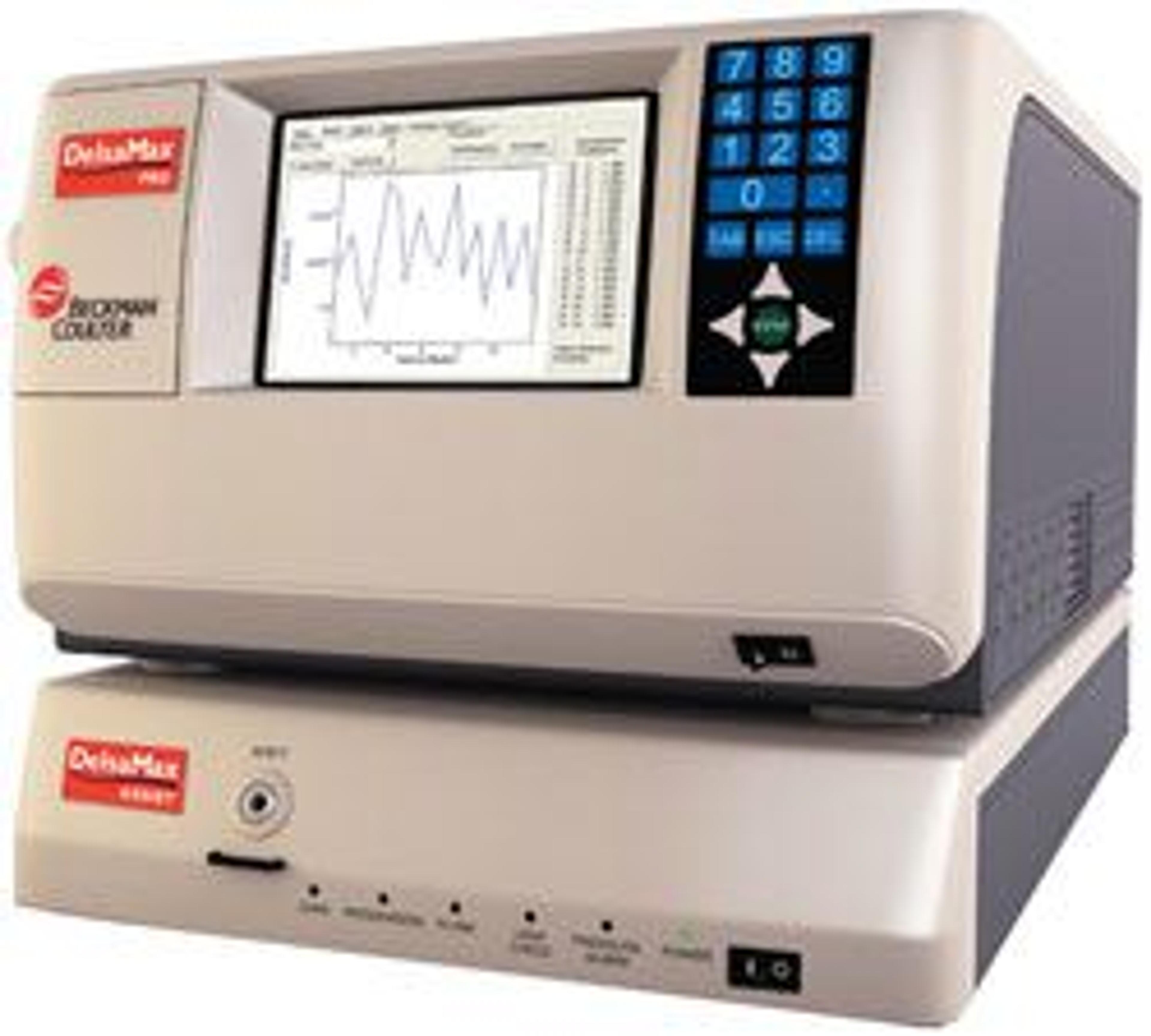
DelsaMax Series - Particle Analyzers
Beckman Coulter Life SciencesWith unprecedented speed, the flexibility to analyze the lowest sample volumes available, and a level of precision and accuracy you can always count on, the new DelsaMax Series helps you advance your research like never before.
Links
Tags
NanotechnologyNanotechnology, or nanotech, is an engineering technique using molecular scale functional systems. Applications of nanotechnology include medicine and medical devices, electronics, air and water purification, food science and energy production.Particle CharacterizationParticle characterization instruments are used to determine particle size distribution, shape, surface area, zeta potential, density and porosity of particles and materials. Multiple tecchniques are available for determining particle size, shape and count including dynamic light scattering (DLS), laser diffraction, electrozone (Coulter technique), imaging particle analysis and single particle optical sensing. Determine the density of your material with a gas pycnometer or examine its surface area and porosity with gas adsorption analyzers and mercury porosimeters. Find the best particle characterization instruments in our peer-reviewed product directory: compare products, check customer reviews and receive pricing direct from manufacturers.Dynamic Light ScatteringDynamic light scattering is used to measure the size distribution of particles in suspension by analyzing the way light scatters off them. It is commonly used in materials science, nanotechnology, and protein characterization. Browse our peer-reviewed product directory to find the best dynamic light scattering systems, compare products, check reviews, and get pricing directly from manufacturers.NanoparticlesNanoparticles are between 1-100nm in size. Nanoparticles can be used for a wide variety of applications including biomedical, catalysis and electronics.