
Generating a Stribeck curve in a reciprocating test (HFRR/SRV-type test)
16 Jul 2023This application note from Bruker discusses the Stribeck curve, which represents the frictional characteristics of a liquid lubricant under different conditions. The curve is divided into boundary, mixed, and hydrodynamic regimes based on film thickness to surface roughness ratio. Traditional tests used a journal-bearing geometry, but there is interest in using reciprocating test modes like the high-frequency reciprocating rig (HFRR) to evaluate lubricant friction. The note describes a test setup using a polished cylindrical dowel pin and a flat plate with a Bruker universal mechanical tester (UMT)-3 instrument. Reciprocating tests allow for evaluating lubricants in real-world scenarios. The conclusion highlights the capabilities of Bruker's UMTs for generating Stribeck curves in reciprocating tests, relevant for lubricant development in various engineering applications.
Related products
Request Quote for All Products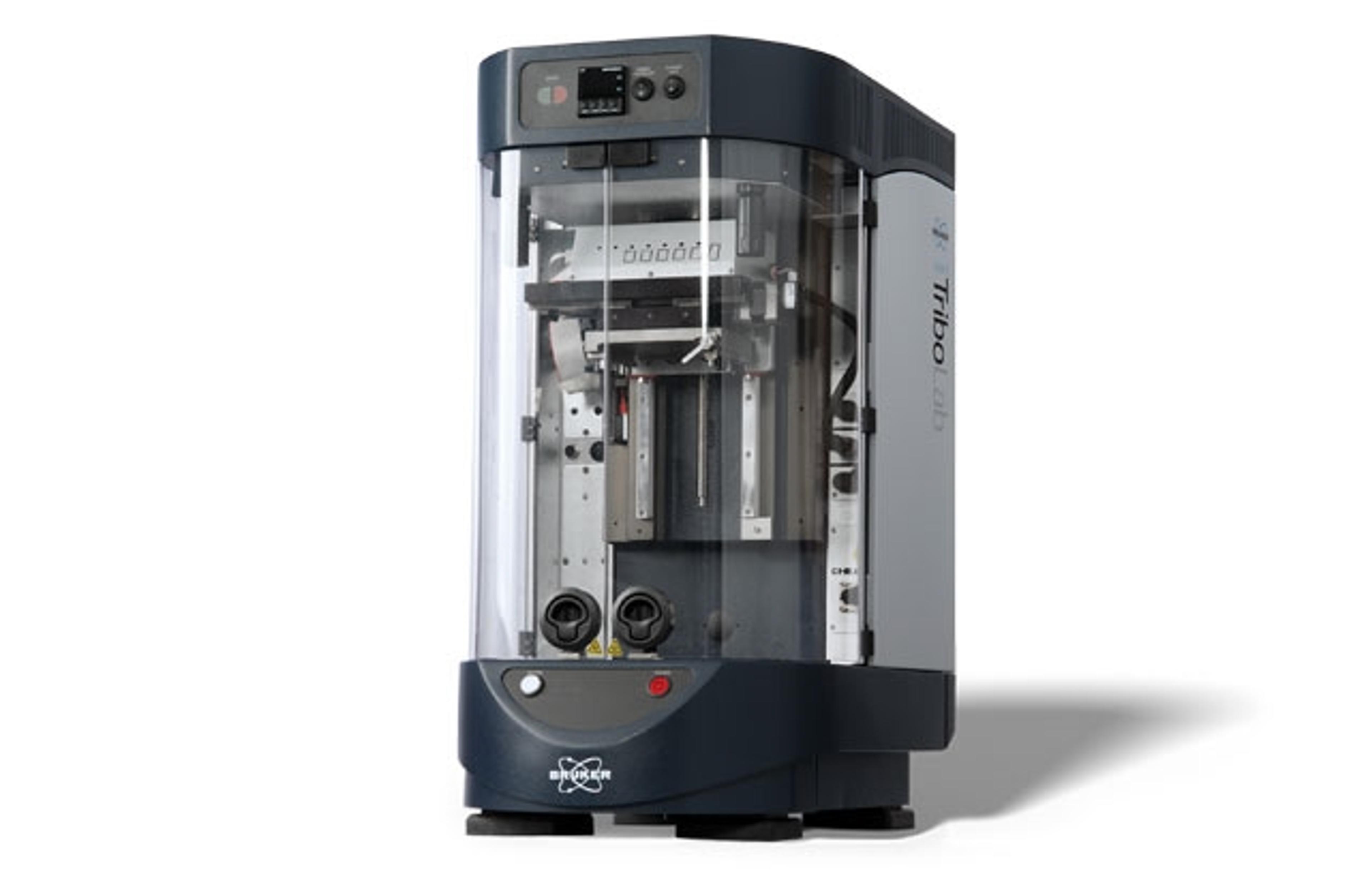
UMT TriboLab
Bruker Nano Surfaces and MetrologyBruker’s Universal Mechanical Tester (UMT) platform has been the most versatile and widely used tribometer on the market since the first model debuted in 2000. Newly designed from the ground up, the UMT TriboLab has a unique modular concept that harnesses more functionality than ever before. In fact, the UMT TriboLab offers higher speeds, more torque, and better force measurement than any of its competitors, plus it introduces powerful new features for improved efficiency and ease-of-use.