Evaluation of Feed Flow Geometry in Hydrosart® Cassettes with Protein Solutions

Evaluation of Feed Flow Geometry in Hydrosart® Cassettes with Protein Solutions

24 Nov 2015

Sartorius Sartocon® cassettes are available with the option of two internal flow geometries. Sartocon cassettes with “E” type spacers are designed for high protein concentration applications and for viscous products; while the cassettes with “ECO” screens are designed for protein concentrations less than 15% (150g/L) and for other products with low viscosity [<3cp (3mPas)]. With current mAb harvest targets of ≥5 g/L and increased use of subcutaneous dosages, protein concentrations often approach 200 g/L or more. It is therefore important to understand when to use each type of cassette and the implications. This evaluation demonstrates that “ECO” channel cassettes can achieve twice the flux at 2rd the feed flow rate of the “E” channel cassette.

SARTOFLOW® Slice 200 Benchtop System

Sartorius Group

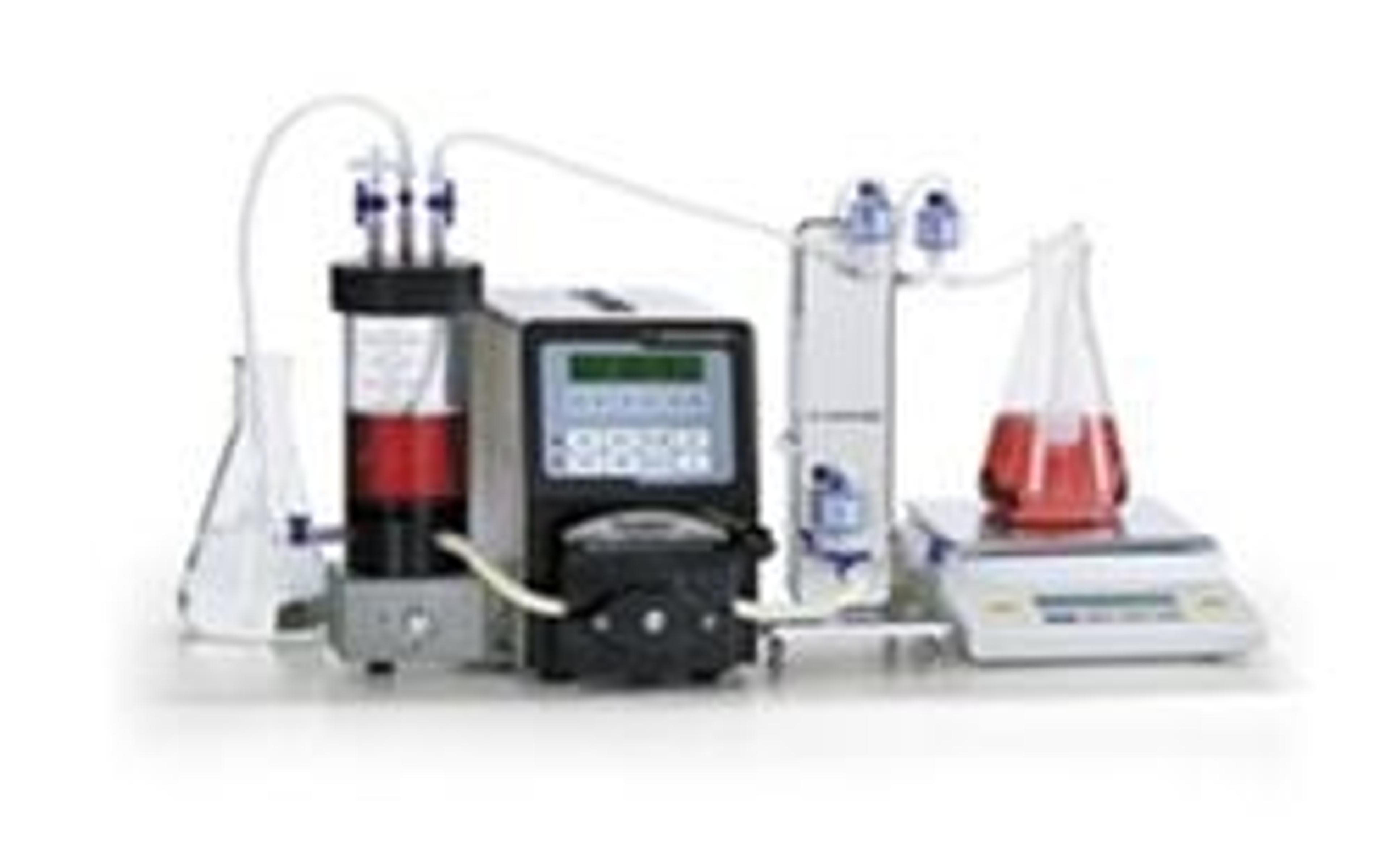
SARTOFLOW® Slice 200 Benchtop Crossflow system complete with Pump, Sartocon Slice 200 holder, 500 ml Vessel, Talent TE 4101 Balance, Pressure sensors, Fittings, Hose, Stir bar, Sartowedge Software, Torque wrench and cables. Also available new Sartocon® Slice 200 cassettes. The low hold-up volume Crossflow cassette filter for low volume applications.

(1)

Links

Tags

AntibodiesAntibodies are used in techniques such as confocal and fluorescence microscopy, flow cytometry, ELISA, ELISPOT, immunohistochemistry, western blotting and immunopreciptation. Select specific antigen reactivity, high specific affinity, low non-specific binding, monoclonal or polyclonal, primary or secondary antibodies and associated conjugates such as an enzyme or dye for visualization.Protein PurificationProtein purification is a vital step in drug discovery, therapeutics, biotech and life science research. The purification process typically involves subcellular or membrane protein extraction with cell lysis kits, separation of proteins from cell debris by filtration or spin columns, and the isolation of proteins of interest from other proteins and impurities with affinity purification (including fusion protein tags and antibody binding proteins A, G and L), immunoprecipitation or chromatographic methods, such as ion exchange, size exclusion and immobilized metal affinity chromatography. All purification methods come in multiple formats for your laboratory needs, including agarose or magnetic beads, resins, columns and filter plates. Find the best protein purification equipment in our peer-reviewed product directory: compare products, check customer reviews and receive pricing direct from manufacturers.Protein QuantificationThe detection and quantification of proteins in a sample is vital across life sciences, pharmaceutical research and clinical diagnostics, and a variety of equipment is available to scientists to simplify the workflow. Proteins of interest can be easily labeled and detected on light-based detection instruments. Immunoassay kits allow you to identify a specific protein of interest and protein detection beads or antibody microarrays allow you to identify multiple specific proteins at once. Protein interactions and enzyme activity can also be monitored with protein-protein interaction assays. Additionally, the biophysical characterization of proteins is made easy with biokinetic analyzers. Find the best protein detection and quantification products in our peer-reviewed product directory: compare products, check customer reviews and receive pricing direct from manufacturers.Monoclonal AntibodiesMonoclonal antibodies (mAbs) are lab-made molecules that can bind to specific antigens on cells, making them highly effective in treating cancers, autoimmune diseases, and infections. These targeted therapies are transforming the treatment landscape for many conditions. Browse our peer-reviewed product directory to find monoclonal antibodies for research and clinical applications; compare products, check reviews, and get pricing directly from manufacturers.Drug DosageDosage is the size or frequency of the administration of a drug. Determination of the dosage of a drug is critical in pharmaceutical development to ensure the optimum balance between efficacy and toxicity.Protein InteractionsProtein interactions are essential for understanding cellular processes, as proteins work together to carry out biological functions. Studying protein interactions can provide insights into disease mechanisms, drug development, and cell signaling pathways. Explore the best tools for protein interaction research in our peer-reviewed product directory; compare products, check reviews, and get pricing directly from manufacturers.
Evaluation of Feed Flow Geometry in Hydrosart® Cassettes with Protein Solutions