
Depyrogenation of Vivaspin® Turbo 15 in Comparison to Ultrafiltration Devices with a Regenerated Cellulose Membrane
29 Oct 2014Endotoxins (or Lipopolysaccharides) are a component of gram-negative bacteria cell wall, an often unwanted impurity in laboratory based research due to their inflammatory and pyrogenic effect on mammalian immune systems. Here, the background levels of endotoxin from manufacturing are quantified in both Vivaspin® Turbo 15 devices and 15 ml ultrafiltration devices from another supplier (Supplier A). Additionally, both types of devices were subjected to treatment of 1N NaOH, which is commonly used in laboratories as a basic chemical for depyrogenation. This application note compares the performance of the two devices in both flow rate and recovery.
Related products
Request Quote for All Products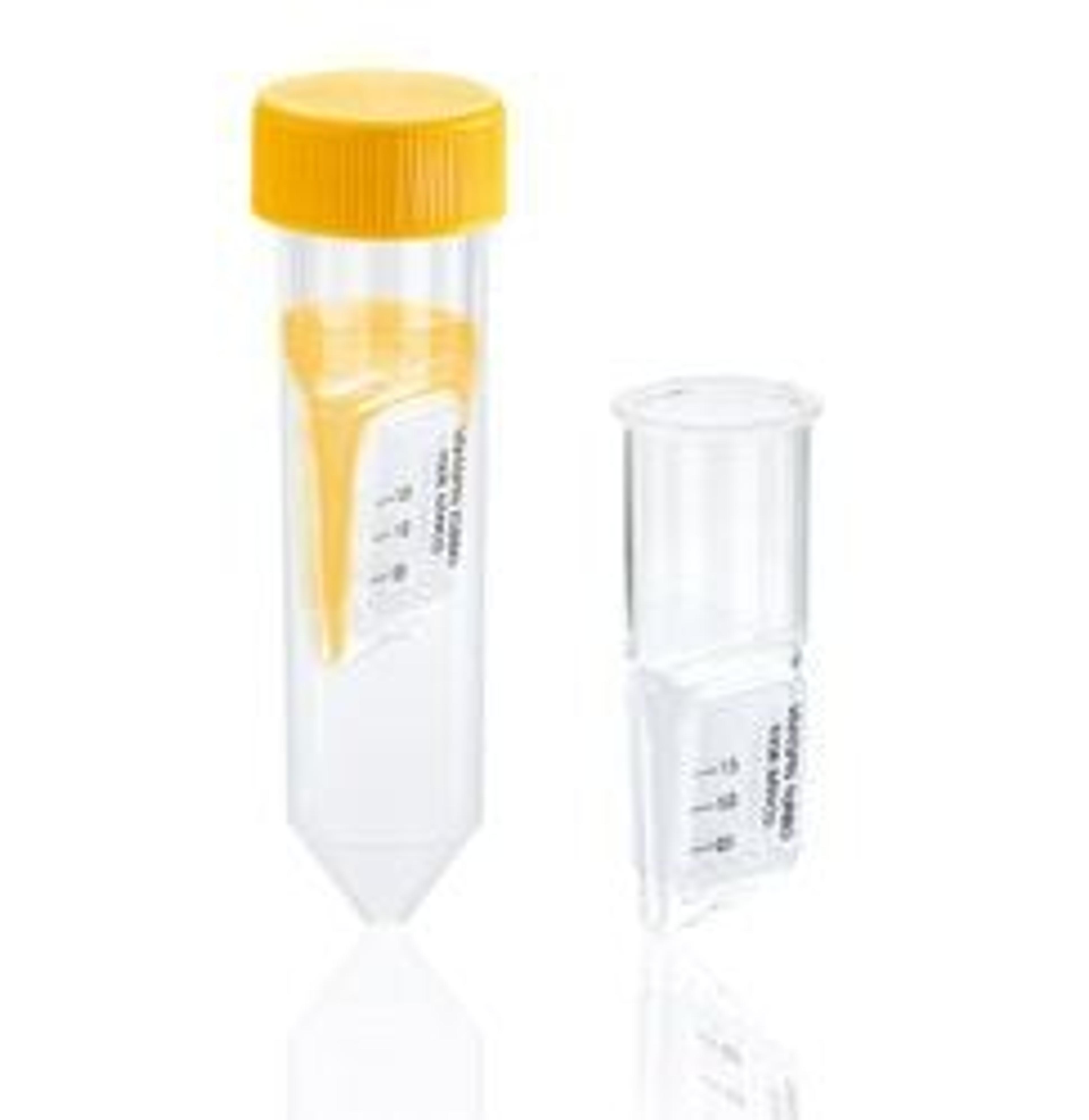
Vivaspin® Turbo 15 centrifugal concentrators
Sartorius GroupVivaspin® Turbo 15 centrifugal concentrators offer the optimal solution to any concentration or buffer exchange application with their broad range of MWCOs. Highest flow rates are achieved due to their twin vertical membranes which minimize protein polarization and subsequent fouling of the membrane. Additionally, their sleek internal profile ensures maximum process speeds right down to the last 100 μl. Working Principle Centrifugation provides the vector to clear solvent and micro molecules through an ultrafiltration membrane to separate macromolecular species and solvents primarily on the basis of size. It is particularly appropriate for the concentration of macromolecules and can also be used to purify molecular species or for solvent exchange. Ultrafiltration is a non denaturing method that is more efficient, flexible and gentle than alternative processes. High Performance In a single spin, 15 ml solutions can be concentrated up to 150x. Samples can be typically concentrated in 10–30 minutes with macromolecular recoveries in excess of 95%. Optimized Design for Fastest Concentration Results The Vivaspin® Turbo’s optimized design, its sleek internal profile, ensures maximum process speeds right the way down to the last few micro liters. The UV joining technology allows for a smooth joint transition between membrane and plastic housing, allowing all of your valuable sample to be collected into the unique pipette friendly dead stop pocket. The ultimate in centrifugal ultrafiltration technology: – Sleek internal design: Ensures maximum process speed for the complete filtration – Large twin vertical membranes: A fouling of the membrane is avoided due to minimized protein polarization. – Unique angular dead stop pocket: The 100 μl dead stop pocket is easy to access with standard 200 μl pipette tips due to its patent pending angular design. It eliminates the risk of the sample running to dryness while allowing highest recovery of the concentrate.Optimized Choice of Materials for High Chemical Compatibility The combination of Polyethersulfone (PES), Polystyrene and Polypropylene (PP) allows sterilization and depyrogenization of the Vivaspin® Turbo 15 units. Polyethersulfone membranes are preferred for their low fouling characteristics, exceptional flux and broad pH range compatibility. Applications Sample preparation – Sample (protein, lipid, virus, nanoparticle, macromolecule) concentration – Desalting | Dialysis – Rebuffering Your sample is often the result of several months of research. Your sample is valuable, and Vivaspin® Turbo 15 provides highest recovery. Summary For scientists and lab technicians who need to quickly and safely concentrate biological samples of 4 ml to 15 ml up to 150 fold, Sartorius offers the Vivaspin® Turbo 15 ultrafilters. Unlike competitive ultrafiltration units, Vivaspin® Turbo 15 is equipped with an angular dead stop pocket, that enables reproducible and complete recoveries, while being the fastest in the market.