Correlation of Mutations Detected in Liquid and Tissue Biopsies Using the Maxwell® RSC

Correlation of Mutations Detected in Liquid and Tissue Biopsies Using the Maxwell® RSC

7 Jan 2016

This application note describes a method for purifying nucleic acids using the Maxwell® RSC instrument, based on novel surface and binding chemistries. Circulating cell-free DNA (ccfDNA) in plasma can be used to detect biomarkers that show great promise for diagnosis and monitoring of cancer, giving rise to the possibility of liquid biopsies that obviate the need for invasive tissue collection. This protocol is completely automated, decreasing the chance of user error or contamination and sixteen samples of up to 1ml can be processed in 80 minutes, making next generation sequencing of DNA a viable potential method for screening plasma in a form of liquid biopsy.

QuantiFluor® dsDNA System

Promega Corp.

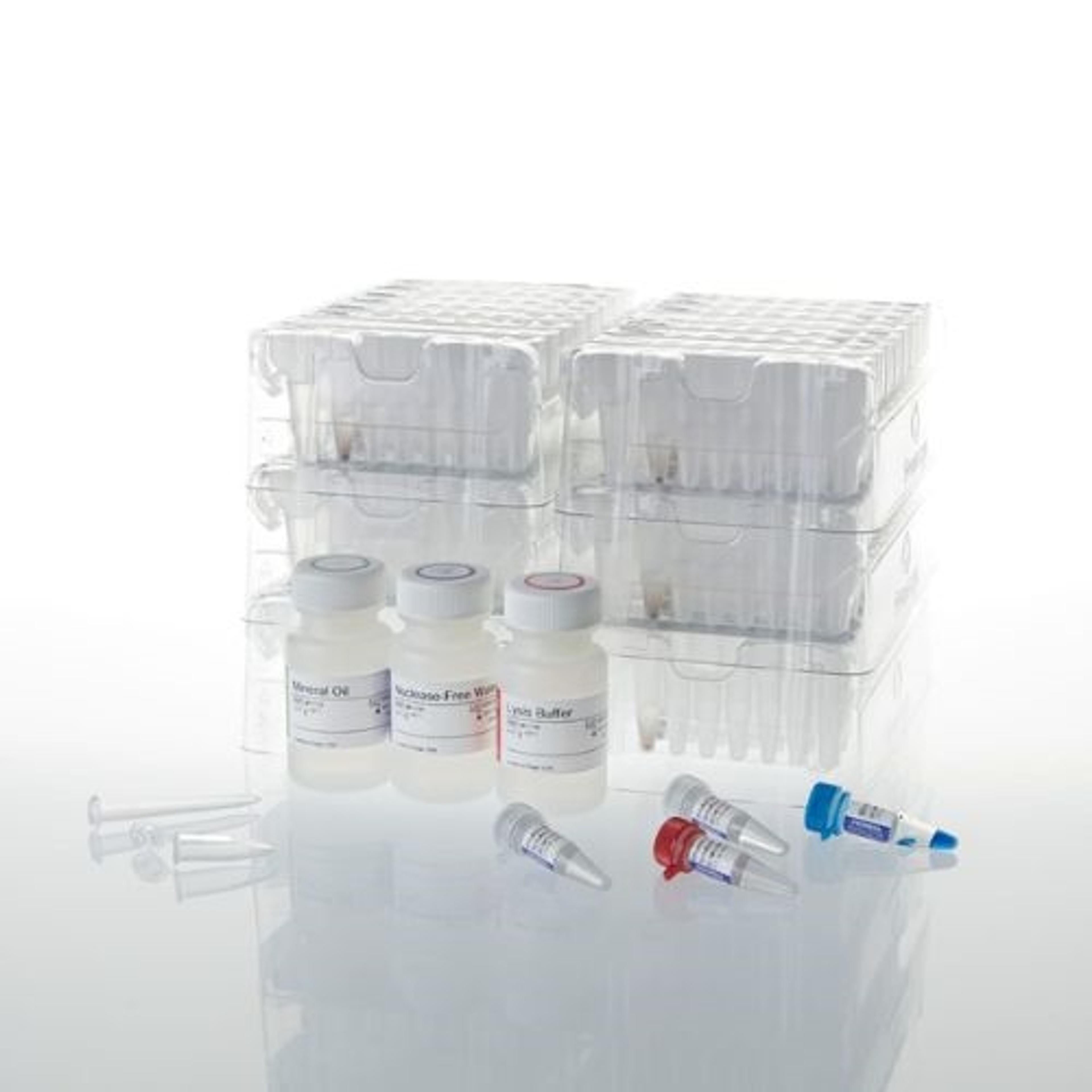
The QuantiFluor® dsDNA System contains a fluorescent DNA-binding dye that enables sensitive quantitation of small amounts of double-stranded DNA (dsDNA) in solution.   The quantitation of dsDNA is a very important step in many biological applications, particularly in standard molecular biology techniques. The dye shows minimal binding to single stranded DNA (ssDNA) and RNA, allowing specific quantitation of dsDNA. The QuantiFluor® dsDNA System was developed using the fluorescence module of the GloMax® Multi+ Detection System and the QuantiFluor®-ST Handheld Fluorometer. The QuantiFluor® dsDNA System can be used with any fluorometer that is capable of measuring fluorescence at the appropriate excitation and emission wavelengths, including the Quantus™ Fluorometer. Each QuantiFluor® dsDNA System contains sufficient volume to perform 200 assays at 2ml or 2,000 assays at 200μl. QuantiFluor® dsDNA System Features & Benefits:   Specificity - Highly specific to dsDNA, minimal binding to ssDNA, RNA, protein and interfering compounds. Sensitivity - Significantly increased sensitivity over absorbance at 260nm (NanoDrop® spectrophotometer) for low-concentration samples. Performs better or equal to PicoGreen® dye and can detect as little as 50pg/ml. Ease of Use - System includes all required reagents to quickly set up and quantitate dsDNA. Instrument Compatibility - Pre-optimized on both the Quantus™ Fluorometer and GloMax®-Multi+ Instrument.
(2)

Maxwell® CSC DNA FFPE Kit

Promega Corp.

  The Maxwell® CSC DNA FFPE Kit is used in combination with the Maxwell® CSC Instrument to provide an easy method for efficient, automated purification of genomic DNA (gDNA) from human FFPE breast, lung or colon tissue samples.   The Maxwell® CSC DNA FFPE (formalin fixed, paraffin embedded) kit is intended for use, in combination with the Maxwell® CSC Instrument and the Maxwell® CSC DNA FFPE purification method, as an in vitro diagnostic (IVD) medical device to perform automated isolation of DNA from human breast, lung and colon FFPE tissue samples. The purified DNA is suitable for use in amplification-based in vitro diagnostic assays. Available in the US only.

(0)

Links

Tags

Cellular PathologyCellular Pathology deals with the microscopic analysis of tissue samples and cells. Sample preparation and processing includes fixation, staining, sectioning and slide mounting, using equipment such microtomes and cryostats. In choosing immunohistochemistry and immunocytochemistry kits, consider chromogens, staining method, antibodies, microscopes and imaging.DNA / RNA Extraction and PurificationPurified DNA and RNA are required for numerous downstream molecular biology applications. Consequently, the importance of high-quality DNA/RNA extraction and purification equipment cannot be underestimated. Many purification kits are available and are typically optimized for nucleic acid type and source, including plasmid DNA, genomic DNA, mRNA, RNA and viral nucleic acid purification kits. Automated extraction and purification of nucleic acids can be implemented with magnetic bead separator instruments or high-throughput purification workstations. Find the best DNA/RNA extraction and purification equipment in our peer-reviewed product directory: compare products, check customer reviews and receive pricing direct from manufacturers.DNA SequencingDNA sequencing, such as sanger sequencing, is a biological technique that determines the precise order of nucleotide bases in a fragment or template of DNA. DNA sequencers and genetic analyzers are based on capillary electrophoresis, where labeled DNA fragments are electrophoretically separated by size as they migrate through a polymer. Find the best DNA sequencing products, including DNA sequencing kits, genomic libraries and genetic identity kits in our peer-reviewed product directory: compare products, check customer reviews and receive pricing direct from manufacturers.BiomarkersBiomarkers are biological markers which can be measured and evaluated to indicate a biological state. The use of biomarkers in research and diagnosis can indicate a normal or disease state or drug response of cells / tissues. Biomarkers include genetic markers, cell surface markers such as antigens, antibodies or receptors and secreted molecules such as cytokines. An assay system is required for identification of biomarkers. :Clinical ChemistryBiochemistry (or clinical chemistry) involves the analysis of bodily fluids using chemical tests. Techniques used include HPLC, chromatography, spectroscopy, mass spectrometry, immunochemical, electrophoresis, turbidometric / spectrophotometric assay, MRI and ISE analysis. Tests are often carried out on plasma or serum but urine (urinalysis) and fecal specimens are also processed.Clinical GeneticsMolecular Genetics covers the analysis of hereditary genetic disease and chromosomal abnormalities. Genetics can be analysed using DNA, RNA, and protein microarrays, PCR, RT PCR and DNA sequencing. Genetic equipment includes genetic workstations, thermal cyclers, cooling blocks and electrophoresis products. Diagnostic kits are used for DNA / RNA extraction and purification.Next Generation SequencingNext-generation sequencing (NGS), also known as whole-genome sequencing, high-throughput sequencing and massive parallel sequencing, produces and analyses thousands to millions of nucleotide sequences at once. Sequencing systems operate via varying technologies depending on the manufacturer, including sequencing by synthesis, ligation, pyrosequencing, ion semiconductor and single-molecule real-time sequencing. For NGS, library preparation is paramount to successful sequencing. In this section, explore a range of library preparation kits, from targeted, amplicon-based or hybridization-based kits including epigenomic, transcriptomic and genomic workflows to fragmentation kits. Find the best next-generation sequencing products in our peer-reviewed product directory: compare products, check customer reviews and receive pricing direct from manufacturers.Protein PurificationProtein purification is a vital step in drug discovery, therapeutics, biotech and life science research. The purification process typically involves subcellular or membrane protein extraction with cell lysis kits, separation of proteins from cell debris by filtration or spin columns, and the isolation of proteins of interest from other proteins and impurities with affinity purification (including fusion protein tags and antibody binding proteins A, G and L), immunoprecipitation or chromatographic methods, such as ion exchange, size exclusion and immobilized metal affinity chromatography. All purification methods come in multiple formats for your laboratory needs, including agarose or magnetic beads, resins, columns and filter plates. Find the best protein purification equipment in our peer-reviewed product directory: compare products, check customer reviews and receive pricing direct from manufacturers.Cancer DiagnosticsThere are a wide variety of diagnostic tests for cancer available, and this range continues to expand as our knowledge of cancer improves. Current diagnostic methods include biopsy, imaging and blood tests for known biomarkers. New methods in research development include liquid biopsies and cancer breathalyzers.High ThroughputHigh throughput experiments allow the simultaneous processing of several samples. This parallelization reduces the cost per experiment and increases reproducibility and output volume of data.Cancer ResearchCancer research aims to understand the mechanisms of cancer development and progression to improve prevention, diagnosis, and treatment. From molecular biology to clinical trials, research spans a wide range of disciplines, including immunotherapy, targeted therapies, and drug discovery. Explore the best cancer research products in our peer-reviewed product directory; compare products, check reviews, and get pricing directly from manufacturers.MutationMutations are changes in the DNA sequence that can lead to diseases, including cancer and genetic disorders. Analyzing mutations is crucial in diagnostics, drug development, and personalized medicine. Explore mutation detection tools in our peer-reviewed product directory; compare products, check reviews, and get pricing directly from manufacturers.Clinical AutomationClinical laboratory automation refers to the use of automated systems in clinical laboratories to increase efficiency, reduce human error, and improve patient care. From sample analysis to total laboratory automation, this plays a critical role in modern diagnostics and laboratory workflows. Explore clinical automation solutions in our peer-reviewed product directory; compare products, check reviews, and get pricing directly from manufacturers.FFPEFormalin-fixed paraffin-embedded (FFPE) tissues are commonly used in medical research, particularly in histology and cancer studies. The preservation process allows long-term storage of tissue samples for later analysis. Explore FFPE research products in our peer-reviewed product directory; compare products, check reviews, and get pricing directly from manufacturers.Human PlasmaHuman plasma is the liquid component of blood, which carries blood components - nutrients, hormones, proteins, and waste - throughout the body. Plasma-based studies provide insights into biomarkers, immune responses, and disease mechanisms. Compare plasma handling tools and systems in our peer-reviewed product directory.
Correlation of Mutations Detected in Liquid and Tissue Biopsies Using the Maxwell® RSC