
Comparative Analysis of Dual-Luciferase® Assay Technologies in a High Throughput Microplate Format
31 Mar 2016This application note describes a study to investigate the performance of several luciferase variants and assay formats adapted to a high throughput screening compatible, 384-well format across a range of compatible microplate readers, including Synergy HTX.
Related products
Request Quote for All Products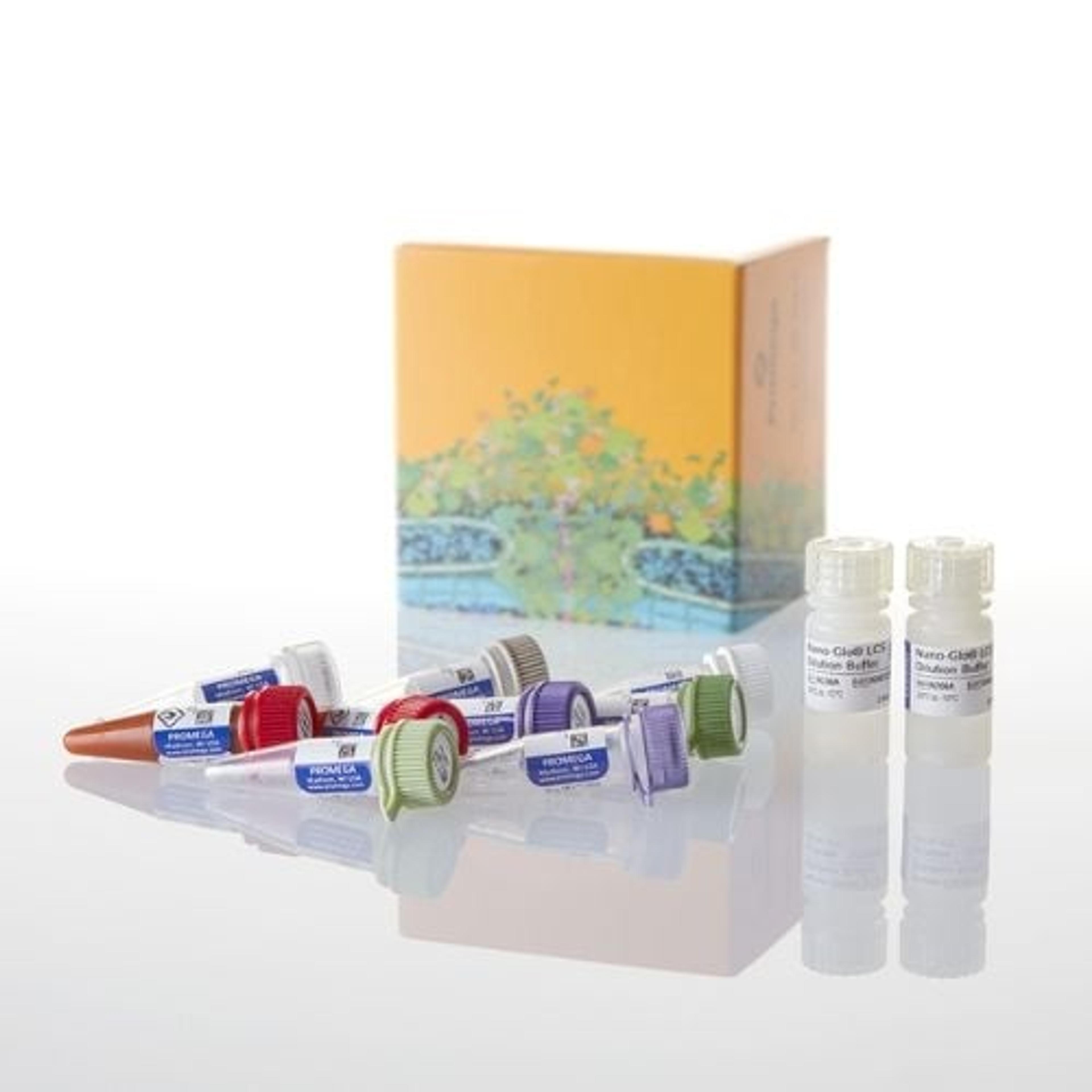
NanoBiT® PPI Starter Systems
Promega Corp.NanoLuc® Binary Technology (NanoBiT) is a two-subunit system based on NanoLuc® luciferase that can be applied to the intracellular detection of protein:protein interactions (PPIs) in live cells. The NanoBiT® system is composed of two small subunits, Large BiT (LgBiT; 18kDa) and Small BiT (SmBiT; 11 amino acid peptide), that are expressed as fusions to target proteins of interest. The LgBiT and SmBiT subunits have been independently optimized for stability and minimal self-association. Interaction of the target proteins facilitates subunit complementation to give a bright, luminescent enzyme. The NanoBiT® PPI Starter Systems provide the vectors required to create the LgBiT and SmBiT protein fusions, a PRKACA:PRKAR2A constitutively interacting positive control pair and a negative control vector. Starter systems also include the Nano-Glo® Live Cell Assay System, a single-addition, non-lytic detection reagent used for monitoring NanoBiT® luminescence in living cells. The reagent is prepared by diluting the Nano-Glo® Live Cell Substrate with the Nano-Glo® LCS Dilution Buffer to make the Nano-Glo® Live Cell Reagent. Both substrate and buffer solutions are optimized to provide enhanced stability and reduce autoluminescence in the presence or absence of serum, increasing the sensitivity for detection of low levels of NanoBiT® luminescence. The FKBP:FRB pair is provided separately as an inducible positive control. Expression is driven by HSV-TK promoter, providing constitutive, low-level expression in mammalian cells. Using the NanoBiT® MCS Starter System, you can generate N- and C-terminal LgBiT and SmBiT fusions to proteins of interest using traditional cloning with a multiple cloning site (MCS). Using the NanoBiT® Flexi® Starter System, you can generate N- and C-terminal LgBiT and SmBiT fusions using the Flexi® Vector Cloning System, a directional cloning method based on two rare-cutting restriction enzymes, SgfI and PmeI, that provides a rapid, efficient and high-fidelity way to transfer protein-coding regions between Flexi® Vectors without the need to resequence. Utilize Find My Gene™ to obtain your ORF clones already in Flexi® format for simple creation of fusions. Features: Obtain Greater Sensitivity: Bright signal and reduced background improve sensitivity, signal:background ratio and dynamic range. More Accurately Model PPI Biology: Minimize artifacts with small tags and low, natural expression levels; perform real-time kinetic analysis in live cells. Precisely Measure Interaction Dynamics: Low affinity of tags minimizes spontaneous LgBiT:SmBiT association; complementation is easily reversible allowing accurate analysis of protein association and disassociation. Perform Simple Measurement: Bright luminescent output is ideal for any luminometer with no specific filter or injector requirements. Scale Your Assays: Assays can be scaled from bench to HTS, allowing use with any plate size up to 1,536-well format; detection reagent has been optimized for benchtop stability. Applications: Real-time measurements of PPI dynamics. Single-copy or single-cell measurements of PPI. PPI modulator screens in 384- or 1536-well formats.
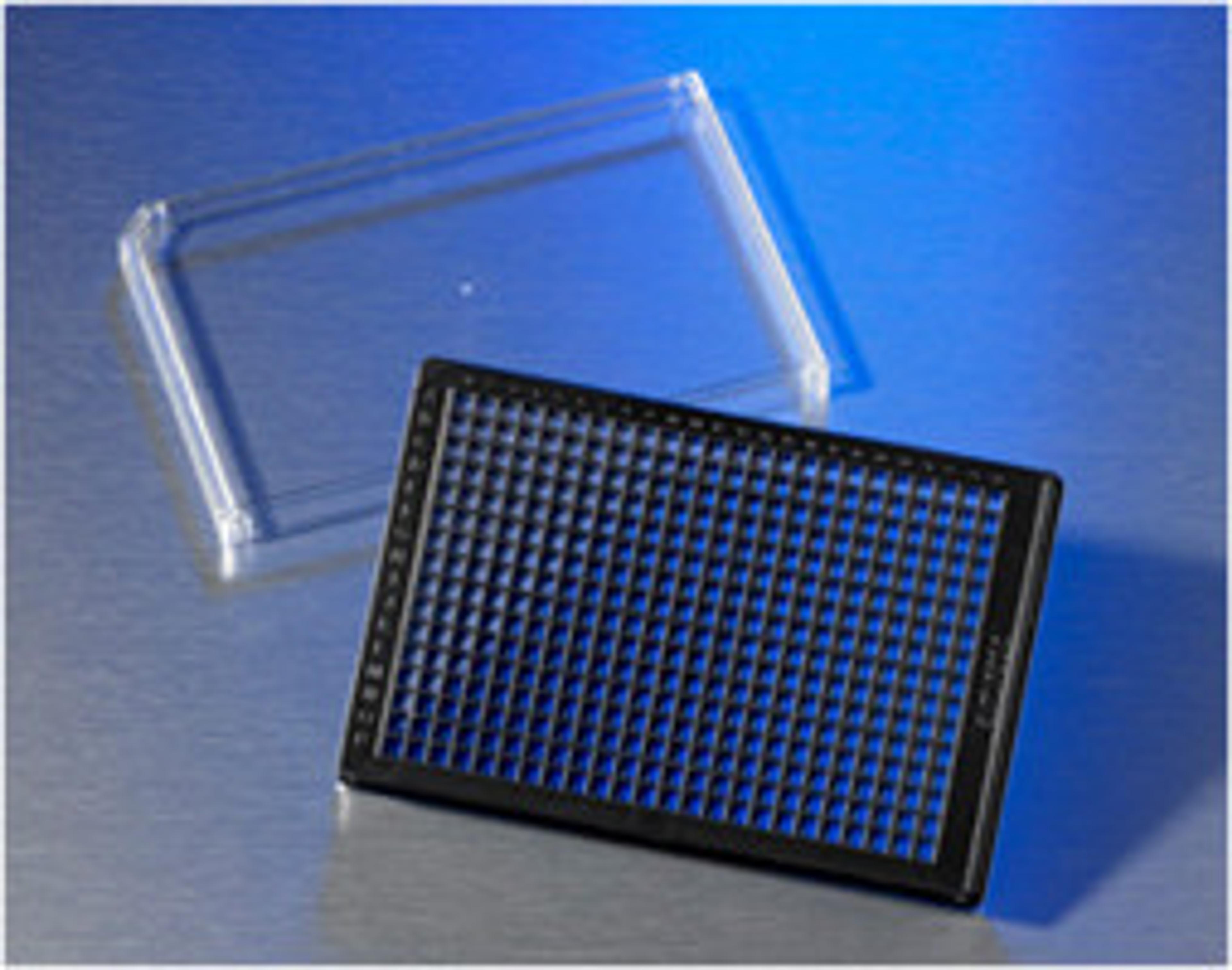
Corning® 384-well Black/Clear Round Bottom Ultra-Low Attachment Spheroid Microplate, Bulk Packed 10 per Bag, with Lid, Sterile
Corning Life SciencesUltra-Low Attachment microplates feature a covalently bound hydrogel layer that effectively inhibits cellular attachment Surface minimizes protein absorption, enzyme activation and cellular activation Surface is noncytotoxic, biologically inert and nondegradable Sterilized by gamma irradiation Black wall microplates have low background fluorescence, minimal light scatter and reduced crosstalk Opaque walls to prevent well-to-well crosstalk Can be used for both top and bottom reading instruments Bulk packed 10 per bag Novel well geometry aids formation of spheroids in center of well Optically clear round bottom with black opaque microplate body
Nano-Glo® Dual-Luciferase® Reporter Assay System
Promega Corp.Switch Seamlessly from Your Current Dual-Luciferase® Assay!