
Co-optimization of Probes and Polymerases to Drive the Evolution of Targeted Sequencing
22 Mar 2016This poster demonstrates the capabilities of targeted sequence enrichment using the KAPA HTP Library Preparation Kit and KAPA HiFi HotStart DNA Polymerase. Inefficiencies in library construction and automation-unfriendly workflows have previously meant low throughput and poor performance. By combining enzymes specifically tailored for high performance NGS applications with innovative oligonucleotide probe design, improved library construction and targeted enrichment can be achieved.
Related products
Request Quote for All Products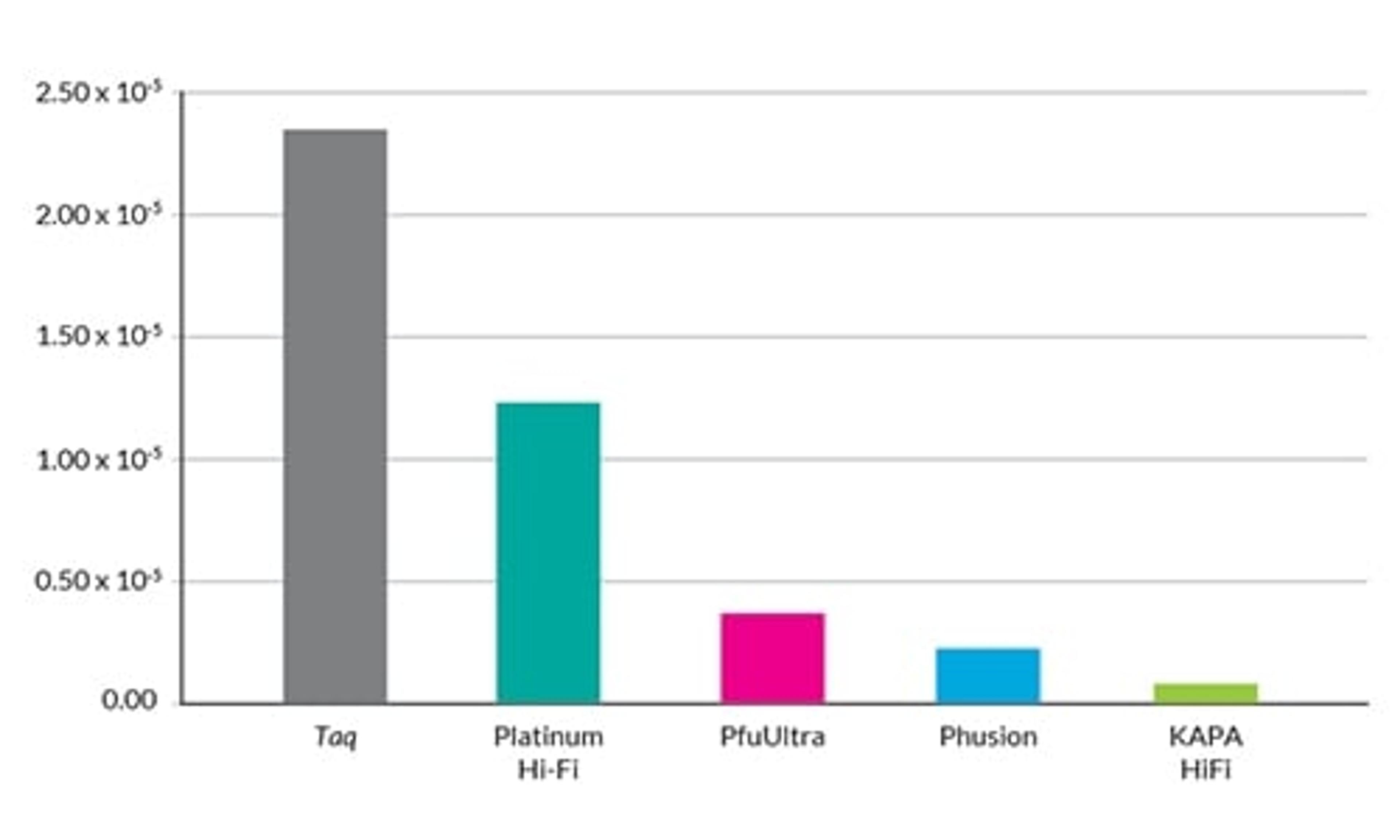
KAPA HiFi PCR Kits
Kapa Biosystems, Inc.KAPA HiFi DNA Polymerase is a novel, single-enzyme system that exhibits industry-leading performance when compared with other high fidelity polymerases and polymerase blends. KAPA HiFi has been engineered to have an increased affinity for DNA without the need for accessory protein domains. The intrinsic high processivity of KAPA HiFi results in significant improvements to yield, sensitivity, speed, target length, and the ability to amplify difficult templates (e.g AT- and GC-rich). The error rate of KAPA HiFi PCR Kits is 100X lower than wild-type Taq DNA polymerase. Features: Achieve the highest fidelity Increased processivity, strong proofreading activity, and optimized buffer system result in superior accuracy The error rate of KAPA HiFi is 100X lower than Taq, 40X lower than polymerase blends, 3X lower than Pfu Ultra and 2X lower than Phusion Improve performance on GC- and AT-rich templates Achieve higher success rates across targets up to 84% GC content Higher yields when amplifying AT-rich templates Amplify longer targets with greater sensitivity High-fidelity PCR of long and complex genomic templates Improved sensitivity High speed allows significantly shorter reaction times for long range PCR Applications: High-fidelity PCR Amplification of DNA fragments for cloning and protein expression or genomic characterization Site-directed mutagenesis Next-generation sequencing library amplification
KAPA RNA Library Preparation Kits for Illumina
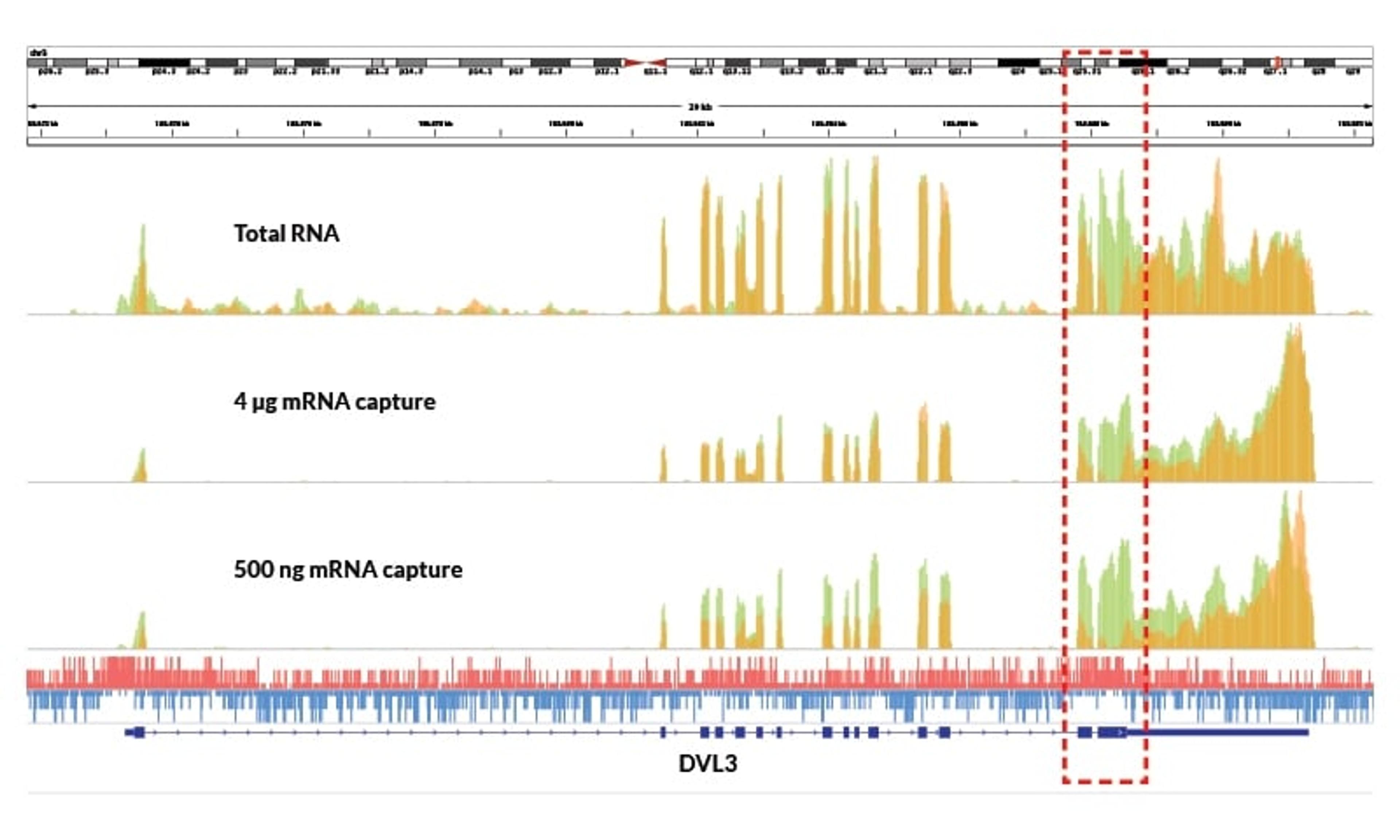
Kapa Biosystems, Inc.KAPA Stranded mRNA-Seq Kits includes all the enzymes and buffers required for cDNA library preparation for Illumina Next-Generation Sequencing, utilizing 100 ng – 4 µg of total RNA. KAPA mRNA Capture Beads are included for isolation of poly(A)-tailed RNA. Kits provides precise measurement of strand orientation (>99%), uniform coverage, and high-confidence mapping of alternate transcripts, and are optimized for the improved coverage of GC-rich and low-abundance transcripts. Kits contain KAPA HiFi for high-efficiency and low bias library amplification, as well as KAPA mRNA Capture Beads and a streamlined, “with-bead” protocol. KAPA Stranded RNA-Seq Kits include all the enzymes and buffers required for cDNA library preparation for Illumina Next-Generation Sequencing, but do not contain the KAPA mRNA Capture Beads. Kits can be used to prepare libraries from 10-400 ng of either poly(A)-selected, ribosomally-depleted, or total RNA. Features: Uncover challenging transcripts Improved coverage of GC-rich transcripts Enhanced identification of exonic regions Detect low-abundance transcripts Enables identification of transcripts missed by competitor kits, even with high input High uniformity across varying amounts of sample input Identify more genes Higher percentage of uniquely mapped reads compared to Illumina TruSeq™ Stranded mRNA Sample Prep Kits Lower duplication rates yield better coverage Maintain high coverage uniformity Minimal 5′–3′ bias across transcripts More uniform distribution of reads over each transcript Applications: Gene expression Single nucleotide variation (SNV) discovery Post-transcriptional SNVs Fusion gene identification Targeted transcriptome Whole transcriptome
NimbleGen SeqCap EZ Library Kits
RocheSeqCap EZ Library is a solution-based capture method that enables enrichment of the whole exome or customer regions of interest in a single test tube. Built upon an optimized design algorithm, SeqCap EZ Library sets a new standard for a simple single-step enrichment method.