
ResourceLife Sciences
Centrifugation Steps in the Cell Culture Process
23 Jun 2013During various stages of the cell culturing process, centrifugation is frequently used to isolate extracellular products or to separate cells from their aqueous environment. Traditionally, cells and media are first transferred from a cell culture flask to a 15-mL or 50-mL conical tube before centrifugation. These transfer steps require operator labor and time, the cost of the transfer vessel, and introduce the potential for contamination during transfer. Download this application note to read how cell culture flask adapters allow culture flasks to be centrifuged directly.
Related products
Request Quote for All Products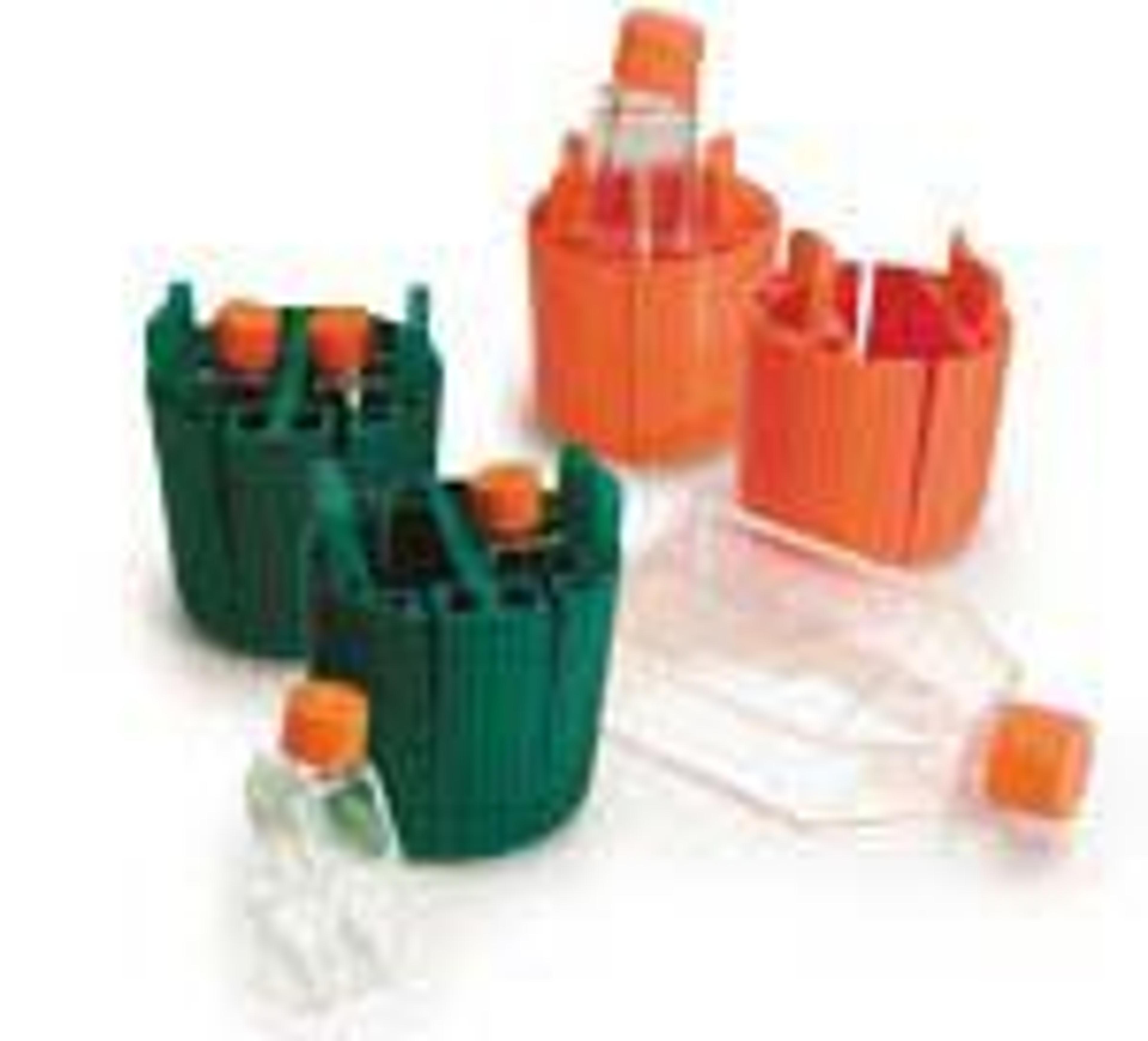
Cell Culture Flask Adapters
Beckman Coulter Life SciencesImprove the application flexibility of your centrifuge with buckets and adapters from Beckman Coulter
Links
Tags
Cell / Tissue CultureCell culture or tissue culture is used to study the biology of cells or tissues and to isolate cellular products in an environment which can be manipulated and well defined. Accurately control your culture environment with bioreactors or culture incubators, bind your cells to a surface or together with an extracellular matrix. Distinguish cell types with differential media or proliferate cells with certain characteristics using selective media. Enrich your media with supplements such as growth factors, sera and vitamins. Find the best cell and tissue culture products, kits and equipment in our peer-reviewed product directory: compare products, check customer reviews and receive pricing direct from manufacturers.CentrifugesCentrifuges are used to separate particulates suspended in a liquid via the application of a centrifugal force including cells, macromolecules, nanoparticles and precipitates. Centrifuges come in three sizes: microcentrifuges, benchtop and floor-standing centrifuges, depending on the volume and number of samples that require separation. When choosing a centrifuge, consider its maximum separation power indicated by its relative centrifugal force (RCF) value. Low force centrifuges reach a maximum RCF of 8,000 g, high-force centrifuges can reach maximum RCF values of 80,000 g. For extremely high forces, consider ultracentrifuges (up to 800,000 g). Refrigerated and vacuum centrifuges also known as concentrators are available for more specialized applications. A range of volumes are available for centrifuge tubes and microfuge tubes, depending on sample sizes. Find the best centrifuges in our peer-reviewed product directory: compare products, check customer reviews and receive pricing direct from manufacturers.