
A Universal Surface Coating for Lab-On-A-Chip and Biosensor Applications
A Universal Surface Coating for Lab-On-A-Chip and Biosensor Applications
5 Aug 2015This poster describes an alternative to traditional methods of biomolecule attachment that utilizes a metal polymer surface chemistry. Various formulations of Mix&Go particles from Anteo Technologies can modify the strength of binding, wettability and surface charge, controlling protein binding and the stability of bound biomolecules. The coating was measured using SEM, TEM, AFM and other microscopic methods. Attaching biomolecules onto solid supports is a necessary step in developing and manufacturing most in vitro diagnostics and point-of care products. However, direct immobilization of antibodies to synthetic surfaces can damage proteins and adversely impact both their structure and function.
Related products
Request Quote for All Products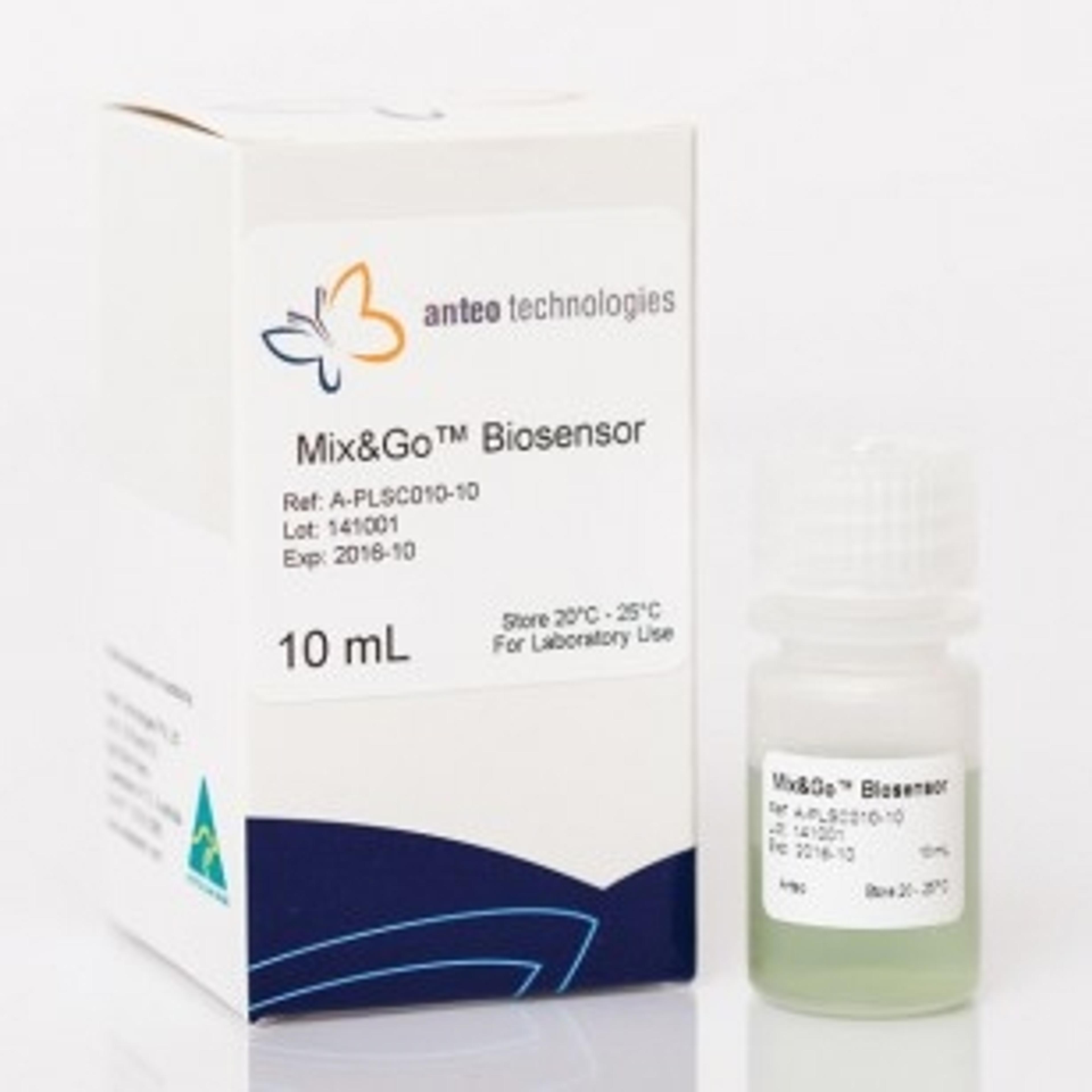
Mix&Go™ Biosensor
Anteo TechnologiesMix&Go Biosensor is a ready-to-use Activation Reagent specifically developed for binding biomolecules onto planar surfaces including polystyrenes, certain cyclic olefin copolymers, microarray slides, silicon oxides, titanium oxides, ceramics and gold surfaces (excluding gold colloids in suspension). Mix&Go Biosensor can modify the strength of binding, wettability and surface charge of base materials commonly used in biosensor applications. By using Mix&Go surface coatings, it is possible to control protein binding and improve the stability of bound biomolecules across a range of surfaces used in biosensors. Mix&Go Biosensor has many advantages over methods such as EDC, including: Mix&Go is water based and replaces the dry chemicals you would use with the EDC method Using Mix&Go instead of NHS/EDC chemistry can save up to 3-4 hours of lab time Increased stability of antibodies Higher functionality of antibodies Decreased background Mix&Go improves reproducibility between experiments by providing uniformity between surfaces.