A GloMax® Multi Microplate Luminometer Method for Dual-Luciferase® Reporter Assay System

23 Jun 2015

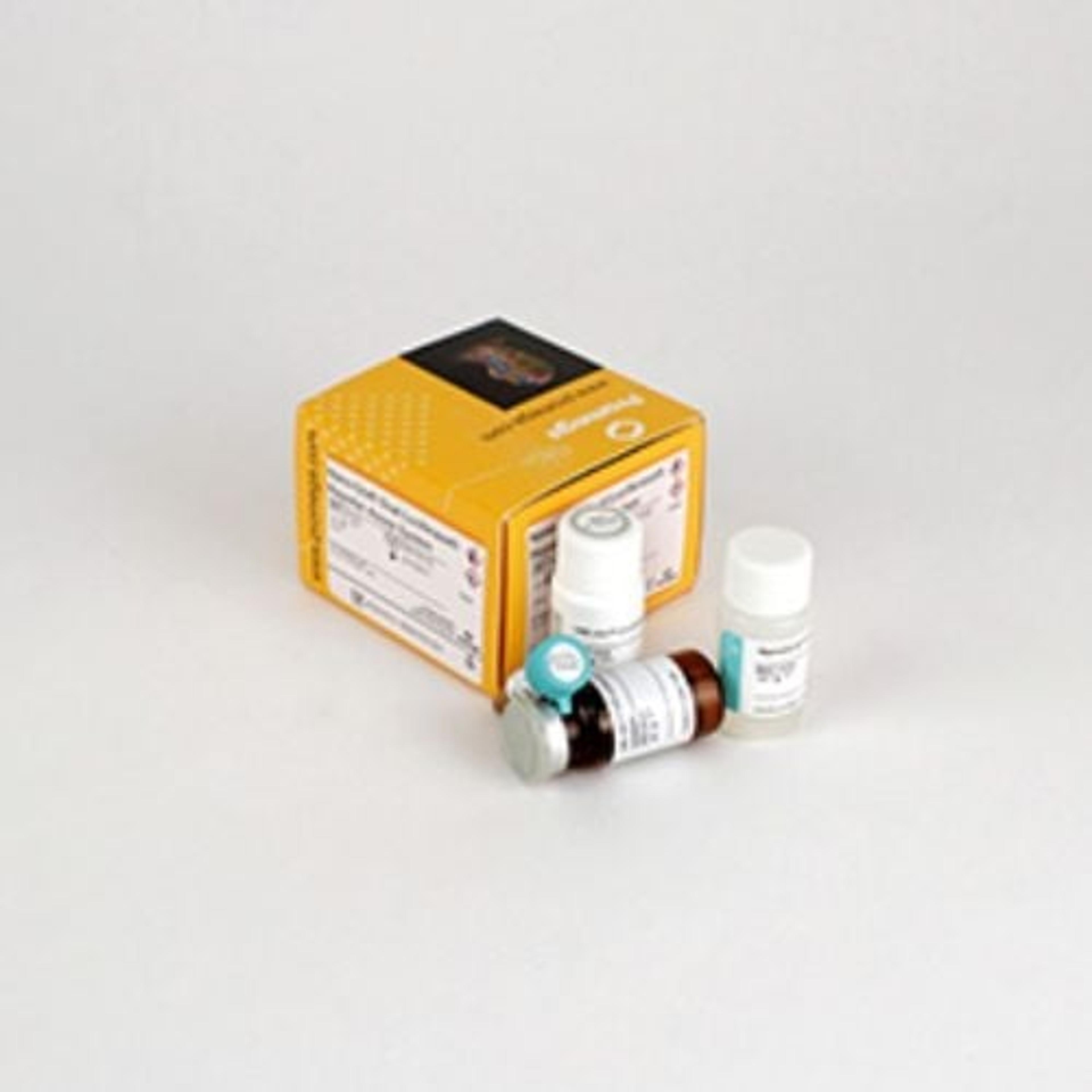
The Dual-Luciferase® Reporter Assay (DLR) from Promega is ideal as a dual genetic reporting luminescence-based assay system for quantitation of gene expression. Two different luciferase reporter enzymes, the firefly (Photinus pyralis) and Renilla (sea pansy or Renilla reniformis), are expressed simultaneously in each cell creating an efficient means of performing two reporter assays in a single sample. The GloMax® Multi Microplate Luminometer with dual injectors provides a convenient, rapid, and sensitive method for quantifying gene expression when used with the Dual-Luciferase® Reporter (DLR) Assay kit. The superior sensitivity and wide dynamic range of the GloMax® Multi Microplate Luminometer make it highly suited for the Dual-Luciferase® Reporter (DLR) Assay application. The GloMax® Multi Microplate Luminometer detects less than 1x10-19 moles of firefly luciferase enzyme using Luciferase Assay Reagent II (LAR II) and 1x10-18 moles of Renilla enzyme using Stop & Glo® Reagent. The GloMax® Multi Microplate Luminometer offers superior sensitivity and dynamic range for luminescence detection, such as the luminescence based dual-reporter assays.

Links

Tags

MicroplatesMicroplates are multi-well plates used to increase the throughput of biological investigations. The number of wells microplates contain can range from 6 to 3243 wells, with the 96-well format being the most commonly used. Microplates can come tailored for a range of applications including cell culture, PCR, filtration, storage, non-binding surface, protein crystallization, as well as pre-coated, deep well and normal Standard microplates. Additionally, options for microplate colors include clear , black, white or black with clear bottom and white with clear bottom for absorbance microplate reader applications. Find the best microplates for your lab in our peer-reviewed product directory: compare products, check customer reviews and receive pricing direct from manufacturers.Microplate Readers / DetectorsMicroplate readers are used to automate the detection and analysis of labeled or label-free components in microplates during assays or live-cell monitoring. Microplate readers are generally distinguished by their mode of detection. Types include absorbance, luminescence, fluorescence intensity, fluorescence polarization, TRF / FRET and multimode microplate readers. Microplate readers deliver a high throughput of samples by reading multiple wells simultaneously, with the 96-well format the most commonly used. As a result, microplate readers are often used in the drug discovery, bioassays, research and pharmaceutical industries for screening applications. Microplate loading can also be automated, with robotic microplate stackers to increase throughput. Find the best microplate readers in our peer-reviewed product directory: compare products, check customer reviews and receive pricing direct from manufacturers.Cell-Based AssaysCell-based assays are used to monitor the presence, quantity and activities of a desired cellular analyte including drug molecules or biomarkers. This can reveal information on cell health (apoptosis, cytotoxicity, viability and proliferation assays), cell metabolism, cell migration and cell signaling mechanisms. Find the best cell-based assay products, kits and equipment with our peer reviewed product directory: compare products, check customer reviews and receiving pricing direct from manufacturers.Gene Expression and Molecular CloningMolecular cloning is a set of techniques that utilizes vectors to transfer recombinant DNA into host cells and is an essential tool for investigating the expression of genes and proteins in bacterial or mammalian cells. A variety of vectors optimized for gene cloning and expression in a range of host organisms are available, alongside competent cells for genetic replication. Here, you can explore a range of molecular tools, high-quality genomic and cDNA libraries, premade clones, transformation and transfection reagents and mutagenesis or gene expression detection assays and expression arrays. Find the best gene expression and molecular cloning products in our peer-reviewed product directory: compare products, check customer reviews and receive pricing direct from manufacturers.Method DevelopmentMethod development is the process of creating and optimizing experimental techniques and protocols to achieve reliable, reproducible results. This is essential in various fields, including pharmaceuticals, environmental science, and diagnostics. Browse our peer-reviewed product directory to find the best method development solutions, compare products, check reviews, and get pricing directly from manufacturers.Gene ExpressionReporter AssayCell Based AssaysCell-based assays use living cells to measure biological responses to various treatments or stimuli. They are essential for drug discovery, toxicology testing, and understanding cellular mechanisms. These assays are used to assess cell viability, proliferation, gene expression, and other cellular activities. Browse our peer-reviewed product directory to find the best cell-based assay tools and reagents, compare products, read customer reviews, and get pricing directly from manufacturers.EnzymesLuminescenceLuminescence techniques detect and measure light emitted by substances during chemical reactions or biological processes. Widely used in assays for diagnostics, environmental monitoring, and drug screening, luminescence-based methods offer high sensitivity. Explore leading systems and products in our directory.