ProductsLife Sciences
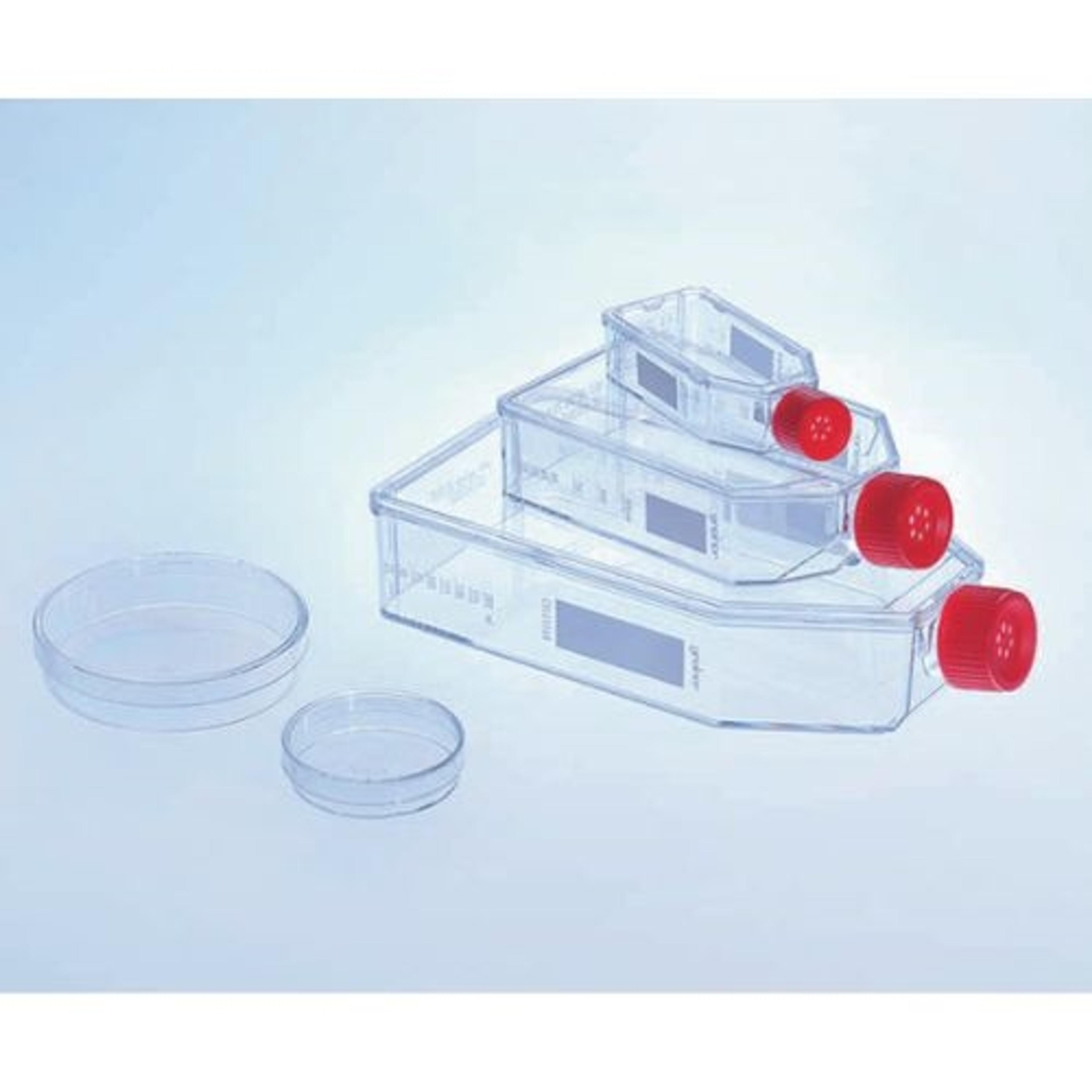
CELLCOAT® Protein-Coated Cell Culture Vessels
Greiner Bio-One GmbHBiological coatings on high-quality cell culture vessels

Biological coatings on high-quality cell culture vessels
Lids are made of rigid polystyreneLids do not have a corner notch on the A1 corner and does not need to be oriented in any particular direction to be placed on Corning platesLid has a shorter skirt than standard lidsSterilized by gamma radiation
Clear flat bottom polystyrene strips are designed to easily break apart and are pre-assembled in an “egg-crate” style strip holder that allows each individual well to be positioned back into the plate once broken. DNA-BIND® surface covalently binds to amine groups, and provides a convenient method to covalently immobilize aminated ssDNA by either the 5’ or 3’ end for hybridization and/or amplification, and for other DNA-based…
Solvent resistant polypropylene provides compatibility with many common organic solvents (e.g., DMSO, ethanol, methanol) DNase- and RNase-free Total well volume 180 µL
96-well egg crate style holder for 1 x 8 Stripwell™ strips Holds twelve 1 x 8 strips Allows each individual well to be positioned back into the plate once broken apart
High optical-quality glass bottom, black microplates are ideal for performing high content cell-based assays using imaging systems. The glass bottom provides a flat and optically clear surface that reduces autofocus time, increases throughput and is ideal for cell growth.
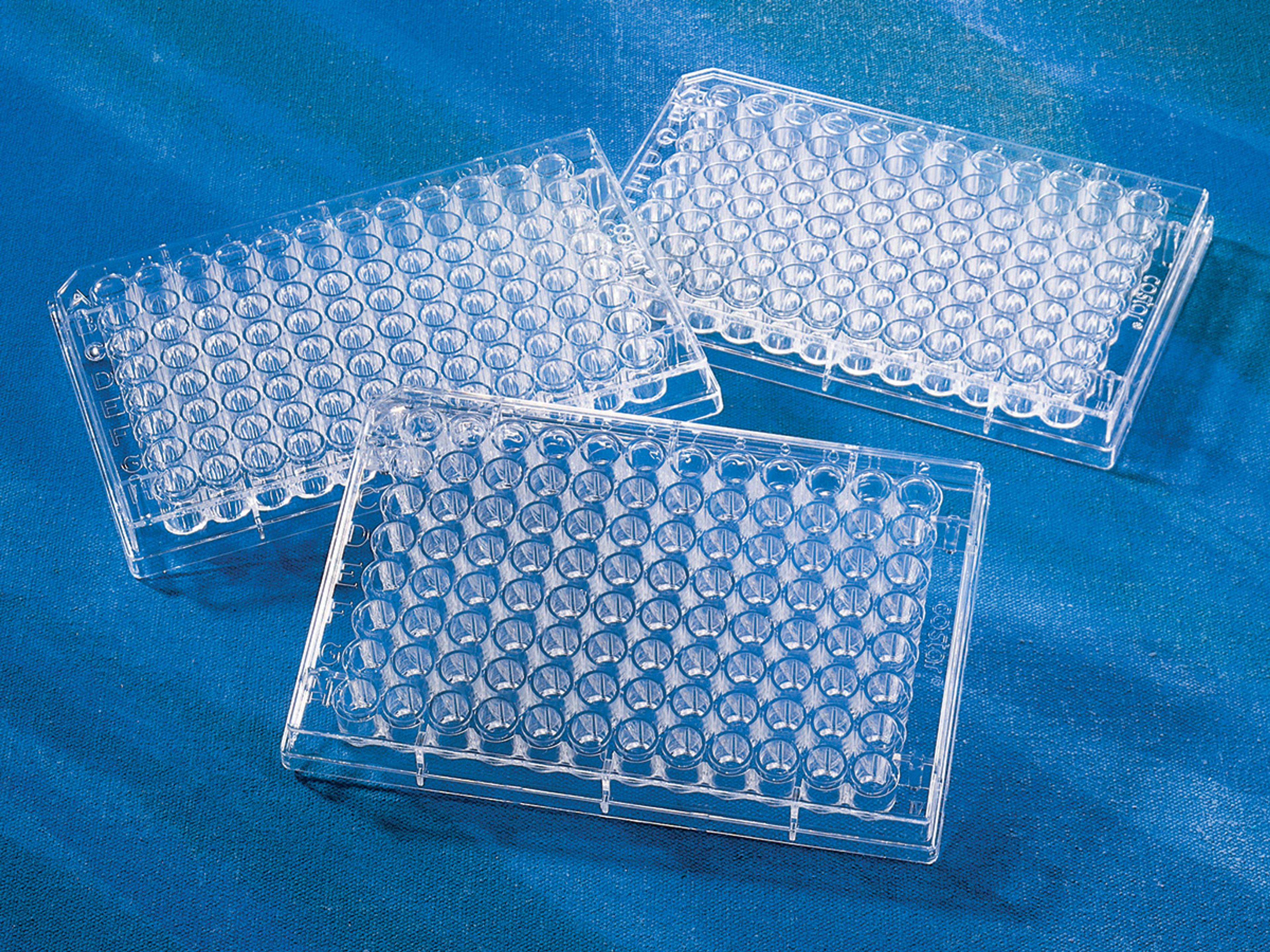
Flat bottoms with 360 µL total volume Recommended working volumes of 75 to 200 µL Treated for optimal cell attachment Nonreversable low evaporation lids with condensation rings to reduce contamination Sterilized by gamma radiation and certified nonpyrogenic Individual alphanumeric codes for well identification Bulk packed 5 per bag
Lids are made of rigid polystyrene Lids have a corner notch on the A1 corner to correspond to the corner notches found on all Corning® microplates Lids do not fit Corning 2 µL 1536 well microplates or 2 mL 96 well storage blocks Sterilized by gamma radiation
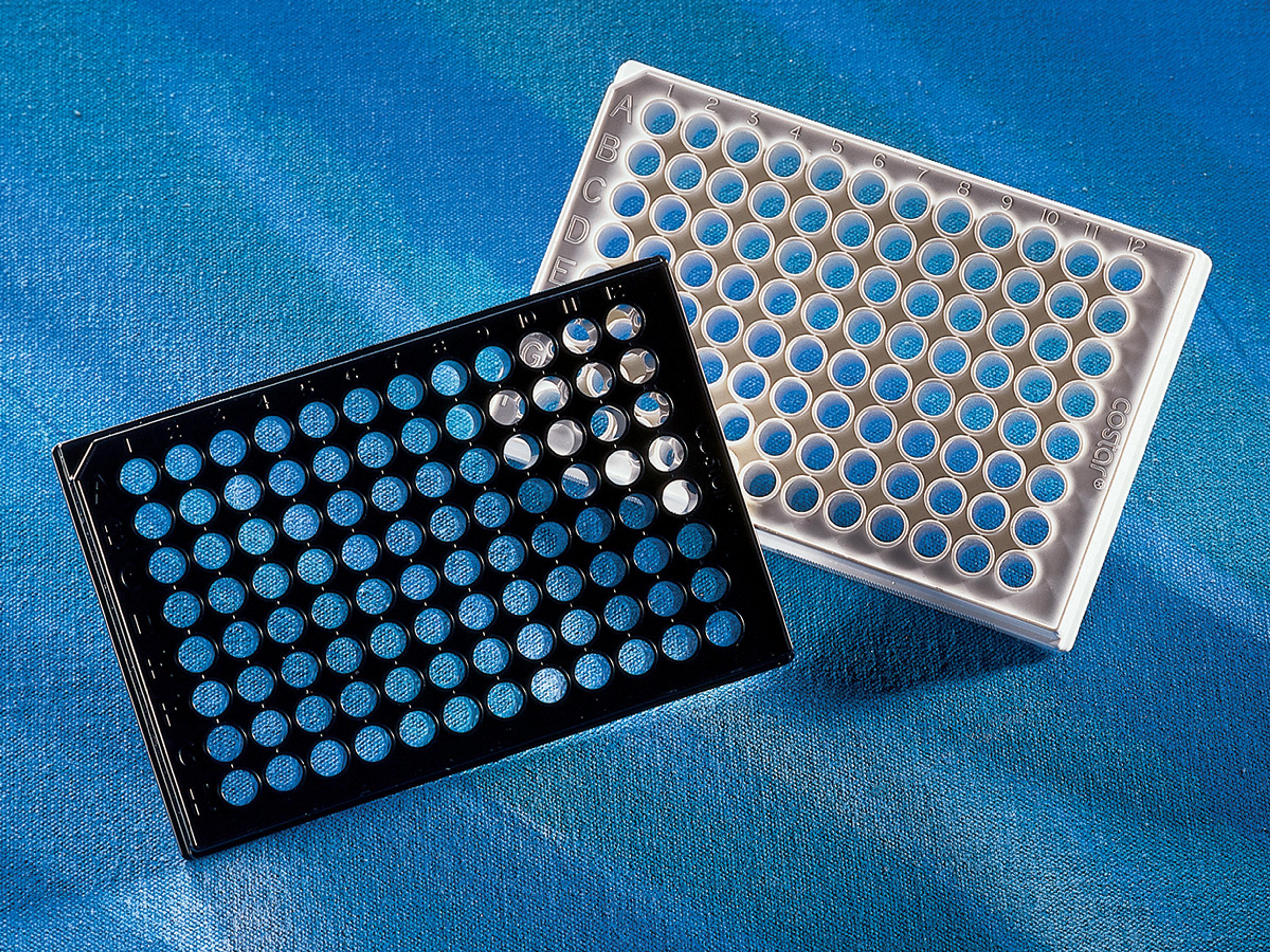
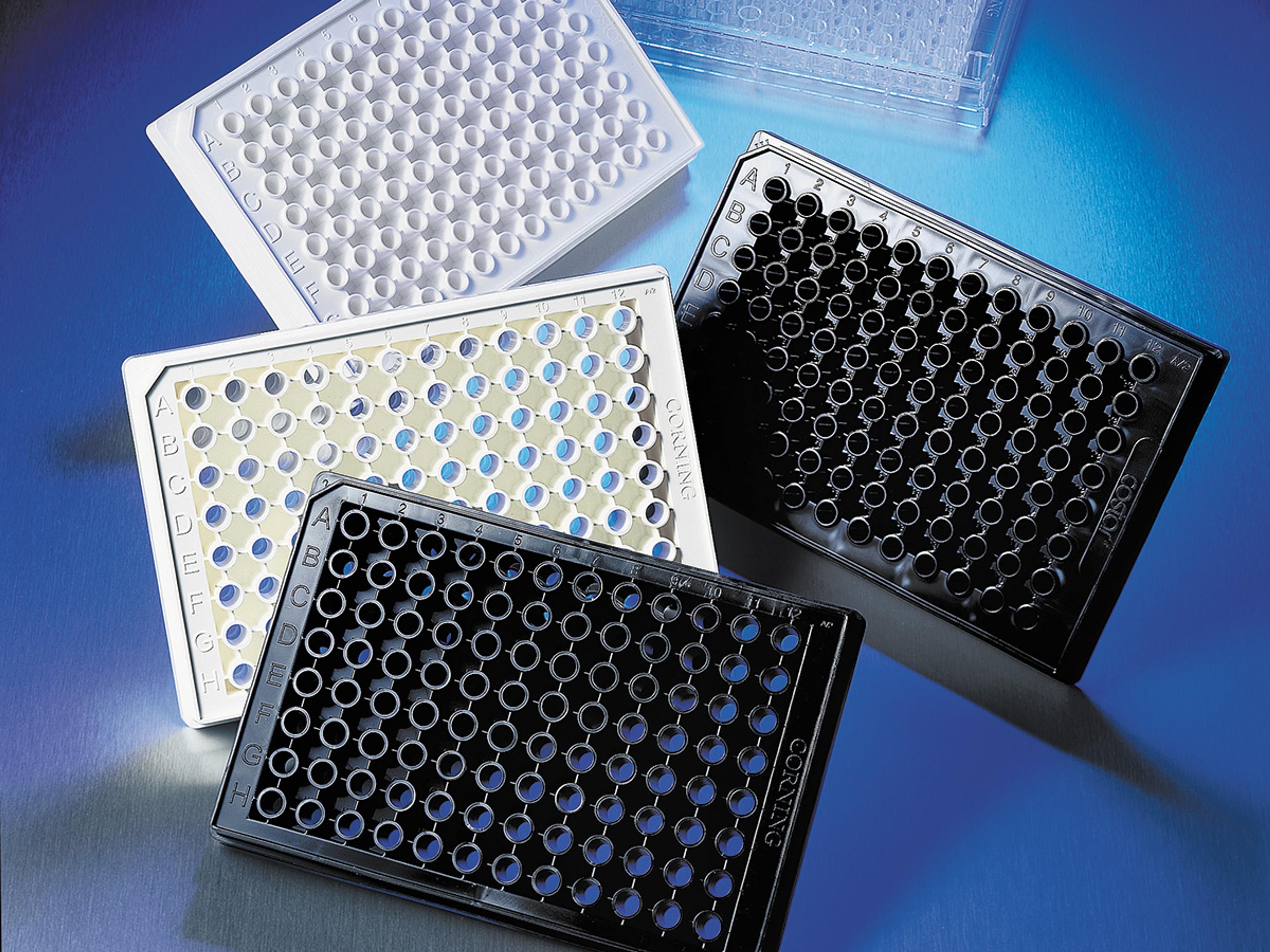
White microplates enhance luminescent signals and have low background luminescence and fluorescence Designed to reduce well-to-well crosstalk Not treated (or medium binding) polystyrene surface is hydrophobic in nature and binds biomolecules through passive interactions Is suitable primarily for the immobilization of large molecules, such as antibodies, that have large hydrophobic regions that can interact with the surfac…
Designed to reduce well-to-well crosstalk during fluorescent assays Not treated (or medium binding) polystyrene surface is hydrophobic in nature and binds biomolecules through passive interactions Is suitable primarily for the immobilization of large molecules, such as antibodies, that have large hydrophobic regions that can interact with the surface Has low background fluorescence and minimize light scattering Total vol…
Not treated (or medium binding) polystyrene surface is hydrophobic in nature and binds biomolecules through passive interactions Is suitable primarily for the immobilization of large molecules, such as antibodies, that have large hydrophobic regions that can interact with the surface Binding capacity of approximately 250 ng of mouse IgG/cm2 Certification results for each lot are made available upon request by contacting l…
White microplates enhance luminescent signals and have low background luminescence and fluorescence Designed to reduce well-to-well crosstalk High binding surface is capable of binding medium (>10kD) and large biomolecules that possess ionic groups and/or hydrophobic regions Binding capacity is approximately 400 to 500ng IgG/cm2 Ideal for immunoassays Without lids, lids supplied separately Total volume is 360 µL; recom…
Not treated (or medium binding) polystyrene surface is hydrophobic in nature and binds biomolecules through passive interactions Is suitable primarily for the immobilization of large molecules, such as antibodies, that have large hydrophobic regions that can interact with the surface Untreated microplates have a binding capacity of approximately 100 to 200ng IgG/cm2
Certification results for each lot are made available upon request by contacting local Corning Life Sciences office High binding surface binds medium (>10kD) and large biomolecules that possess ionic groups and/or hydrophobic regions Binding capacity of approximately 500ng of mouse IgG/cm2 Ideal for immunoassays Recommended working volume of up to 75 to 200 µL Conforms to standard microplate footprint and dimensions
For use as reservoir tray with HTS Transwell Permeable Supports Not Treated for cell attachment Same footprint as standard 24 well plate but with single rectangular well
Not treated (or medium binding) polystyrene surface is hydrophobic in nature and binds biomolecules through passive interactions Is suitable primarily for the immobilization of large molecules, such as antibodies, that have large hydrophobic regions that can interact with the surface Untreated microplates have a binding capacity of approximately 100 to 200ng IgG/cm2 Without lids, lids supplied separately Recommended work…
Has low background fluorescence and minimize light scattering Designed to reduce well-to-well crosstalk Not treated (or medium binding) polystyrene surface is hydrophobic in nature and binds biomolecules through passive interactions Is suitable primarily for the immobilization of large molecules, such as antibodies, that have large hydrophobic regions that can interact with the surface Untreated microplates have a bindin…
PTFE coated silicone elastomer, WebSeal mat
PTFE coated silicone elastomer, WebSeal mat
PTFE coated silicone mat, for use with 96 square well plates, without glass vials
PTFE coated silicone mat, for use with 96 square well plates, pre-cut
PTFE coated silicone mat, for use with 48 square well plates, without glass vials
PTFE coated silicone mat, for use with 384 square well plates. Compatible with Greiner, Whatman, Polyfiltronics and Abgene
PTFE coated silicone mat, for use with large volume glass vials (1.1-MTV-96)
Webseal cutter for vial removal