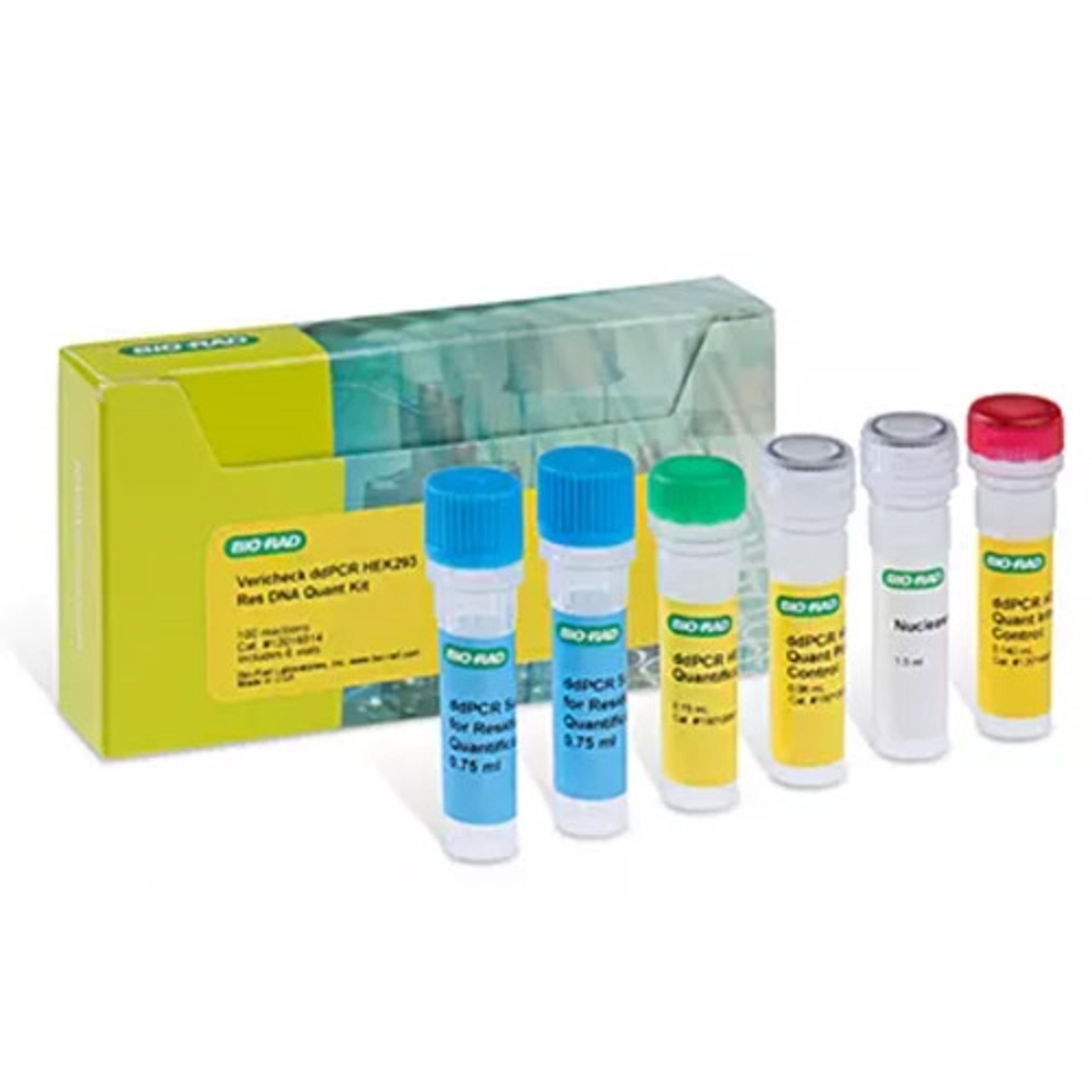
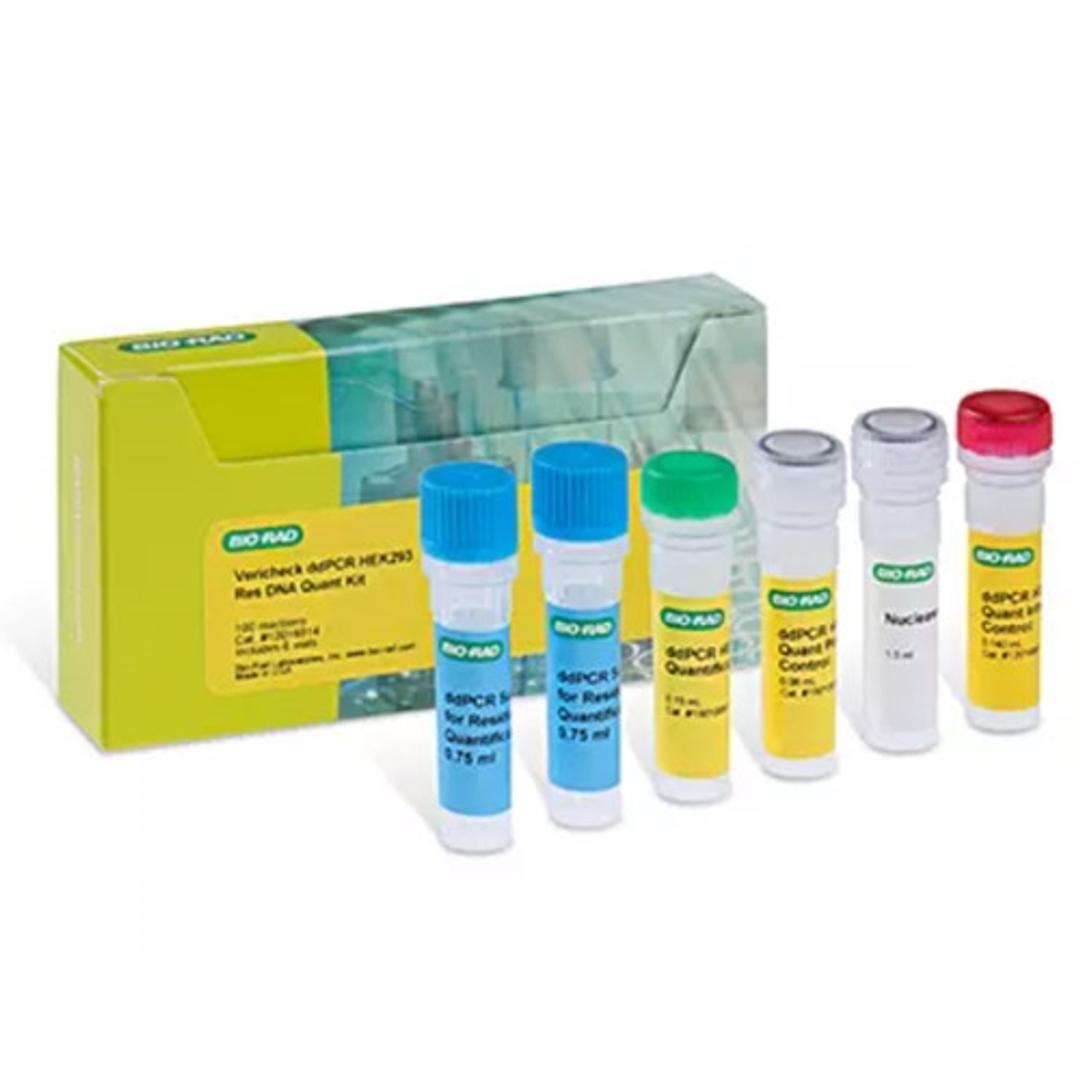
Vericheck ddPCR HEK293 Residual DNA Quantification Kit
The Vericheck ddPCR HEK293 Residual DNA Quantification Kit, with a novel ddPCR assay, has been designed to quantify residual HEK293 DNA in biotherapeutics with high specificity and reproducibility, without the need for reference curves.

The supplier does not provide quotations for this product through SelectScience. You can search for similar products in our Product Directory.
Biotherapeutic products are manufactured in immortalized cell lines, most commonly HEK293. Residual DNA from HEK293 lines can harbor tumorigenic genetic sequences or retroviral sequences that could be transmitted through the biotherapeutic to the human recipients. Accurate quantification of HEK293 DNA is essential to produce a safe and appropriate therapeutic dose. However, the standard methods used for such quantification, like qPCR, face challenges due to lack of specificity and reproducibility. The Vericheck ddPCR HEK293 Residual DNA Quantification Kit, with a novel 5-plex ddPCR assay, has been designed to quantify residual HEK293 DNA in biotherapeutics with high specificity and reproducibility, without the need for reference curves.
The Vericheck ddPCR HEK293 Residual DNA Detection Kit provides:
- High Sensitivity and Specificity
- LOD of 0.1 pg/µl (3 wells) and LOQ of 1 pg/µl (3 wells)
- Low cross-reactivity and low false-positive rate
- 99.9% specificity to HEK293 DNA when tested against CHO, E. coli, and Vero DNA
- Extraction-free, easy-to-use protocol
- The assay works with broad range of sample types from in-process samples (cell lysate, cell culture media, sonicated sample, AAV) to purified final product (PBS with human serum albumin) using an extraction-free workflow
- Auto-thresholding with Regulatory Edition software
- Automated data analysis using in-kit positive control
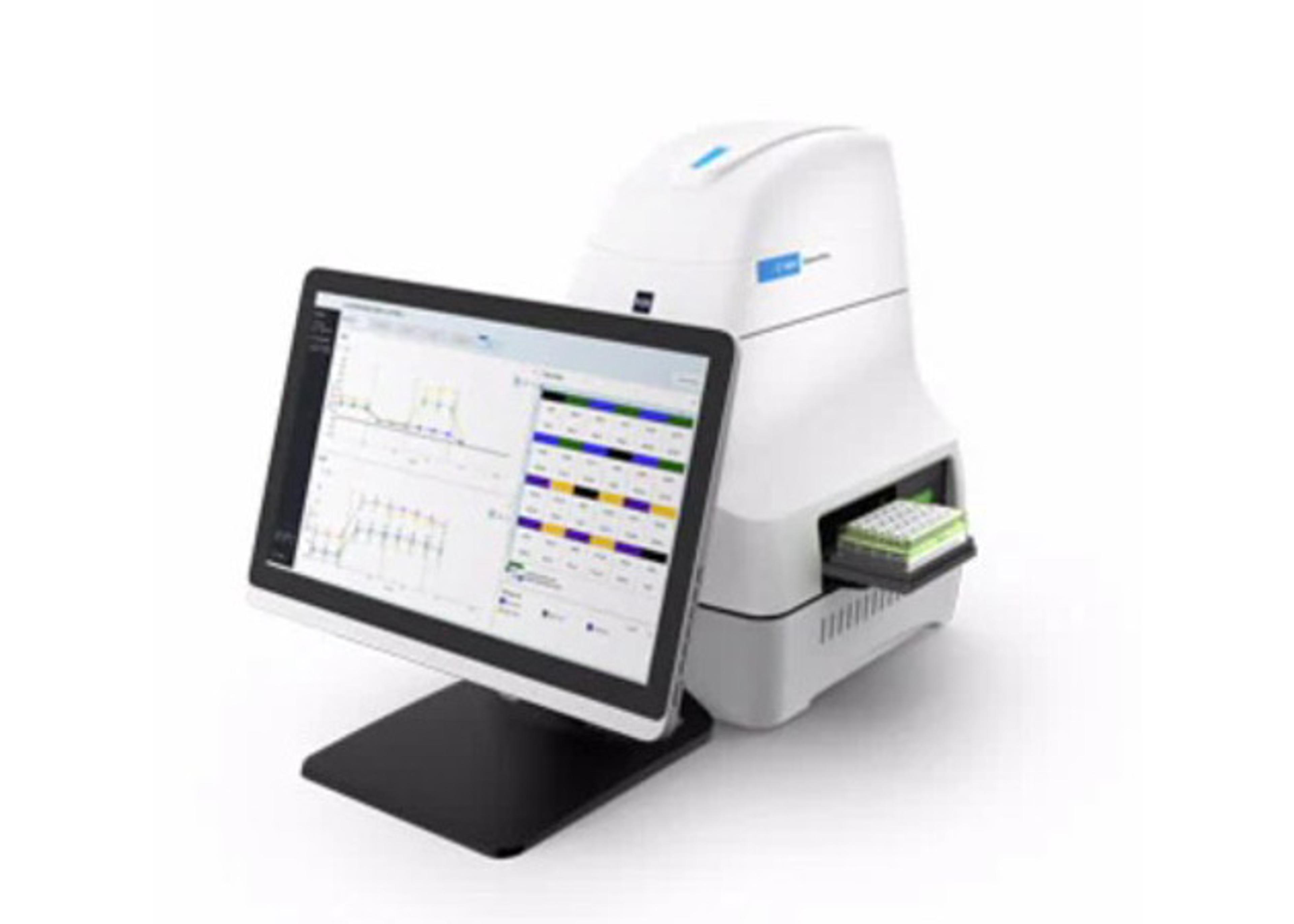
- QX Manager Software / QX ONE Software Regulatory Edition, offering tools and audit trails with tracked protocol changes to help with US FDA 21 CFR Part 11 compliance

Addressing the challenges of residual host cell DNA contamination
In this application note, Bio-Rad addresses the challenges of residual host cell DNA contamination in cell and gene therapy products. Residual host cell DNA contamination poses risks such as dangerous immune responses and oncogenic effects, compromising the safety and therapeutic benefits of the products. Regulatory standards require limiting residual host cell DNA to safe levels. Traditional methods like qPCR and BioAnalyzer have limitations in quantification and sizing.
Droplet Digital PCR (ddPCR) technology emerges as a superior solution, offering absolute quantification, sensitive and specific results, and automated workflows. Bio-Rad's Vericheck ddPCR HEK293 Residual DNA Kits provide HEK293-specific solutions for quantification and sizing, enabling compliance with regulatory guidelines and improving safety confidence in the final products. These kits simplify residual DNA testing, provide high sensitivity, and offer a streamlined workflow for efficient analysis.
Addressing the challenges of residual host cell DNA contamination
Amidst all the exciting advancements, there are still challenges to overcome to manufacture therapeutics of this type reliably. One persistent problem is residual host cell DNA contamination. In this application note, Bio-Rad provides information on the latest methods to address the challenges of residual host cell DNA contamination and achieve higher-quality PCR data.
Detecting HEK293 residual DNA contamination in your cell or gene therapy products
Cell and gene therapies begin their development with the help of a host cell line, but before the product can be administered to a patient, any trace of the host cell DNA must be removed to avoid oncogenic effects. In this application note, Bio-Rad provides an overview of how to detect HEK293 residual DNA contamination in your cell and gene therapy products.
Detecting Mycoplasma contamination in your cell culture with confidence
Cell cultures are an invaluable tool in biopharmaceutical laboratories. However, they are vulnerable to contaminants, such as bacteria, yeasts, molds, viruses, and mycoplasma. Some contaminants, such as mycoplasma, are harder to detect than others. This infographic from Bio-Rad explores mycoplasma contamination in cell cultures and the best technologies for detection.
Detecting HEK293 residual DNA contamination in your cell or gene therapy products
Cell and gene therapies begin their development with the help of a host cell line, but before the product can be administered to a patient, any trace of the host cell DNA must be removed to avoid oncogenic effects.
In this application note, BIO-RAD introduces its ddPCR technology, a fast, precise, and reproducible molecular detection method for HEK293 residual DNA contamination that provides high sensitivity and a quantitative readout that reports genome copies per reaction.

Highly specific and reproducible quantification and sizing of HEK293 residual host cell DNA with extraction-free protocol
In this webinar, we will discuss adeno-associated virus (AAV) vectors used in gene therapy and how to ensure their quality. We will also explore how host cell residual DNA (rDNA) can occur and why it is important to detect this in gene therapy vectors.
Key learning objectives:
- Understand the importance of ensuring AAV vector quality
- How rDNA can occur in the production process
- How to ensure specific and quantitative results from rDNA analysis
- Explore the challenges of rDNA testing and how they can be overcome
- Learn about the emerging technologies that could aid rDNA testing
Who should attend?
- Cell and gene therapy scientists working on developing and manufacturing gene therapy products
Certificate of attendance
All webinar participants can request a certificate of attendance, including a learning outcomes summary, for continuing education purposes.

High-precision Vericheck ddPCR Empty-Full Capsid Kit advances gene therapies
The Vericheck ddPCR Empty-Full Capsid Kit from Bio-Rad combines measuring viral titer and capsid titer, providing a high-precision assessment of both protein and DNA in droplets