
Ultim Max and AZtecLive
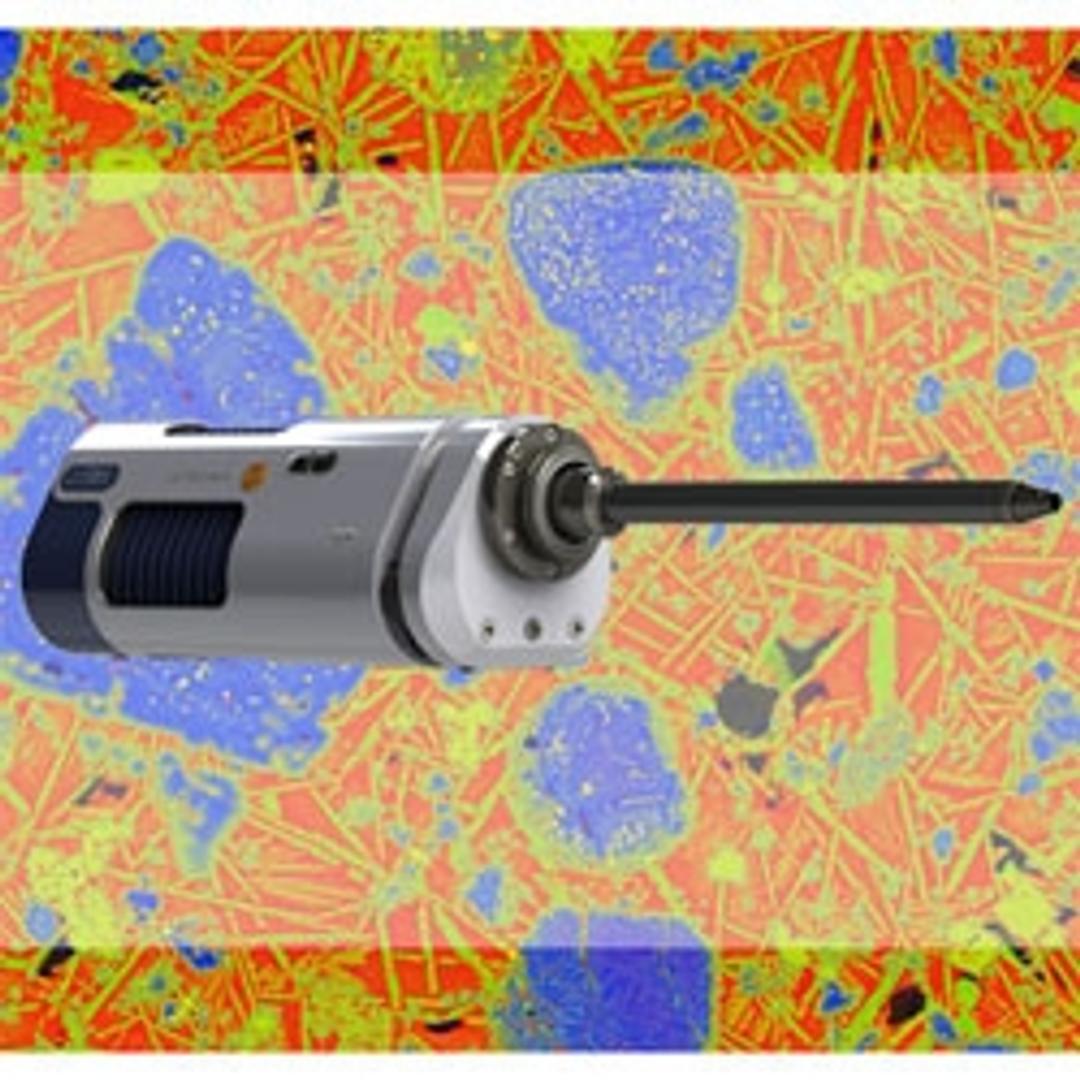
AZtecLive and Ultim™ Max (Silicon Drift Detector) for EDS analysis, combine live electron images with live X-ray chemical imaging to allow a revolutionary change in how users investigate their samples in the SEM.

Receive your quote directly from the manufacturer.
AZtecLive allows for a fast and detailed investigation of a sample. Navigating a sample no longer requires you to move between the microscope and the EDS software. Just travel around the sample whilst viewing Live TV rate electron image and X-ray maps. Stop when you find an area of interest and AZtecLive will automatically switch to integration mode for high quality image collection and X-ray maps to see your sample in detail.
AZtecLive is paired with Ultim™ Max. Large SDD sensors allow up to 17x more data collection at any one time with no decrease in accuracy. Regardless of whether you want better statistics at each data point, to map larger areas, collect data faster, or to investigate the smallest nano-structures, Ultim Max is the ideal solution for your X-ray analysis in the SEM.
Features
- Live chemical imaging
- Automatic recording of analysis with Live Trace
- Sensor area up to 170 mm2
- Quantitative analysis at 400,000 cps
- EDS mapping at >1,000,000 cps
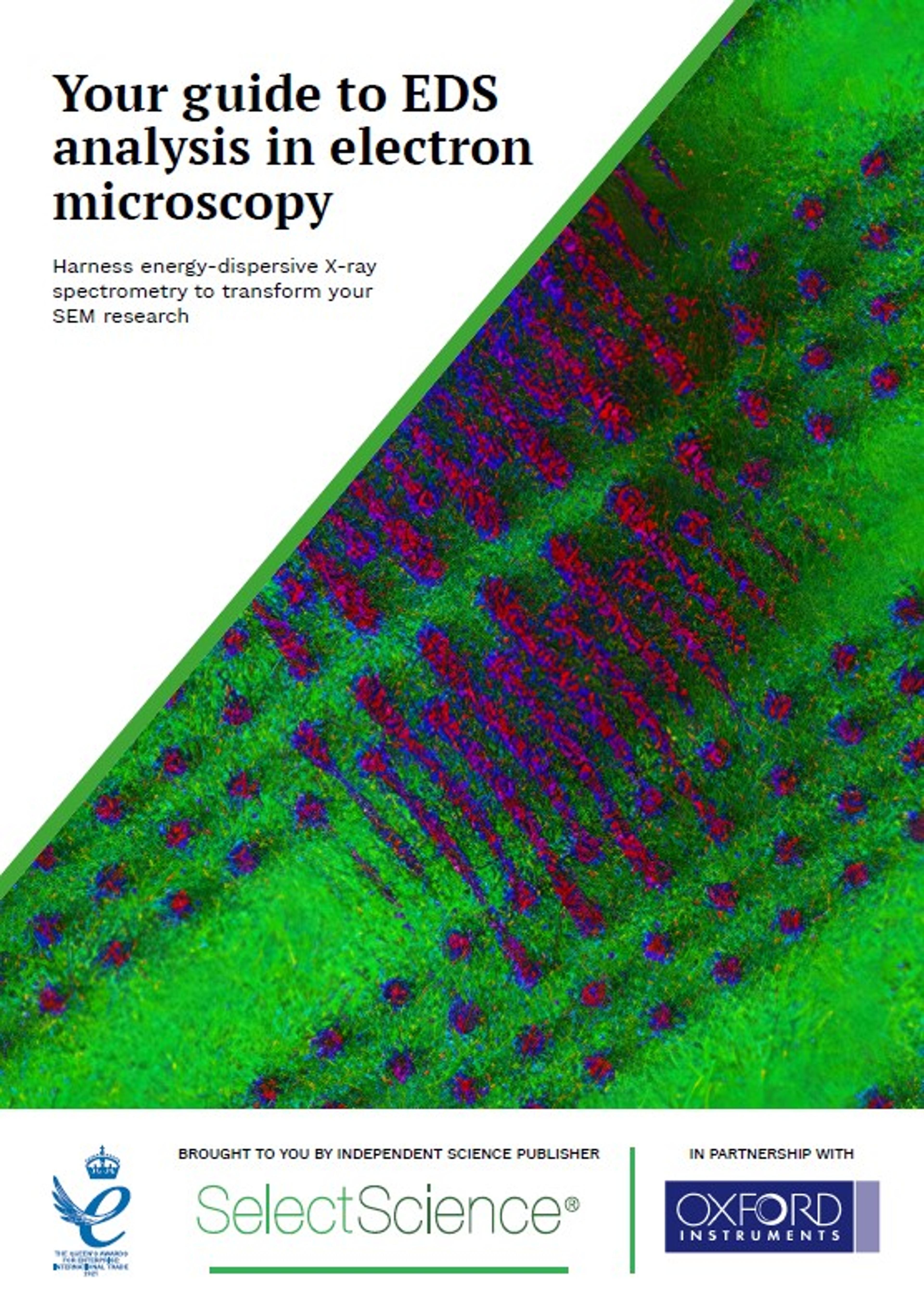
Your guide to EDS analysis in electron microscopy
Harness energy-dispersive X-ray spectrometry (EDS) to transform your scanning electron microscopy (SEM) research with this free guide which covers:
- Questions EDS can answer
- How to prepare biological specimens for EDS
- Benefits of combining EDS with advanced SEM techniques
- The ideal EDS detector
Explore a variety of application resources and find out how to enhance your EM research using EDS. Download to discover how EDS can provide invaluable compositional information to greyscale ultrastructural images via color EM, how to select your detector for low-energy X-ray analysis, and how EDS can unlock a simpler and smarter sample preparation.

Energy dispersive x-ray spectrometry (EDS) for biology
In this white paper, Oxford Instruments presents a brief introduction to energy dispersive X-ray spectrometry (EDS) and discusses the improvements this method provides in terms of sensitivity and stability when compared to older detectors. It also discusses how EDS can be used to analyze differential staining protocols of biological samples.
Analyzing a NAND Flash memory device using low kV EDS
In this application note, Oxford Instruments NanoAnalysis demonstrates that increasing detector sensitivity, either by sensor size, sensor-sample distance, or window removal, it is possible to collect X-ray counts at high resolution imaging condition and achieve elemental maps with sub 20nm spatial resolution even on the lightest of elements. This, combined with the data processing of Aztec TruMap, allows the accurate mapping of elemental distributions in complex specimens with nano-structures such as a NAND flash memory device.
Product Overview
Links
Featured products
Request Quote for All Products
Ultim® Max and AZtecTEM
Oxford InstrumentsAZtecTEM, powered by Ultim™ Max (Silicon Drift Detector), provides exceptional elemental characterisation abilities in the TEM.