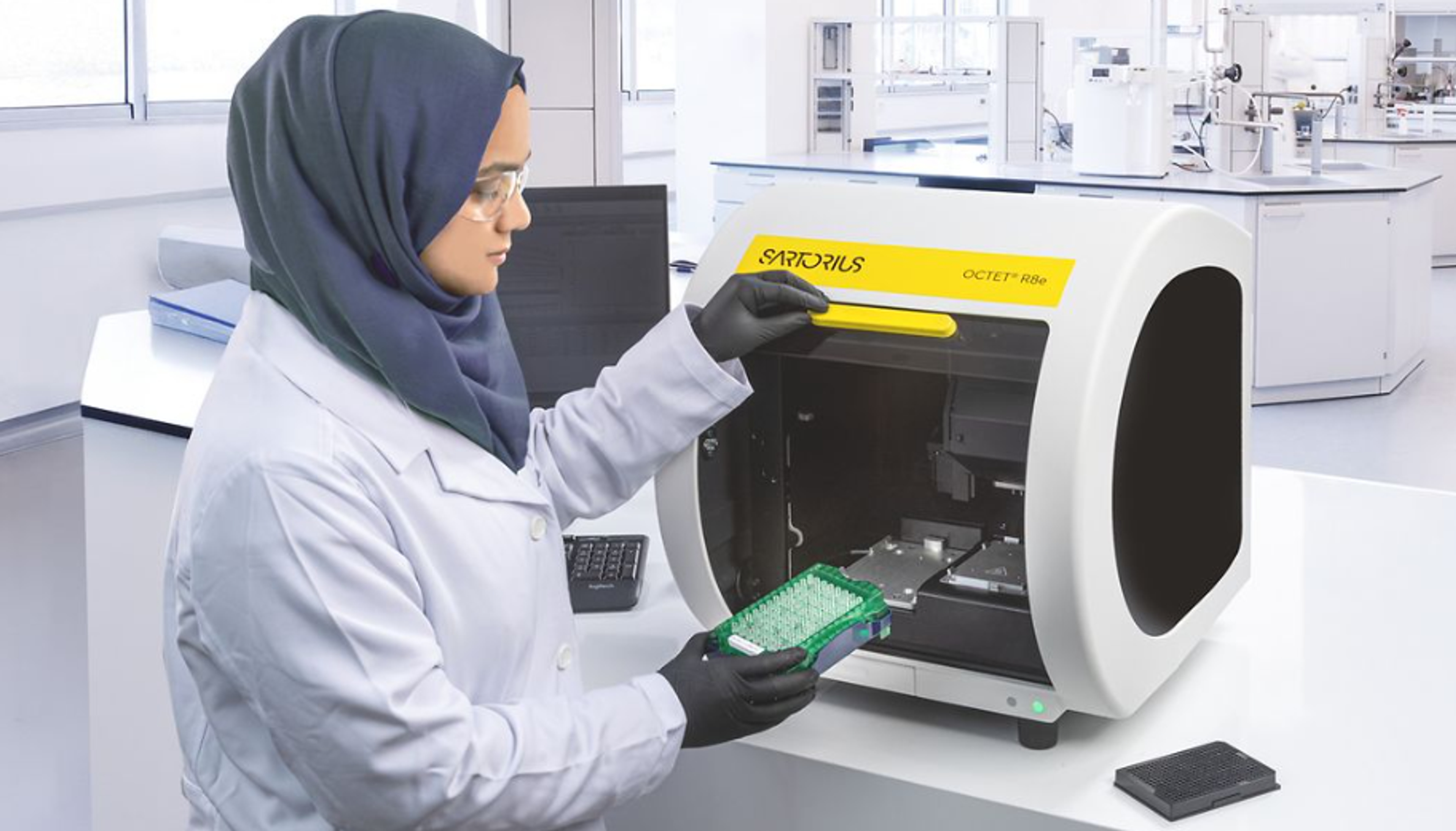
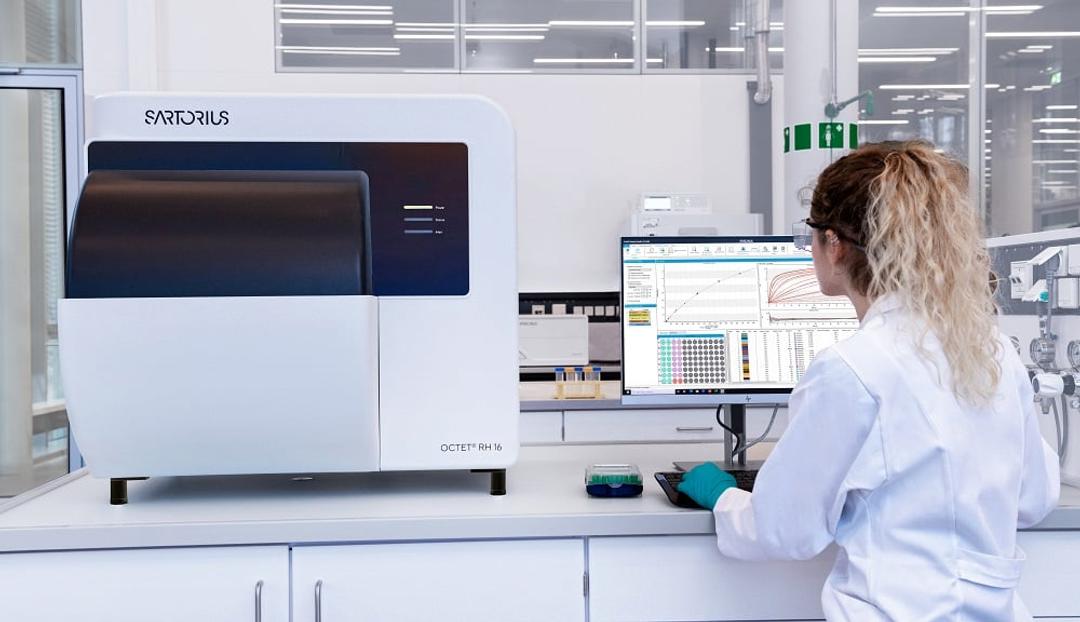
Octet® RH16 BLI System
High throughput label-free performance.



Receive your quote directly from the manufacturer.
Wide range of applications and user friendly.
Antibody charecterization and confirming protein activity and correct folding
Very easy to use, ccurate and replicable results.
Review Date: 18 Nov 2019 | Sartorius Group
Optimization of cell selection and good performance. I approve of the Octet Red 384.
Selection of antibody-producing cells
The equipment is suitable for obtaining cells that produce antibodies, selected by a sensors capable of producing fast results. The Octer Red 384 obtains the best lymphocytes at an acceptable cost because it provides lots of cell data bound to the antigen / antibody ratio in a short time.
Review Date: 3 Jun 2019 | Sartorius Group
We use the Octet RED384 because it is accurate, fast and easy to work with.
Optimize selection of new antibody producing cells
We use the Octet RED384 system to help optimize the selection of new antibody producing cells. The way the Octet RED384 uses Bio-Layer Interferometry (BLI) allows for binding assays to be conducted without having to label the antibody or antigen, and can be performed on supernatant level, being a great advantage for us compared to traditional and time consuming ELISAs.
Review Date: 28 Nov 2017 | Sartorius Group
Nice device which is perfect for epitope binning and obtaining kinetics quickly
Kinetics and epitope binning
The Octet RED384 can quickly generate a lot of data. The sensitivity appears to be lower than SPR platforms nevertheless it is worthwhile to consider since the sensors are significantly cheaper and data can be generated very fast.
Review Date: 3 Aug 2017 | Sartorius Group
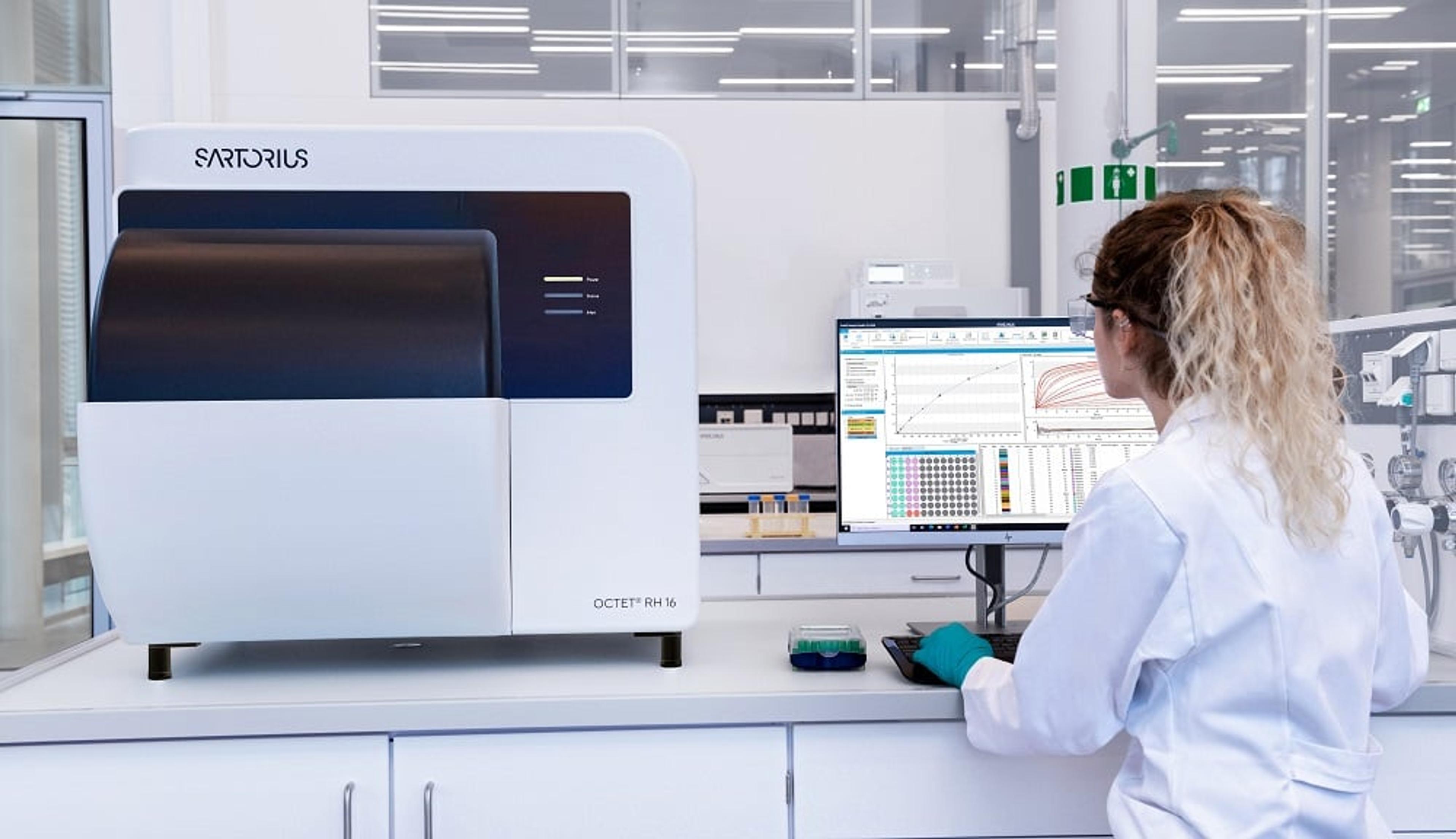
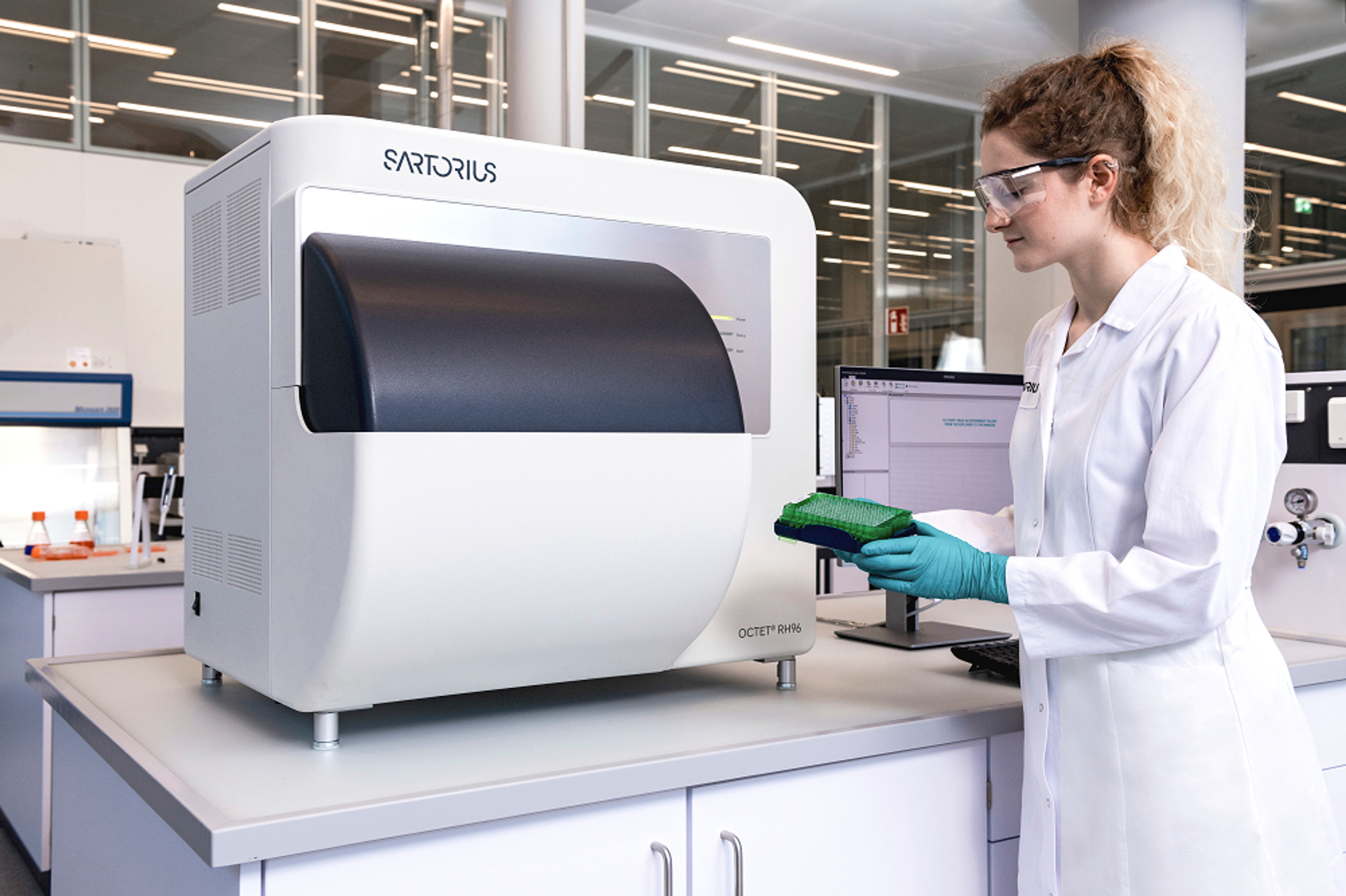
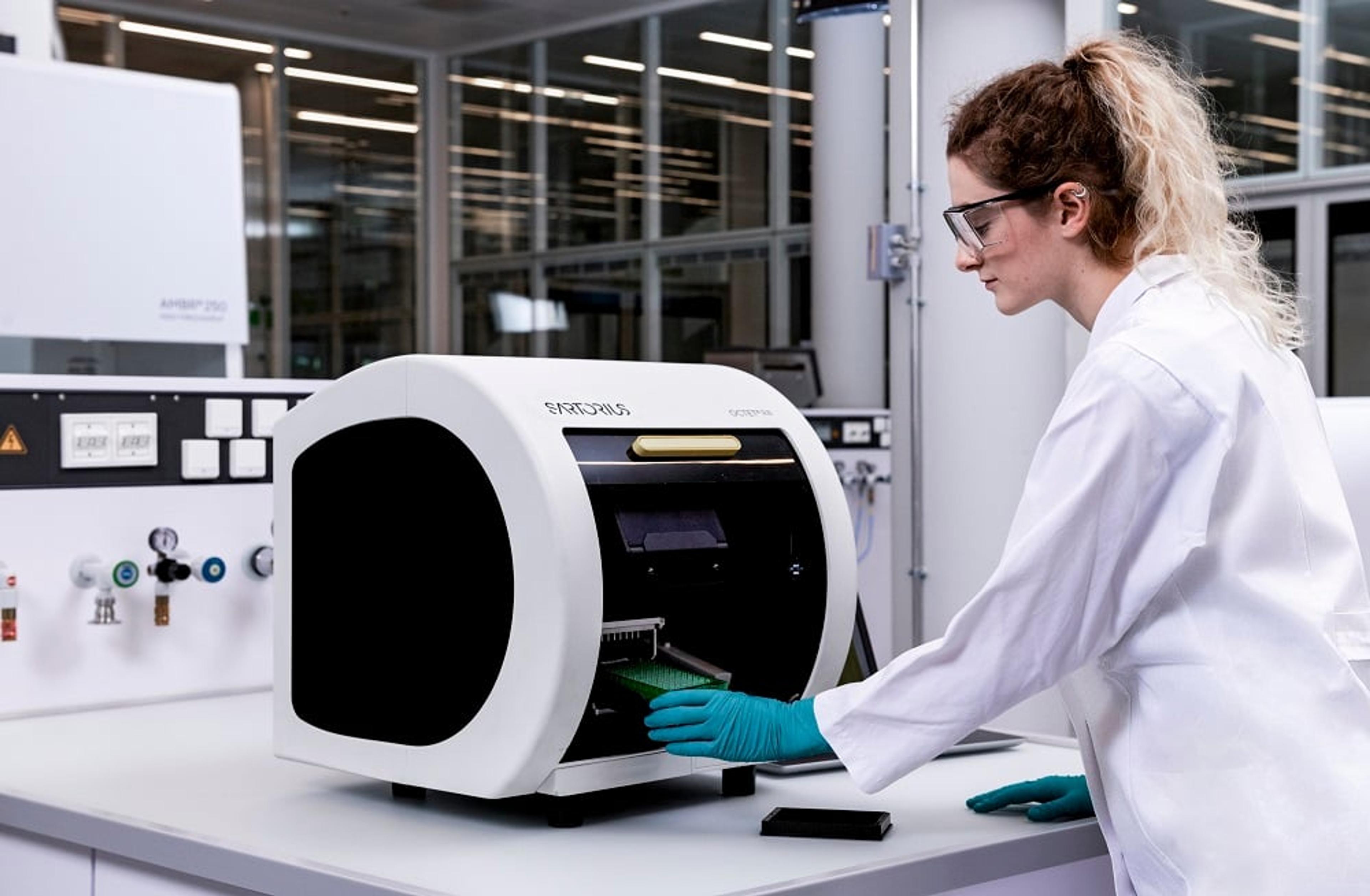
The system provides analytical performance similar to the 8- channel Octet® R8 system, but with higher levels of throughput, speed, and flexibility. The high detection sensitivity and impressive throughput of Octet® RH16 system has made it a favorite for small molecule library screening and analysis of large cross-competition binding matrices. Kinetic analysis including association and dissociation of biomolecules can be performed on up to 384 samples in one 384-well microplate.
Fully automated workflows can be realized due to integrated robotic solutions, extending the unattended run time of the system. Target ligands can be batch immobilized onto biosensors and returned to the biosensor tray for re-use in future experiments, thus extending the number of uses for each biosensor, preserving valuable ligand, and maximizing flexibility in experimental design.
Key benefits:
- Sensitivity - Detection of low molecular weight molecules (≥ 150 Da)
- High throughput - 16-well simultaneous sampling in 384-well and 96-well formats
- Flexibility - Two plate locations maximize throughput and improve workflow
- Unattended operation - Automation friendliness allows multiple-plate assays in one run
- User-friendliness - Advanced software offers greater versatility in experimental design and data analysis
Brochures

Integrated Octet Systems Tailored by Advanced Workflow Engineering Solutions (AWES)
The Octet® HTX and RED384 Systems are the industry-leading platform for monitoring the binding of proteins and other biomolecules directly in real-time. With the ability to read up to 96 samples in parallel, the Octet system reduces titer determination and kinetic screening from hours to minutes.
Integrated solutions from the Advanced Workflow Engineering Solutions (AWES) team can help you maximize the throughput and unattended run time of the Octet HTX and RED384 systems, with round-the-clock operation. Pick and choose a variety of possible configurations — each with a varying amount of components like robotic arms, plate hotels, incubators, and more — that best fit your unique research needs.
Octet System Qualification Products and Services
This product brochure provides an overview of the qualification products and services that can help you meet your initial and ongoing system qualification requirements.
Octet Assay Systems: Dip and Read Assays
The Octet family of instruments is designed to meet a broad range of application and workflow requirements, including antibody characterization, a variety of protein interactions and vaccine research. The following brochure outlines the instruments in the Octet Assay family to ensure selection of the best instrument for your application.
Octet Assay Systems Brochure
This brochure outlines the Octet family of instruments and describes the wide range of applications they can be used for, including; interaction analysis, antibody characterization, vaccine research, lead optimization and pharmacokinetics. It also includes a simple guide to help you chose the right system and biosensor for your application.
Cell line development: Accelerating process optimization by combining Ambr 15 Cell Culture with Octet titer measurements
In this application note, Sartorius demonstrates the power of using the Ambr® 15 Cell Culture system with an integrated Vi-CELL XR and Ambr® Analysis Module together with an Octet® to identify optimum yield conditions in media screening and process optimization experiments.
Small molecule binding kinetics
This application note describes the method setup process for a successful protein-small molecule binding interactions analysis on Octet® R2, R4, R8, RH16, and RH96 instruments. Discover tips on best practices for the preparation of optimal reagents for small molecule binding studies and data analysis including data referencing procedures.
A fast and high-precision influenza vaccine potency assay
This application note presents a vaccine potency assay performed using Octet systems, in which samples are analyzed in their natural state without the use of detergents. Octet systems are capable of analyzing whole virus, split virions and recombinant HA vaccine samples.
Cell line development: Accelerating antibody discovery by monitoring titer and glycosylation with the Octet® platform
In this application note, Sartorius details how the Octet® systems can be used for rapid titer of antibody clones to enable quick selection of high-producing clones.
Octet Systems: Superior performance, unrivaled flexibility
Your research should be guided by your imagination, not by the limitations of your label-free system. In this brochure, Sartorius introduces the Octet® platform's, with flexible, open-format design and comprehensive menu of biosensors letting you attack research challenges in unique new ways.
Bio-layer interferometry (BLI) technology
In this infographic, Sartorius presents a label-free alternative for characterizing protein-protein and drug-protein interactions in standard microtiter plate format and helps you choose an Octet® system tailored to your particular requirements.
Mannose glycans content screening for human-mAb samples using the Octet GlyM Kit
In this application note, Sartorius showcase an approach to screen for mannose content in human mAb samples utilizing the Octet® GlyM Kit.
Accurate measurements on the Octet platform without added sample purification steps
Accurate quantitative assays performed on crude samples offer unprecedented time and cost savings. This overview highlights a few examples from drug discovery and process development where the Octet® system demonstrated a significant reduction in the analysis time over ELISA and HPLC by eliminating the need for purification, while still achieving high accuracy and precision. The total assay times were dramatically reduced with fewer assay steps and less labor time involved.
How are label-free technologies used in early drug discovery?
While traditional biochemical analysis methods such as ELISA and western blots are still used in drug discovery, more and more scientists are adapting label-free analytical techniques in their workflows. In this application note, Sartorius outlines the features of the Octet® system that makes it ideal for lead selection in early drug discovery. To learn how BLI technology on the Octet® is designed to significantly reduce the time it takes to identify, select and optimize therapeutic drug candidates, download the full article below.
Robust and versatile platform for label-free interaction analysis
In this brochure, ForteBio showcases the Octect Platform for real-time, label-free analysis for determination of affinity, kinetics, and antibody/protein concentration. Assays are performed using biosensors, reagent and assay kits in 96- and 384-well microplates making it a significantly easier and faster technique than other comparative label-free technologies.

Accelerate assay development and reduce cycle times for AAV quantification in complex biological samples
Assessing AAV vector quality in gene therapy manufacturing is crucial, but the current gold standard, serotype-specific ELISA, has its drawbacks — time-consuming and prone to matrix effects. In this webinar, Dr. Yoann Saucereau from ExcellGene reveals how a label-free approach not only cut down on complexities in biological matrices but also enabled a quick, routine method. Now, ExcellGene effortlessly analyzes up to 96 samples in under 30 minutes for efficient AAV platform development.
Key learning objectives
- Explore how suitable QC workflows are established in AAV development and manufacturing
- Discover the critical role of assay design and development to determine correct binding kinetics, affinity values or analyte concentrations
- Consider the optimization and evaluation of an AAV titer assay in comparison to Octet® AAVX Biosensors
Who should attend?
- Lab researchers
Certificate of attendance
All webinar participants can request a certificate of attendance, including a learning outcomes summary, for continuing education purposes.
Octet® Systems for Biologics Characterization
Learn why so many choose ForteBio Octet® Systems in these customer testimonials.

4 upcoming webinars to accelerate your research
Discover the latest tools and techniques to expand your research capacity with expert-led presentations on biosafety, spectroscopy, flow cytometry, and more

Addressing global viral threats with biolayer interferometry technology
Discover how molecular virologists are making strides in SARS-CoV-2 research, and the technology that powers their research
Scientists rate the latest technologies in the field of engineered antibodies
Take a look at what other researchers and scientists are saying about cutting-edge technologies in engineered antibodies
10 top new resources to advance your engineered antibody research
Explore our exclusive interviews, free downloads, latest methods, and much more to help support your antibody research

Transform your immunoassay: Choose the right antibody for you
Dr. Christian Frisch explains how to design a reliable assay and reveals how Bio-Rad and Sartorius teamed up to help scientists achieve peak immunoassay performance
Trends in Drug Discovery: Antibody Engineering, Protective Antibody Treatments, Streamlining Antibody Discovery & More!
Find all the latest developments in antibody engineering and June’s top content from our drug discovery community
Special Feature: 5 Technologies Advancing the Development of Engineered Antibodies
High-throughput screening, antibody labeling, bispecific studies and more

‘Our Mission to Meet the Increasing Demand for New Recombinant Antibodies in Pharma’
As the global antibody market hits new heights, meet one scientist working to bridge the gap between biomarker discovery and antibody development with high-speed phage-display technology