TwoMP Auto
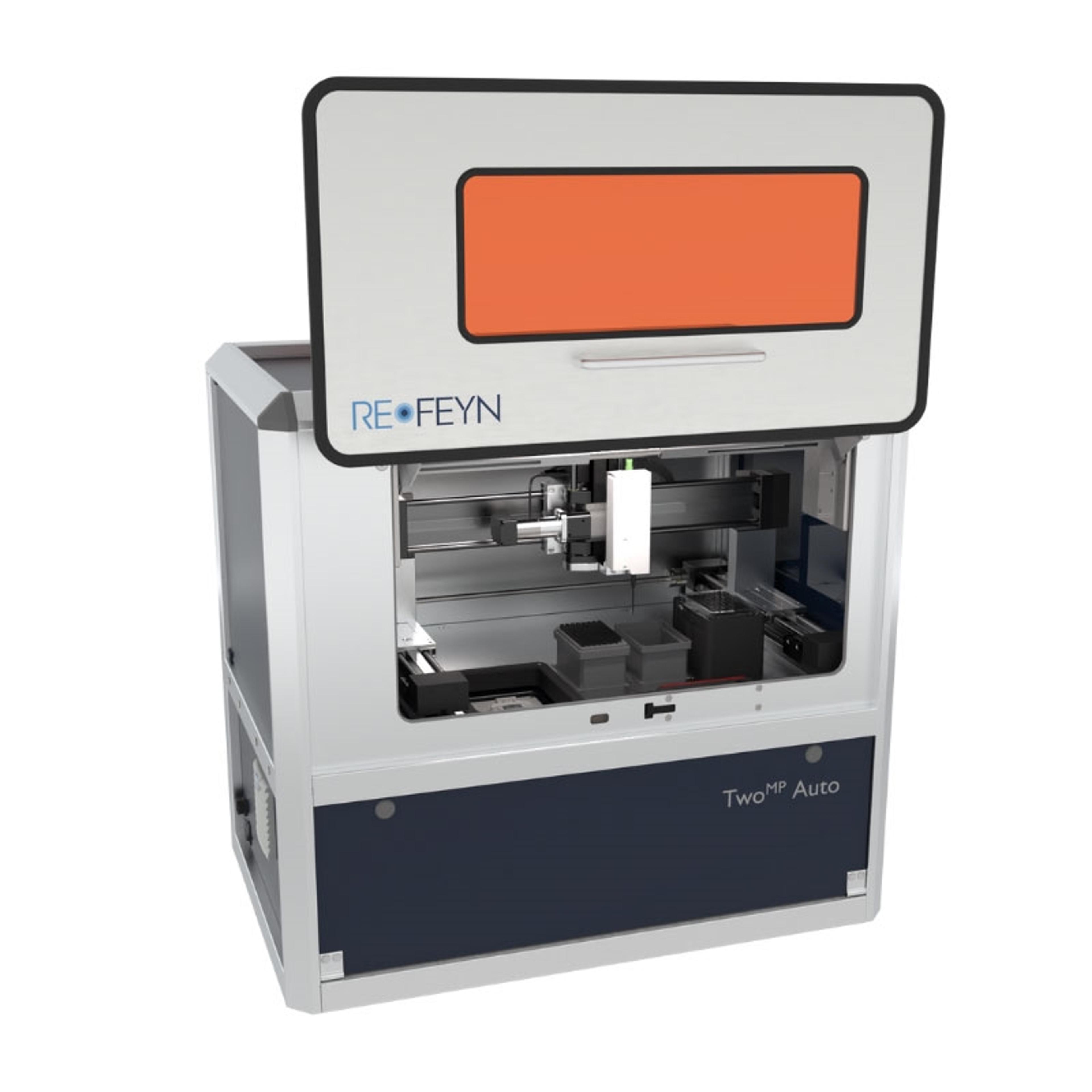
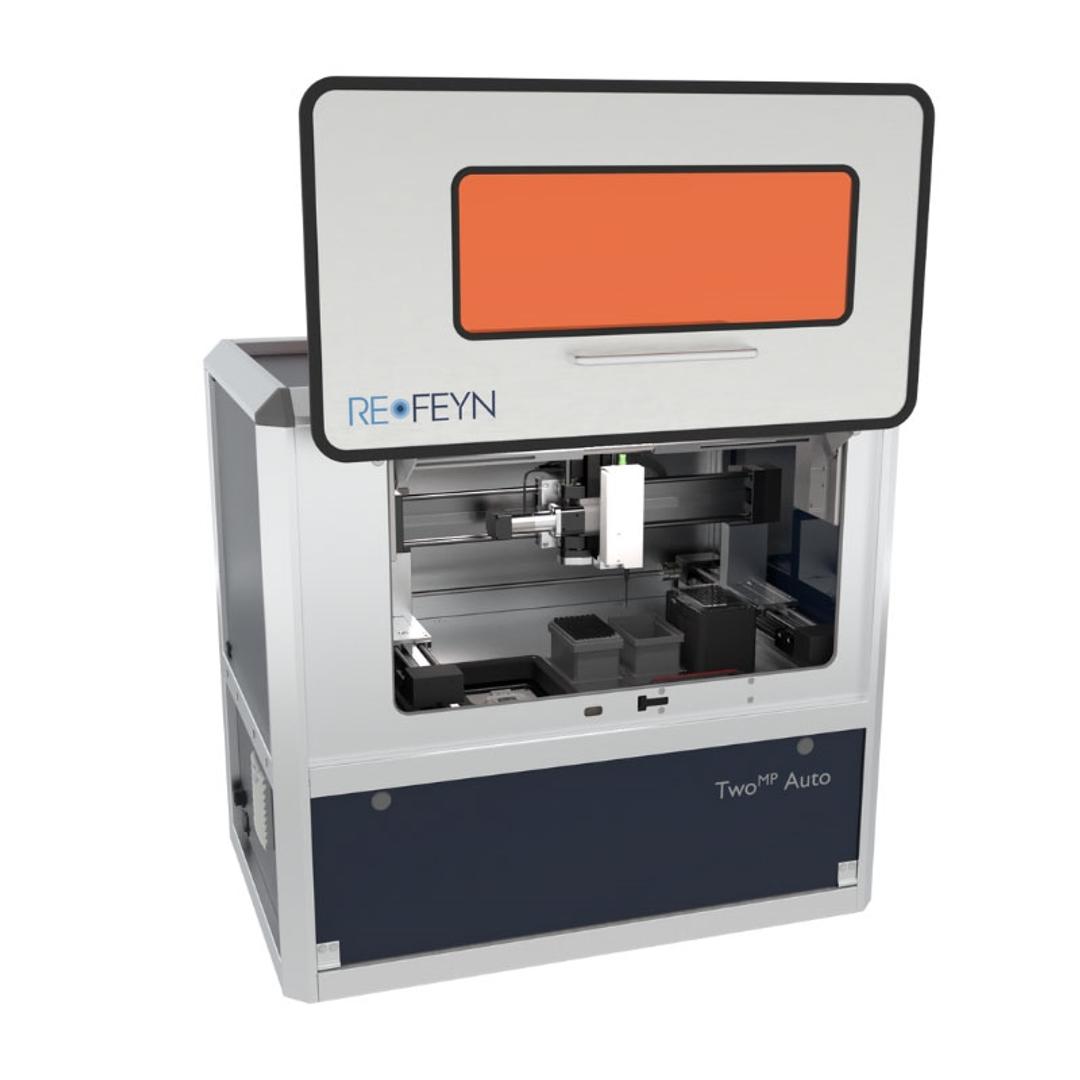
The TwoMP Auto combines the ease and efficiency of automation with the unmatched sensitivity and simplicity of Refeyn’s molecular mass measurement technology. It frees up operator time and offers enhanced precision, enabling rapid measurement of multiple samples with low sample consumption.
Harness the power of automated mass photometry
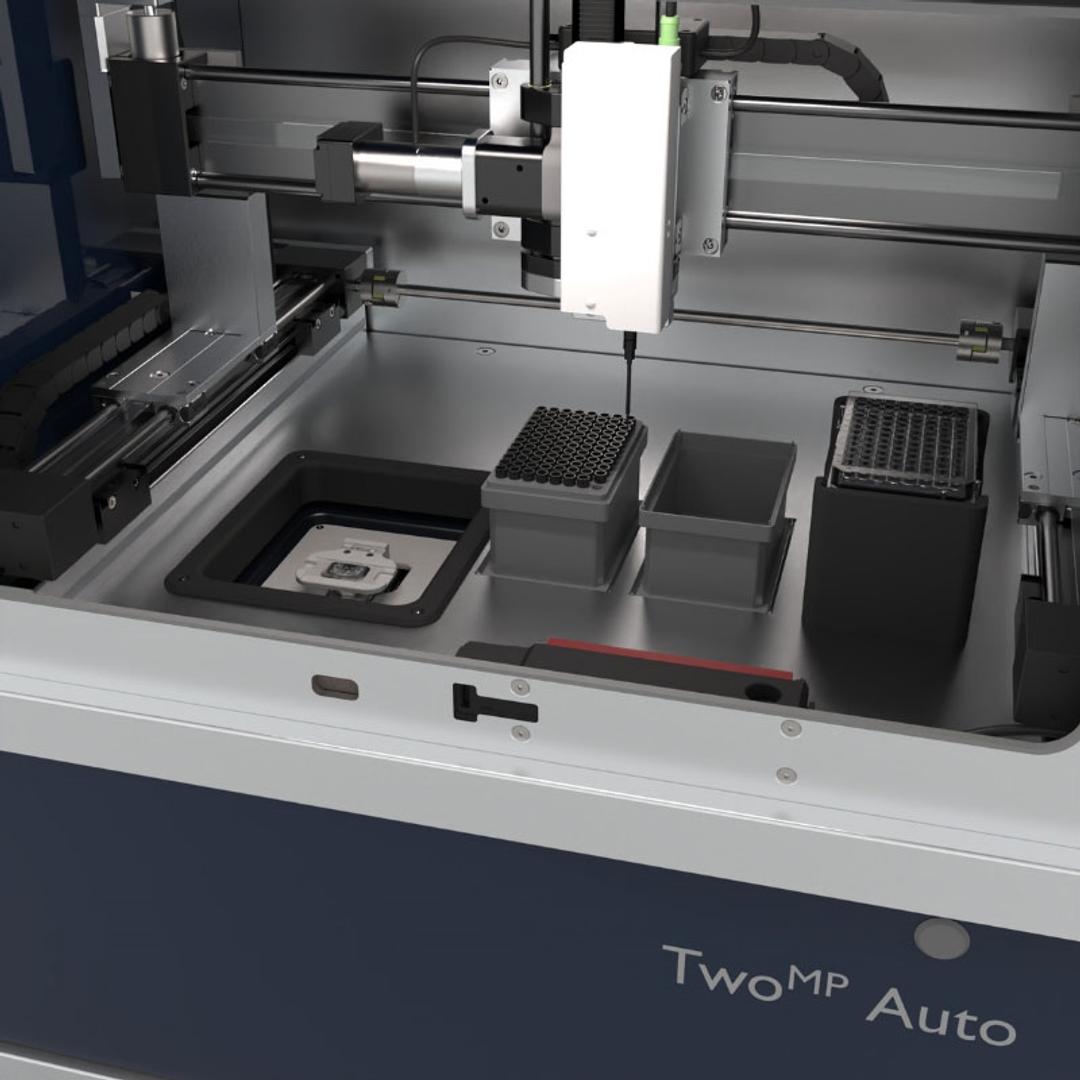
Automated mass photometry : Detailed view of instrument

The supplier does not provide quotations for this product through SelectScience. You can search for similar products in our Product Directory.
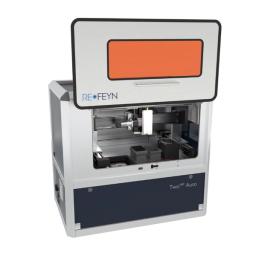
The TwoMP Auto consists of a robotically controlled mass photometer that can autonomously measure 14 samples, including calibrants, in one hour. It is ideal for a range of applications, including titration assays as well as screening. Automated mass photometry is perfect for any task that requires precise and efficient repeated molecular mass characterization. The robotics unit can be retrofitted to both the OneMP and TwoMP Refeyn mass photometers produced by Refeyn.
The TwoMP Auto is intuitive, and a single software interface enables the operator to control the entire data acquisition process. The operator defines a protocol for sample mixing and measurement; and loads the sample, buffers, calibrants, and any other necessary solutions onto a 96-well plate. The robot follows that pre-defined protocol to transfer components from the 96-well plate to a multi-well gasket on the mass photometer that can hold 14 samples. The first and final wells of the gasket are typically used for calibrants, providing an internal validation control. Then, the robot autonomously runs the mass measurements, returning the data to the operator for further analysis. The TwoMP Auto offers all the essential benefits of mass photometry – each experiment uses minimal sample, takes just minutes and the results can be intuitively interpreted.
Key benefits of automated mass photometry
Automated mass characterization of biomolecules
Highly reproducible data
Compatibility with Refeyn OneMP and TwoMP
Plus, all the benefits of mass photometry

Characterization of forced antibody degradation with automated mass photometry
Mass photometry is a label-free bioanalytical tool that can assess antibody fragmentation and/or aggregation in response to induced stressors, such as light, pH and peroxide. In this application note from Refeyn, explore the TwoMP Auto which allows rapid, automated measurements of multiple samples with high reproducibility, across a wide mass range.
Quantifying protein binding affinities using mass photometry
In this application note, Refeyn presents a study demonstrating the application of mass photometry in the investigation of complex protein-protein interactions. Focusing on Immunoglobulin G (IgG) antibodies from different species and protein A, this study quantifies the abundance of proteins and their complexes in solution. Utilizing Refeyn’s TwoMP Auto mass photometer's automated pipetting feature ensures highly reproducible data. By analyzing these measurements, the equilibrium dissociation constant (KD) for each interaction is calculated, providing valuable insights into the strength and nature of these interactions.
Characterizing protein oligomerization with automated mass photometry
In this application note, Refeyn discusses the importance of protein oligomerization and its role in protein function. Mass photometry is a powerful technique for studying protein oligomerization, as it provides high-resolution mass distributions of proteins in solution. Automation through Refeyn's TwoMP enhances the benefits of mass photometry, enabling rapid screening and analysis of oligomeric states. The experiments presented demonstrate the ability of mass photometry to characterize oligomerization behavior and the influence of factors like calcium concentration and inhibitor molecules.
Analyze PROTAC ternary complex formation in solution, label-free!
In this application note, discover how mass photometry allows you to analyze ternary complex formation without the need for protein labeling or immobilization. Learn how experiments take only minutes and allow you to assess the full range of behaviors important for PROTAC (PROteolysis-TArgeting Chimera) mechanistic function, using minimal sample.

Refeyn introduces MyMass instrument to simplify sample quality assessment for structural biology
Compact, all-in-one mass photometer helps researchers verify sample quality before proceeding to cryo-EM, native MS, BLI, SPR, and other costly experiments