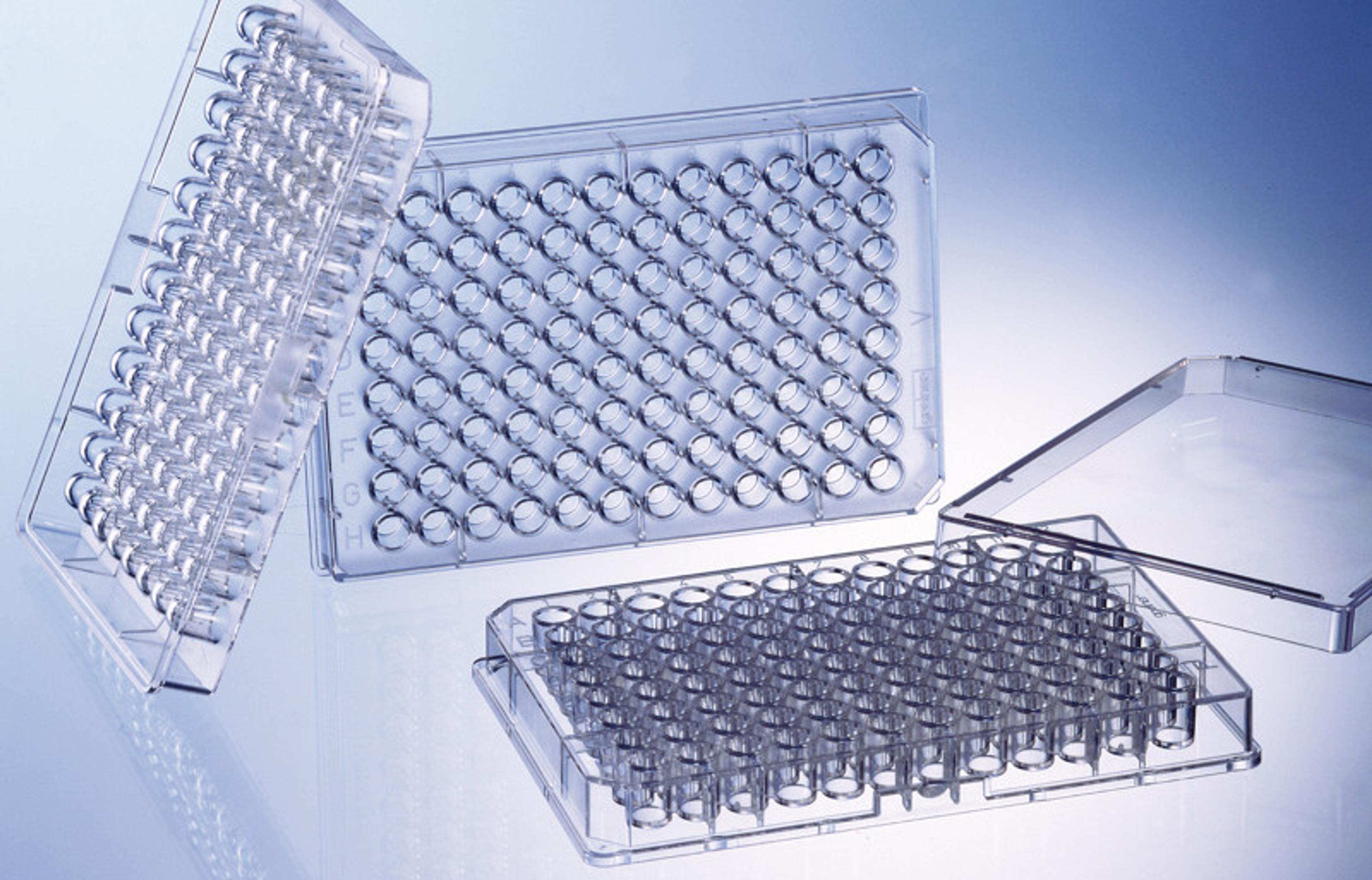
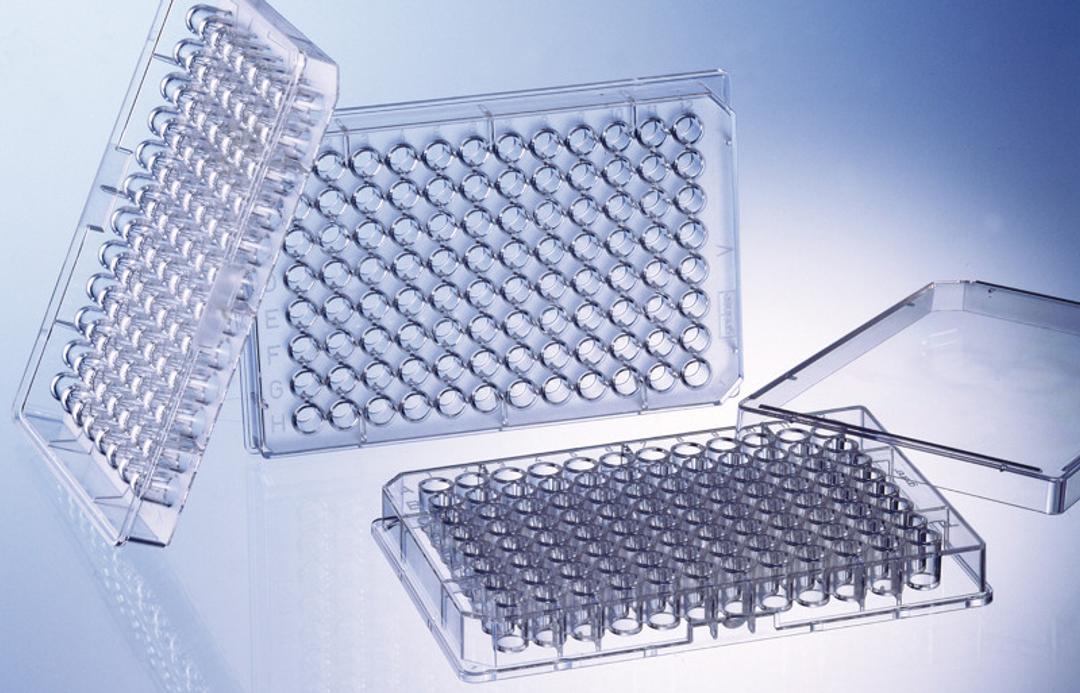
96 well ELISA microplates
96 well ELISA microplates
96 well ELISA microplates
The supplier does not provide quotations for this product through SelectScience. You can search for similar products in our Product Directory.
Good quality plates, could stack better
Cell culture
Good quality plates with no spaces between wells. Plates are a little precarious when stacked, however.
Review Date: 20 May 2022 | Greiner Bio-One GmbH
Great, never had any problems.
Analyze serum and cell culture supernatant
This product is easy to use and stable. I had reproducible and reliable results.
Review Date: 8 Apr 2021 | Greiner Bio-One GmbH
Greiner Bio-One has been manufacturing microplates for diagnostics and immunological research for over 30 years. A wide variety of microplates with different surface treatments and well profiles is available. The microplate footprint is compatible with automated systems.
Brochures

Microplate selection guide
In this brochure, Greiner Bio-One GmbH aims to offer an overview of microplates, focusing on their applications and suitability for different research needs. Advancements in research technologies have led to various platforms used across different fields. Researchers face the task of selecting microplates tailored to their specific applications from a wide array of options. This brochure aims to provide a detailed solution to microplate selection.
UV/VIS Spectroscopy in Microplates UV-Star, μClear, MICROLON and CELLSTAR
Ultraviolet-visible (UV/VIS) spectroscopy is a classical analytical method for determining the chemical constitution of a substance and its concentration in aqueous solution. UV/VIS spectroscopy is usually conducted in quartz glass cuvettes. However, cuvettes do not provide sufficient throughput when dealing with large amounts of samples, and microplates can be used to speed up work. In this application note from Greiner Bio-One, learn about how transparent microplates (CELLSTAR®, MICROLON) or microplates with a clear film bottom (μClear®, UV-Star®) are frequently used in UV/VIS spectroscopy. UV/VIS is a subclass of spectroscopy which uses visible light and adjacent near ultraviolet (UV) ranges for the determination of the concentrations and the characterization of dissolved substances.