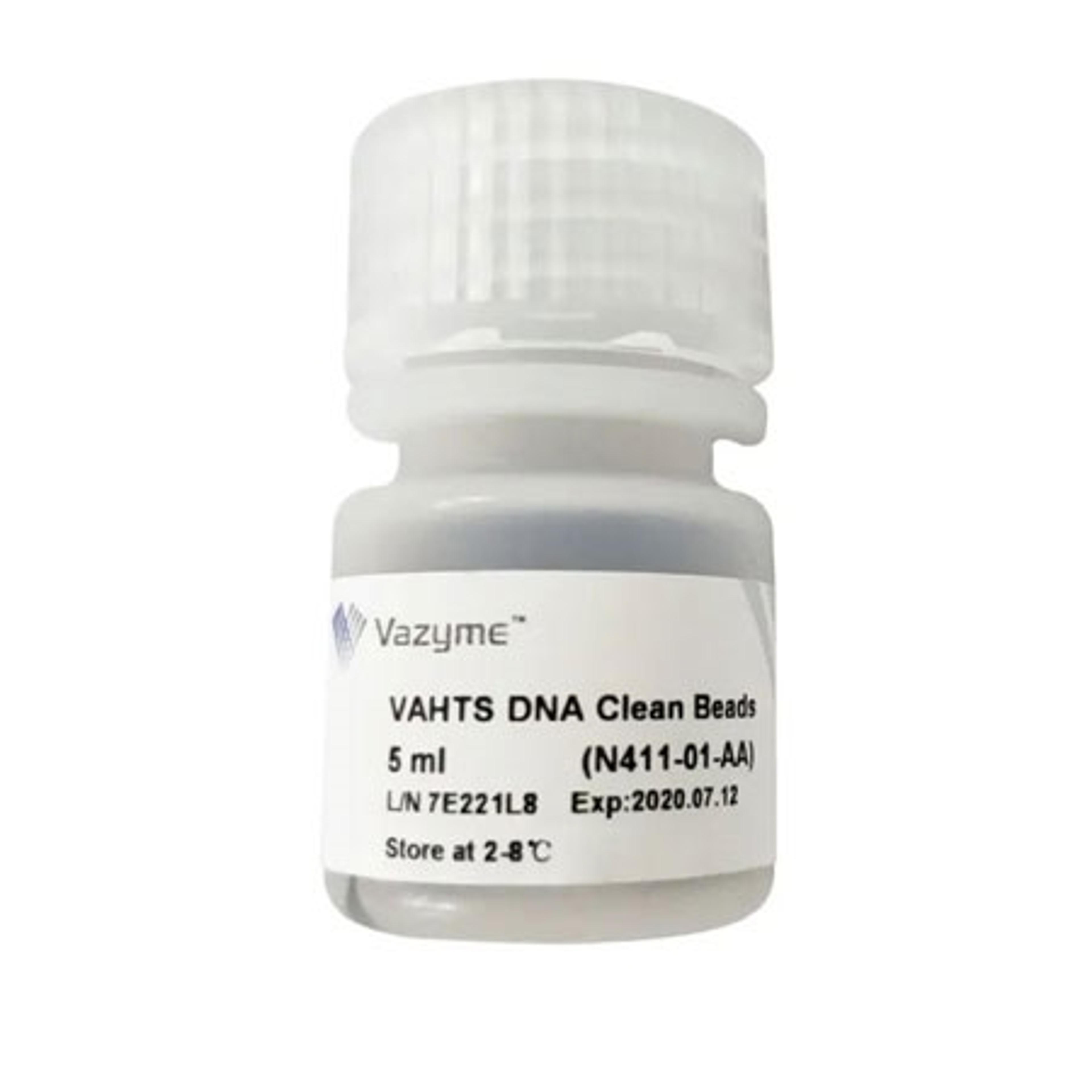
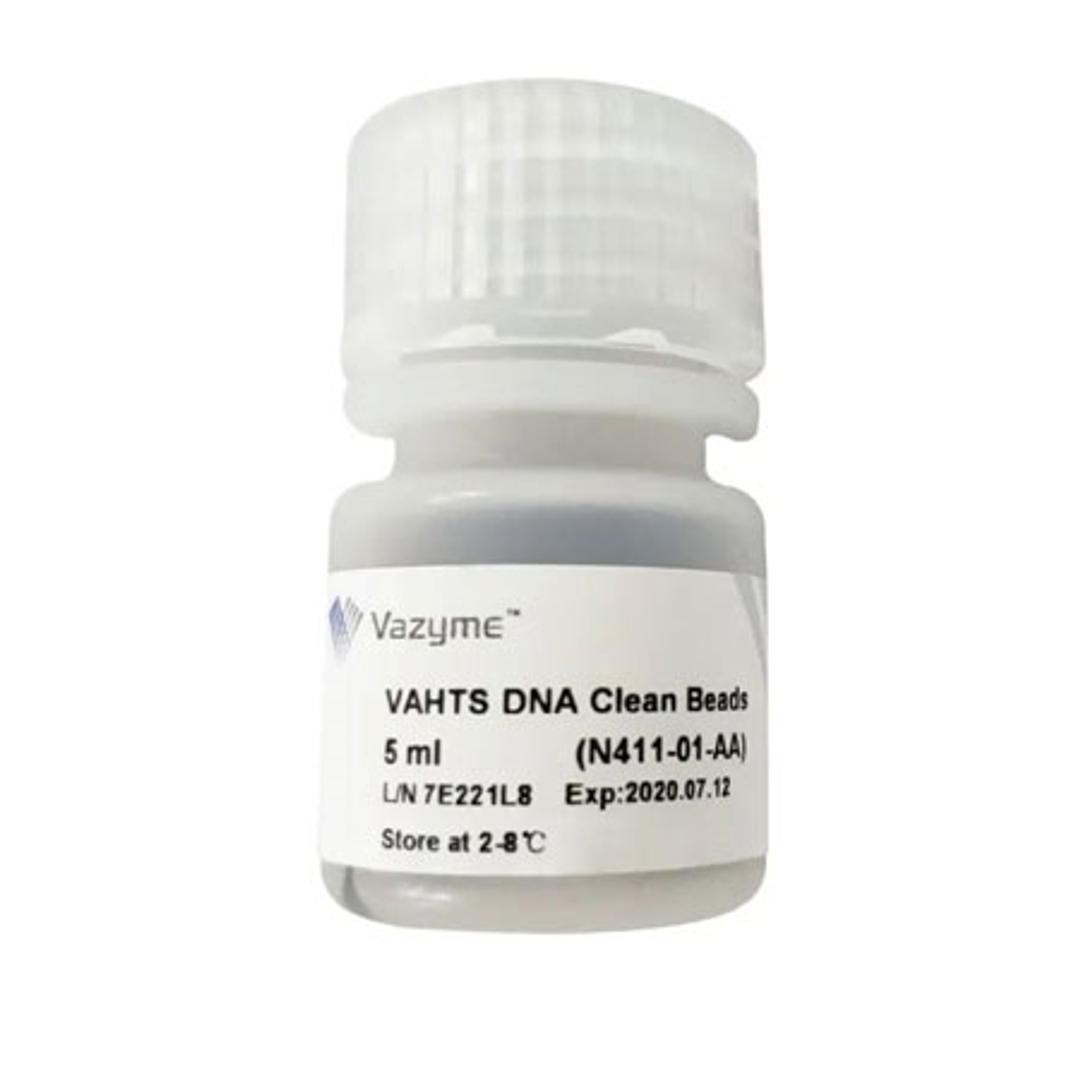
VAHTS DNA Clean Beads
VAHTS TM DNA Clean Beads are based on the SPRI (Solid Phase Reverse Immobilization) principle and are suitable for DNA purification and fragment size sorting in the construction of high-throughput sequencing libraries. VAHTS TM DNA Clean Beads are compatible with various brands of DNA and RNA library building kits and the library building process reported in the literature.
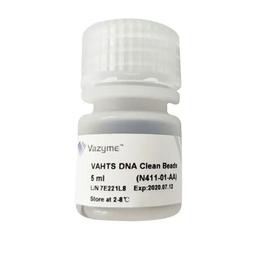

The supplier does not provide quotations for this product through SelectScience. You can search for similar products in our Product Directory.
VAHTS DNA clean beads is a good fragment
areas of DNA and RNA
VAHTS DNA clean beads are based on the SPIR (solid phase reverse immobilization) principle and are suitable for DNA purification and fragment size sorting in the construction of high throughput sequencing libraries. The beads are used in the same way as the widely used AMPure XP beads. The library's results and size distribution are similar and comparable with AMPure XP beads.
Review Date: 26 May 2022 | Vazyme Biotech Co., Ltd
VAHTSTM DNA Clean Beads are based on the SPRI (Solid Phase Reverse Immobilization) principle and are suitable for DNA purification and fragment size sorting in the construction of high-throughput sequencing libraries. VAHTSTM DNA Clean Beads are compatible with various brands of DNA and RNA library building kits and the library building process reported in the literature. The use method is exactly the same as the currently widely used AMPure XP Beads. The yield and size distribution of the library are highly consistent with AMPure XP Beads. It can seamlessly replace AMPure XP Beads, effectively reducing your library building costs.
Product Advantages
- Effectively remove impurities;
- Reduce experiment costs
Application
- Special for DNA or RNA library preparation for NGS

VAHTS DNA Clean Beads (#N411)
In this application note, Vazyme Biotech describes how to use VAHTS DNA Clean Beads for DNA purification and size selection. This promises to be cost-effective, and compatible with various DNA and RNA library construction kits.

Identifying novel aging genes and investigating their pathological role in breast cancer
The lifespan of mouse-inbred strains varies dramatically, indicating the genetic regulation of aging. To reveal the genetic mechanisms of aging, Dr. Rong Yuan and his team measured the lifespan of 32 inbred strains and longitudinally investigated the development and aging related phenotypes. The results suggest that the age of vaginal patency (AVP), a bio-marker of female sexual maturation (FSM), and the circulating IGF1 level, can be used as bio-markers of aging. By quantitative trait loci (QTL) analysis, combining bioinformatic methods, a group of novel aging related genes were identified, including nuclear receptor interacting protein 1 (NRIP1). Pathologic studies revealed that NRIP1 deletion could suppress the initiation and progress of breast cancer. Next-generation sequencing and single-cell RNA sequencing could significantly improve the ability to identify QTL genes and discover the molecular mechanisms of cancer.
In this webinar, join Dr. Rong Yuan and Shuyun Ding as they share how to identify novel aging-related genes and their pathological role in cancer. Plus, discover how to improve your research by using singe cell RNA sequencing and next-generation sequencing (NGS), and explore detailed applications for single-cell RNA sequencing.
Key learning objectives
- Discover how to identify novel aging-related genes and their pathological role in cancer
- Explore the principles and applications of next-generation sequencing
- Learn more about detailed applications for single-cell RNA sequencing
Who should attend?
- Scientists and clinicians with experience in NGS, biology, and genomics
Certificate of attendance
All webinar participants can request a certificate of attendance, including a learning outcomes summary, for continuing education purposes.