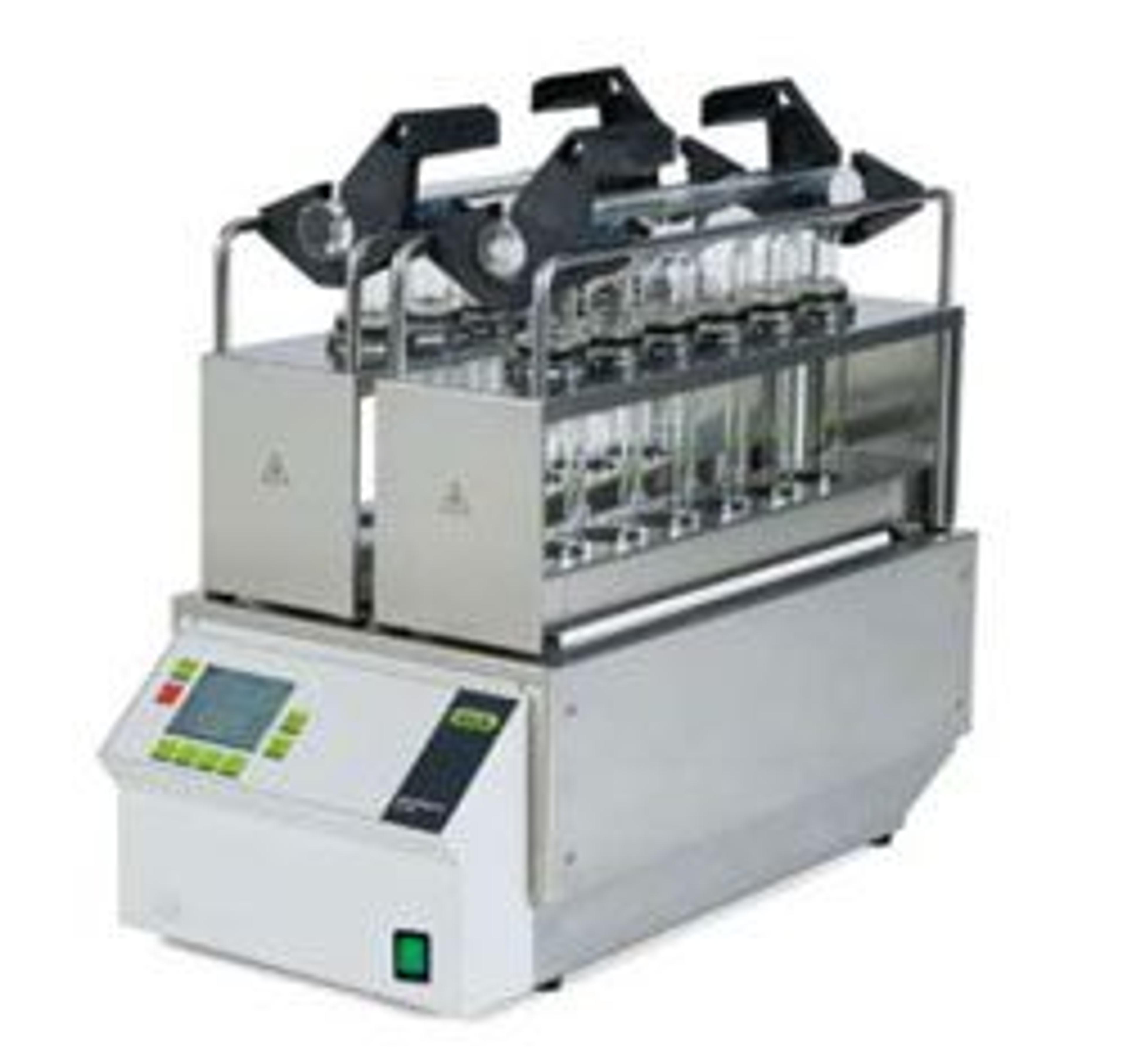
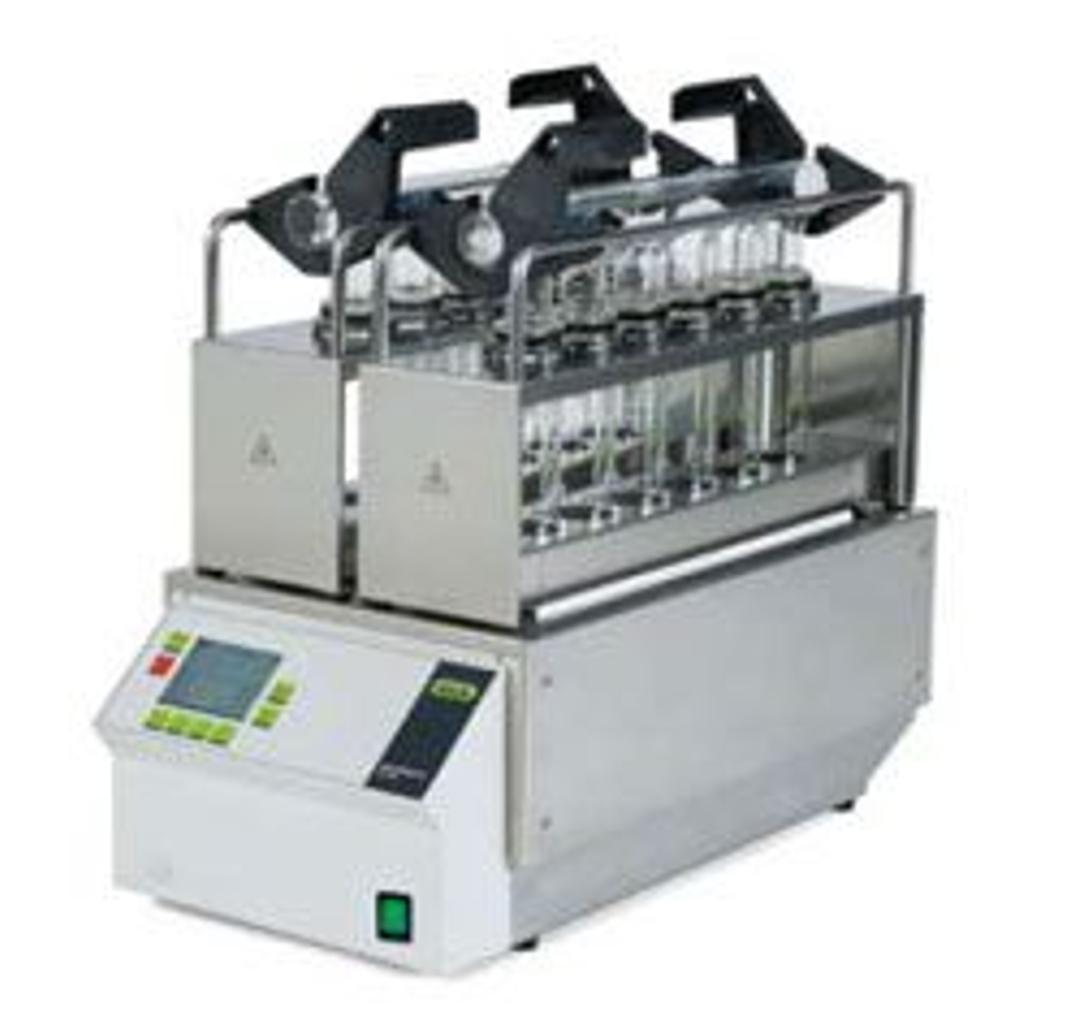
SpeedDigester K-439
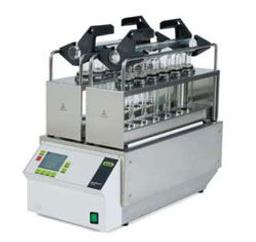
Fully automated IR digestion due to precise temperature control The automatic SpeedDigester K-439 features precise temperature control and an easy to read graphical display which allow for an easy and automated digestion process and uniform, standardized sample processing. The complete digestion process occurs through precise temperature/time control. The temperature control makes it possible to verify the temperature with an…

The supplier does not provide quotations for this product through SelectScience. You can search for similar products in our Product Directory.
Fully automated IR digestion due to precise temperature control
The automatic SpeedDigester K-439 features precise temperature control and an easy to read graphical display which allow for an easy and automated digestion process and uniform, standardized sample processing. The complete digestion process occurs through precise temperature/time control. The temperature control makes it possible to verify the temperature with an external reference sensor, IQ/OQ can be performed.
High throughput with very little manual operation
The heat-up and cool-down periods are considerably shortened compared to classical block digestion. Therefore the total time needed for digestion is significantly reduced which leads to an increase in sample throughput. Fast and automated processing with excellent reproducibility and accurate temperature control, combined with the highest safety measures, make the SpeedDigester K-439 an incredibly convenient infrared digester.

Reference methods guide: Using proximate analysis as the basis for NIR calibrations
In this application note, BUCHI provides a helpful guide on protein and fat determination, a topic of critical commercial concern to food and pet food manufacturing companies to ensure their products abide by the appropriate laws and legal declaration requirements. Official reference methods are discussed, along with their use in creating near-infrared (NIR) calibrations that can streamline production processes and ultimately cut costs in food and pet food industries.
Guidebook to proximate analysis
A method for the quantitative analysis of the different macronutrients in food stuff is called proximate analysis. Nutritional analysis began in 1861 and since then it has have been continuously developed, modified and improved. The analysis uses combination of techniques to determine protein, fat, moisture, ash and carbohydrates that are well documented due to the need for legal declaration requirements.
Kjeldahl knowledge base: Nitrogen and protein determination
Comprehensive guide covering all aspects of theoretical and practical nitrogen and protein determination according to Kjeldahl. The guide helps you to understand the method and enables you to set up experiments correctly.
Tips & tricks from BUCHI experts
Bring your instruments up to full performance with tips and recommendations from practical experience. These tips & tricks can make your daily lab work easier, safer and more sustainable.