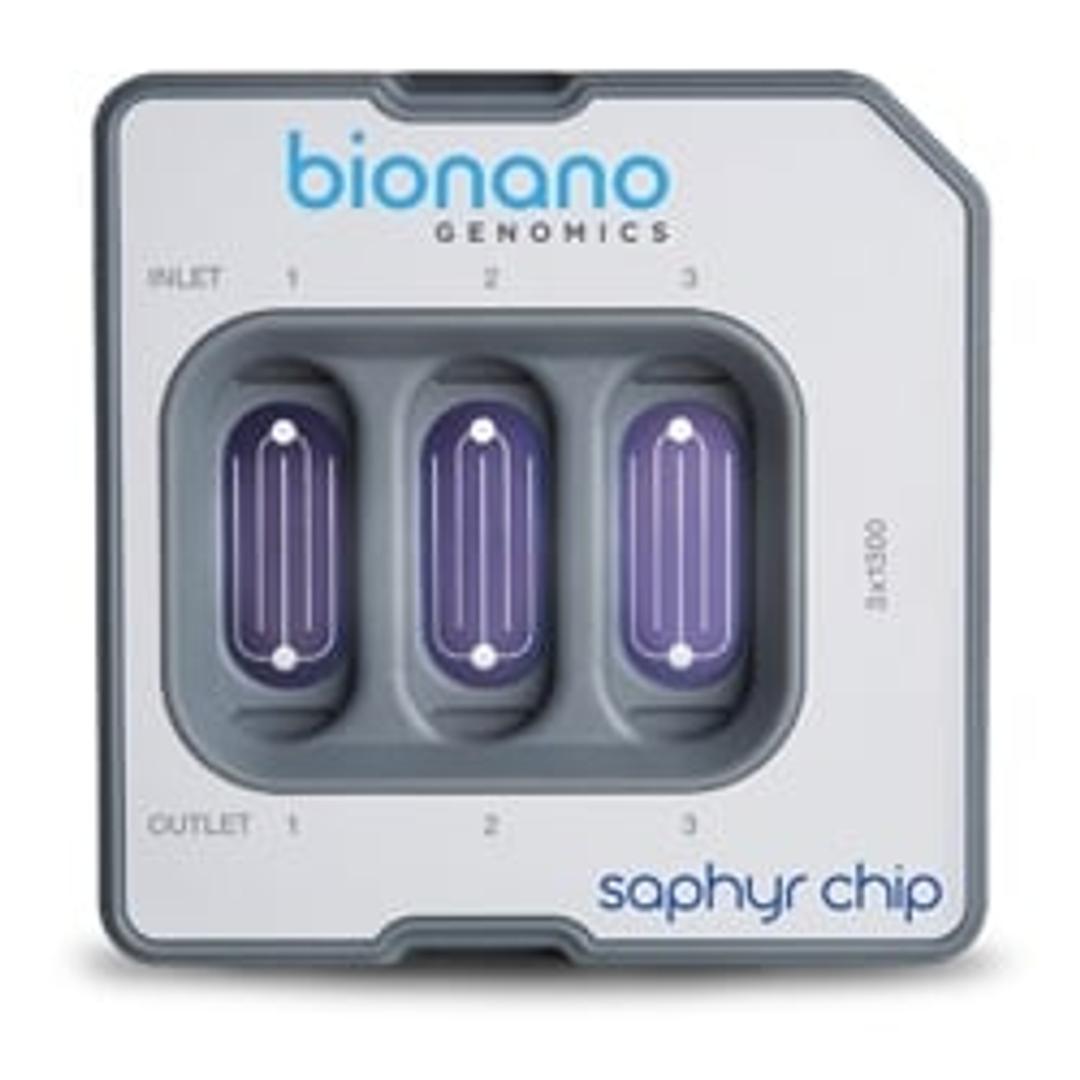
Saphyr Chip®
The Bionano Saphyr Chip ® utilizes hundreds of thousands of massively parallel NanoChannels that linearize long DNA molecules allowing Bionano systems to directly image your samples.





The supplier does not provide quotations for this product through SelectScience. You can search for similar products in our Product Directory.
Inside each Chip, a gradient of micro- and nano-structures, upstream of the chip's NanoChannels, gently unwinds and guides DNA into the NanoChannels. Saphyr Chip's NanoChannels allow only a single linearized DNA molecule to travel through while preventing the molecule from tangling or folding back on itself.
By leveraging mature semiconductor manufacturing technology, Bionano delivers robust performance and quality. The breakthrough Saphyr Chip combines with the Bionano Direct Label and Staining (DLS) technology to provide you with the highest sensitivity possible for structural variant detection starting at 500 bp, along with genome maps up to chromosome-arm-length.
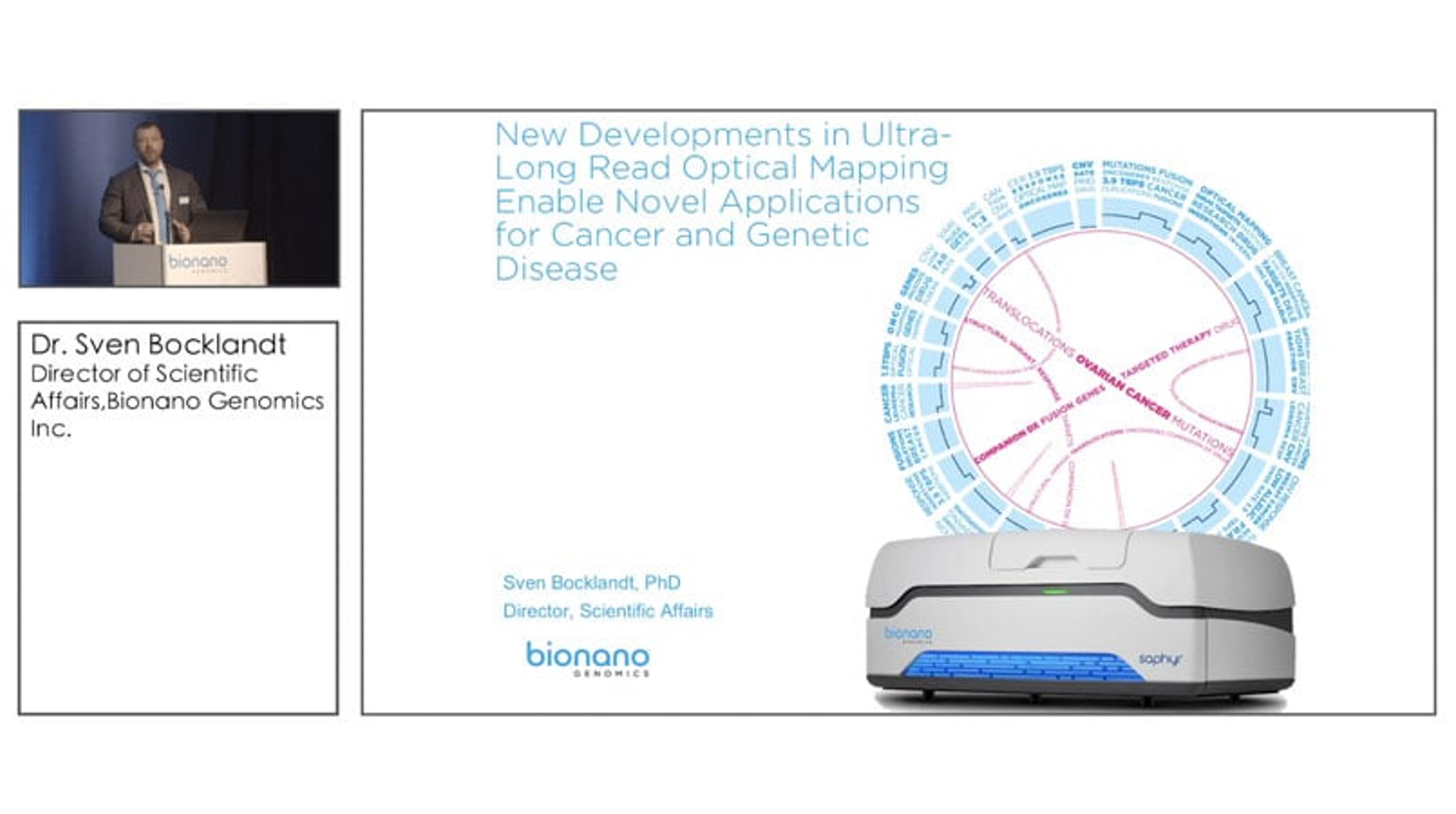
Novel Applications for Ultra-Long Read Optical Mapping in Cancer and Genetic Disease
In this video, Dr. Sven Bocklandt, Director of Scientific Affairs at Bionano Genomics Inc., discusses how the new genome-mapping workflow addresses the difficulty in identifying structural variation with clinical-grade sensitivity and precision. Here, Bocklandt focuses on how the workflow provides high-throughput, high-resolution imaging to detect structural variants directly from megabase-length DNA molecules. However, the workflow is also designed for building high-quality reference genomes and modernizing clinical cytogenetics.
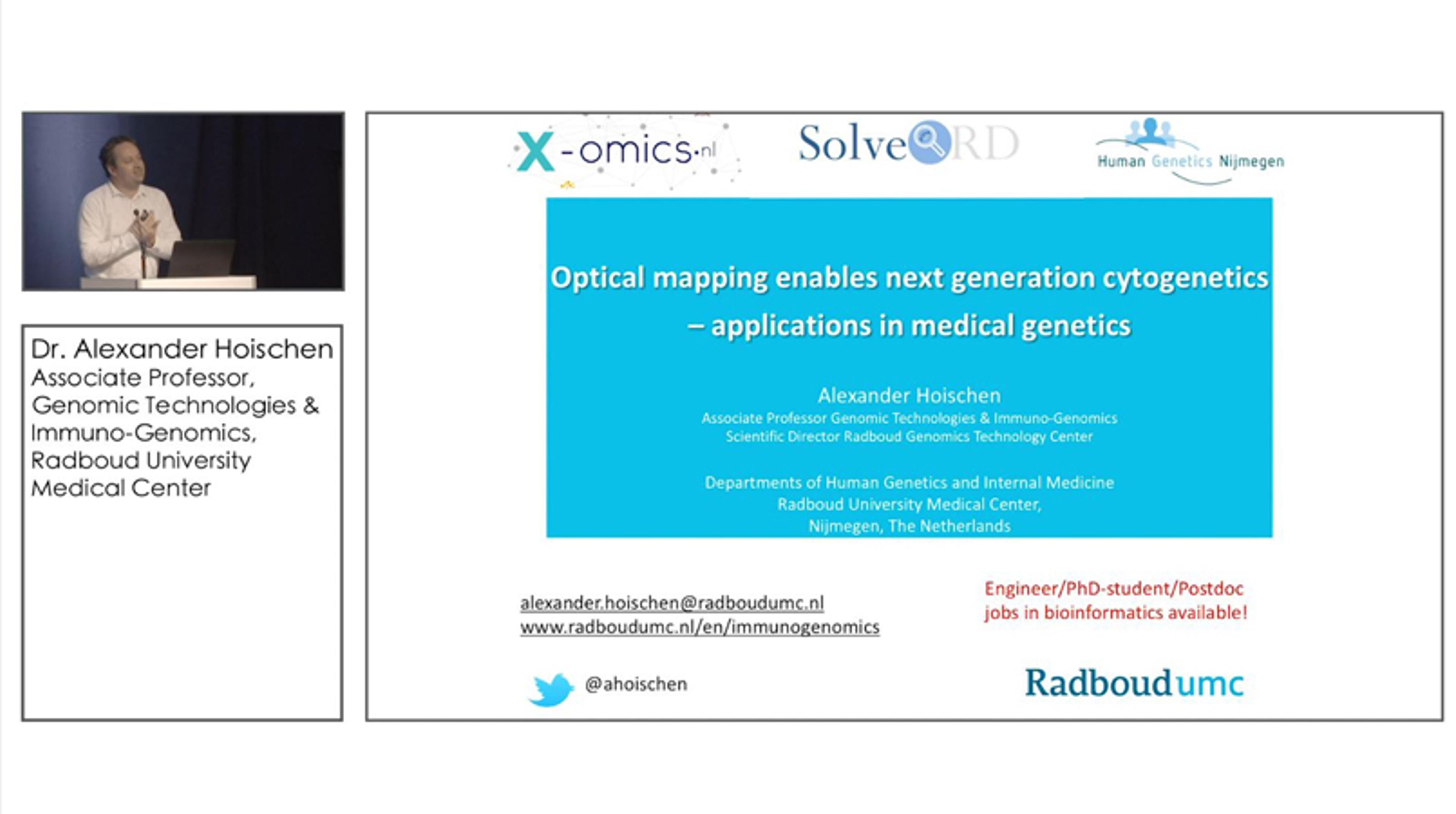
Enabling Next-Generation Cytogenetics with Optical Mapping - Applications in Medical Genetics
Structural variants (SVs) represent an important source of genetic variation in the human genome and are involved in a multitude of diseases, such as cancer and developmental disorders. In this presentation at the European Society of Human Genetics (ESHG) conference 2019, Dr. Alexander Hoischen, Associate Professor, Immuno-Genomics Radboud University Medical Center, discusses SV detection using optical mapping technology and the new Saphyr system from Bionano Genomics. Supported by data presented in this talk, Hoischen hypothesizes that optical mapping technology may largely replace classical cytogenetic tests in the future.
Next-Generation Mapping: Detecting Unbalanced and Balanced Structural Variants
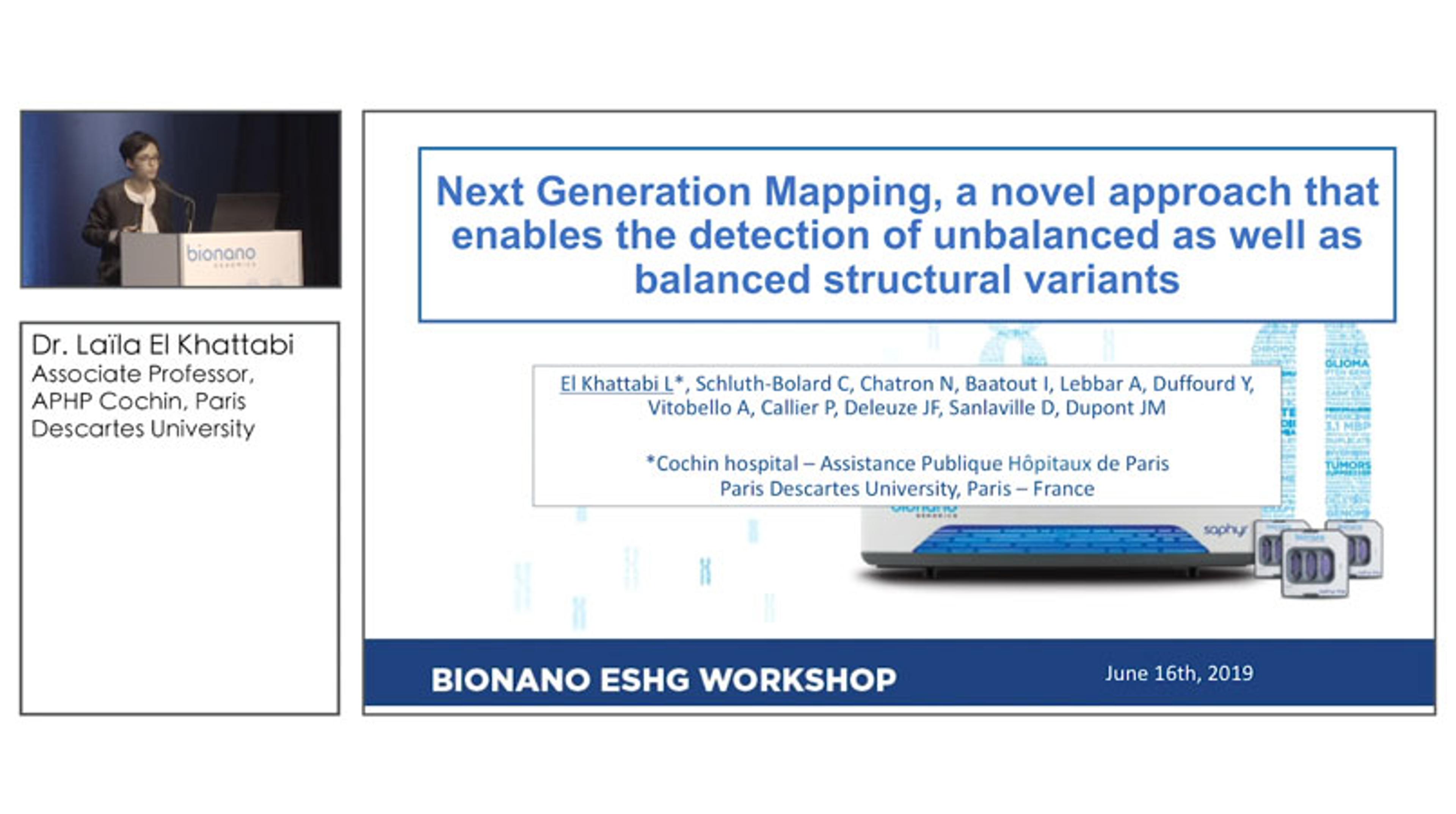
In this video, Dr. Laïla El Khattabi, Associate Professor, APHP Cochin, Paris Descartes University, discusses the use of next-generation mapping using Bionano Genomic’s novel, non-sequencing-based technology and how this enables the identification of structural variants (SVs) within the human genome that can be missed by current massively parallel sequencing methods.
Through a study of 29 patients in a routine cytogenetic laboratory setting, the data presented here demonstrates the potential to improve the resolution of the pan-genome detection of different sorts of SVs in a simple, comprehensive test. This approach could have a significant clinical impact on SV-associated diseases, such as developmental disorders, as well as reproductive diseases and recurrent miscarriages.

International consortium expands COVID-19 susceptibility research with Bionano genome imaging
Saphyr’s extremely sensitive structural variation detection technology will be used to analyze samples from COVID patients from dozens of clinical sites throughout North America and Europe

Next-generation cytogenetics for clinical-grade sensitivity and precision
Discover the latest technology for the identification of structural variants (SVs) within the human genome