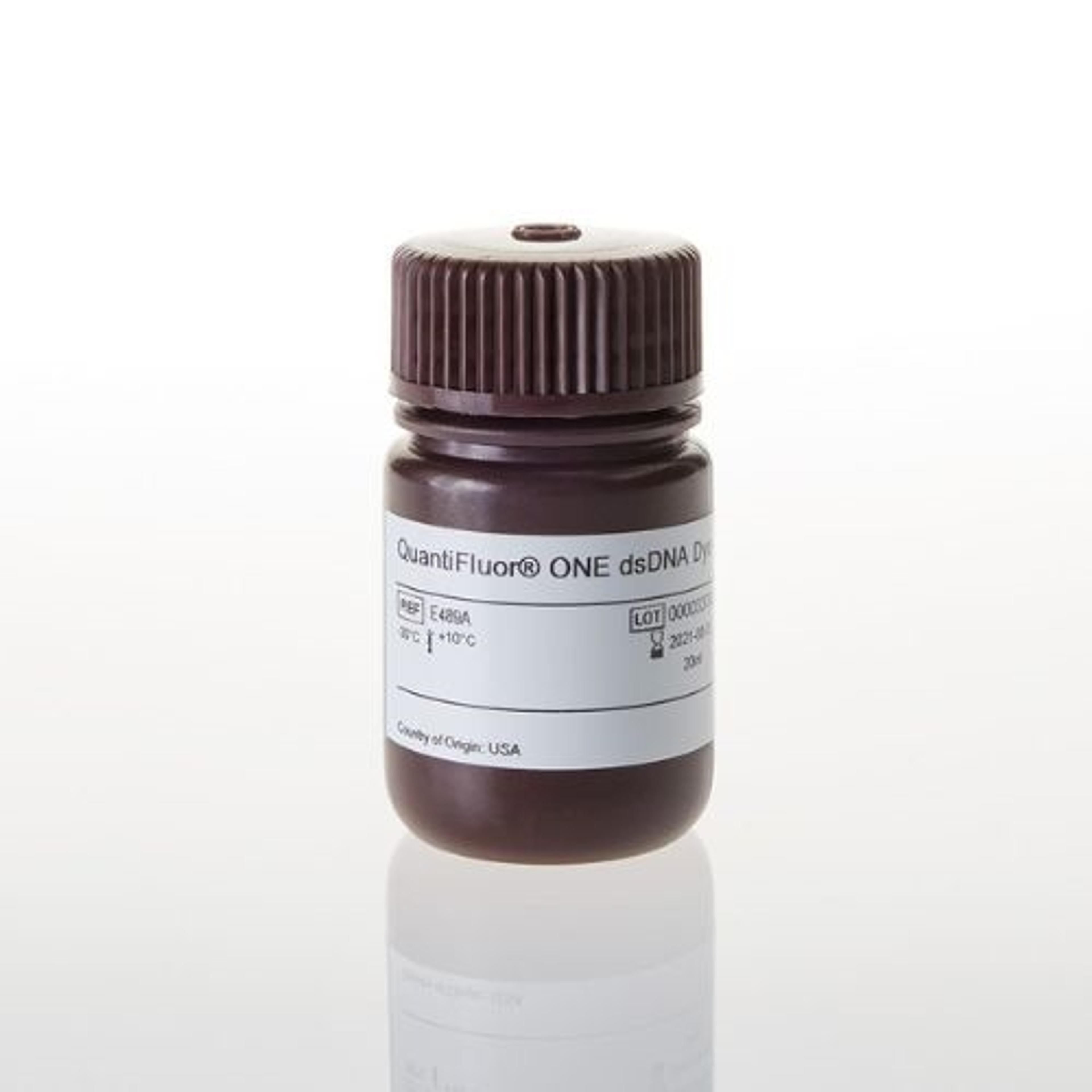
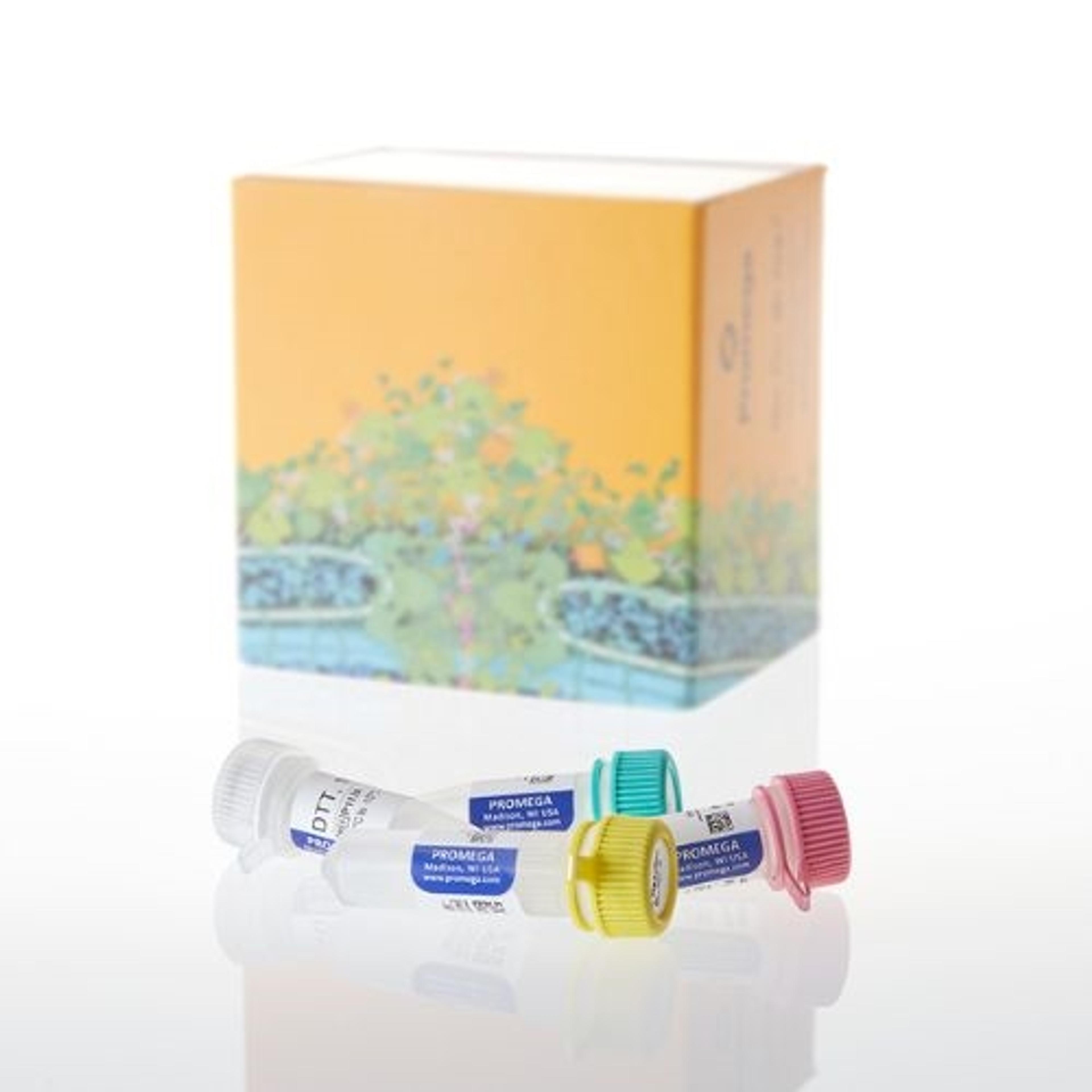
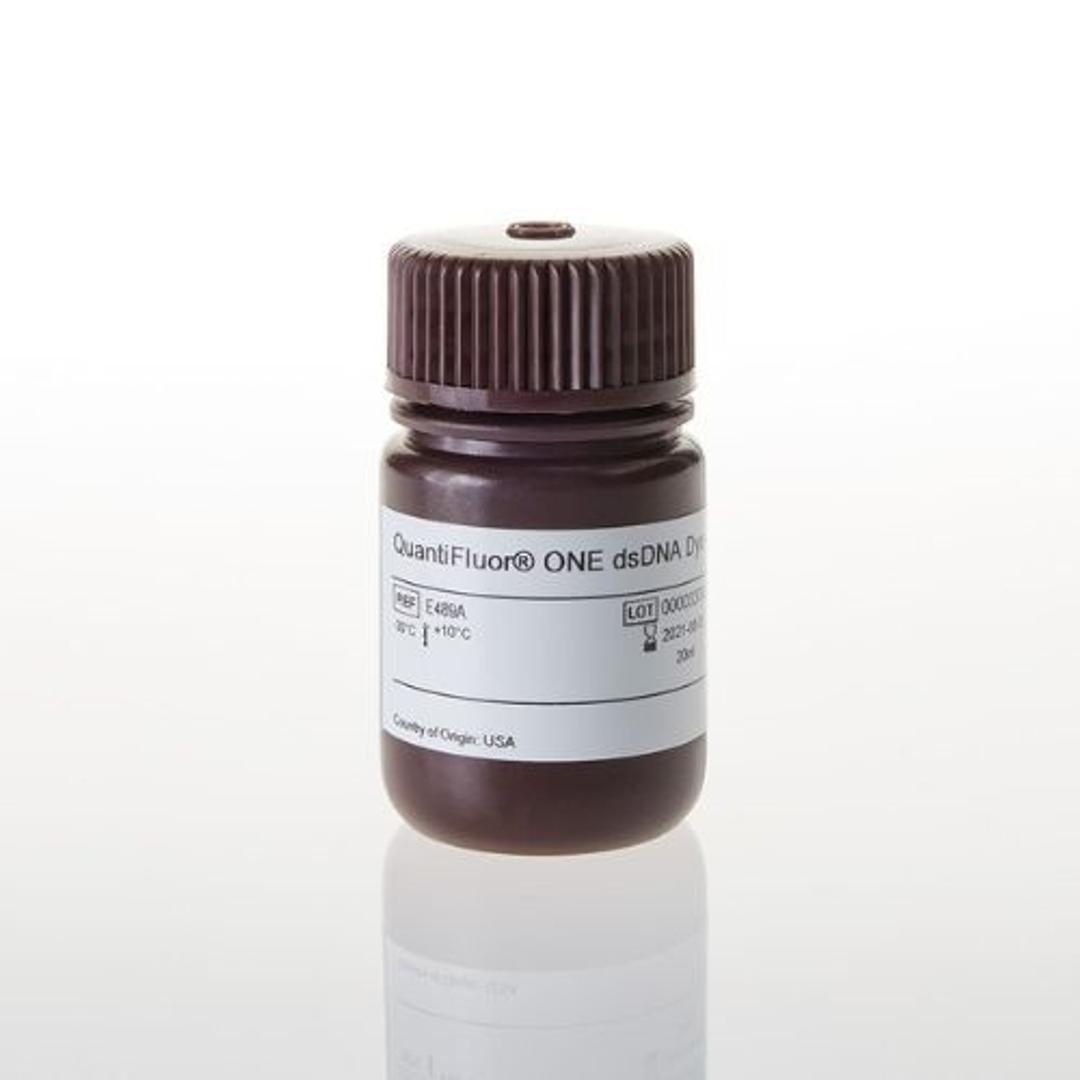
QuantiFluor® ONE dsDNA Dye
The QuantiFluor® ONE dsDNA Dye is a fluorescent double-stranded DNA-binding dye (504nmEx/531nmEm) prepared for an “add-and-read” format making sample quantitation easy. This dye enables sensitive quantitation of small amounts of double-stranded DNA (dsDNA). The QuantiFluor® ONE dsDNA Dye is intended for use as a general purpose reagent in the US and is suitable for use by clinical laboratories as a component of la…

Receive your quote directly from the manufacturer.
The QuantiFluor® ONE dsDNA Dye is a fluorescent double-stranded DNA-binding dye (504nmEx/531nmEm) prepared for an “add-and-read” format making sample quantitation easy. This dye enables sensitive quantitation of small amounts of double-stranded DNA (dsDNA).
The QuantiFluor® ONE dsDNA Dye is intended for use as a general purpose reagent in the US and is suitable for use by clinical laboratories as a component of laboratory developed tests. Outside of the US, this product is intended for research use only.
The QuantiFluor® ONE dsDNA Dye can be used with any fluorometer that is capable of measuring fluorescence at the appropriate excitation and emission wavelengths.
QuantiFluor® ONE dsDNA Dye Features & Benefits:
- Easy to Use - Add-and-read format makes this dye simple to use—no dilutions, no extra tubes.
- Sensitive - Significantly better sensitivity compared to absorbance at 260nm (NanoDrop®), allowing users to quantitate their low-concentration samples with confidence.
- Highly Specific to dsDNA - Minimal binding to ssDNA, RNA, protein and interfering compounds.
- Flexible with Instrumentation - Compatible with any fluorometer capable of measuring the appropriate fluorescence excitation and emission spectra.
Applications:
- dsDNA quantitation.

Purification of Amplifiable Nucleic Acid from Oil Palm and Rice Leaves and Seeds Using the Maxwell® 16 LEV Plant DNA Kit
This poster evaluates a novel cellulose-based paramagnetic particle technology to purify nucleic acid (NA) from Elaeis guineensis (oil palm) and Oryza sativa (rice) plant leaf and seed lysates in an automated format using the Maxwell® 16 System. Plant NA purification provides a variety of unique challenges due to the broad diversity of plants, their extracellular structures, and endogenous compounds (e.g. polysaccharides, phenolics) that can co-purify with NA and inhibit downstream enzymatic assays. Extracted NA were evaluated for yield and amplifiability in qPCR and RT-qPCR, and the data collected supports the broad utility of the novel cellulose-based technology and Maxwell® 16 System for automated plant NA purification.