PeakForce QNM
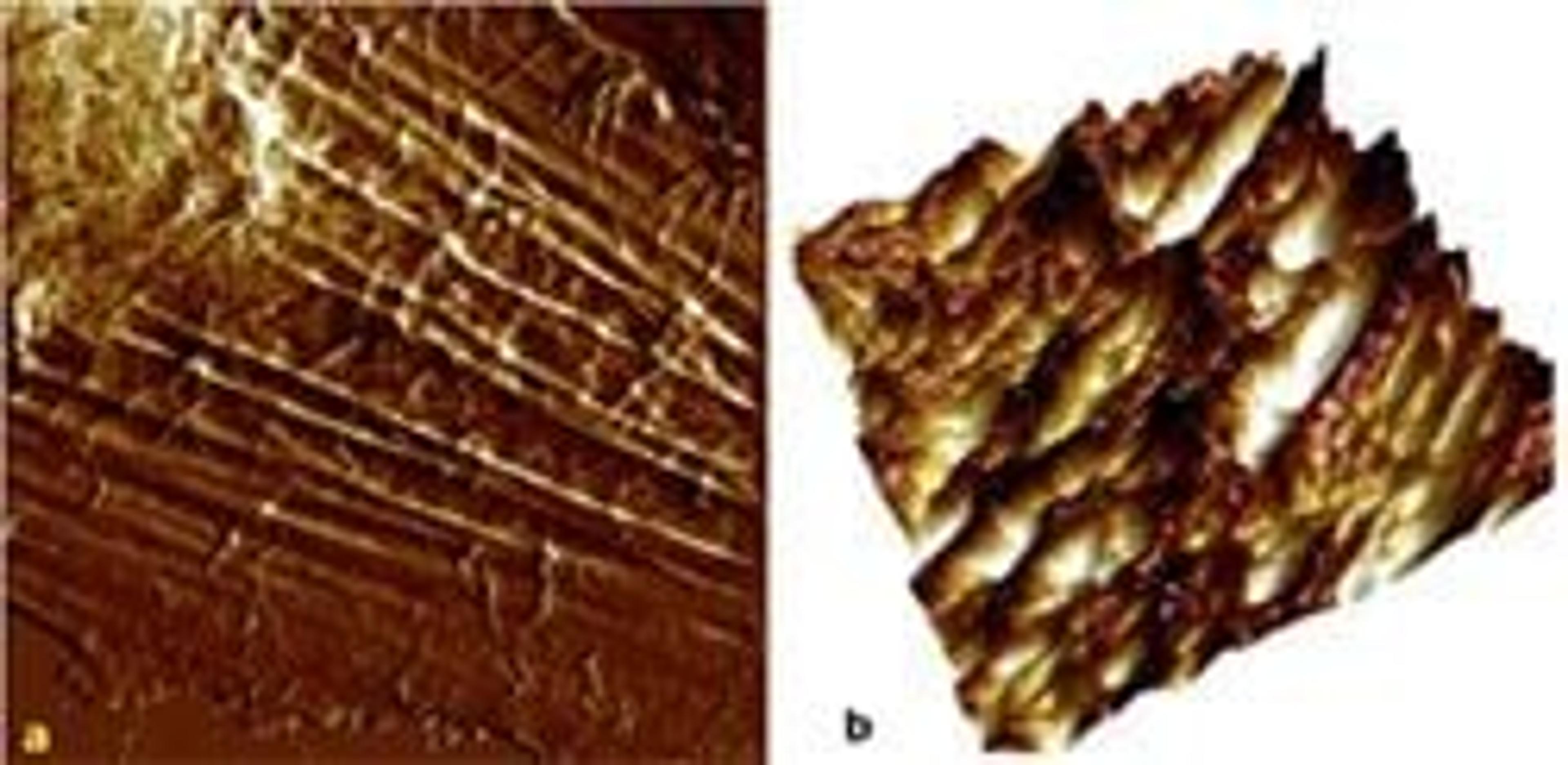
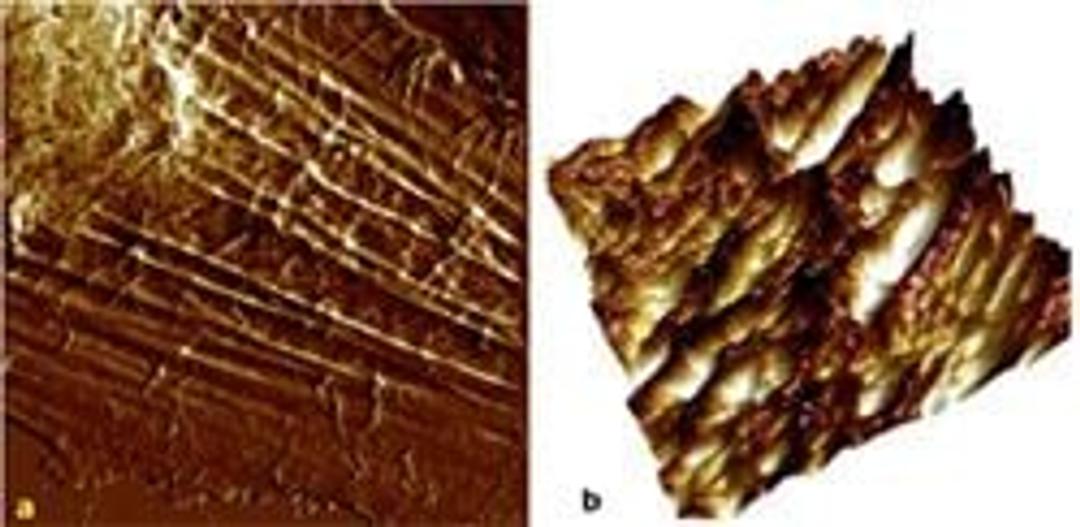
Unprecedented quantitative characterization of materials on the nanoscale PeakForce QNM® (Quantitative Nanomechanical Property Mapping) allows quantitative nanomechanical mapping of material properties, including modulus and adhesion, while simultaneously imaging sample topography at high resolution. PeakForce QNM and its counterpart mode PeakForce Mapping are based on Bruker's exclusive PeakForce Tapping® technology, which re…

The supplier does not provide quotations for this product through SelectScience. You can search for similar products in our Product Directory.
Unprecedented quantitative characterization of materials on the nanoscale
PeakForce QNM® (Quantitative Nanomechanical Property Mapping) allows quantitative nanomechanical mapping of material properties, including modulus and adhesion, while simultaneously imaging sample topography at high resolution. PeakForce QNM and its counterpart mode PeakForce Mapping are based on Bruker's exclusive PeakForce Tapping® technology, which records very fast force response curves at every pixel in the image. The force control made possible by this technique leads to longer probe lifetimes and improved sample integrity, as well as correlated, high-resolution nanomechanical and topographic data.
These capabilities dramatically exceed those of any other technique for nanoscale materials characterization, changing the perception and use of AFM.

Improving the accuracy of nanomechanical measurements with force-curve-based AFM techniques
The structure and mechanical properties of sub-micron features in materials are of particular interest due to their influence on macroscopic material performance and function. Atomic force microscopy has the high resolution and force control to directly probe the mechanical properties of a wide range of these materials. In this application note from Bruker, consider the development and implementation of several new features that improve the flexibility, accuracy, and productivity of atomic force microscopes in measuring such important material properties as modulus and adhesion.
Deep learning to classify and establish structure property predictions with PeakForce QNM atomic force microscopy
Machine learning, is a powerful tool to establish the presence (or absence) of correlations between microstructure and bulk properties with its ability to flesh out relationships and trends that are difficult to establish otherwise. In this application note from Bruker, explore the use of deep learning tools, such as convolutional neural nets (CNNs), to explore atomic force microscopy (AFM) phase and PeakForce QNM® images of impact copolymers, a polymer blend of polypropylene with micro-sized domains of rubber.
Explore the Bruker MultiMode 8-HR
In this application note from Bruker, explore the MultiMode® platform’s success which is based on its combination of high resolution, performance, versatility, and productivity. The new MultiMode 8-HR™ AFM takes full advantage of these developments to provide significant improvements in imaging speed, resolution, and nanomechanical performance with higher speed PeakForce Tapping®, enhanced PeakForce QNM®, new FastForce Volume™, and exclusive Bruker probes technology.
Quantitative mechanical property mapping at the nanoscale with PeakForce QNM
The scanning probe microscope (SPM) has long been recognized as a useful tool for measuring the mechanical properties of materials. Until recently though, it has been impossible to achieve truly quantitative material property mapping with the resolution and convenience demanded by SPM researchers. A number of recent SPM mode innovations have taken aim at these limitations, and now, with Bruker’s PeakForce QNM®, it is possible to identify material variations unambiguously and at high resolution across a topographic image. In this application note, explore the principles and benefits of the PeakForce QNM imaging mode.
Simultaneous electrical and mechanical property mapping at the nanoscale with PeakForce TUNA
Atomic force microscopy (AFM)-based conductivity measurements are a powerful technique for nanometer-scale electrical characterization on a wide range of samples. Tunneling AFM (TUNA), cover the lower current range (sub-pA up to nA). Bruker has developed an enhanced TUNA module with its proprietary PeakForce Tapping™ mode of operation that makes significant improvements to all three of these elements to enable exquisite tip-sample force control, quantitative nano-mechanical material property mapping through PeakForce QNM™, correlated nanoscale electrical property characterization through TUNA, and extreme ease of use through the ScanAsyst™ image optimization algorithms. A special probe has also been designed for use on particularly challenging samples. In this application note, explore the basics of PeakForce TUNA™, and compare it to standard Contact Mode–based TUNA.
Quantitative Mechanical Property Mapping at the Nanoscale with PeakForce QNM
The scanning probe microscope (SPM) has long been recognized as a useful tool for measuring mechanical properties of materials. Until recently though, it has been impossible to achieve truly quantitative material property mapping with the resolution and convenience demanded by SPM researchers. A number of recent SPM mode innovations have taken aim at these limitations, and now, with Bruker’s PeakForce QNM®, it is possible to identify material variations unambiguously and at high resolution across a topographic image. This application note discusses the principles and benefits of the PeakForce QNM imaging mode.

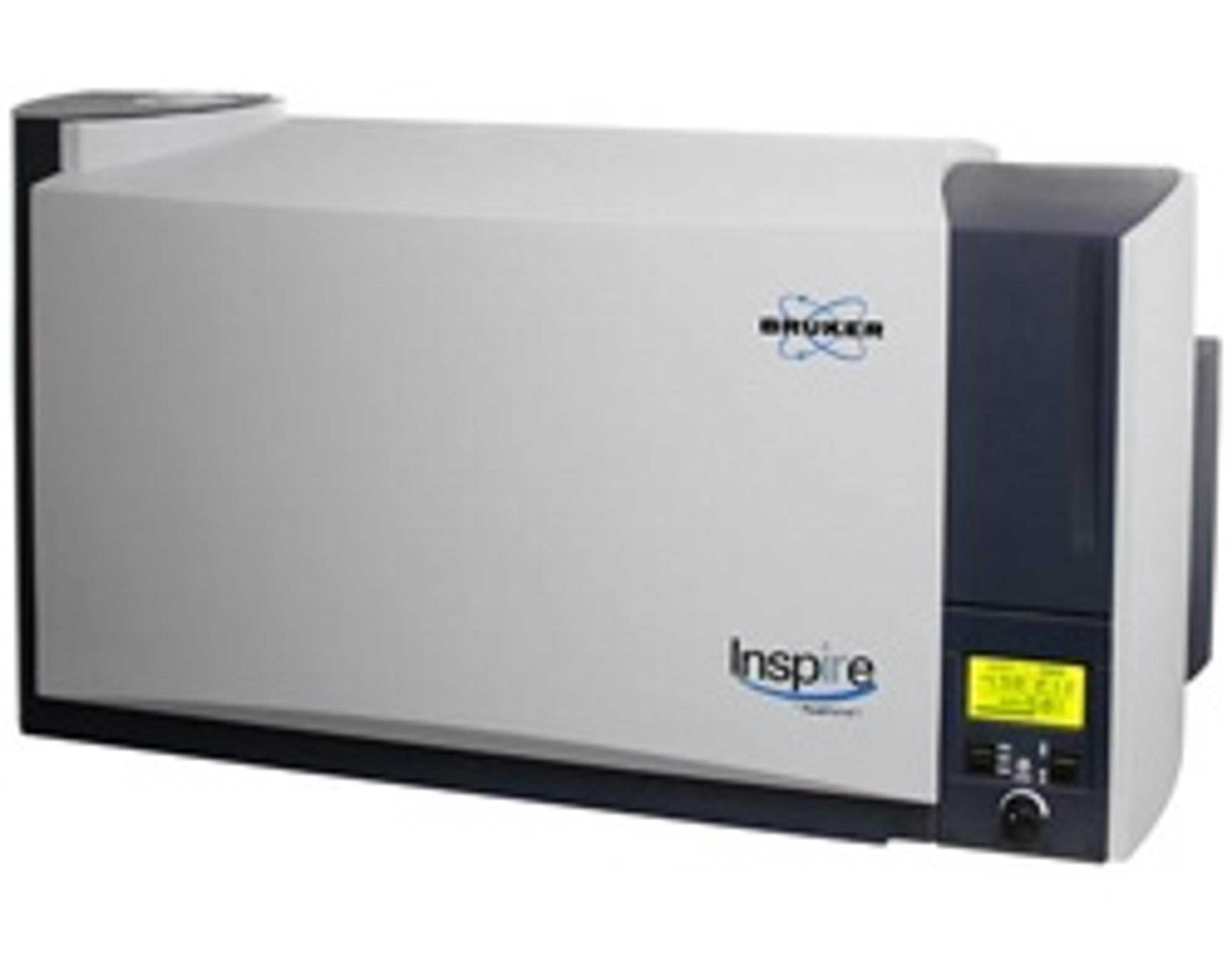
Bruker Introduces Second-Generation Inspire Nanochemical Imaging Solution
Featuring unique PeakForce IR and IR EasyAlign technology