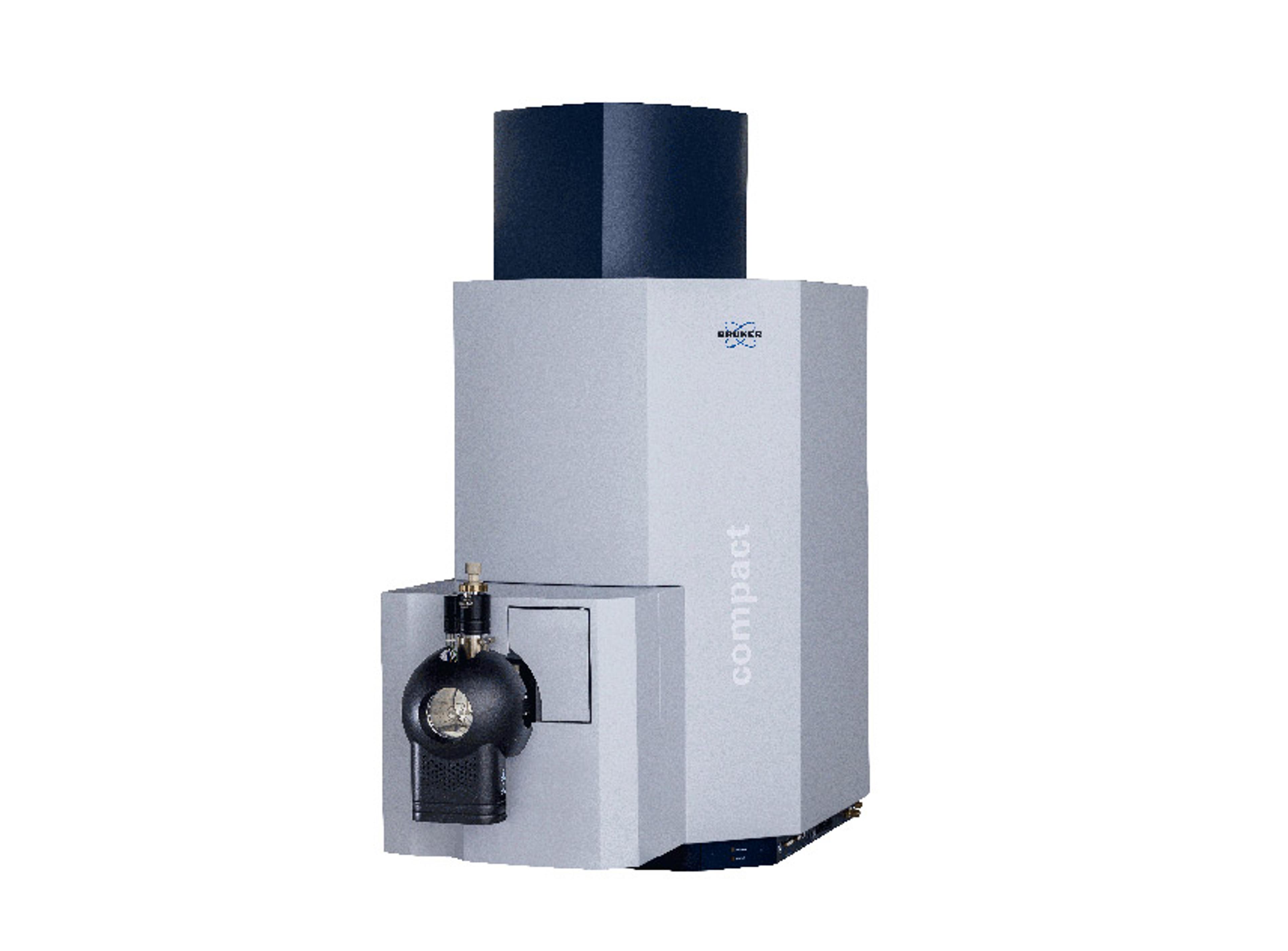
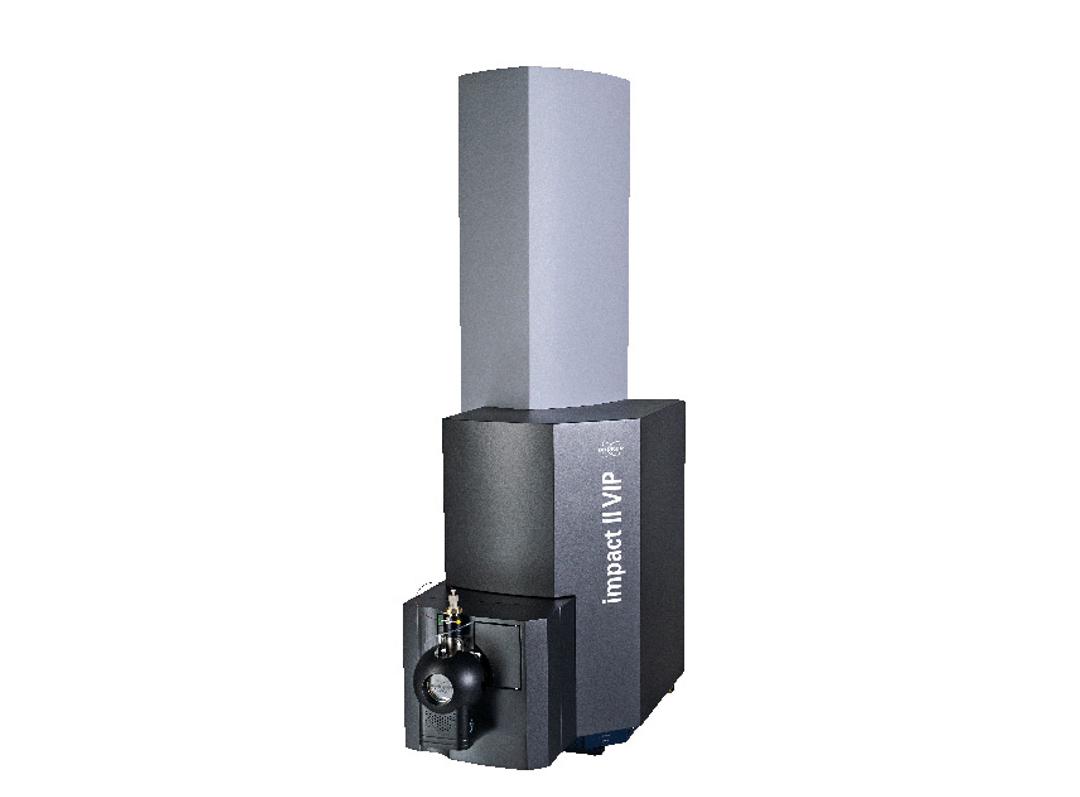
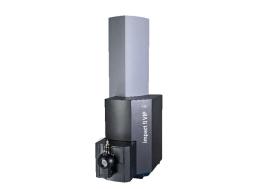
impact II VIP
Higher Performance | More Confidence | More impact

Receive your quote directly from the manufacturer.
Easy handling, rugged German machine, limited maintenance required, worth investment.
Proteomics, PMF, denovo sequencing
Easy handling, rugged German machine, limited maintenance required, worth investment. Instrument is effective in intact mass, PMF, glycoform and glycan analysis, denovo sequencing . Oligonucleotides work well with Bruker machines
Review Date: 11 Jan 2019 | Bruker Daltonics
Very productive instrument, with high sensitivity and results of high good quality
proteomics
A good investment, providing high confident protein identity and good quantitative data of differentially expressed proteins.
Review Date: 24 Jan 2017 | Bruker Daltonics
Need more of these instruments
proteomics
Impact II is easy to use, great support and cooperation from the manufacturer, same day service provided must of the time, fast, reliable and accurate instrument.
Review Date: 3 May 2016 | Bruker Daltonics
Modern organic labs have become automated, yet real-time mass assays remain just out of reach — the Impact II solves this at an affordable price.
Our laboratory has recently purchased an impact II Mass Spectrometer. Our choice was not only related to the small footprint but also to the versatility of the system. The impact II provides the quality of results necessary to improve research outcomes in our hit and lead discovery efforts. It provides essential information quickly and improves the chemist’s workflow. Modern organic labs have become automated, yet real-time mass assays remain just out of reach — the Impact II solves this at an affordable price.
Review Date: 7 Oct 2015 | Bruker Daltonics
- High Resolution: Delivers high-resolution data and improved spectral quality.
- Ease of Use: User-friendly software and hardware make sample analysis easier.
- Versatility: Supports a wide range of applications, from protein identifications to small molecule quantitation.
Brochures

High Resolution Quantitative Proteomics using Bruker LC-MS
The following brochure details the use of Bruker's Impact II mass spectrometer in combination with CaptiveSpray in protein analysis.
Pesticide Target Screening with GC-APCI Coupled to High-resolution QTOF-MS
This application note describes the application of bbCID data acquisition for pesticide target screening by coupling a GC to an atmospheric pressure chemical ionization source (GC-APCI) and a high resolution QTOF-MS. Pesticides are frequently found as contaminations in food and environmental matrices, and commonly analyzed by GC-MS or LC-MS.
Quantitation of Benzodiazepine and Z-drug Hypnotics Using High Resolution, Liquid Chromatography-Quadrupole Time of Flight Mass Spectrometry
This application note presents a study evaluating the suitability of high resolution, accurate mass Quadrupole Time of Flight (QTOF) technology as an additional approach for the simultaneous detection, confirmation and quantification of benzodiazepine and non-benzodiazepine hypnotics in human serum. Traditionally liquid chromatography - tandem mass spectrometry (LC-MS/MS) systems using multiple reaction monitoring (MRM) have been used for this type of analysis.
Developing a Robust Self-Optimizing MS/MS QTOF Workflow for De Novo Verification of Synthetic Peptides in Biopharmaceutical Applications
This poster presents a method optimized QTOF MS system with self-adapting deep sequencing MS/MS capabilities (InstantExpertise™) that allows facile pharmaceutical product verification of synthetic peptides. Bioactive peptides are common, widely used supplement products in pharma, biopharma, as well as nutritional industries. The synthesis of bioactive peptides with accurate amino acid sequences is pivotal to ensure correct biological activity; thus, methods that ensure accurate de novo verification as well as simultaneous impurity characterization are very important. This method combines high speed self-optimized MS/MS, accurate isotopic patterns, and high mass accuracy fragment data.
Trace Analysis of TCDD and PBDE Persistent Organic Pollutants
Persistent Organic Pollutants (POPs) are major concern for the environment, quantifying them with sensitivity and confidence increasingly important. The study in this application note uses an atmospheric pressure chemical ionization GC coupled to a high-resolution QTOF – MS to analyze the levels of key substances in POPs, including decaBDE which is the most difficult PBDE to analyze.
Rapid Generation of Accurate Information on Proteoform Distribution and Relative Abundance by UHR-QTOF MS
Over their life cycle, proteins undergo various transformations that can alter their functions while keeping a good part of their primary sequence intact. This multiplication of Post Translational Modifications (PTM) patterns, alternative splice forms or products of proteolytic processing cannot be easily resolved with a bottom-up approach, as very few peptides are specific from a given proteoform. However, the information relative to the distribution of different proteoforms can be seen in their intact mass profile. This application note explores the potential of the latest generation UHR-QTOF to quickly map the distribution and relative abundances of proteoforms in complex protein extracts.
Path to Resolving Power Beyond 250: A Comprehensive Trapped Ion Mobility Spectrometry Analytical Model
In trapped ion mobility spectrometry (TIMS), ions are radially confined in a quadrupolar field and axially trapped by an electric field gradient (EFG) that counteracts the drag force exerted from a flow of gas. After ions reach a mobility-dependent equilibrium position inside the trap, the magnitude of the EFG is decreased such that ions elute over a user defined timescale (~10 ms to 1 s). Recently, an analytical model for TIMS was derived and, in part, experimentally verified. A central, but not yet fully explored component of the model involves the fluid dynamics at work in the analyzer (i.e.: gas velocity, pressure gradient, flow profile, etc.). This poster characterizes the fluid properties using computational fluid dynamics (CFD) simulations and ion mobility experiments.
Using a Novel Atmospheric Pressure GC Source Coupled to High-Resolution TOF-MS to Analyze Environmental Samples
A new gas chromatography atmospheric pressure chemical ionization (GC-APCI) source coupled to a high-resolution QTOF-MS was used for the GC/MS analysis of polycyclic aromatic hydrocarbons (PAH), pesticide and explosive standards as well as soil, sediment and sludge samples of environmental origin. Compared to an earlier GC-APCI design, the source demonstrated improved GC/MS performance in terms of reproducibility and analytical working range.
A Novel High Resolution Human Metabolite MS/MS Spectral Library Enables Rapid and Accurate Metabolite Identification of Human Biofluids
This case study describes the creation of a high-resolution, manually curated metabolite library of about 800 human metabolites established using a high performance quadrupole-time-of-flight mass (Q-TOF) spectrometer. This library formed the basis for the described workflow for rapid and accurate metabolite identification in untargeted metabolomics research, exemplified on plasma, urine and saliva samples.
Nutrient Deficiency Responses of Potato (<i>Solanum tuberosum</i> L.) Revealed by Combined Proteomics and Metabolomics Approaches
This poster demonstrates an investigation in to early stress responses and adaptation mechanisms in Solanum tuberosum to nitrogen limitation using combined ,omics’ approaches.
Bruker and ANPC partner to support major new frontline response to combat COVID-19 threat
The strategic partnership with Australian National Phenome Centre (ANPC) aims to support the work of their researchers

Webinar Highlights - Eliminating False Positives and Negatives: Correctly Report Results the First Time
Learn how to improve your data acquisition in high-resolution mass spectroscopy