iCell Endothelial Cells
iCell® Endothelial Cells, interior surface blood vessel cells derived from human induced pluripotent stem (iPS) cells facilitate vascular-targeted drug discovery, tissue regeneration, and other life science research. iCell® Endothelial Cells exhibit characteristic endothelial gene and protein expression (e.g., CD31, CD105, CD144, ZO-1, and von Willebrand Factor) and endothelial cell functions (e.g., tubular formation, acetylat…




The supplier does not provide quotations for this product through SelectScience. You can search for similar products in our Product Directory.
iCell® Endothelial Cells, interior surface blood vessel cells derived from human induced pluripotent stem (iPS) cells facilitate vascular-targeted drug discovery, tissue regeneration, and other life science research.
iCell® Endothelial Cells exhibit characteristic endothelial gene and protein expression (e.g., CD31, CD105, CD144, ZO-1, and von Willebrand Factor) and endothelial cell functions (e.g., tubular formation, acetylated LDL uptake, barrier function, and wound healing). These cells are an ideal in vitro model system that provides a reliable source of endothelial cells suitable for use in vascular biology research including angiogenesis, atherosclerosis, inflammation, and many other research areas.
iCell® Endothelial Cells are shipped as cryopreserved suspensions of dissociated cells with medium supplement, specially formulated for optimal cell performance. iCell Endothelial Cells remain viable in culture for up to 5 passages, thus enabling assessment of both acute and longer-term testing.
iCell® Endothelial Cells Benefits:
- Human Cells - Cells are differentiated from human pluripotent stem cells that provide an easily accessible and physiologically relevant model system for vascular-targeted drug discovery, tissue regeneration and other vascular biology research.
- Highly Pure Cell Population - Provides endothelial cell-specific responses to reference molecules.
- Homogenous and Reproducible
- Fully Functional Model - Cells exhibit standard biochemical characteristics of normal human endothelial cells, and demonstrate utility in a variety of assays including cell migration, cytokine stimulation, tubular formation, and impedance/barrier function.
- Easy to Implement - Cells are shipped as cryopreserved suspensions of dissociated cells. Simply thaw and use.
- Acute and Longer-term Testing - Cells remain viable in culture for up to 5 passages, thus enabling assessment of both acute and longer-term testing.
- iPS Cell-derived
iCell® Endothelial Cells Applications:
- Cells are amenable to a wide array of assays including: Cell adhesion, Cell invasion and migration, Cell permeability, Cell proliferation, Cell viability, Impedance/transendothelial electrical resistance, Tubular formation.

Application of Human iPS Cell-Derived Models for Highly Predictive Toxicity Screening
This poster presents the development of an industrial-scale manufacturing platform for the production of terminally-differentiated, human iPS cell-derived tissue types (e.g. neurons, cardiomyocytes, and hepatocytes) that are highly pure (>95%) and exhibit normal genotypic, phenotypic, and functional characteristics of native cells.
Advancements in the Use of iPS Cell-Derived Systems for In Vitro Disease Modeling and Phenotypic Screening
This poster demonstrates the impact of iCell products in the drug discovery and development space. Examples of assay miniaturization, transfection optimization, and high content imaging-based phenotypic assays are presented.
iCell® Endothelial Cells: Assaying Barrier Function
This application note describes the analysis of the barrier function of iCell Endothelial Cells using the ECIS System (Applied BioPhysics) and xCELLigence RTCA Cardio System (ACEA Biosciences). These non-invasive, label-free platforms allow for the real-time detection of cell-cell interaction, transient contractions, and cell layer permeability by monitoring changes in electrical impedance across the cell monolayer.
iCell® Endothelial Cells –Assaying Barrier Function Using xCELLigence RTCA Cardio System Application Protocol
Proper regulation of endothelium barrier integrity is a fundamental feature of angiogenesis and vascular homeostasis. Dysregulation of this barrier has been associated with pathological conditions, such as inflammation and vascular diseases, tumor metastasis, and early stages in the pathogenesis of atherosclerosis. iCell® Endothelial Cells, derived from human induced pluripotent stem cells, exhibit
morphological, biochemical, and pathophysiological characteristics of a native human endothelium. The xCELLigence RTCA Cardio System (RTCA System) is a non-invasive, label free platform that utilizes impedance changes across the cell monolayer to indirectly measure cell-cell interaction, transient contractions, and cell layer permeability. This application Note describes how to handle iCell Endothelial Cells for use on the RTCA System and provides basic instructions for compound treatment, data acquisition, and analysis. Together iCell Endothelial Cells and the RTCA System enable in vitro screening of compound effects on human endothelium permeability.
Applying Transfection Technologies to Create Novel Screening Models
The availability of human induced pluripotent stem cell (iPSC)-derived cells offers new opportunities for the generation of novel, physiologically relevant cellular models for drug screening and development. Realizing the full potential of these cellular models requires molecular techniques that enable introduction of exogenous genes and/or modulation of endogenous genetic elements. In this application note read how various types of iPSCs are compatible with transfection reagents to deliver, plasmid DNA, siRNA and reporter gene constructs. This enables investigation of specific target genes for numerous applications in drug discovery research.
Applying Transfection Technologies to Create Novel Screening Models
This Application Note highlights how iCell products are compatible with a variety of commercially available transfection reagents, thus enabling the regulation of specific target genes for numerous applications in drug discovery research. Transfection reagents were evaluated for delivery of plasmid DNA, small interfering RNA (siRNA) oligonucleotides, and reporter gene constructs.
iCell Endothelial Cells: Assaying Cell Proliferation
Regulation of endothelial cell proliferation plays a fundamental role in vascular remodeling and angiogenesis in several physiological and pathological conditions. This application note describes the use of iCell® Endothelial Cells, from Cellular Dynamics International, in proliferation assays. iCell Endothelial Cells were treated with a growth factor and/or its receptor inhibitor to modulate a known pro-angiogenic signaling pathway. The proliferation activity was reliably assessed using the CellTiter-Glo® Luminescent Cell Viability Assay, from Promega.
Bill Murphy, UW, Discusses the Advantages of Stem Cells for Tissue Generation
Dr. Murphy shares his perspective on the use of iPSC-derived iCell® Endothelial Cells in the development of in vitro models for human vascularization and their impact of on regenerative medicine research.
Cellular Dynamics Product Tour
Emile Nuwaysir, Chief Operating Officer of Cellular Dynamics International, introduces the range of iCell® products available from CDI. Watch this video to see time lapse footage of the cells growing.
Cellular Dynamics: Capillary-like Network Formation of iCell® Endothelial Cells in PEG Hydrogel
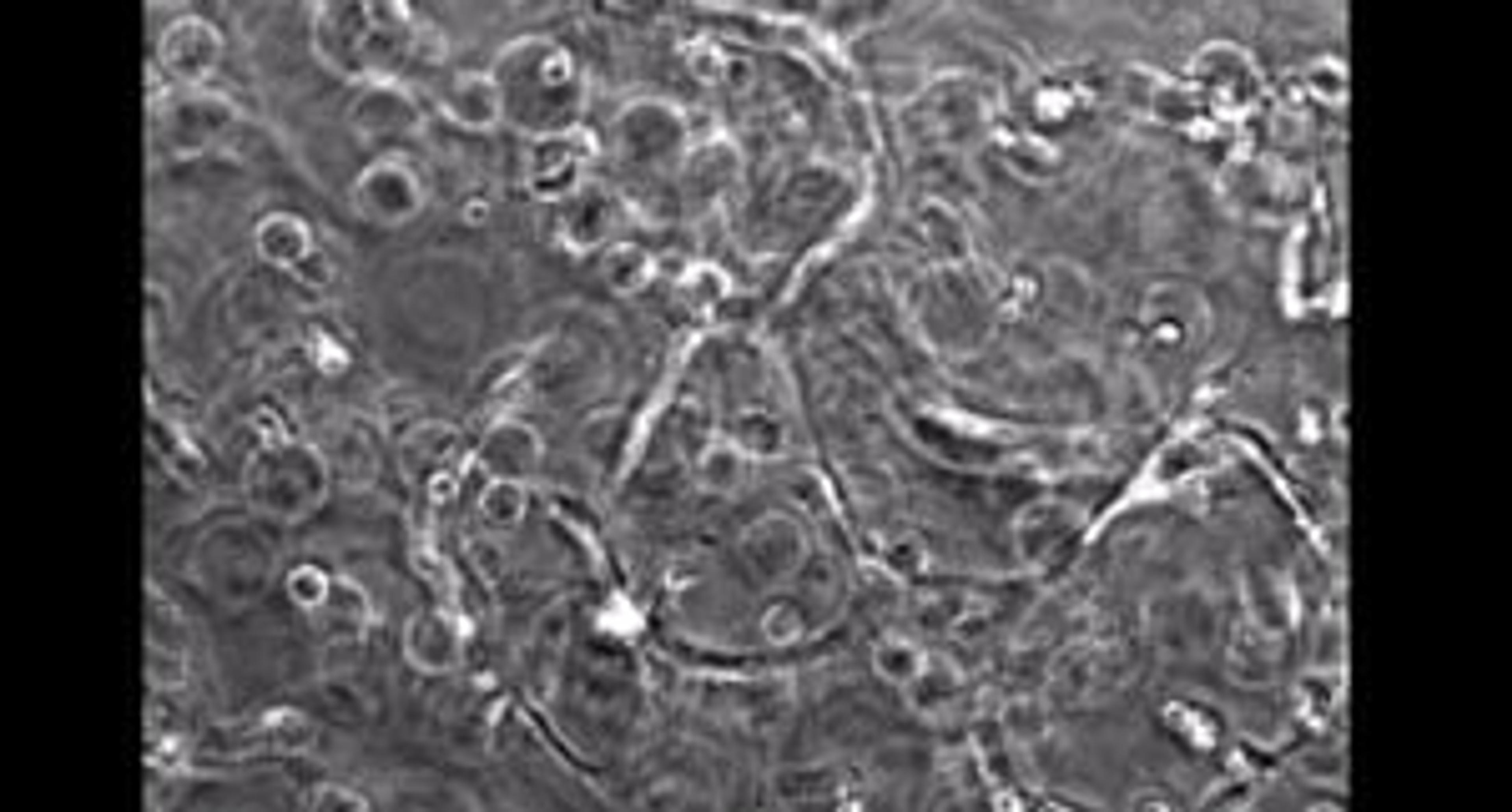
These time-lapse video images illustrate 3D capillary-like network formation for iCell® Endothelial Cells (Cellular Dynamics International) encapsulated in a synthetic polyethylene glycol (PEG) hydrogel. Images shown for time points recorded over days 2-3 in culture. The PEG hydrogel was formed with protease-degradable crosslinks and a pendant adhesion peptide to promote cellular remodeling, and grown in standard CDI-recommended media & supplement. Video courtesy of Michael Schwartz, University of Wisconsin.