Design & Development
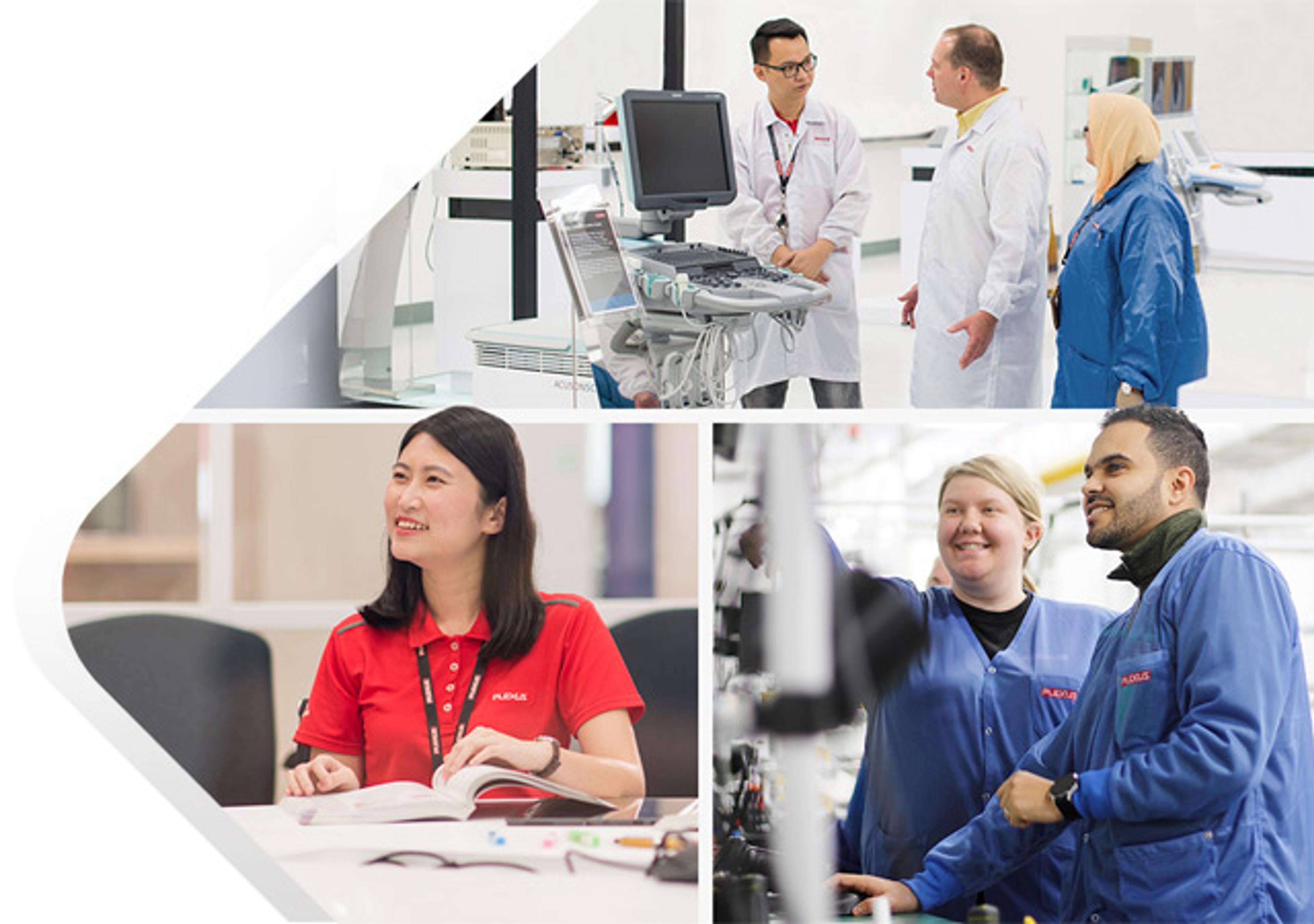
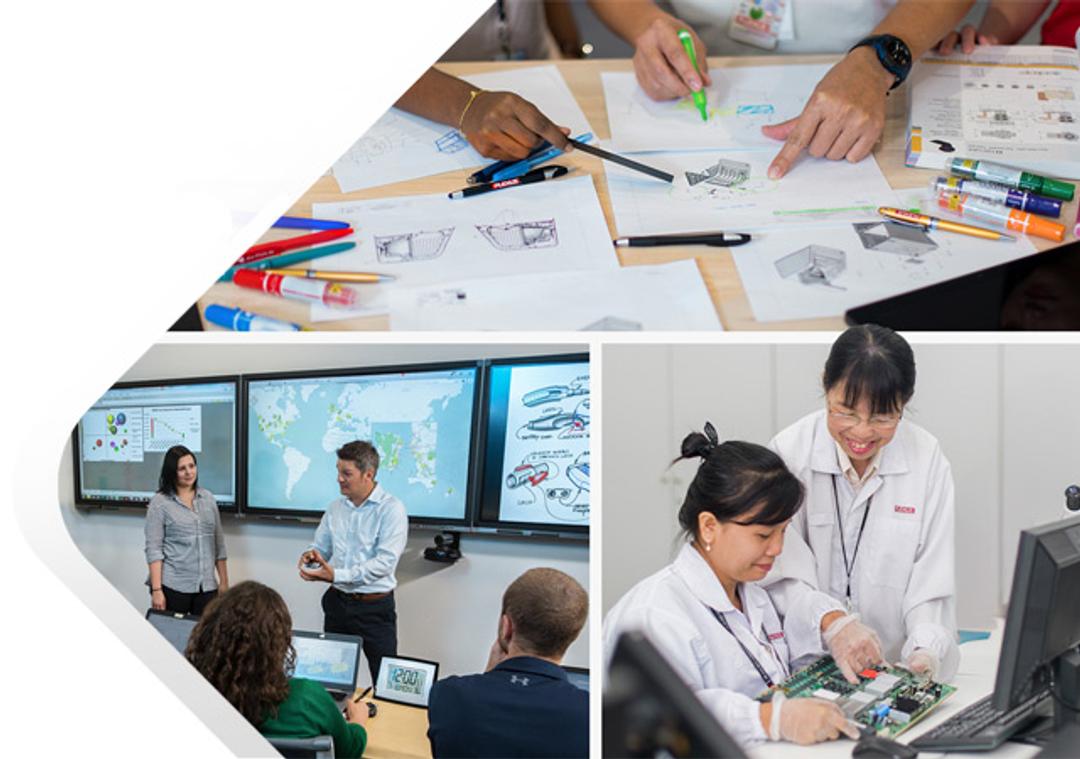
We partner with you to turn complex concepts into commercially viable life science instruments. Our teams integrate regulatory strategy, DfX optimization, and rigorous testing from day one, ensuring your product is compliant, reliable, and optimized for global scale, accelerating your path to market.

Receive your quote directly from the manufacturer.
Our Design & Development services cover the complete ideation and engineering journey for complex medical and diagnostic devices:
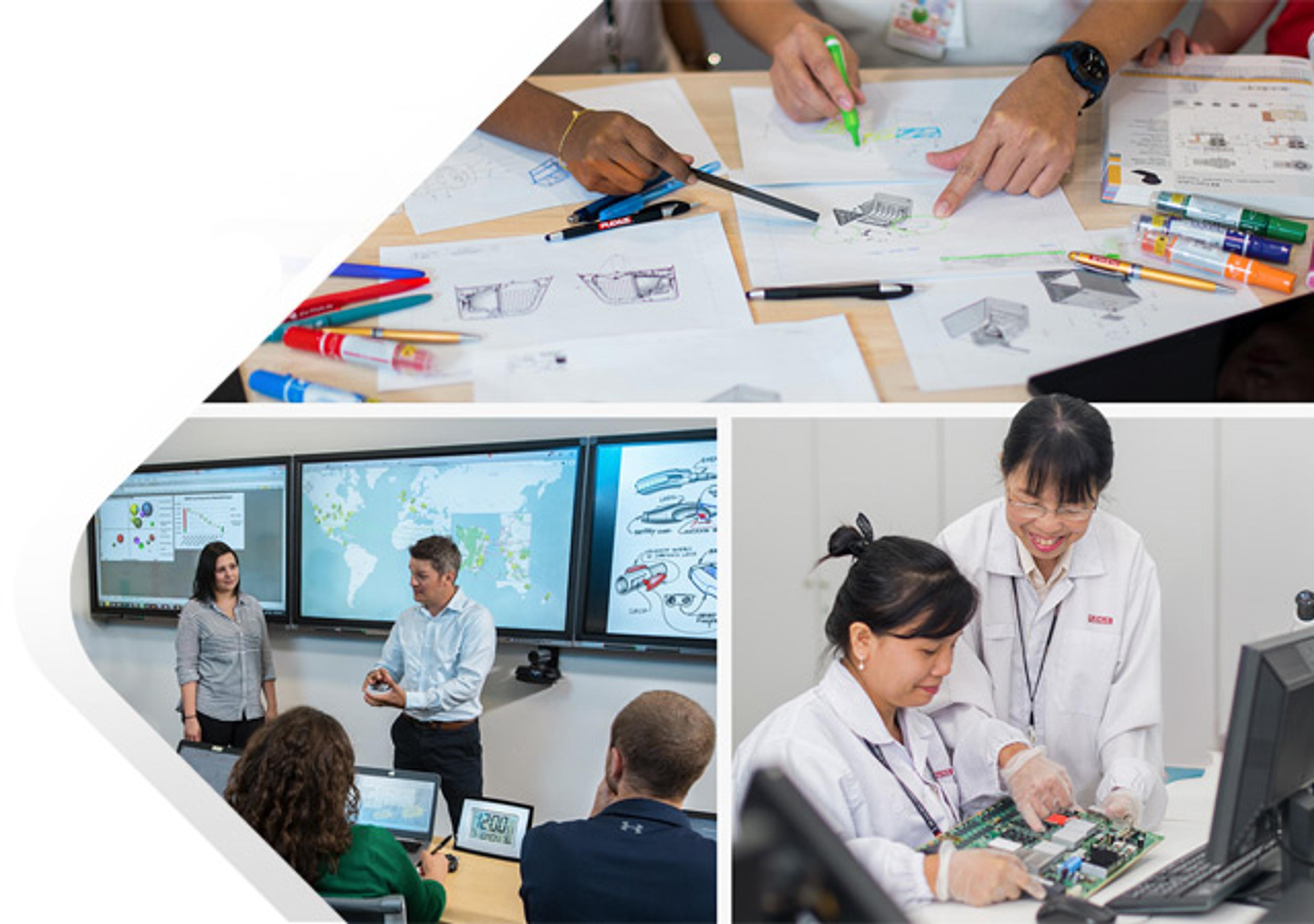
- Product Strategy: We help define the technical and commercial roadmap, ensuring the device architecture, regulatory strategy (e.g., FDA, MDR compliance), and budget align with market goals from the outset.
- Product Development: Our experts manage the full engineering development, delivering a production-ready design that focuses heavily on compliance, intellectual property protection, and uncompromising reliability.
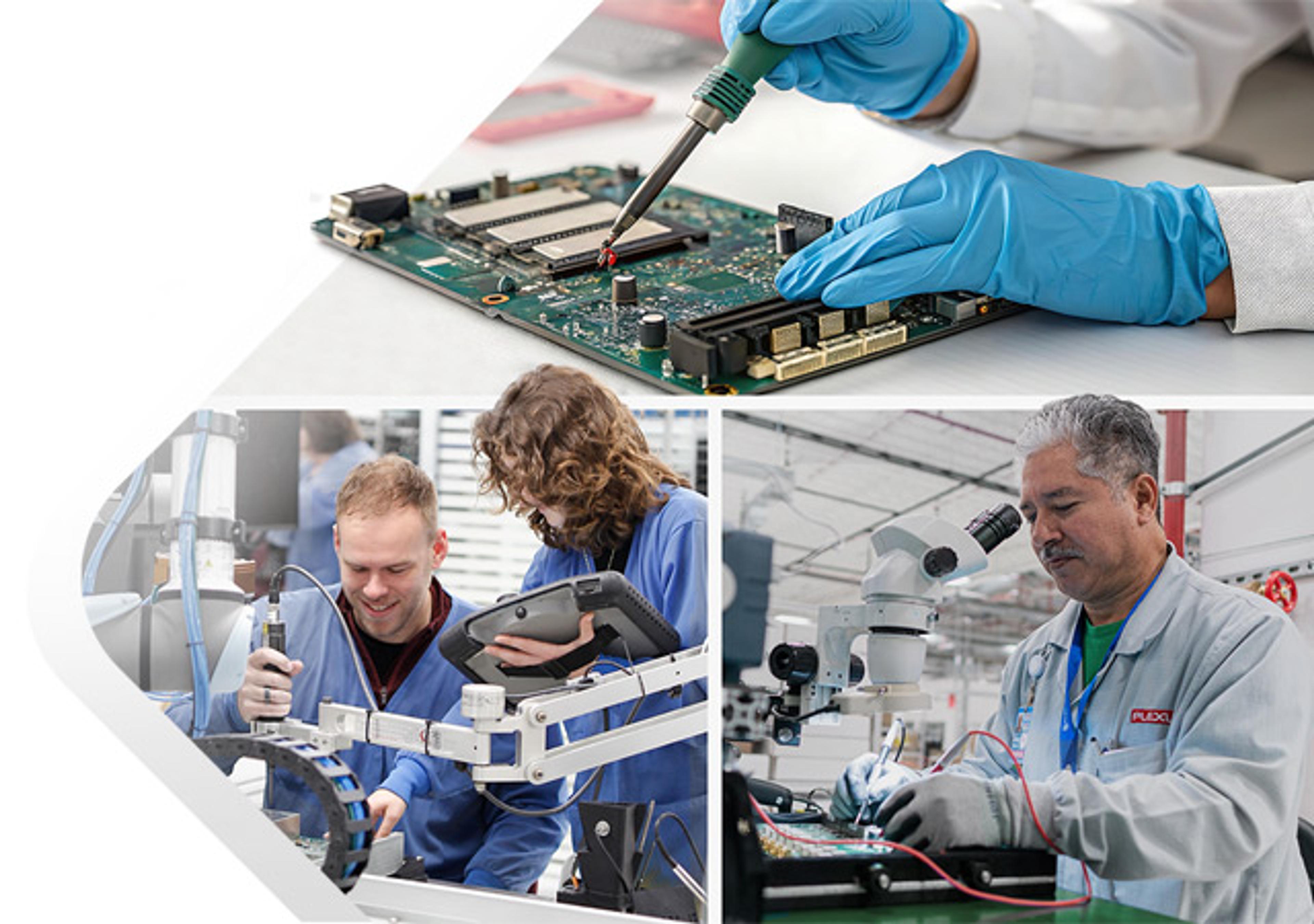
- Design for Excellence (DfX): We embed manufacturability, testability, and serviceability into the design, which critically reduces costs and time-to-market when scaling up production.
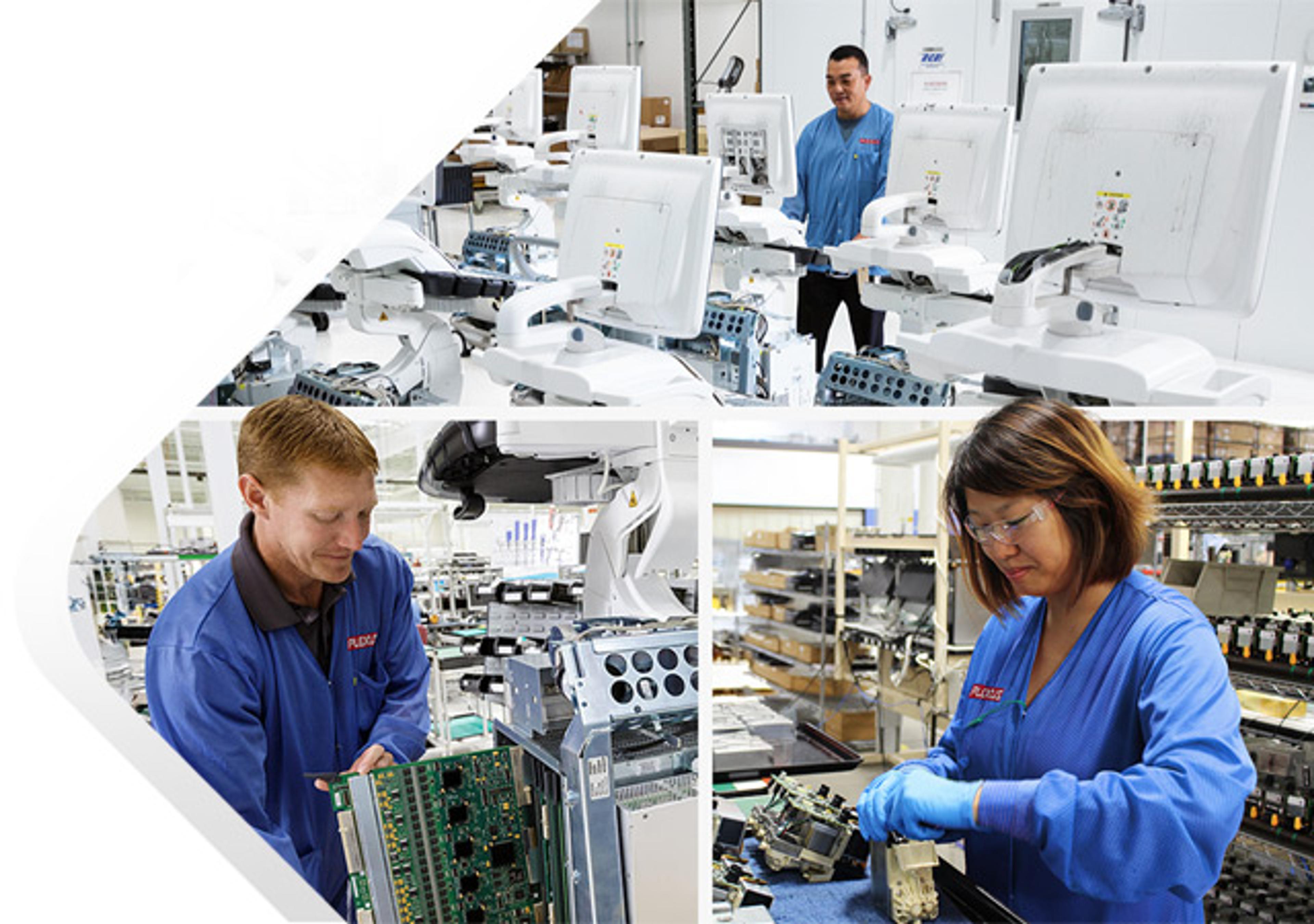
- Test Engineering: We develop and integrate custom, robust testing strategies and equipment to guarantee the quality and performance required for sensitive life-saving devices.
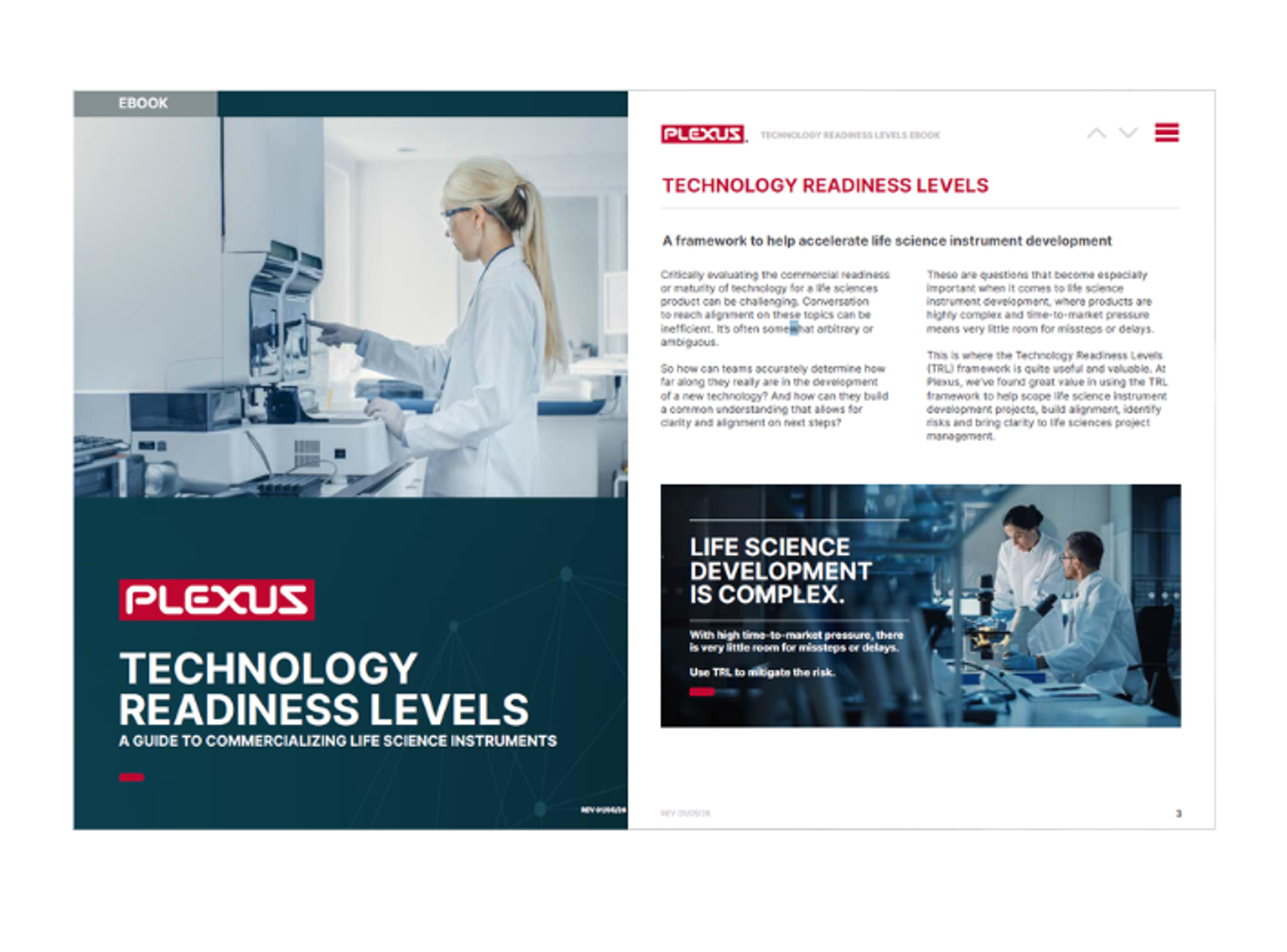
Technology readiness levels: A framework to help accelerate life science instrument development
Critically evaluating the commercial readiness or maturity of technology for a life sciences product can be challenging. Plexus has found great value in using the Technology Readiness Levels (TRL) framework to help scope life science instrument development projects, build alignment, identify risks and bring clarity to life sciences project management.
Resource details:
- Document type: Application notes
- Page count: 16
- Read time: 24 mins
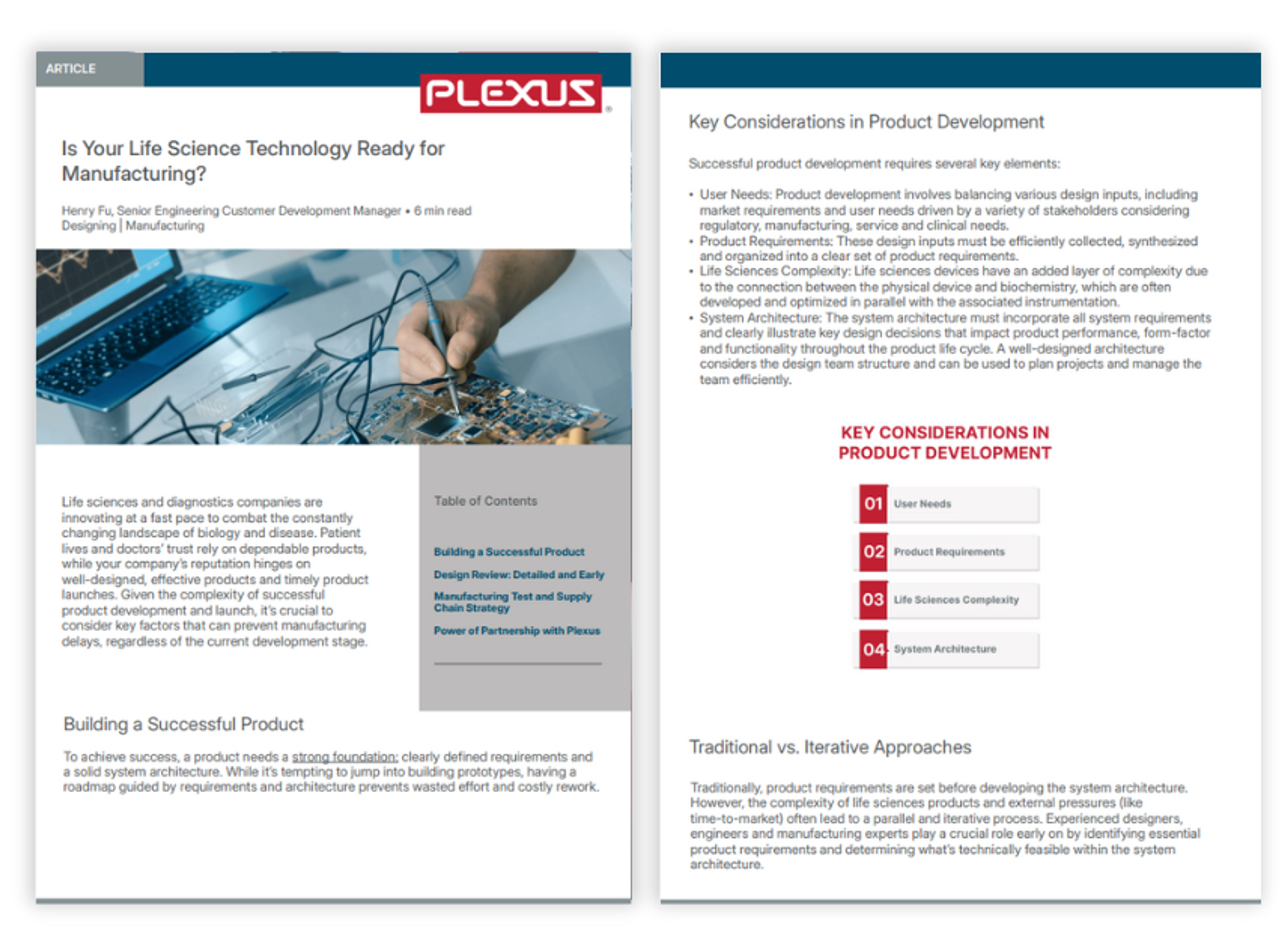
Is your life science technology ready for manufacturing?
Product development is complex, and it’s crucial to consider key factors that can prevent manufacturing delays.
In this article, Plexus outlines how to build a successful product, develop a strategy for supply chains and implementation of manufacturing tests, and how the Plexus product development process can support you in the timely launch of life-changing products.
Resource details:
- Resource type: Application notes
- Pages: 5
- Read time: 8 mins
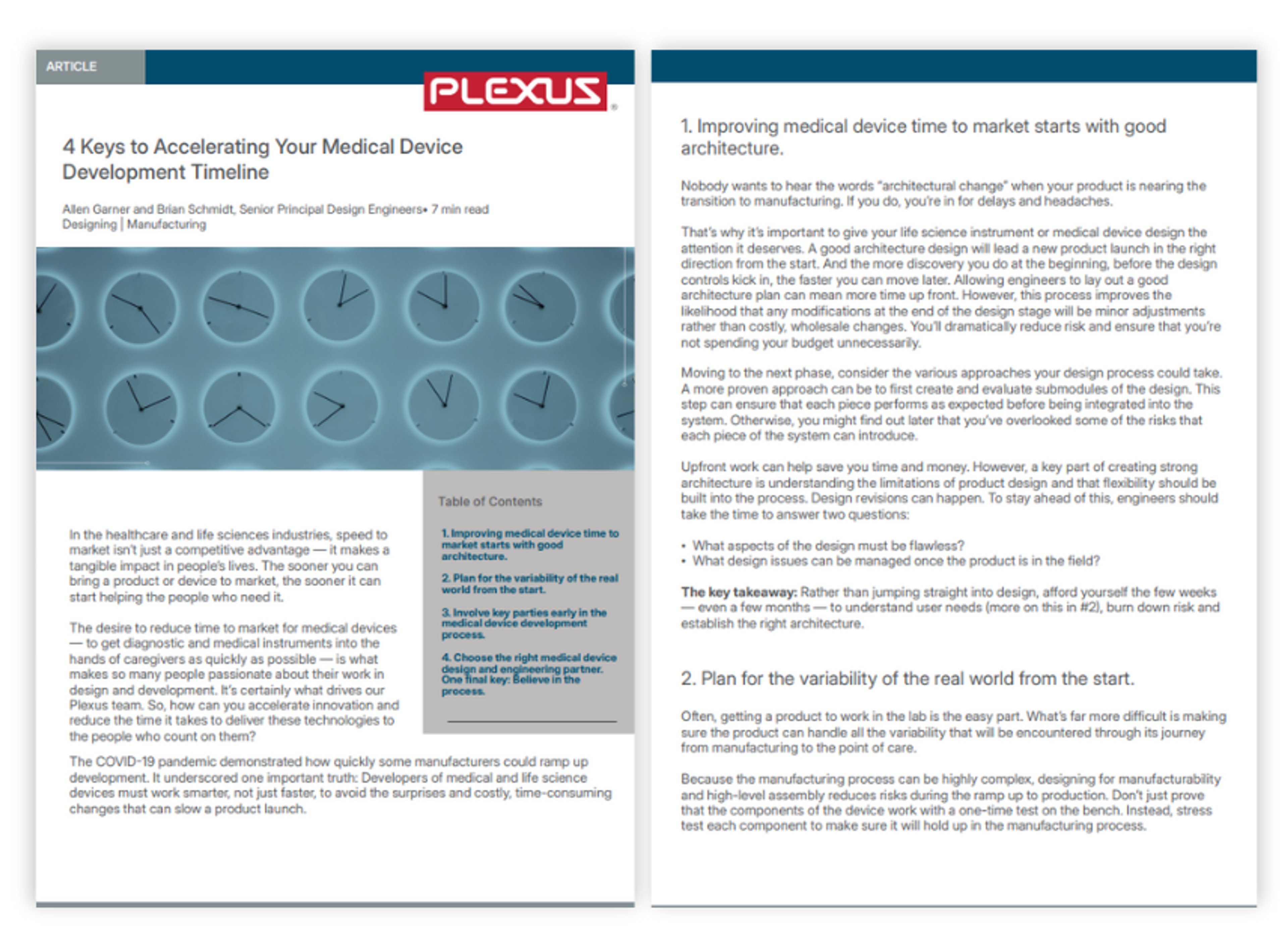
Four keys to accelerating your medical device development timeline
In this article, Plexus outlines four important factors to consider when you’re looking to accelerate your life science or medical device design and development efforts.
From improving medical device time to market, planning for variability, and choosing the right design and engineering partner, discover how working smarter can avoid product launch delays.
Resource details:
- Resource type: Application notes
- Pages: 4
- Read time: 6 mins
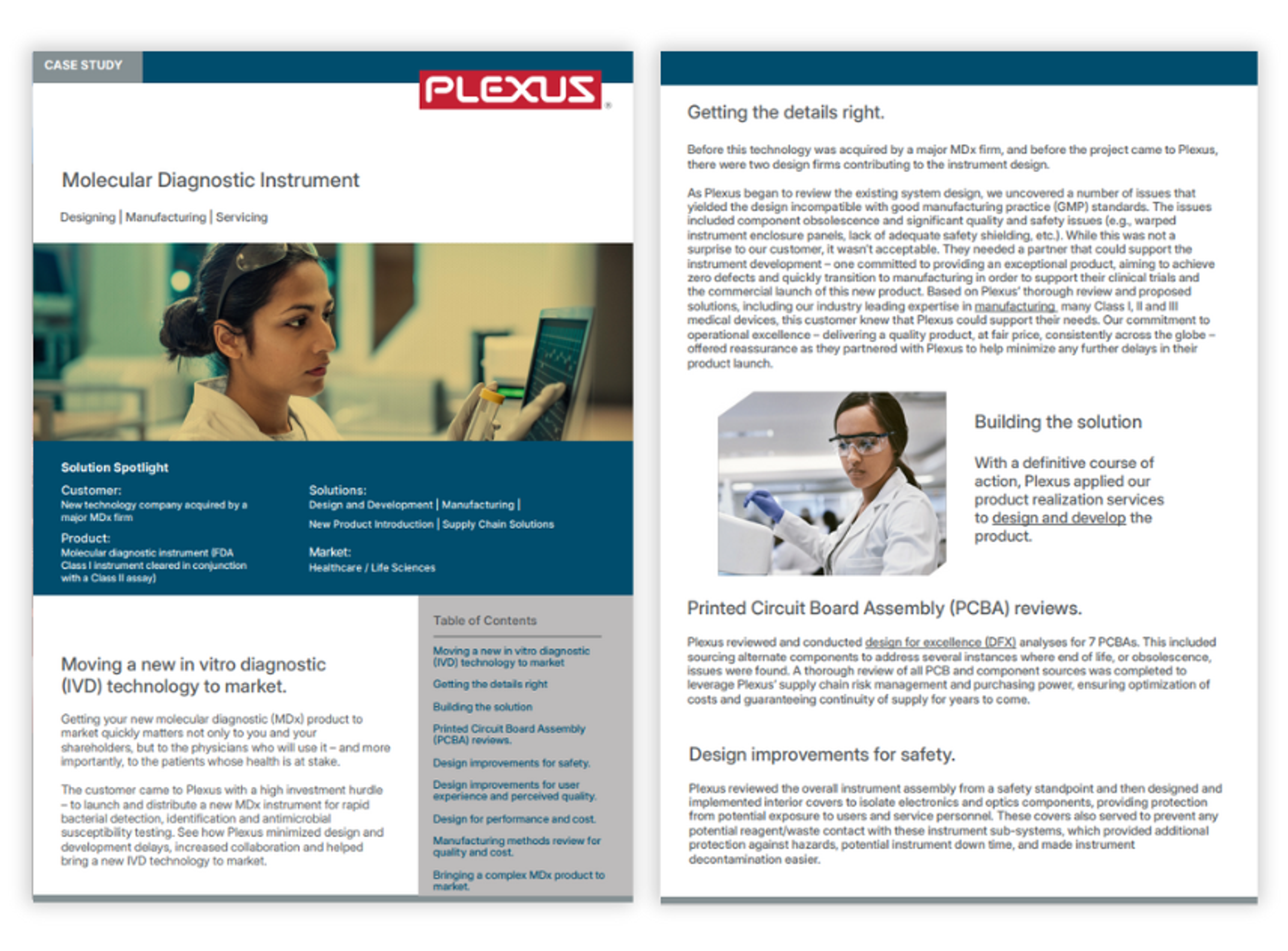
Molecular diagnostic instrument
Getting your new molecular diagnostic (MDx) product to market quickly matters not only to you and your shareholders, but to the physicians and patients who need it.
A new technology company approached Plexus with a high investment hurdle - to launch and distribute a new MDx instrument for rapid bacterial detection, identification and antimicrobial susceptibility testing. This case study showcases how Plexus was able to minimize design and development delays, increase collaboration and help bring a new IVD technology to market.
Resource details:
- Resource type: Case studies
- Pages: 4
- Read time: 6 mins
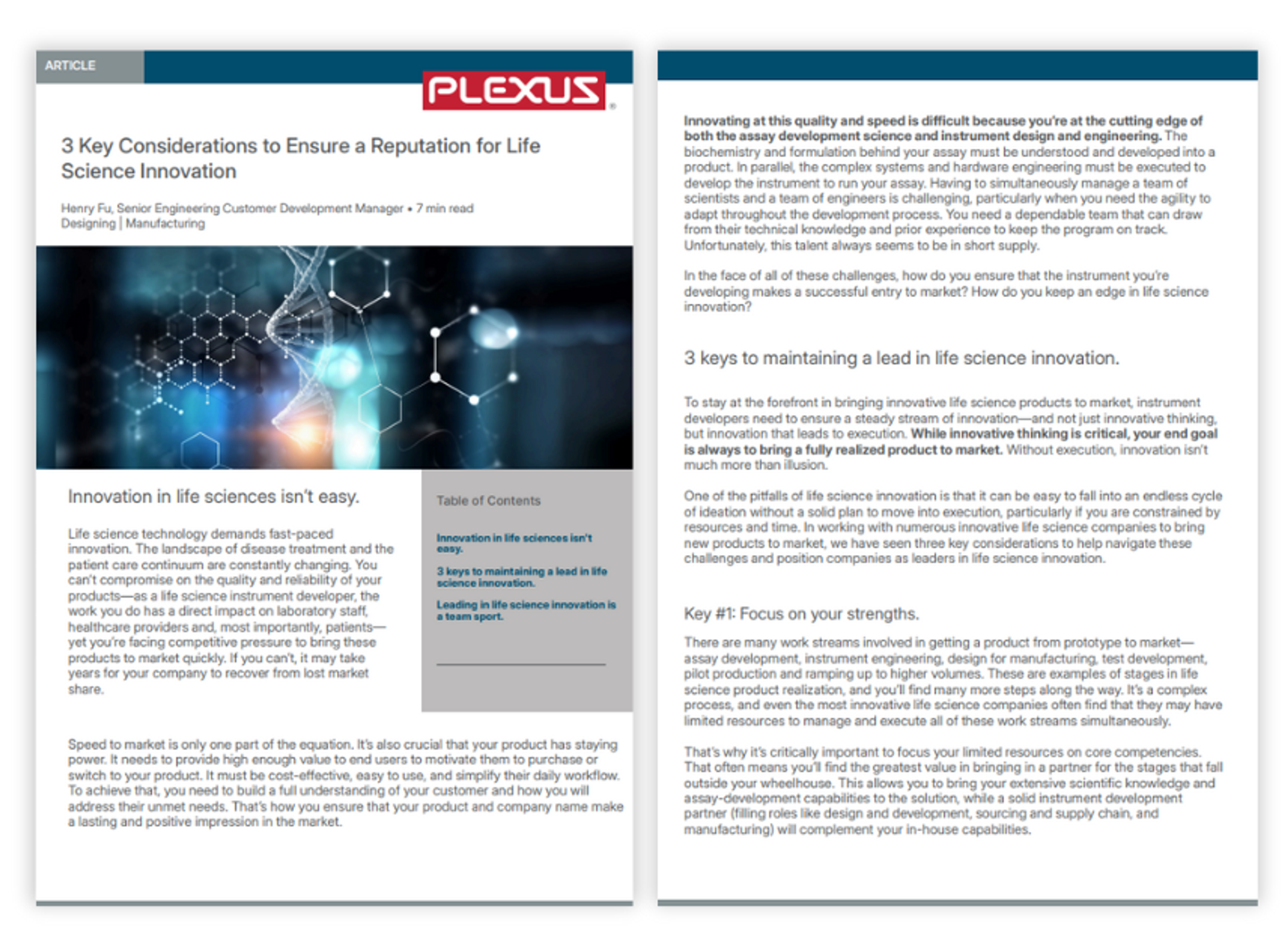
Three key considerations to ensure a reputation for life science innovation
Life science technology demands fast-paced innovation. In this article, Plexus outlines the keys to staying at the forefront of life science product innovation, including how the right partner can cement your place as a leader in life science innovation.
Resource details:
- Resource type: Application notes
- Pages: 4
- Read time: 6 mins
Smart engineering strategies to future proof your system development
Wednesday, February 18 at 16:00 GMT | 17:00 CET | 11:00 EST | 08:00 PST
Transforming a life sciences or MedTech concept into a scalable, production-ready product requires early alignment between science, engineering, regulatory strategy, manufacturing, and supply chain planning.
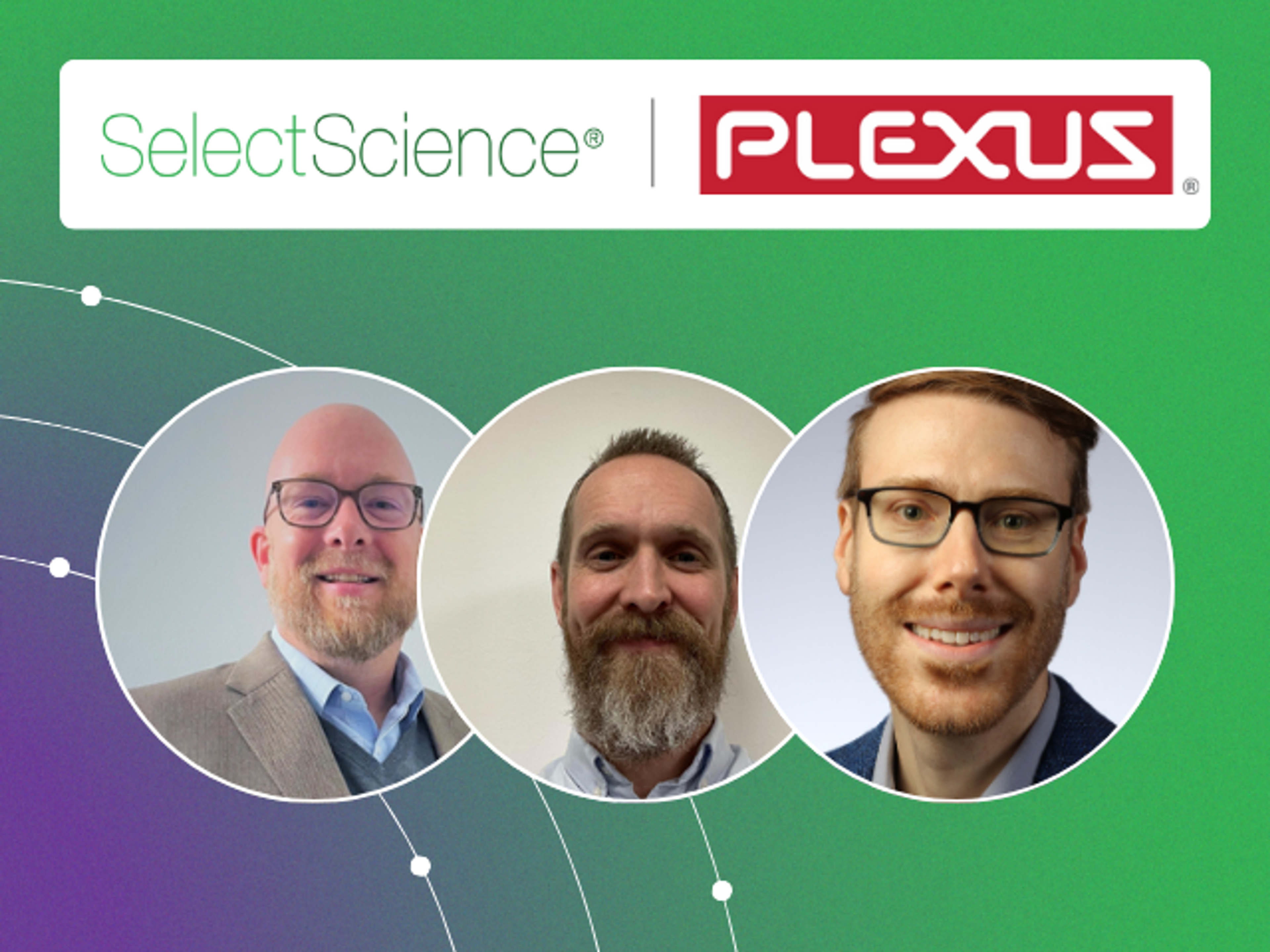
In this SelectScience® webinar, experts from Plexus discuss how engineering-led system development can help future-proof medical and life sciences products, from early assay development through to high-volume production. The session explores how early collaboration across R&D, quality, regulatory, product strategy, hardware, and software teams can reduce development risk, support long-term data capture, and improve readiness for commercial launch.
Attendees will learn how to anticipate the technical, regulatory, and manufacturing challenges that can determine whether a promising scientific breakthrough becomes a reliable, scalable, and commercially viable product.
Certificate of attendance
If you attend the live webinar, you will automatically receive a certificate of attendance, including a learning outcomes summary, for continuing education purposes. If you view the on-demand webinar, you can request a certificate of attendance by emailing editor@selectscience.net.
Webinar details
- Cost: Free to attend
- Location: Online
- Duration: 60 minutes
Registration is required to secure your place. If you register but cannot attend live, you will receive a link to the on‑demand recording once it becomes available.