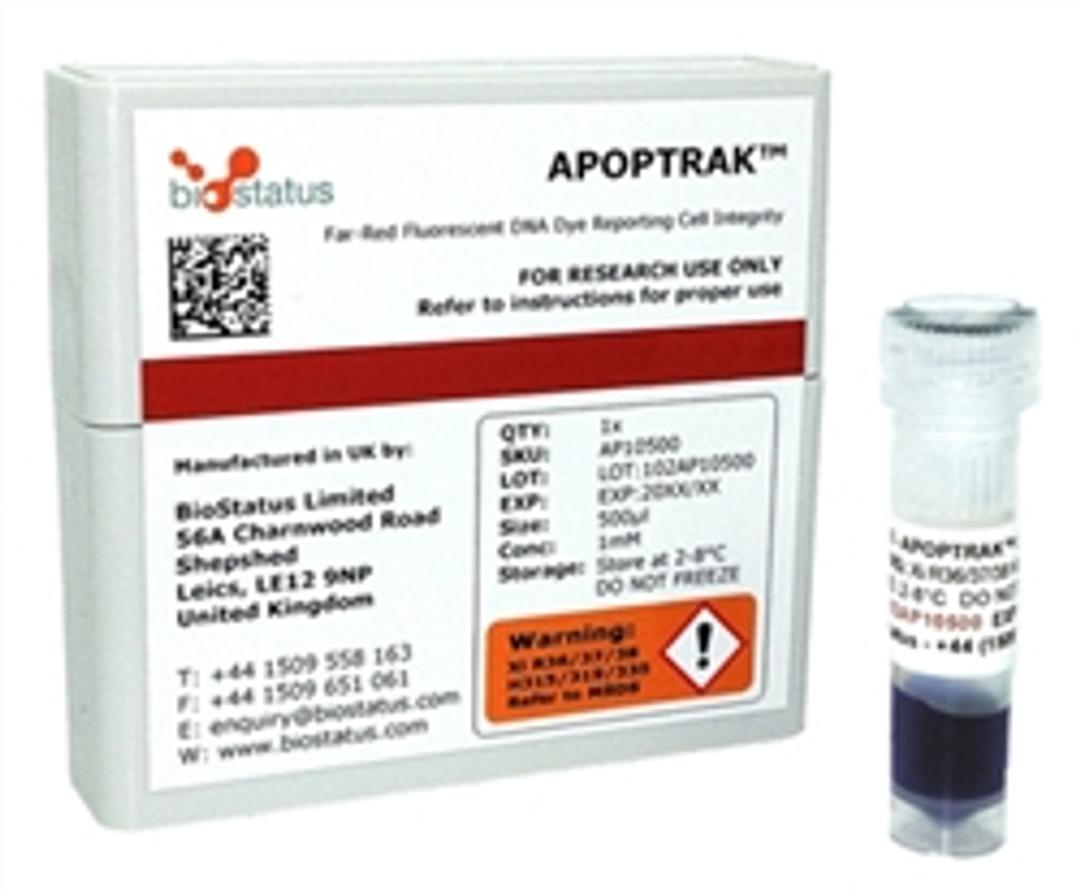
APOPTRAK
A novel cellular probe that can enter both INTACT and compromised cells.

The supplier does not provide quotations for this product through SelectScience. You can search for similar products in our Product Directory.
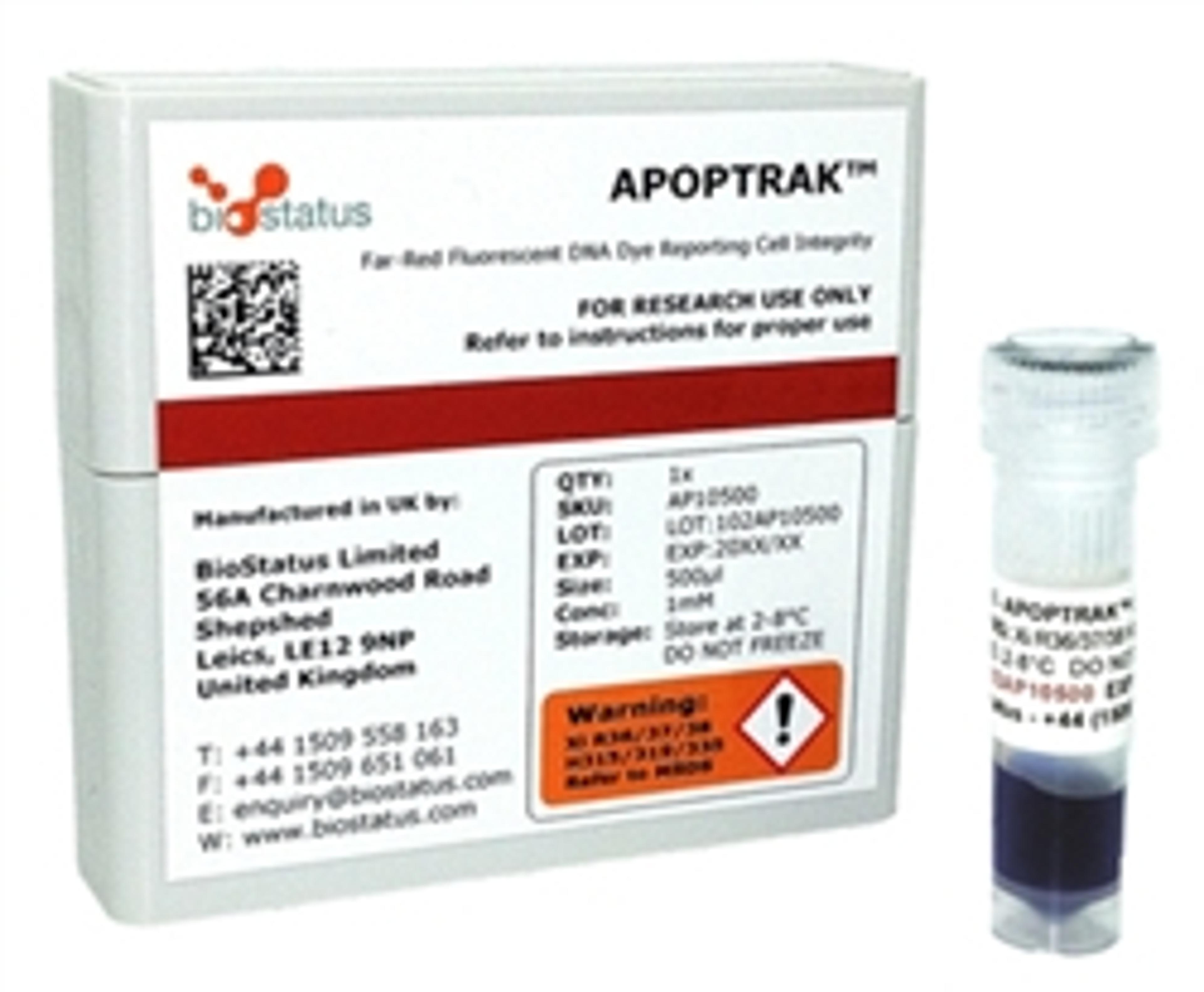
APOPTRAK™ is a chemical derivative of DRAQ5™. It is a novel cellular probe that can enter both intact and compromised cells, differentially revealing the relative integrity of an individual cell membrane. APOPTRAK™ is a useful probe for use in apoptosis assays.
APOPTRAK™ enters LIVE cells slowly and leaky (apoptotic) cells rapidly, to give a signal intensity difference of between 5- and 10-fold, depending on the cell type and treatment. This allows a positive discrimination between these two populations. APOPTRAK™ benefits from all the advantageous ""far-red"" spectral properties of its parent, but differs significantly in its rate of entry into LIVE cells.
Key benefits include:-
- Different rate of entry into LIVE and apoptotic cells, allowing positive discrimination by flow cytometry
- Easy to use - no lyse, no wash, no RNase needed
- Ideal for use with GFP & FITC labels - APOPTRAK™ fluoresces in the far-red region
Published data (Wiltshire et al, Cytometry 2000) suggests an ability of APOPTRAK™ to discriminate early and late apoptotic cells when used in combination with Annexin V.

How APOPTRAK™ Helps Report Cell Integrity in FC-Based Apoptosis Assays
This application note presents a solution for live cell marking and cell death sorting in FC-based apoptosis assays using APOPTRAK.
APOPTRAK™ in FC-Based Apoptosis Assays: Live Cell Marking and Cell Death Scoring
In apoptosis an ordered series of events leads to destruction of a single cell. The changes that occur can be assayed through DNA fragmentation, caspase activity (using permeant substrates e.g. FLICA™ probes), mitochondrial membrane potential (e.g. using TMRM), cytochrome C release, plasma membrane inversion (using Annexin V) and permeabilization being common choices. This application note demonstrates the use of APOPTRAK™ in the analysis of far-red fluorescent dye reporting cell integrity.