New Premium Quality Kjeldahl Consumables

22 May 2016
Alex Waite
Editorial Assistant

Product news

Effective immediately, VELP Scientifica is proud to announce the availability of a new set of consumables for all the phases of Kjeldahl analysis.

This new line of genuine Kjeldahl consumables includes KjTabsTM catalyst and antifoamingtablets suitable for all the applications as well as VreceiverTM boric acid powder formula with indicators for colorimetric titration simplifying and optimizing your distillations.

In order to enhance the performances of your digestion units, VELP designed seven different types of accurately pre-dosed KjTabsTM tablets for both accelerating the mineralization process and drastically reducing foam formation, fundamental for the good outcome of your Kjeldahl analysis.

In addition, VELP is launching the unique pre-dosed VreceiverTM sealed bags, containing VELP boric acid powder formula with indicators for colorimetric titration. The VreceiverTM is ready in a few minutes, easy to use and guaranteeing reliable and standardized receiving solution preparation for precise and accurate analysis (especially combined with VELP automatic distillation units with integrated titrator).

Ensure premium performance from your analytical instruments with the new VELP Scientifica consumables designed to make your life easier and to obtain the utmost from your instruments.

DKL Series and DK Series - Kjeldahl Digesters

Velp Scientifica

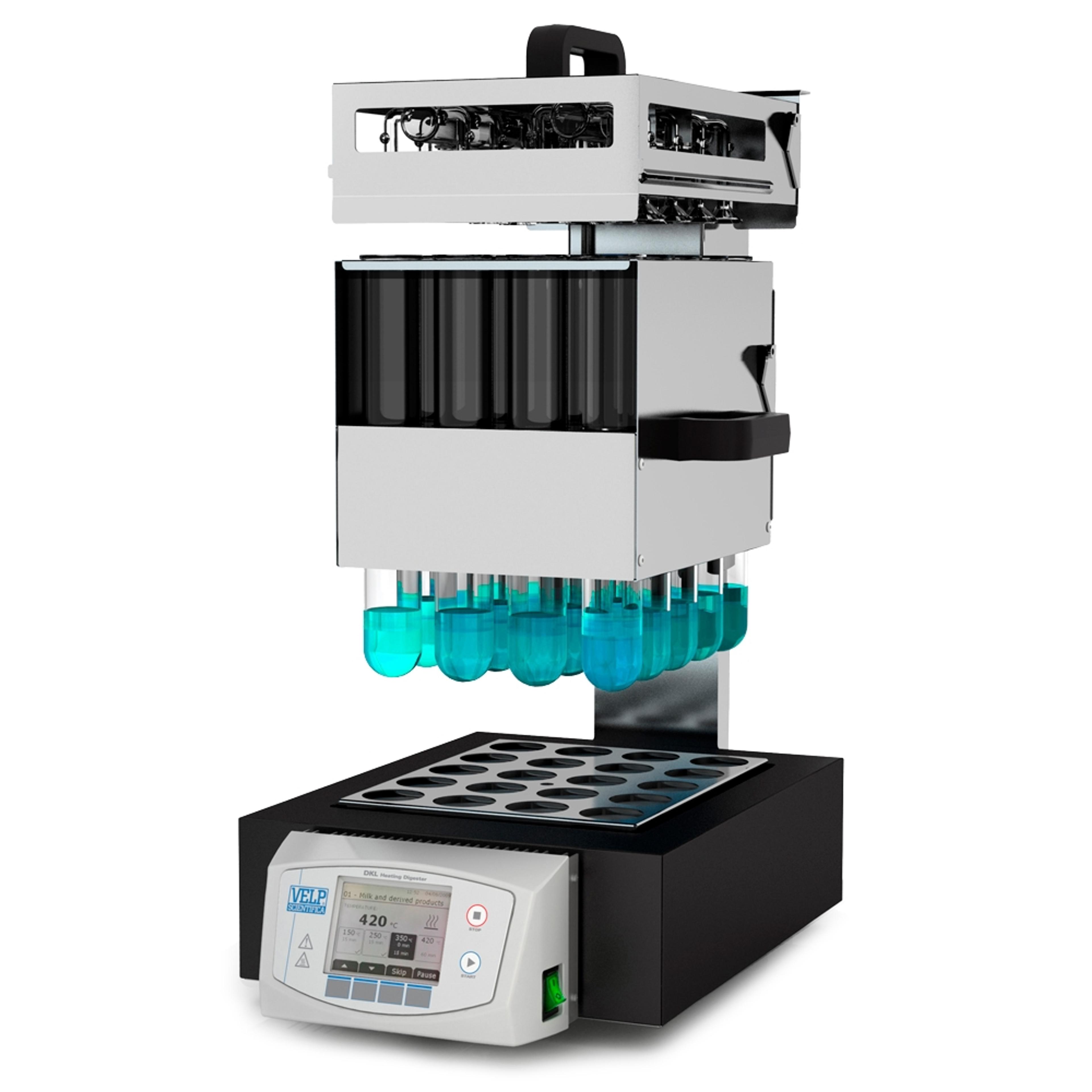
DK Series digesters are traditional digesters, consisting of an aluminum heating block to offer high thermal homogeneity. The DKL Series of digesters offers a premium level of automation: lowering and lifting of the samples take place automatically, as well as the separation between the test tubes and the suction cup. VELP digesters work in accordance with a variety of Standards (such as AOAC, ISO, EPA, DIN etc.)
(1)

UDK Series - Kjeldahl Distillation Units

Velp Scientifica

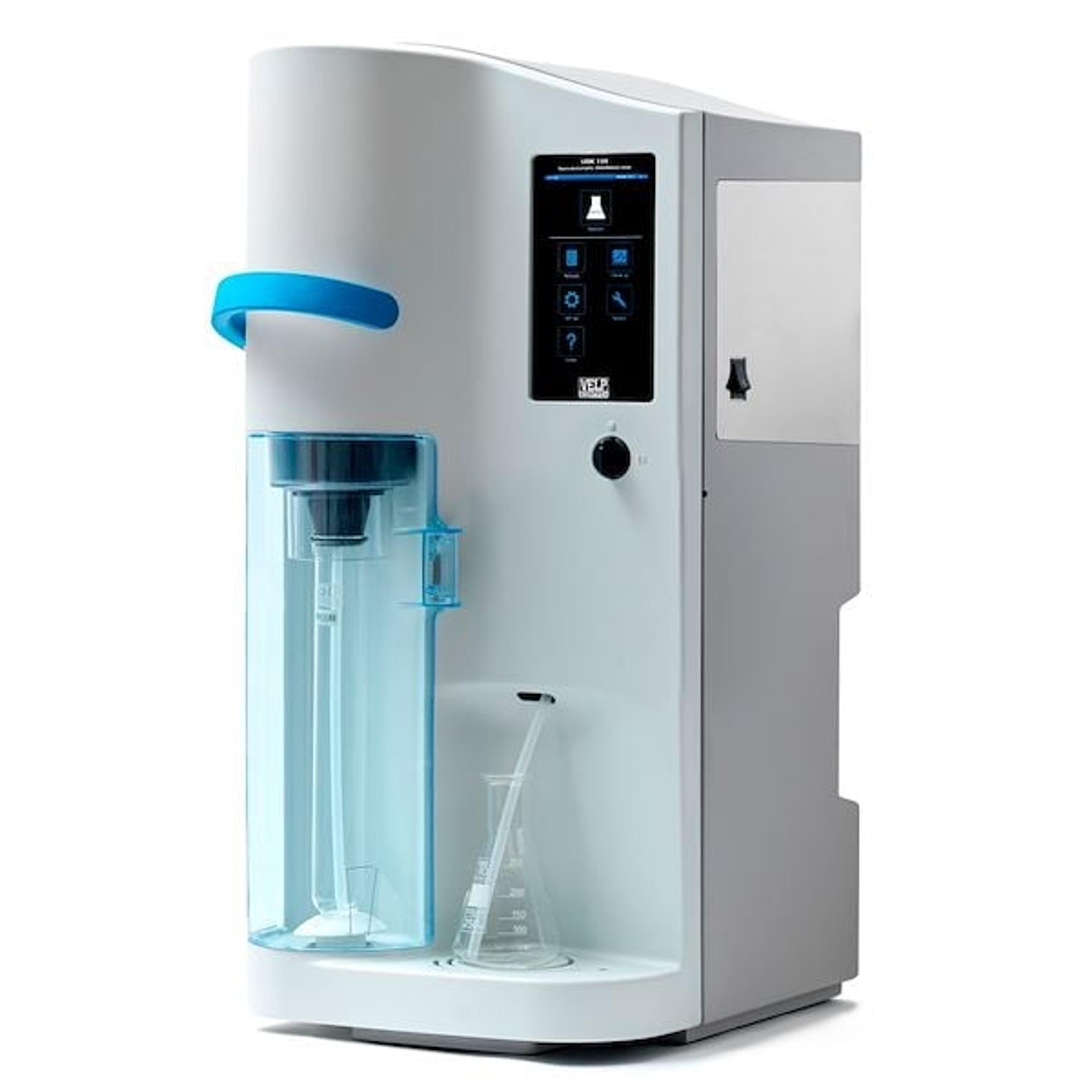
The UDK Series Distillers are designed to meet the most challenging demands and requirements for diverse applications, according to international standards: Kjeldahl nitrogen TKN, proteins, ammoniacal nitrogen, nitric nitrogen (Devarda), phenols, TVBN and volatile acids, cyanides, and alcohol content. 

(13)

Links

Tags

Labware and Lab SuppliesLabware and lab supplies include various forms of glassware, plasticware, reagents and personal protective equipment (PPE) and are used across all scientific laboratories, enabling daily tasks to be performed. Explore a range of flasks and beakers, petri dishes, carboys and storage bottles. Labware such as condensers, desiccators and burettes are also available for more specific tasks. Find the best labware and lab supplies in our peer-reviewed product directory: compare products, check customer reviews and receive pricing direct from manufacturers.Sample ManagementSample management systems include sample storage devices such as freezers and plate storers, sample environment enclosures and sample organization, retrieval and sorter systems. Useful system features include high-throughput, automation, robotic arms, automated liquid handling and associated database systems. Accessories in sample management include barcode scanners, heat sealers and tubes.Robotic InstrumentsRobotic instruments can be used for high-throughput automation of many lab processes. Such processes use instruments for assays like cell based assays and ELISA, for sample preparation like shakers, centrifuges and incubators, and for analysis such as sequencing and western blot analyzers. Useful features of robotic instruments include speed, reproducibility, barcode readers, software and automation.KjeldahlKjeldahl is an analytical chemistry technique for the quantitation of nitrogen in chemical substances. Applications of Kjeldahl include analyzing the protein content of food, nitrogen analysis in environmental sciences and the pharmaceutical industry and total kjeldahl nitrogen, nitrate and ammonia analyses in agricultural sciences.TitrationTitration is an analytical technique for determining substance concentration in a solution. For titration consider a manual or automated system, volumetric or coulometric reagent addition and indication by a potentiometer, spectrometer, turbidometer or by the Karl Fischer method. Other features of titration to consider include burettes, reagents, concentration range, reaction time and autosamplers.Particle CharacterizationParticle characterization instruments are used to determine particle size distribution, shape, surface area, zeta potential, density and porosity of particles and materials. Multiple tecchniques are available for determining particle size, shape and count including dynamic light scattering (DLS), laser diffraction, electrozone (Coulter technique), imaging particle analysis and single particle optical sensing. Determine the density of your material with a gas pycnometer or examine its surface area and porosity with gas adsorption analyzers and mercury porosimeters. Find the best particle characterization instruments in our peer-reviewed product directory: compare products, check customer reviews and receive pricing direct from manufacturers.Thermal Analysis EquipmentThermal analysis equipment is used for measuring heat flow, weight loss, dimension changes or thermomechanical properties and is important for analyzing a material’s performance and stability. Thermal analysis equipment includes differential scanning calorimeters (DSC), thermogravimetric analyzers (TGA), thermomechanical analyzers (TMA), dilatometers, thermometers, vapor sorption analyzers, boiling and melting point apparatus. Thermal analyzers can reveal properties such as melting, crystallization and glass transitions or other processes such as oxidation, decomposition, volatilization, as well as coefficients of thermal expansion and modulus. Find the best thermal analysis equipment in our peer-reviewed product directory: compare products, check customer reviews and receive pricing direct from manufacturers.Quantitative AnalysesQuantitative analyses involve measuring the amount or concentration of a substance in a sample using analytical techniques. These analyses are essential in fields like chemistry, biology, and environmental science. Explore quantitative analysis tools in our peer-reviewed product directory; compare products, check reviews, and get pricing directly from manufacturers.AutomationAutomation in laboratories and manufacturing processes enhances efficiency, precision, and scalability by reducing the need for manual intervention. It plays a critical role in improving productivity, minimizing human error, and accelerating workflows in fields like diagnostics, drug development, and industrial testing. Automation technologies include robotic systems, automated liquid handlers, and process control systems that streamline complex tasks and ensure consistent, reproducible results. Explore our peer-reviewed product directory to discover the best automation solutions, compare options, read user reviews, and get prices directly from manufacturers.Chemical Process AnalysisSample ConcentrationSample concentration involves the removal of solvents from samples using technologies such as centrifugal evaporation, lyophilization and rotary evaporation.NitrogenColorimetric AssaysDigestion