Mission Bio partners with Agilent Technologies to advance precision medicine

This strategic partnership aims to expand access to the Tapestri Platform for single-cell multiomics

22 Apr 2020

Diane Li
Assistant Editor

Industry news

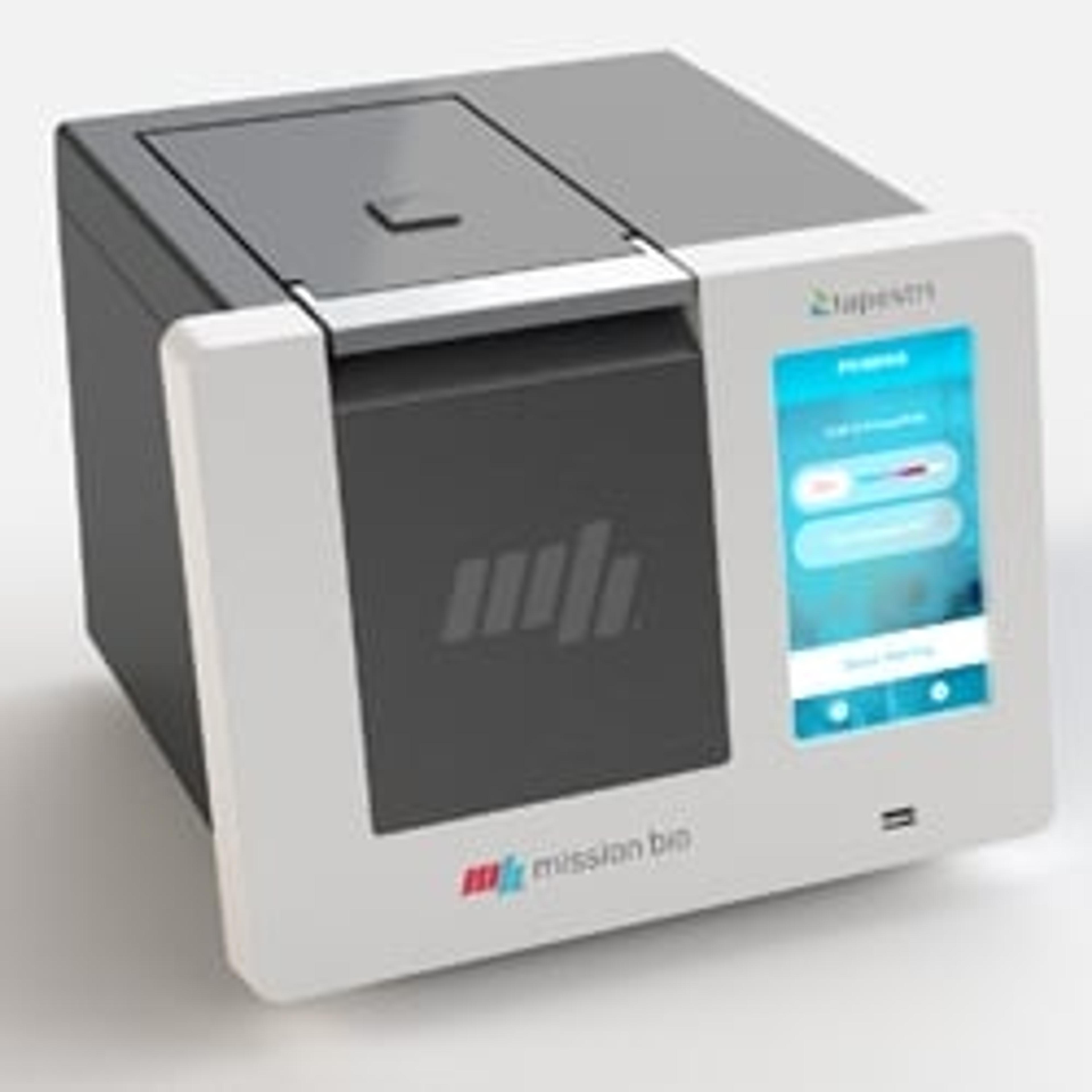
Mission Bio, Inc., the pioneer in high-throughput single-cell multi-omics and DNA analysis has announced a partnership with Agilent Technologies, a global leader in life sciences, diagnostics and applied chemical markets. The two companies have entered a co-marketing agreement to drive adoption of Mission Bio’s Tapestri Platform, the industry’s first and only multi-omic device to analyze both DNA and protein at the single-cell level.

North America is the largest single-cell genome sequencing market in the world and is set to reach over $5 billion in the next four years. With applications in oncology, immunology, genome editing, and biomarker development, single-cell sequencing technologies are proving necessary to further the evolution of more precise, effective treatments.

As the only single-cell multi-omic platform capable of detecting DNA and protein changes simultaneously from the same cell, the Tapestri Platform can sensitively detect rare cancer subclones and co-occurring cancer mutations, thus offering a precise way to measure therapy response and disease progression. The new co-marketing agreement will support Mission Bio’s global expansion efforts and bring its technology into the hands of leading cancer researchers in the United States.

“It’s extremely validating to have one of the world’s leaders in life sciences supporting our commercialization efforts,” says Darrin Crisitello, Chief Commercial Officer of Mission Bio. “Leveraging Agilent’s vast US commercial footprint gives us significant reach to additional customers, providing them with the tools to develop treatments and potentially cures for cancer.”

This latest milestone is a testament to Agilent’s confidence that the Tapestri Platform will further their common goal of empowering research and clinical labs with novel technology to advance precision medicine. Agilent has been an investor in Mission Bio since 2014, and has leveraged Tapestri as a quality control method for its genome-editing research, analyzing the off-target effects of CRISPR for therapeutic development.

“Tapestri is fundamentally changing how researchers understand cancer, so we’re excited to see more researchers and clinicians adopt this platform,” remarked Kevin Corcoran, Vice President and General Manager of Agilent’s Biomolecular Analysis Division. “This targeted sequencing method at the single-cell level complements our class-leading genomics products, providing a more comprehensive oncology offering for our customers.”

This strategic partnership follows Mission Bio’s recent distribution partnership with Novogene, a leading genomics provider, to bring the Tapestri Platform to the rapidly expanding Chinese market. The company also partnered with BioLegend, a global leader in protein antibody and reagent‎ manufacturing, to co-develop the first commercial solution for combined DNA and protein analysis at the single-cell level.

Want more of the latest science news straight to your inbox? Become a member of SelectScience for free today>>

Tapestri Platform

Mission Bio

Clonal Resolution with Single-Cell Precision Complex disease evolves, so understanding genetic variability — including mutation co-occurrence at the single-cell level — is vitally important for clinical researchers to break the cycle of treatment response, resistance and relapse.

(0)

Links

Tags

Genome AnalysisGenomics, the study of genomes, includes functional genomics, evolutionary genomics and comparative genomics. There are many genomic technologies such as DNA sequencing of whole genomes, computational biology and bioinformatics. DNA and nucleic acids must be isolated and concentrated from cells for analysis with kits, automated analyzers and software. Other useful technologies for studying genomics include PCR, microarrays and electrophoresis.DNA / RNA Extraction and PurificationPurified DNA and RNA are required for numerous downstream molecular biology applications. Consequently, the importance of high-quality DNA/RNA extraction and purification equipment cannot be underestimated. Many purification kits are available and are typically optimized for nucleic acid type and source, including plasmid DNA, genomic DNA, mRNA, RNA and viral nucleic acid purification kits. Automated extraction and purification of nucleic acids can be implemented with magnetic bead separator instruments or high-throughput purification workstations. Find the best DNA/RNA extraction and purification equipment in our peer-reviewed product directory: compare products, check customer reviews and receive pricing direct from manufacturers.DNA SequencingDNA sequencing, such as sanger sequencing, is a biological technique that determines the precise order of nucleotide bases in a fragment or template of DNA. DNA sequencers and genetic analyzers are based on capillary electrophoresis, where labeled DNA fragments are electrophoretically separated by size as they migrate through a polymer. Find the best DNA sequencing products, including DNA sequencing kits, genomic libraries and genetic identity kits in our peer-reviewed product directory: compare products, check customer reviews and receive pricing direct from manufacturers.Biopharmaceutical AdvancesBiopharmaceutical advances follow the development of pharmaceuticals derived from biotechnology, also known as biotechnology medicines. Biopharmaceuticals may be produced from cell lines, plants, or microbial cells. Important considerations of biopharmaceutical use include application, cost, production process and purification.DNADeoxyribonucleic Acid (DNA) is the main component of chromosomes and the carrier of genetic information of living organisms. Find out here about PCR, NGS, ChIP-Seq, gel imaging, and many other techniques which can be used for the analysis of DNA.Single Cell AnalysisSingle-cell analysis involves studying individual cells to gain insights into their behavior, gene expression, and function. This approach is valuable in cancer research, stem cell biology, and immunology. Explore single-cell analysis products in our peer-reviewed product directory; compare products, check reviews, and get pricing directly from manufacturers.Genome SequencingGenome sequencing involves determining the complete DNA sequence of an organism's genome. It provides crucial information about genetic variations, mutations, and diseases. Advances in sequencing technologies, such as next-generation sequencing (NGS), have accelerated research in genomics, diagnostics, and personalized medicine. Explore genome sequencing tools in our peer-reviewed product directory; compare products, check reviews, and get pricing directly from manufacturers.Precision MedicinePrecision medicine refers to the idea of customized healthcare, where medical decisions and treatments are tailored to the individual patient. Molecular diagnostics, companion diagnostics and Next Generation Sequencing (NGS) play a pivotal role in this approach. Cancer ResearchAlthough cancer is often referred to as a single condition, it actually consists of more than 100 different diseases. Microscopy, mass spectrometry, high throughput sequencing and flow cytometry are some of the most common techniques employed in cancer research labs.