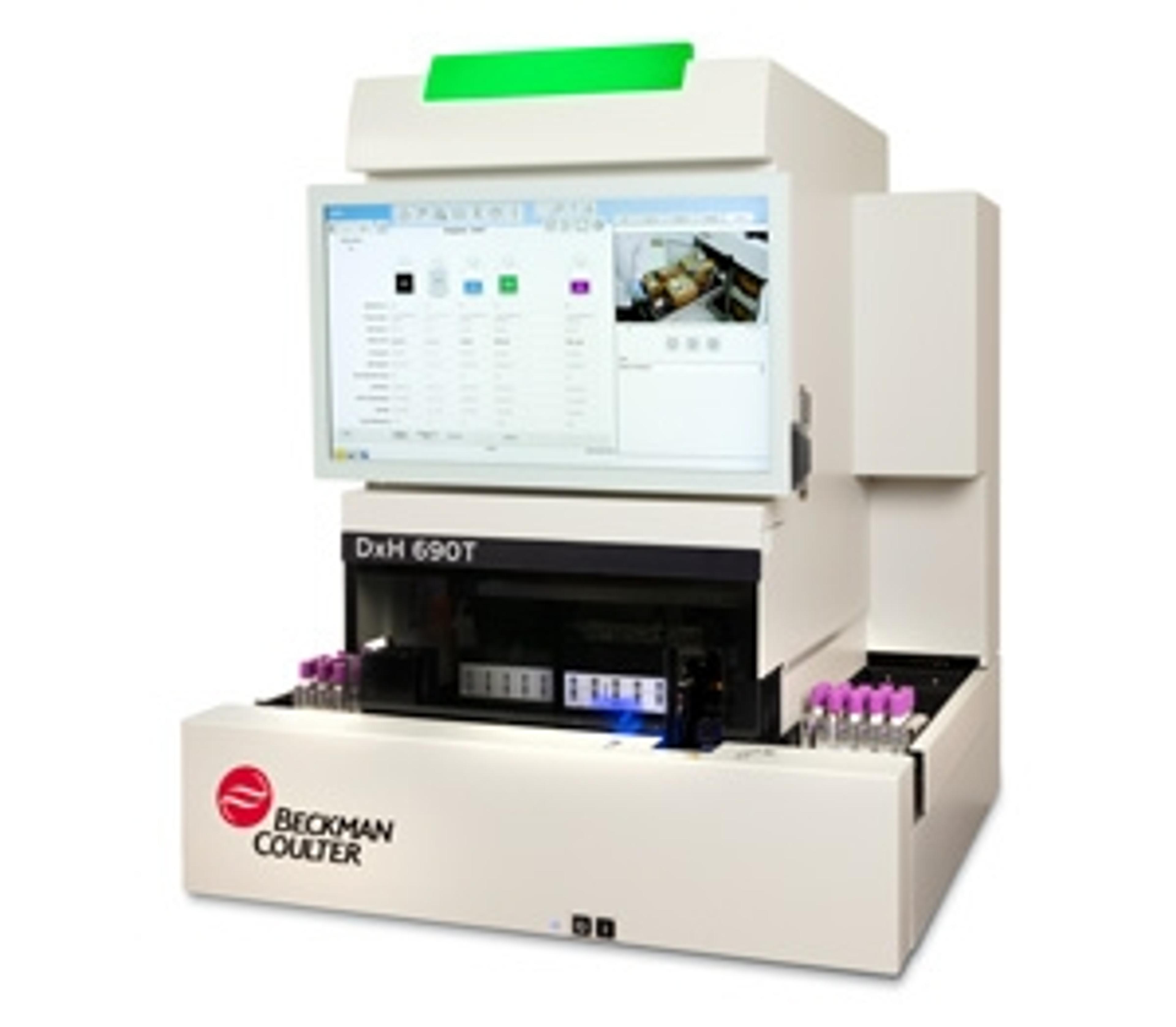
Beckman Coulter praised by Frost & Sullivan for accelerating sepsis detection with the DxH 690T

The technology is said to be superior at identifying cell types in human blood, providing faster and more reliable assessments for clinical decision making

17 Sept 2020

Diane Li
Assistant Editor

Industry news

Based on its recent analysis of the global hematology testing market, Frost & Sullivan recognizes Beckman Coulter Diagnostics with the 2020 Global New Product Innovation Award for the DxH 690T. The company developed the tabletop hematology analyzer for mid-volume laboratories, community hospitals, and physician offices, without compromising clinical effectiveness. With 93% first-pass yield and 75% fewer quality control steps compared to other commercially-available systems, the DxH 690T provides laboratories a more streamlined workflow with increased uptime and lower overhead costs.

“The DxH 690T leverages flagship products in the Beckman Coulter Diagnostics’ portfolio, specifically the enhanced Coulter Principle, VCS technology and DataFusion, to provide precise cellular assessments of RBCs, WBCs and platelets. The DxH 690T is more effective and efficient than competing devices at detecting the variety of cell types and morphologies, particularly with abnormalities,” said Norma Vela Industry Analyst, Frost & Sullivan. “The DxH 690T reduces the need for manual interventions and specimen re-dos, thus streamlining laboratory workflows and increasing productivity.”

The DxH 690T’s automated capabilities are a significant benefit because of worker shortages and financial pressures in healthcare. Beckman Coulter designed the DxH 690T with medium-sized hospitals and mid-volume laboratories in mind to increase walkaway times, minimize touch points, and maximize uptime.

Significantly, the DxH 690T also supports early detection of sepsis for adult patients in the emergency department with the Early Sepsis Indicator (ESId). The only FDA-cleared hematology biomarker for sepsis, ESId measures monocyte distribution width (MDW) to provide insight into the often deadly condition. Unlike existing hematology analyzers, Beckman Coulter’s DxH 690T includes ESId that extracts information about sepsis’ presence through monocyte morphology. Beckman Coulter’s technology uniquely identifies changes in the volume of the monocyte population that can aid in detecting patients with sepsis or at risk for sepsis.

“While competitors typically eliminate some features and capabilities for the mid-volume market, Beckman Coulter retains as many high-volume analyzer capabilities and features as possible,” noted John Scarpa Industry Analyst. “The instrument leverages the company’s experience in hematology innovation and complements its broad hematology portfolio, including the DxH 520 for low-volume, the DxH 900 for high-volume, and the DxH connected workcell solutions for ultra-high-volume facilities.”

Each year, Frost & Sullivan presents this award to the company that has developed an innovative element in a product by leveraging leading-edge technologies. The award recognizes the value-added features/benefits of the product and the increased return on investment (ROI) it gives customers, which, in turn, raises customer acquisition and overall market penetration potential.

“We are truly honored to receive this important industry recognition,” said Peter Soltani, Ph.D., senior vice president and general manager of hematology at Beckman Coulter. “The DxH 690T is a key part of our hematology solutions portfolio and innovation strategy to deliver the power and technology small-, medium- and large-volume laboratories need to make more informed clinical decisions that help improve patient outcomes.”

Frost & Sullivan Best Practices Awards recognize companies in a variety of regional and global markets for demonstrating outstanding achievement and superior performance in areas such as leadership, technological innovation, customer service, and strategic product development. Industry analysts compare market participants and measure performance through in-depth interviews, analyses, and extensive secondary research to identify best practices in the industry.

Do you use Beckman Coulter products in your lab? Write a review today for your chance to win a $400 Amazon gift card>>

Links

Tags

Combinatorial ChemistryCombinatorial chemistry, also known as combichem, is a technique used in drug discovery to create libraries of structurally related compounds. A library is generated by synthesis with a chemical reactor system or by computer-based modeling of compound combinations. When undertaking combinatorial chemistry consider reagents, buffers, resins and standards.Data AnalysisData analysis hardware and software is available to make data processing straight-forward yet powerful. Data software can be used for math and stats, technical graphing and image analysis. In addition, software is available for specific data analysis of electrophoresis, densitometry, ELISA and DNA sequencing.HematologyIn Haematology / Hematology, complete blood cell counts (or full blood counts) are obtained using automated blood count analyzers to enumerate blood cell types.  Hematology also encompasses haemostasis and coagulation, thrombophilia and hemophilia, plasma viscosity and ESR analysis, hemoglobinopathies, cell morphology and haematinic measurement.ImmunologyImmunological techniques measure and characterize immune responses. Immunology kits and analysis systems often use techniques such as ELISA, radioimmunoassay (RIA) and immunodiffusion assays, Immunohistochemistry, and flow cytometry. Immunologists use equipment such as flow Cytometers, plate readers, plate washers and fluorescent microscopes.Cellular PathologyCellular Pathology deals with the microscopic analysis of tissue samples and cells. Sample preparation and processing includes fixation, staining, sectioning and slide mounting, using equipment such microtomes and cryostats. In choosing immunohistochemistry and immunocytochemistry kits, consider chromogens, staining method, antibodies, microscopes and imaging.Biopharmaceutical AdvancesBiopharmaceutical advances follow the development of pharmaceuticals derived from biotechnology, also known as biotechnology medicines. Biopharmaceuticals may be produced from cell lines, plants, or microbial cells. Important considerations of biopharmaceutical use include application, cost, production process and purification.Clinical ChemistryBiochemistry (or clinical chemistry) involves the analysis of bodily fluids using chemical tests. Techniques used include HPLC, chromatography, spectroscopy, mass spectrometry, immunochemical, electrophoresis, turbidometric / spectrophotometric assay, MRI and ISE analysis. Tests are often carried out on plasma or serum but urine (urinalysis) and fecal specimens are also processed.Clinical GeneticsMolecular Genetics covers the analysis of hereditary genetic disease and chromosomal abnormalities. Genetics can be analysed using DNA, RNA, and protein microarrays, PCR, RT PCR and DNA sequencing. Genetic equipment includes genetic workstations, thermal cyclers, cooling blocks and electrophoresis products. Diagnostic kits are used for DNA / RNA extraction and purification.Clinical MicrobiologyMicrobiology is the study of microorganisms including protists, prokaryotes, fungi, and, often, viruses. Microorganisms are a useful research tool as genetic vectors and, in immunology, for antibiotic susceptibility testing, cellular biology and genetics. Microorganisms commonly grow readily in incubators with microbial culture media; this can contain chromogenic supplements to differentiate between cell lines. Estimate your culture’s density of microorganisms with colony counters, or screen and select colonies for desirable clones with automated colony pickers. Additionally, equipment is available to monitor environments for the presence of microbes and identify with microbial identification instruments. Find the best microbiology products in our peer-reviewed product directory: compare products, check customer reviews and receive pricing direct from manufacturers.Drug DeliveryDrug Delivery refers to dosage form, route of administration, formulations, technologies, and systems for transporting a pharmaceutical compound in the body as needed to safely achieve its desired therapeutic effect. Drug delivery is often approached via the biopharmaceutical or small molecule drug's formulation, but it may also involve medical devices or drug-device combination products. Considerations include instrumentation, software and services. RegulatoryPharmaceutical regulations impact on all areas of drug development, manufacture and control and supply. Services are provided from the early stages of drug development and clinical trials through to dossier submission, approval and marketing. Regulatory also includes submission of analytical studies from the pharmaceutical product and safety. Clinical TrialsClinical Trials, an essential part of drug discovery process, assess the safety and effectiveness of a new medication or device in the pharmaceutical industry. Clinical Trials are a phased process (Phase 0, Phase I, Phase II, Phase III and Phase IV) which begins after initial preclinical testing.Hematology SolutionsHematology solutions involve diagnostic tests and equipment used to analyze blood samples and diagnose blood disorders such as anemia, leukemia, and hemophilia. These tools include automated full blood count analyzers, reagents, and digital morphology systems. Explore hematology solutions in our peer-reviewed product directory; compare products, check reviews, and get pricing directly from manufacturers.AutomationAutomation in laboratories and manufacturing processes enhances efficiency, precision, and scalability by reducing the need for manual intervention. It plays a critical role in improving productivity, minimizing human error, and accelerating workflows in fields like diagnostics, drug development, and industrial testing. Automation technologies include robotic systems, automated liquid handlers, and process control systems that streamline complex tasks and ensure consistent, reproducible results. Explore our peer-reviewed product directory to discover the best automation solutions, compare options, read user reviews, and get prices directly from manufacturers.Clinical AutomationClinical laboratory automation refers to the use of automated systems in clinical laboratories to increase efficiency, reduce human error, and improve patient care. From sample analysis to total laboratory automation, this plays a critical role in modern diagnostics and laboratory workflows. Explore clinical automation solutions in our peer-reviewed product directory; compare products, check reviews, and get pricing directly from manufacturers.
Beckman Coulter praised by Frost & Sullivan for accelerating sepsis detection with the DxH 690T