
Virtual Biopharma Summit 2021: Poster highlights

Explore the latest research in biopharma from scientific posters presented at the SelectScience Virtual Biopharma Summit 2021

23 Nov 2021


Dora Wells
Clinical Content Editor

Editorial article

Virtual Biopharma Summit 2021: Poster highlights

This year's Virtual Biopharma Summit saw a range of fascinating and insightful scientific posters presenting the latest research in biopharma. Discover the hot topics in our top picks below to gain insights on a range of research fields, including pulsed electromagnetic targeting of magnetic nanoparticles as anti-tumor therapy, a novel, commercially viable E. coli expression system, 3D iPSC-derived muscle models, nanoparticle-based strategies to combat covid-19, and more!
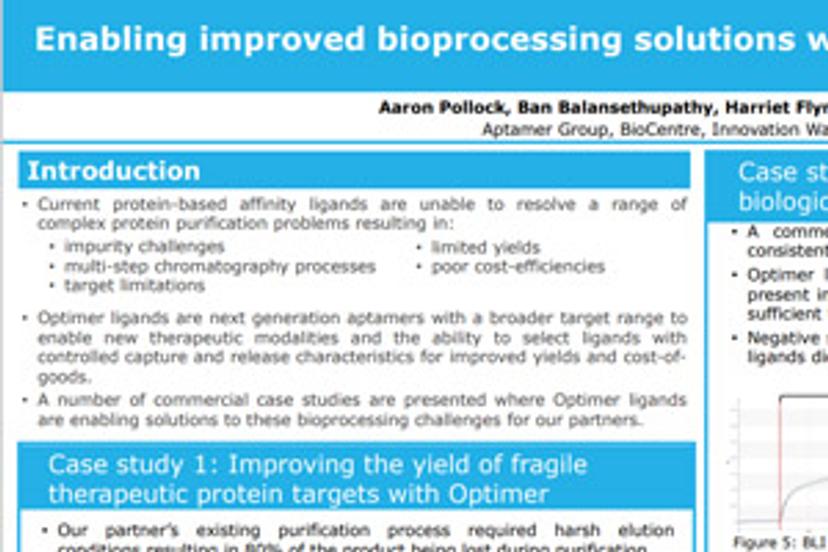
Enabling improved bioprocessing solutions with Optimer

Enabling improved bioprocessing solutions with Optimer®

Current protein-based affinity ligands are unable to resolve a range of complex protein purification problems. This poster describes several commercial case studies where Optimer® ligands are enabling solutions to these bioprocessing challenges. Download now to discover how Optimer® ligands enable new therapeutic modalities, and improved yields and cost-of-goods.
Download poster

Effect of cysteine mutations on the function of the mitochondrial form of the peroxide sensor Gpx3

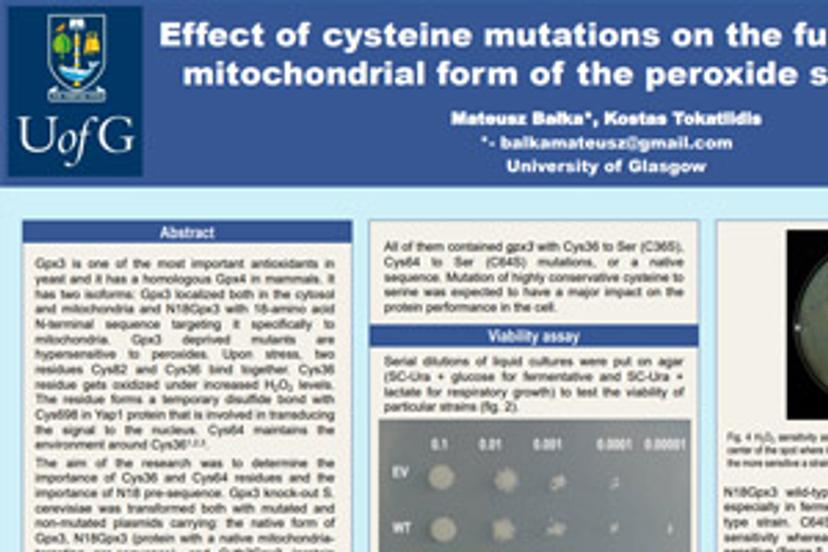
Effect of cysteine mutations on the function of the mitochondrial form of the peroxide sensor Gpx3

Gpx3 is one of the most important antioxidants in yeast and it has a homologous Gpx4 in mammals. In this poster, Balka and Tokatlidis describe their work on the effect of cysteine mutations on the function of Gpx3 in S. cerevisiae. Download now to learn their findings on the viability of mutant Gpx3 variants and their role in H2O2 sensitivity.
Download poster

Role of nanocarrier-based inhalation L-type calcium channel modulators with antioxidant role to support cardiac myocyte

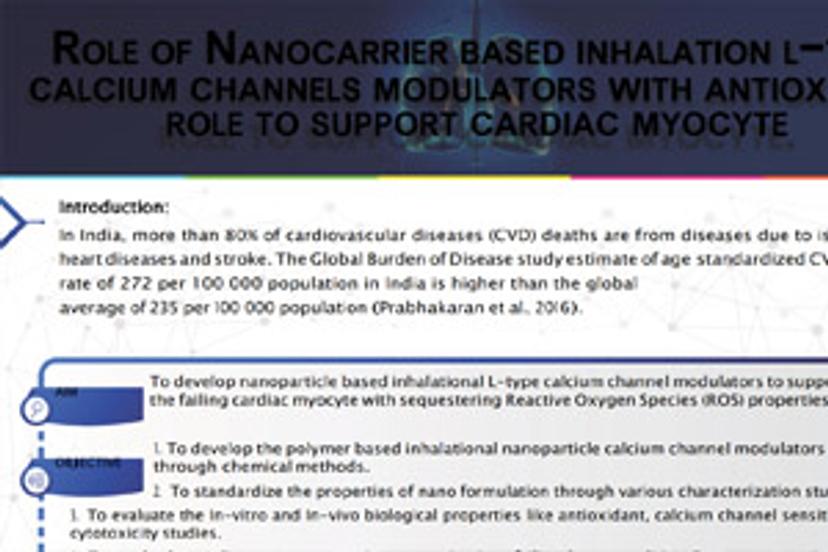
Role of nanocarrier-based inhalation L-type calcium channel modulators with antioxidant role to support cardiac myocyte

In India, over 80% of cardiovascular disease (CVD) deaths result from ischemic heart disease and stroke. Here, Radhakrishnan et al., describe their study aiming to develop nanoparticle-based inhalational L-type calcium channel modulators to support the failing cardiac myocyte. Download now to discover how the study provides proof of concept for an innovative, safe, and efficient personalized inhalational medicine for a failing heart that is designed to prevent the progression of heart failure.
Download poster

Novel biomarker quantification method using 31P NMR for monitoring of cell metabolism

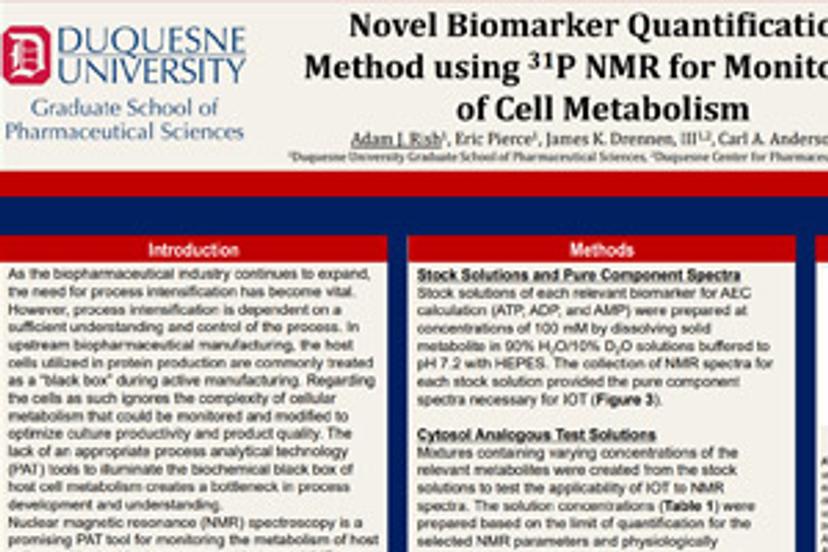
Novel biomarker quantification method using 31P NMR for monitoring of cell metabolism

Nuclear magnetic resonance (NMR) spectroscopy is a promising process analytical technology (PAT) tool for monitoring the metabolism of host cells used in the biopharmaceutical industry. However, limitations of the method restrict its biological application.

Download this poster to explore the work of Rish et al., aiming to develop a calibration-free approach for intracellular quantification of a relevant biomarker to support PAT application of NMR spectroscopy.
Download poster

Review of nanoparticle-based strategies to combat COVID-19

Review of nanoparticle-based strategies to combat COVID-19

Using a database search approach, this review explores the potential of nanotechnology-based tools for COVID-19 disease management. Download this poster to discover the nanoparticle (NP)-based strategies that can be used to combat COVID-19 and/or similar pandemics in the future; identified using combined principles from previous antiviral studies, and recent research conducted on SARS-CoV-2.
Download poster

Assessing contractility of 3D iPSC-derived muscle models for safety and discovery at high-throughput using a novel, label-free magnetic detection method

Assessing contractility of 3D iPSC-derived muscle models for safety and discovery at high-throughput using a novel, label-free magnetic detection method

3D engineered muscle tissues (EMTs) are a promising tool to study cardiac contractile deficiencies in vitro. However, EMTs pose challenges as they can be complex to fabricate and require laborious optical imaging and image processing to measure contractility.

Download this poster to explore a study with a goal to design, build, and validate an EMT platform that uses 1) facile and scalable bioengineering approaches to generate tissues from a variety of cell sources, and 2) a label-free measurement technique capable of direct contractility assessment across several tissues in parallel.
Download poster

Engineered E. coli with an oxidative cytoplasm and efficient cleavage of N-terminal methionine

Engineered E. coli with an oxidative cytoplasm and efficient cleavage of N-terminal methionine

Lees et al., have developed a novel E. coli expression system, named Gor/Met E. coli, with an oxidative intracellular environment that can express disulfide-bonded proteins as soluble, properly folded intracellular proteins. Download this poster for insight into the potential of the Gor/Met E. coli as a commercially viable production strain for producing high yields of disulfide-bonded proteins with their native sequence.
Download poster

In vitro study of pulsed electromagnetic targeting of magnetic nanoparticles as potential anti-tumor therapy

In vitro study of pulsed electromagnetic targeting of magnetic nanoparticles as potential anti-tumor therapy

In breast cancer, new treatment methods using electromagnetic fields (EMFs) could inhibit cell growth and proliferation, induce apoptosis, and suppress angiogenesis and metastasis.

Download this poster to discover the findings of this study in fluorescently determining the cellular effects caused by pulsed EMF and iron magnetic nanoparticles (MNPs) on cancerous MDA-MB-231 and healthy MCF-10A cells.

Download poster

Want to see more from our Virtual Biopharma Summit 2021? Click here to discover research from our brilliant lineup of guest speakers, the latest news in biopharma, and more!

Links

Tags

Atomic Absorption / Emission SpectroscopyAtomic absorption spectroscopy (AAS) and atomic emission spectroscopy (AES) — also called optical emission spectroscopy (OES) — are used to detect the elemental constituents in samples. Both techniques involve the atomization of a sample. Atomic absorption spectrometers may use a flame or furnace to create an atomic vapor of the sample before irradiation with spectral light. Optical emission spectrometers may use a flame, inductively coupled plasma (ICP), microwave plasma (MP) or spark arcs to atomize and excite the sample. At higher excitation energies, electrons can be emitted instead of photons, which can be useful for samples that can’t be atomized and for surface analysis. Explore electron spectroscopy equipment such as Auger spectrometers and photoelectron spectrometers for surface elemental analysis of samples. Find the best atomic absorption, photoelectron and optical emission spectrometers in our peer-reviewed product directory: compare products, check customer reviews and receive pricing direct from manufacturers.Fluorescence SpectroscopyFluorometers and spectrofluorometers (also called fluorescence spectrometers) are used to measure the intensity and wavelength of fluorescent light emitted from a sample after excitation by illumination. Spectrofluorometers utilize monochromators to select the desired wavelengths, whereas filter fluorometers employ a set of filters. Spectrofluorometers for measuring steady-state fluorescence and lifetime fluorescence (or time-resolved fluorescence) are available, as well as fluorescence microscopes and microplate readers. Find the best fluorescence spectroscopy products in our peer-reviewed product directory: compare products, check customer reviews and receive pricing direct from manufacturers.AntibodiesAntibodies are used in techniques such as confocal and fluorescence microscopy, flow cytometry, ELISA, ELISPOT, immunohistochemistry, western blotting and immunopreciptation. Select specific antigen reactivity, high specific affinity, low non-specific binding, monoclonal or polyclonal, primary or secondary antibodies and associated conjugates such as an enzyme or dye for visualization.BiosensorsBiosensors are devices used to detect an analyte using biological molecules specific to the analyte coupled to a detector. Biosensor instruments may be photometric, typically using surface plasma resonance (SPR), electrochemical or QCM (quartz crystal microbalance) biosensors. Biosensors should be selective, portable, robust and sensitive and have a fast response time. Systems may be manual or automated and usually have associated software.Cell / Tissue CultureCell culture or tissue culture is used to study the biology of cells or tissues and to isolate cellular products in an environment which can be manipulated and well defined. Accurately control your culture environment with bioreactors or culture incubators, bind your cells to a surface or together with an extracellular matrix. Distinguish cell types with differential media or proliferate cells with certain characteristics using selective media. Enrich your media with supplements such as growth factors, sera and vitamins. Find the best cell and tissue culture products, kits and equipment in our peer-reviewed product directory: compare products, check customer reviews and receive pricing direct from manufacturers.ProteomicsProteomics is the systemic bioinformatics study of proteins and amino acids, including their structure, size, function and identification. Tools used in proteomics include chromatography, blotting and gels, protein arrays, mass spectrometry and ELISA and associated analysis software. Analyzers and proteomic systems should be sensitive, high resolution, fast and may be automated for high-throughput.PCR and Thermal CyclingPolymerase chain reaction (PCR) kits and thermal cyclers are used for the in vitro amplification of DNA permitting subsequent analysis and experimental procedures. Explore a range of high-quality polymerase, primers and nucleotides or simplify your workflow with a PCR mastermix. Find reverse transcription PCR (RT-PCR) and cDNA synthesis kits for RNA products and libraries. Quantitatively measure the amplification of DNA with real-time PCR (qPCR) and droplet digital PCR (ddPCR) kits and systems, and discover automated PCR setup solutions to increase throughput. Alternative DNA amplification methods also include recombinase polymerase amplification (RPA) kits. Find the best PCR kits and thermal cyclers and purification equipment in our peer-reviewed product directory: compare products, check customer reviews and receive pricing direct from manufacturers.Cell-Based AssaysCell-based assays are used to monitor the presence, quantity and activities of a desired cellular analyte including drug molecules or biomarkers. This can reveal information on cell health (apoptosis, cytotoxicity, viability and proliferation assays), cell metabolism, cell migration and cell signaling mechanisms. Find the best cell-based assay products, kits and equipment with our peer reviewed product directory: compare products, check customer reviews and receiving pricing direct from manufacturers.DNA SequencingDNA sequencing, such as sanger sequencing, is a biological technique that determines the precise order of nucleotide bases in a fragment or template of DNA. DNA sequencers and genetic analyzers are based on capillary electrophoresis, where labeled DNA fragments are electrophoretically separated by size as they migrate through a polymer. Find the best DNA sequencing products, including DNA sequencing kits, genomic libraries and genetic identity kits in our peer-reviewed product directory: compare products, check customer reviews and receive pricing direct from manufacturers.Gene Expression and Molecular CloningMolecular cloning is a set of techniques that utilizes vectors to transfer recombinant DNA into host cells and is an essential tool for investigating the expression of genes and proteins in bacterial or mammalian cells. A variety of vectors optimized for gene cloning and expression in a range of host organisms are available, alongside competent cells for genetic replication. Here, you can explore a range of molecular tools, high-quality genomic and cDNA libraries, premade clones, transformation and transfection reagents and mutagenesis or gene expression detection assays and expression arrays. Find the best gene expression and molecular cloning products in our peer-reviewed product directory: compare products, check customer reviews and receive pricing direct from manufacturers.BiomarkersBiomarkers are biological markers which can be measured and evaluated to indicate a biological state. The use of biomarkers in research and diagnosis can indicate a normal or disease state or drug response of cells / tissues. Biomarkers include genetic markers, cell surface markers such as antigens, antibodies or receptors and secreted molecules such as cytokines. An assay system is required for identification of biomarkers. :Biopharmaceutical AdvancesBiopharmaceutical advances follow the development of pharmaceuticals derived from biotechnology, also known as biotechnology medicines. Biopharmaceuticals may be produced from cell lines, plants, or microbial cells. Important considerations of biopharmaceutical use include application, cost, production process and purification.In Vivo Imaging Systems<i>In vivo</i> imaging systems, including pre-clinical imaging systems and medical imaging systems are used to non-invasively visualize and capture images of live animals and plants. Monitor the natural processes or diseases of your subjects using small-animal pre-clinical imaging systems, including single photon positron emission tomography (SPECT), positron emission tomography (PET), computed tomography (micro-CT), magnetic resonance imaging (MRI), X-ray radiography, ultrasound, fluorescence and bioluminescence imagers. Multimodal systems and software solutions are also available for correlative analysis of organ, tissue, cell, or molecular-level processes. Find the best in vivo imaging products in our peer-reviewed product directory: compare products, check customer reviews and receive pricing direct from manufacturers.Bioprocessing / FermentationBioprocessing is the use of biological materials to perform commercial, scientific or medical research processes. Biological materials used include cells, enzymes and organisms. Usually bioprocessing requires a batch or continuous bioreactor such as a fermentor or cell culture system. The advantages of using a reactor include high productivity, easy configuration, adjustable values and automation.NanotechnologyNanotechnology, or nanotech, is an engineering technique using molecular scale functional systems. Applications of nanotechnology include medicine and medical devices, electronics, air and water purification, food science and energy production.