PolyScience temperature control solutions support COVID-19 response

The cutting-edge technology is utilized to aid drug development and medical equipment production

12 May 2020


Diane Li
Assistant Editor

Editorial article

Scientists' Choice Awards, 2020
PolyScience is a leading manufacturer of liquid temperature control solutions

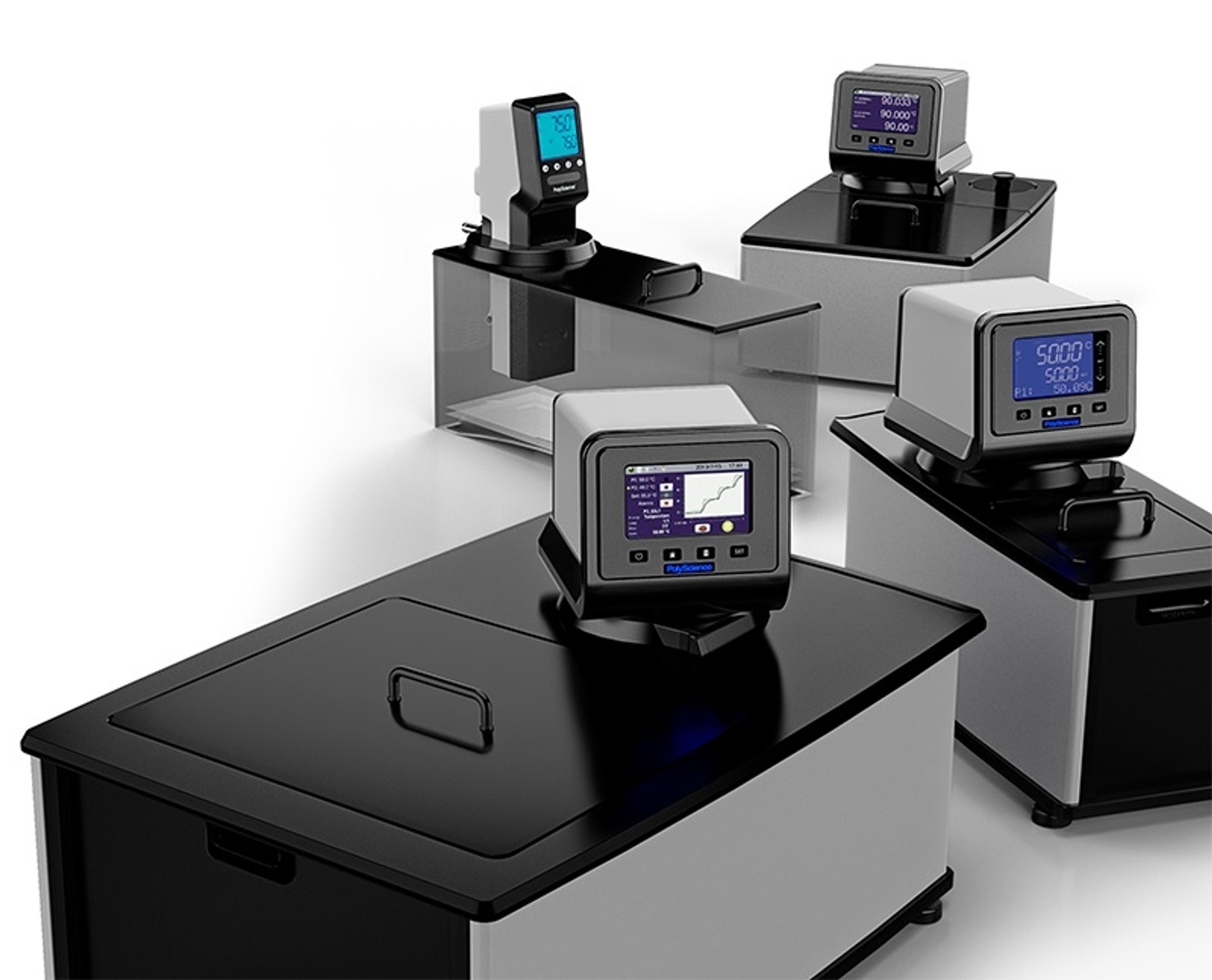
With the ongoing global health crisis, medical facilities are being subjected to an unprecedented test of endurance. Scientists worldwide are at the forefront of efforts to develop effective drugs and vaccines against COVID-19 and many are relying on PolyScience products as essential tools in that endeavor. As a leading manufacturer of liquid temperature control solutions, PolyScience was declared an essential business and as in the past with other global medical crises has shown commitment to support COVID-19 research and vaccine development by continuing to work on through the pandemic.

“We have always been there to supply the laboratory industry with equipment and the tools they need to be successful and now more than ever that success is key to finding an end to this disease. The temperature control equipment we provide serves a broad range of applications. Whether it is a CT scan, PET scan or medical tests, our chillers are involved with that. Right now, we are focusing our production to supply our products globally and making sure that hospitals have what they need,” says Phillip Preston, CEO of PolyScience.

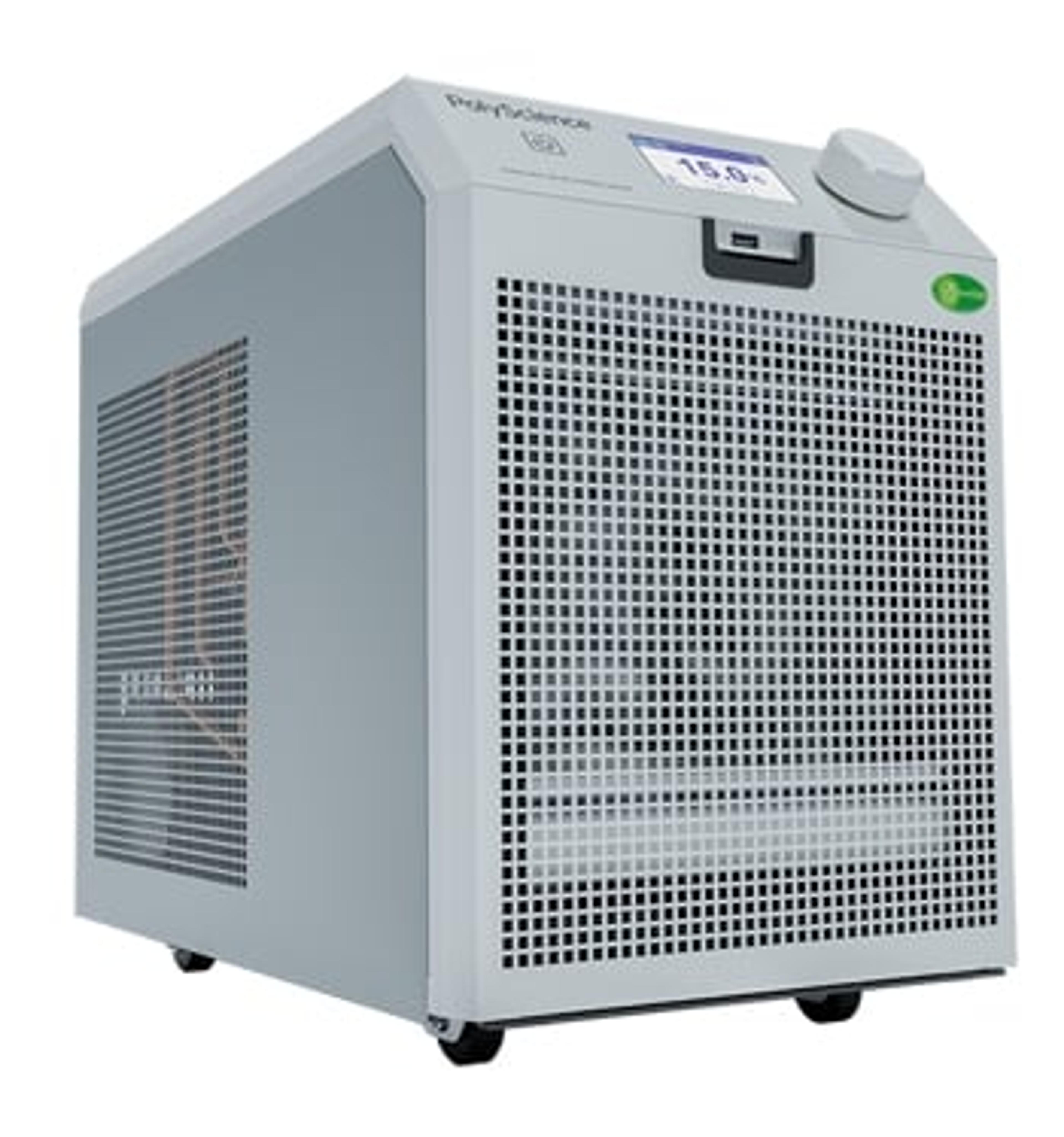
Researchers are able to use temperature control solutions from PolyScience to precisely control the temperatures of their bioreactors and ensure maximum efficiency in their drug development. In the field of diagnostics, temperature control is a key component in the cultivation of cultures as well as in the preparation of storage of laboratory samples. Products such as their DuraChill chillers are able to provide reliable temperature control solutions to facilities working on COVID-19 diagnostics, clinical care, vaccine development and long-term research.

Future developments at PolyScience

In order to support science and research in the best way in the fight against the pandemic, PolyScience temperature control technology is also being used in the production of medical devices and protective equipment. In response to a pressing need for more ventilators to treat the critically ill, PolyScience is actively researching the development of a splitter that will allow a single ventilator to treat multiple patients. A key risk associated with the ventilator splitter is cross-contamination, but this product aims to address these concerns by correctly managing air flow to patients.


I see this as a short-term solution that PolyScience can do to help the world get past this challenge.

Phillip Preston  CEO, PolyScience


“Doing these things are outside of our core business, but I see this as a short-term solution that PolyScience can do to help the world get past this challenge,” says Preston.

Coordinated safety and organization measures have been implemented to ensure that the company itself is not affected by the virus whilst at the same time maintaining production. Its approach has been one of abundant caution in order to help minimize the risk to employees and their families. Remote work plans have been implemented as well as development of a resource matrix to leverage cross-trained personnel in various key areas.

“We are here to support the medical industry in combating this disease. With our global distribution centre in Europe as well as our world headquarters in the United States, we are here to offer our support in any way we can. I have confidence in our laboratory community that we can end this challenge,” says Preston.

Do you use PolyScience products in your lab? Write a review today for your chance to win $400 Amazon gift card>>
Links

Tags

Combinatorial ChemistryCombinatorial chemistry, also known as combichem, is a technique used in drug discovery to create libraries of structurally related compounds. A library is generated by synthesis with a chemical reactor system or by computer-based modeling of compound combinations. When undertaking combinatorial chemistry consider reagents, buffers, resins and standards.Baths and CirculatorsLaboratory baths and circulators are capable of refrigerating and heating to meet the demands of any temperature controlled application.Refrigerators Freezers and CryogenicsRefrigerators, Freezers & Cryogenics can be used for preservation or experimental purposes. Types of freezers include deep freeze, -80C°C, ultra-low temperature, explosion proof, cryogenic and controlled rate freezers. Freezing is also used in freeze-drying equipment for dehydration processes. Feature to consider in freezers include temperature control and recorders, failure alarms and self-closing mechanisms.Heating EquipmentA range of heating equipment is available for different laboratory applications including furnaces, ovens and hotplates. Furnace systems include vacuum furnaces and ultra-high temperature furnaces and ovens comprise of convection and vacuum ovens.IncubatorsLaboratory incubators are used to provide a stable environment to cultivate and store samples in, giving you optimal control of temperature, humidity, oxygen and CO<sub>2</sub> levels. Incubators are necessary equipment for cell culture and microbial research. Control temperature with heated or refrigerated incubators, or the levels of CO<sub>2</sub> and oxygen with CO<sub>2</sub> incubators. Using environmental chambers, create a humid climate for testing samples. Find the best incubators in our peer-reviewed product directory: compare products, check customer reviews and receive pricing direct from manufacturers.Labware and Lab SuppliesLabware and lab supplies include various forms of glassware, plasticware, reagents and personal protective equipment (PPE) and are used across all scientific laboratories, enabling daily tasks to be performed. Explore a range of flasks and beakers, petri dishes, carboys and storage bottles. Labware such as condensers, desiccators and burettes are also available for more specific tasks. Find the best labware and lab supplies in our peer-reviewed product directory: compare products, check customer reviews and receive pricing direct from manufacturers.Sample ManagementSample management systems include sample storage devices such as freezers and plate storers, sample environment enclosures and sample organization, retrieval and sorter systems. Useful system features include high-throughput, automation, robotic arms, automated liquid handling and associated database systems. Accessories in sample management include barcode scanners, heat sealers and tubes.Cellular PathologyCellular Pathology deals with the microscopic analysis of tissue samples and cells. Sample preparation and processing includes fixation, staining, sectioning and slide mounting, using equipment such microtomes and cryostats. In choosing immunohistochemistry and immunocytochemistry kits, consider chromogens, staining method, antibodies, microscopes and imaging.Biopharmaceutical AdvancesBiopharmaceutical advances follow the development of pharmaceuticals derived from biotechnology, also known as biotechnology medicines. Biopharmaceuticals may be produced from cell lines, plants, or microbial cells. Important considerations of biopharmaceutical use include application, cost, production process and purification.Clinical ChemistryBiochemistry (or clinical chemistry) involves the analysis of bodily fluids using chemical tests. Techniques used include HPLC, chromatography, spectroscopy, mass spectrometry, immunochemical, electrophoresis, turbidometric / spectrophotometric assay, MRI and ISE analysis. Tests are often carried out on plasma or serum but urine (urinalysis) and fecal specimens are also processed.Clinical MicrobiologyMicrobiology is the study of microorganisms including protists, prokaryotes, fungi, and, often, viruses. Microorganisms are a useful research tool as genetic vectors and, in immunology, for antibiotic susceptibility testing, cellular biology and genetics. Microorganisms commonly grow readily in incubators with microbial culture media; this can contain chromogenic supplements to differentiate between cell lines. Estimate your culture’s density of microorganisms with colony counters, or screen and select colonies for desirable clones with automated colony pickers. Additionally, equipment is available to monitor environments for the presence of microbes and identify with microbial identification instruments. Find the best microbiology products in our peer-reviewed product directory: compare products, check customer reviews and receive pricing direct from manufacturers.Evaporators and Freeze DryersCentrifugal evaporation is used for solvent removal from a sample. This is a useful technique for sample concentration or sample drying. Many centrifugal evaporators are modular with a central vacuum pump for generating low pressure. Useful features of evaporators or vacuum ovens include minimal solvent bumping, solvent resistance, computer control, temperature regulation and benchtop design.Scale-upScale-Up is generally defined as the process of transferring the results of the discovery phases of the drug discovery process, obtained on a laboratory scale, to the pilot plant and finally to production scale. Scale-Up uses reactors and pump systems as well as reagents, standards and buffers. Often Scale-Up is provided as a service by Contract Manufacturing Organizations (CMOs). Temperature ControlTemperature controlled processes are experiments carried out using ovens, furnaces, incubators, hotplates, refrigeration and freezers.Research and Development