
Advances in Molecular Spectroscopy from UV-Vis to Raman
12 Mar 2019
Scientists like you are always looking for better, faster ways to carry out their work. That’s the key motivation for the molecular spectroscopy team at Agilent, who have been busy developing a host of exciting new products. Designed with the notion of ‘innovation with purpose’, these products set out not only to make the everyday life of laboratory scientists and industrial analysts easier but also to transform their thinking. Here, as SelectScience’s Emily Adam reports, they are already earning rave reviews from scientists around the world.
Redesigned UV-Vis Spectrophotometry
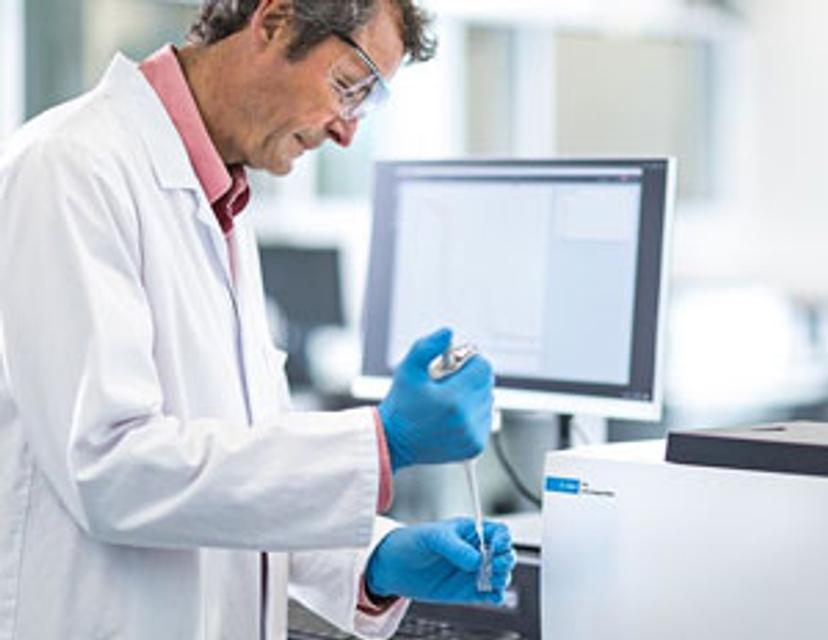
UV-Vis spectrophotometers are a mainstay in many labs, but have you ever considered how a redesigned UV-VIS spectrophotometer could multiply your experimental possibilities? With the new Cary 3500, simplicity and ease of use combine, streamlining experimental design with the introduction of eight cuvettes enabling simultaneous measurement at four temperatures in a single experiment – successfully reducing analysis time whilst amplifying confidence.
At an official launch event, Michel van den Berge, Molecular Spectroscopy Marketing Director, and Dr. Matthew Quinn, Application Specialist, highlighted the rapid cooling and heating ability of the unit from 0 to 110°C, at a rate of 30°C per min.
And the Cary 3500 has been an instant hit with scientists at the ARC Centre at the University of Melbourne, who state: “We are impressed with the fast scan, user friendly modular design and high throughput of the Agilent Cary 3500 UV-Vis.
“In particular, the great temperature ramping rate and sensitivity make our work easier. Our project uses UV-Vis to research how temperature affects the scattering properties of gold nanoparticles coated in PNIPAM polymer. As temperature increased over the 30 – 40 °C range, the polymer collapses and the particles aggregate; we are interested in understanding the dynamics of these processes. Wavelength scans at different temperatures, and thermal gradient scans are used to partially characterize these processes. We also do these measurements over a range of pH, salt concentrations and gold particle concentrations.”
The ARC Centre team goes on to highlight that “with Agilent’s Cary 3500 UV-Vis, the useful temperature ramping function allows us to quickly scan the effect of temperature on particle scattering at a given wavelength. We had no way to do that previously other than to manually take data points at different temperatures from wavelength spectra.”
Another user of the technology — Dr. Mohammad Al Kobaisi, of Swinburne University of Technology — praises the intuitive software and explains how its data management feature prevents the loss of results and ensures well-organized projects and archives.
Al Kobaisi adds: “The Cary 3500 is most definitely an exciting advancement from any other UV-vis spectrometer I have used previously, expanding the flexibility to control more parameters while conducting research experiments.“
Furthermore, another sign of success is the nomination of the Cary 3500 for a Scientists’ Choice Award, in the category Best New Spectroscopy Product of 2018. The winner of which will be announced at Pittcon 2019.
Download this application note to discover more of the benefits of the Cary 3500 >>
Non-Destructive Testing of Pharmaceuticals
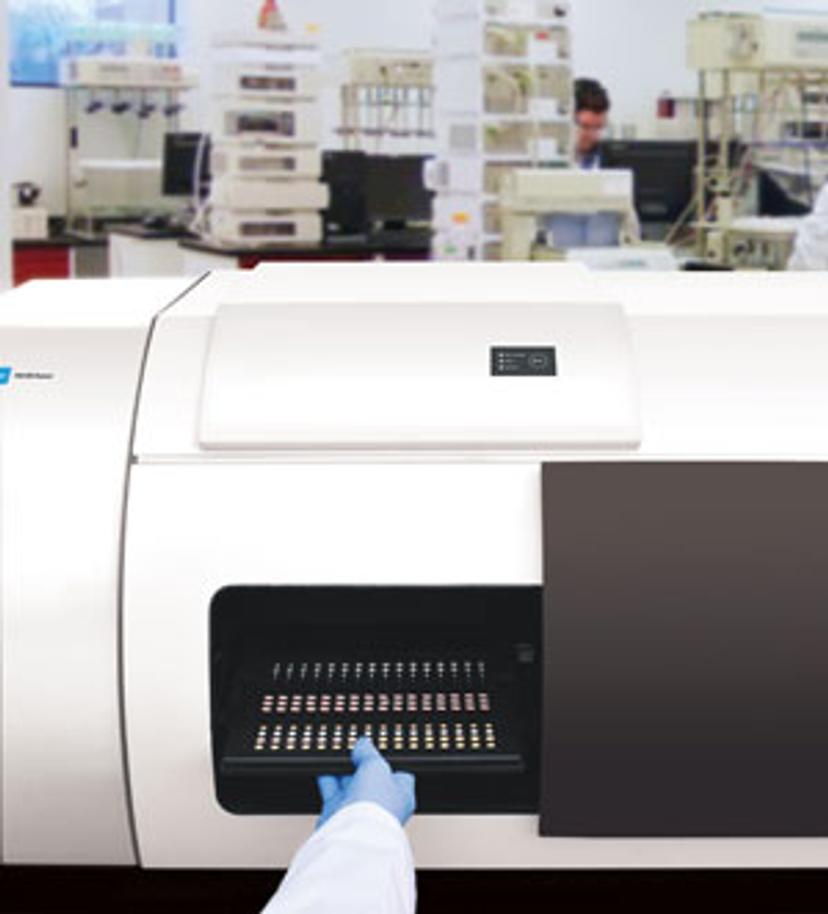
Another key area Agilent has been working on is non-destructive testing of pharmaceutical products. One such technique, transmission Raman spectroscopy (TRS), is being used for the quantitative analysis of tablets, powders and other pharmaceutical formulations.
TRS is ideal for solid state analysis as the measurement represents the entire contents of a tablet or capsule. This contrasts with traditional backscatter Raman, which is limited to sampling tablet surfaces. When comparing TRS to other solid-state techniques, such as X-ray powder diffraction and solid-state NMR, TRS has an improved limit of detection, is more cost effective, and analysis time is significantly faster. Samples can also be measured intact with TRS, where other techniques require grinding to a powder.
The TRS100, from Agilent, enables fast and user-friendly analysis for pharmaceutical QC testing. One of the early users of this technology is Jerry Jin, PAT Scientist at Allergan. Impressed, he highlights how, “the analysis of 10 pharmaceutical tablets for their content uniformity takes only several minutes, as compared to one day turnaround time when using a traditional HPLC method.”
This represents a significant time saving, enabling more efficient quality control.
Jin also explains that “method development using TRS100 for material identification and quantitative assay is generally easier than other vibrational spectroscopic techniques such as near infrared (NIR). One intrinsic advantage of TRS is its excellent specificity.”
“Considering the unique strength of Agilent’s TRS100 in pharmaceutical analysis, I expect to see its deployment in more QC labs for product identification and assay, as well as its deployment on factory floors for real-time release testing.”
Related products
Request Quote for All Products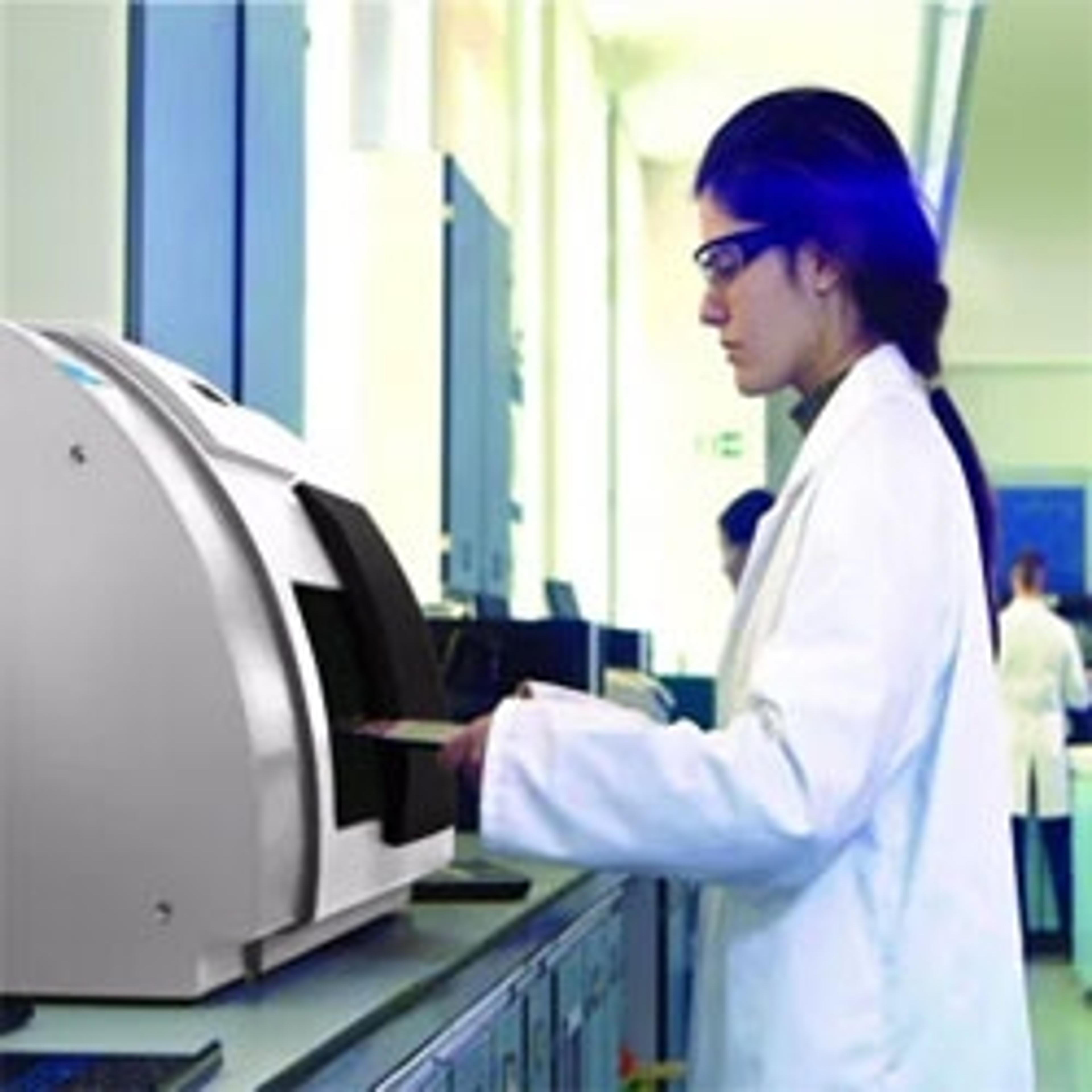
TRS100 Quantitative Pharmaceutical Analysis System
Agilent TechnologiesThe TRS100 enables fast, easy-to-use whole tablet or capsule content uniformity and polymorph screening for pharmaceutical finished-product testing and formulation development. Easier to implement than other spectroscopic methods, Agilent's transmission Raman spectroscopy (TRS) technology allows simple method development and deployment for quantitative analysis in quality control applications.
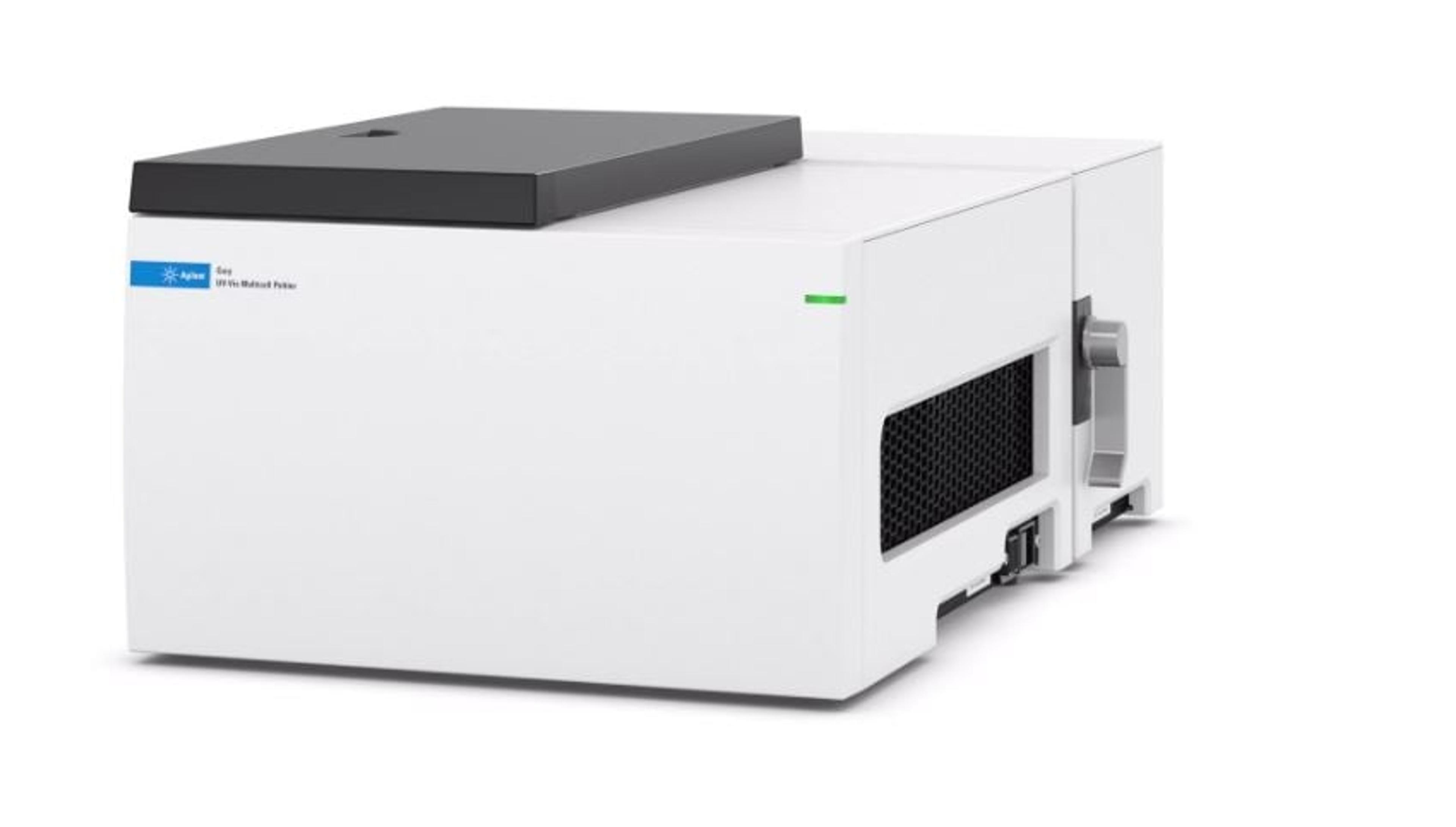
Cary 3500 Multicell UV-Vis Spectrophotometer
Agilent TechnologiesThe Cary 3500 UV-Vis double beam spectrophotometer offers new and unique measurement capabilities in ultraviolet-visible spectroscopy—for routine analysis and challenging measurements, including advanced data integrity in compliant environments. Measure up to four temperature experiments, across eight cuvette positions, simultaneously—with air-cooled Peltier temperature control. Xenon flash lamp technology enables accurate monitoring of kinetic experiments—with a data collection rate up to 250 points per second. You can also analyze low volume samples accurately, and reproducibly—every time. The Cary 3500 comes complete with Cary UV Workstation software—a next-generation analytical platform with streamlined methods for wavelength reads, scanning, concentration, kinetics, and temperature measurements. When configured with Agilent OpenLab data management software, Cary UV Workstation data is managed, protected, and stored in a local or central secure database Features: Measure samples at four temperatures across eight cuvette positions in a single experiment and collect data from each cuvette simultaneously—dramatically reducing analysis time with the Cary 3500 double beam spectrophotometer. Accurately and quickly control the temperature of your samples from 0 to 110 °C without water, noise, or messy cables using a unique and fully integrated air-cooled Peltier system. Control UV-Vis thermal ramp measurements at up to 30 °C/min using highly accurate, solid-state digital Cary temperature probes that control experimental temperature from inside the cuvette. Ensure analytical accuracy for small-volume measurements with a highly-collimated and uniform beam of less than 1.5 mm width, coupled with permanent optical alignment of the stationary cell holders. Get your double beam spectrophotometer results faster than a diode array, with advanced xenon flash lamp technology achieving a data collection rate of 250 points per second. Achieve research grade photometric performance, stability, and range with the Cary 3500 double beam spectrophotometer. Streamline method setup with the Cary UV Workstation software for scanning, concentration, kinetics, and thermal control. The software includes a Help and Learning Center with intuitive video tutorials to get you up and running fast. Meet data integrity standards—provides the technical controls to securely acquire, process, report and store data in laboratories that must follow the compliance guidelines of FDA 21 CFR Part 11, EU Annex 11, GAMP5, as well as and ISO/IEC 17025 and EPA’s 40 CFR Part 160. Store and manage Agilent Cary 3500 UV-Vis data in a local secured storage on the workstation PC, or in a central storage location. The OpenLab software suite includes optional secure database storage for electronic records, complete administration for users and access privileges, software licensing, and security settings—e-signature workflow and enhanced audit trail review capabilities. This solution received My Green Lab’s ACT (Accountability, Consistency, Transparency) label after independent audit for its environmental impact throughout the product lifecycle.