
SCIEX announces expansion of ZenoTOF accurate mass platform at ASMS 2026
Updates include SCIEX OS 5.0, enhanced sensitivity modes, and expanded ecosystem integrations for proteomics and metabolomics workflows
1 Jun 2026
At ASMS 2026, SCIEX has announced platform-wide expansions across its accurate mass ZenoTOF line. The company has introduced new SCIEX OS 5.0 software capabilities, broader front-end compatibility, and strategic software collaborations designed to help omics researchers address complex biological questions.
These enhancements aim to reduce workflow complexity and deliver deeper, more actionable insights from a single, connected, and dynamic mass spectrometry platform.
SCIEX OS 5.0 software enhances connected omics workflows
SCIEX OS 5.0 software introduces new features including Central Metrics Tracker, Central Monitoring, Reporter Template Creator, an AI-enabled 'help me' function, and AI-enabled Calculated Columns. Together, these capabilities are designed to streamline data acquisition, monitoring, and reporting across the ZenoTOF line, supporting scalable and reproducible omics workflows.
ZT Scan DIA 3.0 and enhanced sensitivity mode advance proteomics and metabolomics
ZT Scan DIA 3.0 combines the completeness of data-independent acquisition with narrower Q1 isolation windows so researchers can balance selectivity, sensitivity, and throughput based on the requirements of each experiment. This technology underpins scalable proteomics and robust metabolomics, reducing workflow complexity and expanding the range of applications a single ZenoTOF platform can address.
With enhanced sensitivity mode on, the ZenoTOF 8600 System has demonstrated significant gains for low-input proteomics workflows with nanoflow, where improvements range from approximately 10% to 40% gains in both identification and quantitation.
Expanded front-end compatibility for high-throughput and structural analysis
Expanded front-end compatibility boosts the flexibility of the ZenoTOF line and supports a wider range of omics applications.
Echo® MS+ system integration with the ZenoTOF 8600 system creates what SCIEX describes as the industry’s highest-throughput accurate mass platform, sampling at up to 1 sample per second. This configuration delivers enhanced sensitivity for high-throughput screening, positioning it as a foundational screening technology to accelerate early discovery, reduce workflow complexity, and lower consumable costs.
HDX-MS by Trajan Scientific and Medical brings deep automation expertise and comprehensive data processing to the ZenoTOF line, unlocking deeper insights into protein structure and binding. These capabilities complement EAD on the ZenoTOF platform to deliver an integrated end-to-end solution for routine high-sensitivity, zero-scrambling, amino-acid residue resolved HDX-MS.
New source enhancements deliver seamless compatibility between Evosep, IonOpticks, and the ZenoTOF line. Researchers can now fully leverage Whisper Zoom methods, bringing together high sensitivity, robustness, and throughput in a unified SCIEX-based platform to accelerate next-generation proteomics analyses.
In addition, an agreement between SCIEX and IonOpticks plans to expand access to advanced liquid chromatography solutions for the proteomics community, including Aurora XS columns.
Software collaborations extend ZenoTOF data processing across leading platforms
Key collaborations across leading software platforms enable researchers to operate within the workflows they already use and trust, while taking advantage of ZenoTOF accurate mass performance.
A collaboration with BSI brings advanced AI-based proteomic PEAKS software data processing across the ZenoTOF line. This integration enables researchers to identify, quantify, and validate biomarkers in a single solution, eliminating the traditional fragmentation between discovery and targeted quantitation. The combined workflow is designed to reduce complexity and improve reproducibility for translational research.
MS-Dial becomes one of the pioneer collaborators translating ZT Scan DIA 3.0 measurements into life science answers. Using this trusted life-sciences software package, customers can discover new biomarkers through comprehensive profiling of metabolomics and lipidomics.
A collaboration with MZIO brings SCIEX data compatibility into mzmine, allowing users to integrate SCIEX instruments into existing metabolomics and small molecule pipelines. This supports scalable data processing, advanced feature extraction, and downstream analysis across diverse mass spectrometry workflows.
Want the latest science news straight to your inbox? Become a SelectScience member for free today>>
Related products
Request Quote for All Products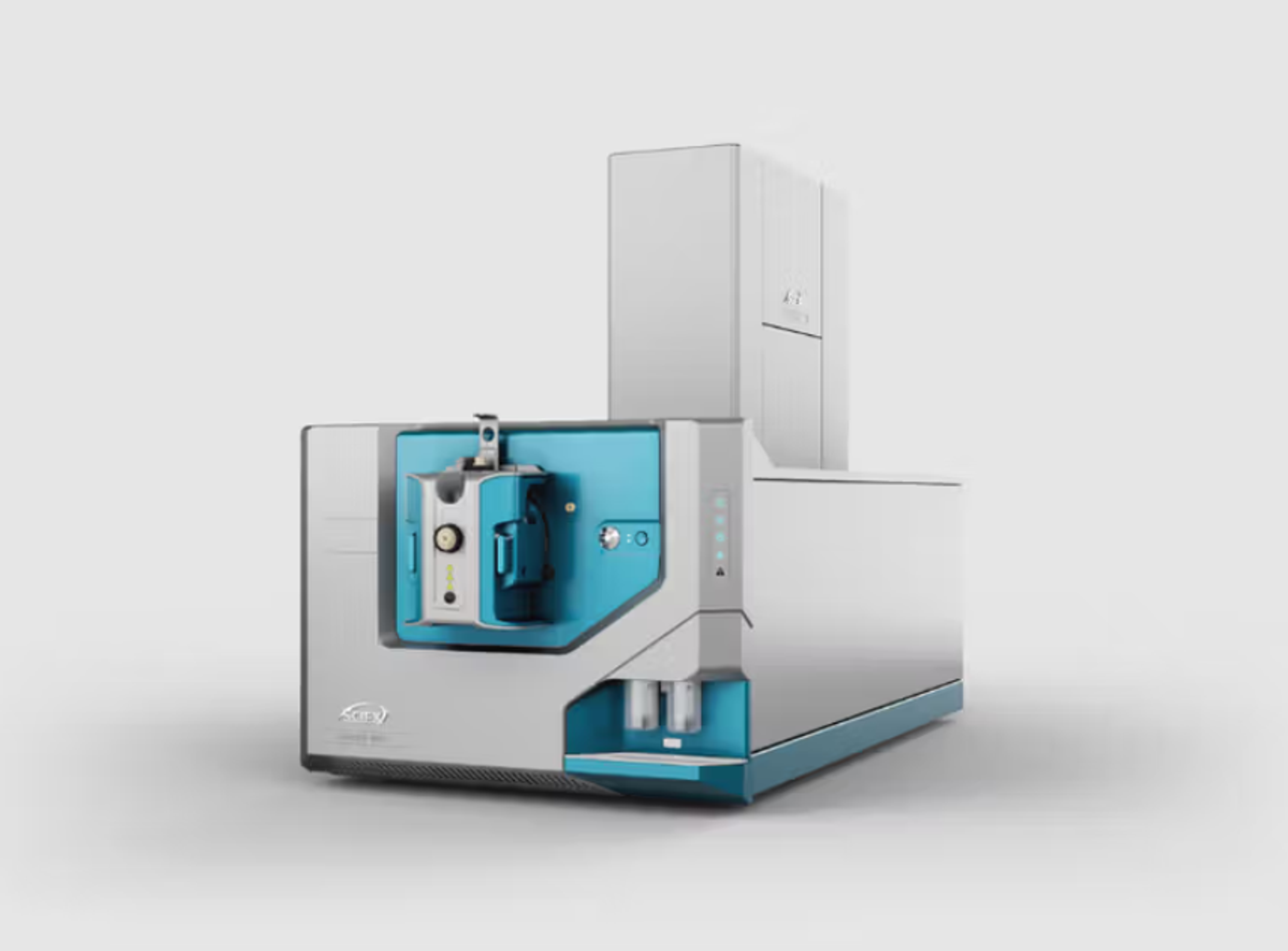
ZenoTOF 8600 system
SCIEXDelivers new levels of sensitivity, combined with the versatility of EAD and Zeno-trap enabled workflows.
Links
Tags
Frequently asked questions
Show frequently asked questions
How does SCIEX OS 5.0 software enhance connected omics workflows on the ZenoTOF accurate mass platform?
SCIEX OS 5.0 software enhances connected omics workflows across the ZenoTOF line by introducing Central Metrics Tracker, Central Monitoring, Reporter Template Creator, an AI-enabled helpme function, and AI-enabled Calculated Columns. These features are designed to streamline data acquisition, monitoring, and reporting, supporting scalable and reproducible omics workflows and helping researchers reduce workflow complexity while extracting deeper, more actionable insights from a single, connected mass spectrometry platform.
What role do ZT Scan DIA 3.0 and enhanced sensitivity mode on the ZenoTOF 8600 system play in proteomics and metabolomics research?
ZT Scan DIA 3.0 combines the completeness of data-independent acquisition with narrower Q1 isolation windows, allowing researchers to balance selectivity, sensitivity, and throughput for each experiment. This supports scalable proteomics and robust metabolomics, reducing workflow complexity and broadening the range of applications a single ZenoTOF platform can address.
With enhanced sensitivity mode enabled, the ZenoTOF 8600 system has shown approximately 10% to 40% gains in both identification and quantitation for low-input proteomics workflows with nanoflow, advancing high-sensitivity proteomics analyses.
How do SCIEX’s hardware and software collaborations expand the capabilities of the ZenoTOF 8600 system across the omics continuum?
SCIEX’s collaborations extend the capabilities of the ZenoTOF 8600 system and the broader ZenoTOF line across proteomics, metabolomics, lipidomics, and structural biology.
Echo® MS+ integration with the ZenoTOF 8600 creates a high-throughput accurate mass platform sampling up to 1 sample per second for high-throughput screening. HDX-MS by Trajan Scientific and Medical, combined with EAD on the ZenoTOF platform, delivers an automated, high-sensitivity, zero-scrambling HDX-MS solution for protein structure and binding studies.
New source enhancements enable seamless compatibility with Evosep and IonOpticks, including Whisper Zoom methods and access to Aurora XS columns. Software collaborations with BSI’s PEAKS, MS-Dial, and MZIO’s mzmine integration allow researchers to process ZenoTOF data within established workflows, supporting biomarker discovery, comprehensive metabolomics and lipidomics profiling, and scalable small-molecule data analysis, representing a step change in how researchers move across the omics continuum.