
Webinar Highlights: Understanding the Basics of Karl Fischer Titration
9 Nov 2016
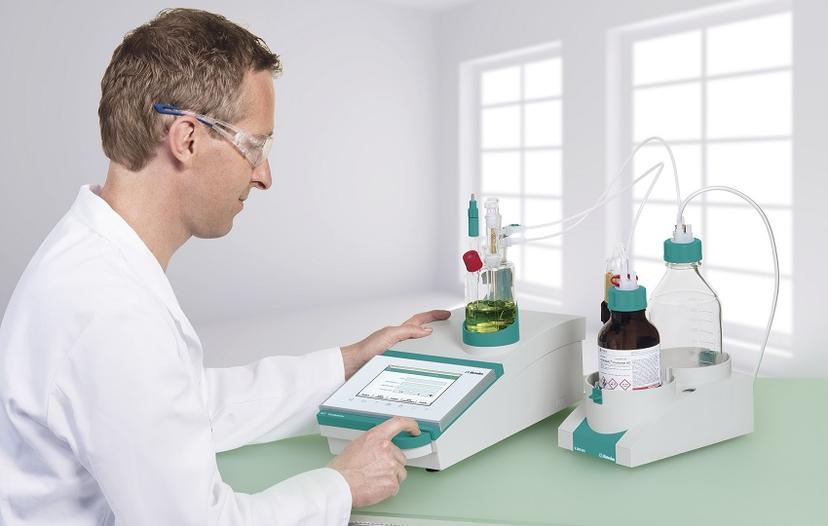
Karl Fischer Titration offers many advantages

Michael Magreth Product Manager, Karl Fischer Titration
Metrohm
In this webinar Michael Magreth, Product Manager Karl Fischer Titration, Metrohm, discusses the advantages that Karl Fischer titration offers. He also details when to apply volumetry or coulometry, and the principle of the oven method.
Watch the on-demand webinar or read on for highlights from the webinar Q&A session.
Q: What is the best way to analyze samples with a very high water content?
A: You can dilute the sample, for example with methanol to reduce the amount of water, and then put it into the titration cell. You will need to determine blank value of pure methanol, because the methanol does contain some water.
Q: Although methanol is neutralized in volumetric titrations do we need to use fresh or unsaturated methanol for every test.
A: No. If you are adding 30 or 40 ml of methanol to your titration cell then that amount of methanol is sufficient for several titrations, however it does depend on how much water you add to the titration cell with your sample. Additionally, the exchange frequency also depends on how strongly the sample contaminates the methanol.
Q: What is your suggestion on determination of water content for acidic or alkaline samples?
A: You will need to neutralize the sample to increase buffer capacity in the cell; this can be done by the addition of imidazole to acidic samples or by adding salicylic acid to alkaline samples. There are also pre-mixed reagents available to neutralize the sample.
Q: Can the diaphragm electrode be cleaned?
A: Yes, with concentrated nitric acid. You will need to let nitric acid flow though the diaphragm, then rinse several times with water before rinsing the diaphragm with methanol to get rid of water. If you don’t rinse out the water, then conditioning times will be long.
Q: How are the Karl Fischer electrodes stored?
A: Dry, you don’t need any special storage solution. You can also leave the electrodes in the titration cell if you are planning on using it again soon.
Q: How do you recommend determining oven temperature for sample?
A: The automated system runs a temperature gradient across an hour – you can see at which temperatures the water is released – this would give you an optimum temperature oven temperature. If you have a manual oven system, you need to measure the sample at different temperatures to find a range where the released water content is stable and reproducible.
Q: How can I validate my oven method?
A: To validate an oven method, it is suggested to use a commercially available KF oven standard and analyze this standard using the oven system to validate. From the result you receive, and the certified water content of the standard, you can calculate the recovery. Most available standards have a water content of either 1 or 5%, for such a standard we usually say that a recovery between 97 and 103% is fine. If you get a recovery in this range, then the system and the methods are working.
Q: How much sample should I add?
A: There are many factors influencing sample size, generally, the more water the sample contains, the smaller the sample size should be. In volumetric Karl Fischer you can also alter the burette size, and the titrant concentration.
Q: Can the molecular sieve be reused?
A: It can be dried in a drying oven above 180°C and reused.
Q: For samples with a very low water content, could atmospheric moisture contact during sample storage or preparation be an issue?
A: Yes, atmospheric moisture can be an issue, samples with a low water content tend to absorb water. Make sure that the sample is stored in a dry place. Sample preparation should be carried out as fast as possible to avoid an influence of atmospheric moisture. Some sample preparation techniques avoid contact to atmospheric moisture completely, e.g. homogenization directly in the titration cell or the oven technique.
Q: Would you recommend using a Pasteur pipette or a syringe with needle to add samples?
A: I would recommend to use a syringe to add a sample to the titration vessel. A syringe can be filled with the sample and then several additions of the same sample can be made. The sample is protected against atmospheric moisture in the syringe. Furthermore, the syringe can be easily placed on a balance. Finally, with a syringe and a needle there is no need to open the titration cell so no additional atmospheric moisture can get into the cell.
Miss the live webinar? Watch the full webinar on demand here, or discover more exclusive webinars here.
Do you use any of the products mentioned in this article? Is there a product you couldn’t live without? Write a review today for your chance to win an Amazon voucher worth $400 or an iPad Air®.
Related products
Request Quote for All Products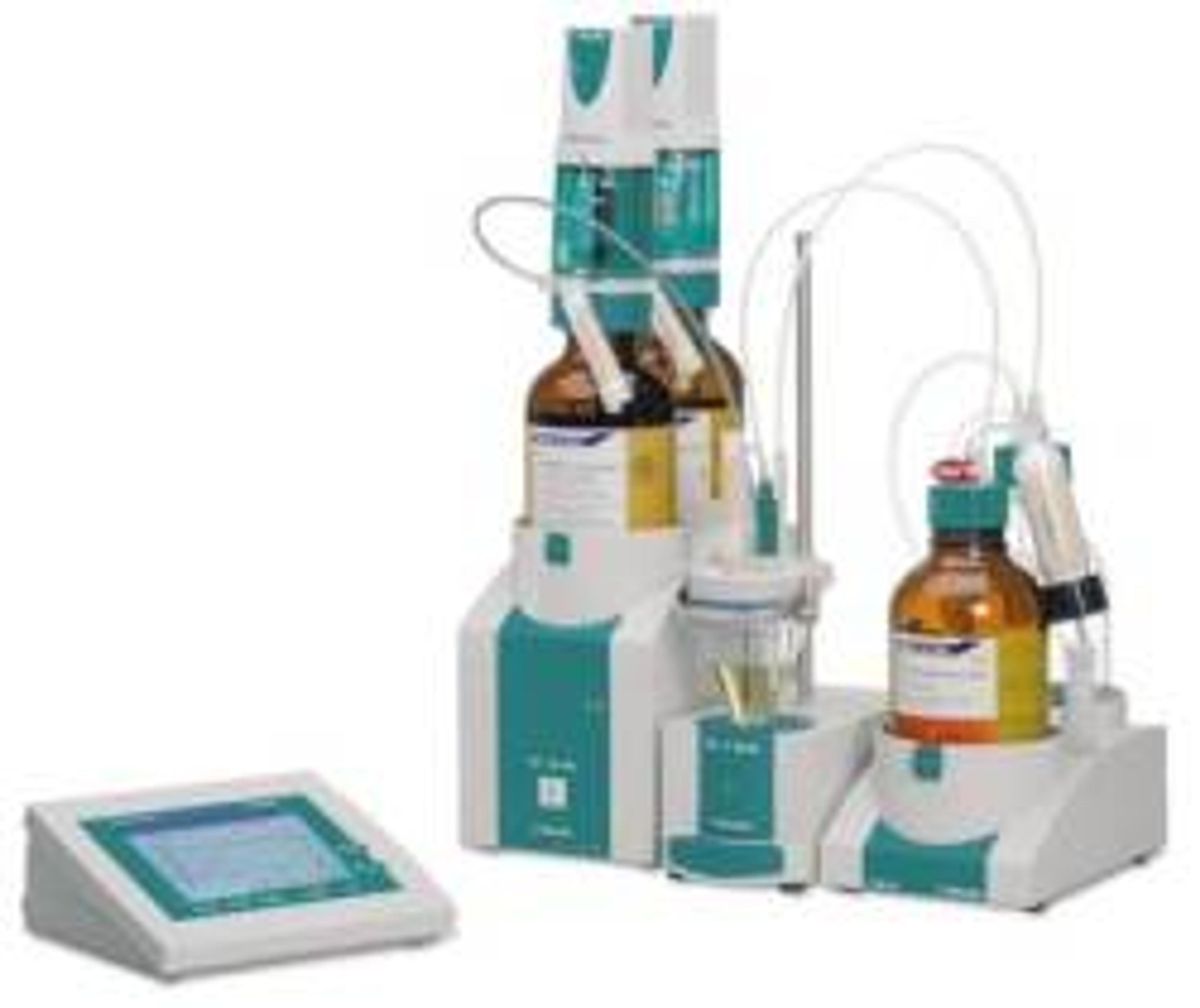
901 Titrando for Karl Fischer Titration
Metrohm AG901 Titrando - The Karl Fischer Titrando for the modern titration laboratory Thanks to its modular concept the Titrando System can be optimally adapted to any application. It meets the requirements of FDA Regulation 21 CFR Part 11. Profit from its intelligence and multiple communication options (USB, RS 232C, Remote)!In addition to the Karl Fischer mode (KFT), this high-end titrator also includes the SET mode, which means that titrations can be carried out to a predefined endpoint. "ITrode ready": The high-resolution, galvanically separated measuring interface - now also with additional digital measuring input for intelligent electrodes «iTrodes» - means that it is also possible to make high-precision pH measurements Transparent operation – thanks to specially adapted dialogs, the Titrando accelerates method development and simplifies routine operation. The large color screen of the Touch Control informs you about the instrument condition and offers uniquely comfortable operator guidance. For operation via a PC the appearance is exactly the same. Numerous worked-out methods and titration examples make familiarization easier. Method templates and calculation formula templates are available for developing your own methods. Extended titration and evaluation parameters open up new applications. More intelligence: The Data Chip of the Dosing Unit contains all important titrant data. Thanks to the sophisticated Liquid Handling, automatic reagent exchange is now also possible in volumetric KF titration. The 901 Titrando works with Dosing Units, which are ideal for handling KF reagents. Parallel titration – a Titrando can work with two titration cells at the same time (requires tiamo).