
Visit Corning Life Sciences at SLAS2016
Optimize Assay Performance and Streamline High Throughput Screening
18 Jan 2016
The road to developing a new medicine can have many unexpected twists and turns along the way. Corning solutions can help you optimize your assays and streamline high throughput screening, so you can focus on the discovery and development of new ways to prevent and treat disease.
Visit Corning at SLAS2016, exhibit 1231 to learn more about its solutions for drug screening, lab automation, 3D cell culture and cancer research.
Plus, look out for the following Podium Talks and Poster Presentations:
Podium Talks
Automating Phenotypic and Target-based Discovery Using Parallel Automated Approaches
Addressing the Challenges of 1536 Cell-based Screening
January 25 | 12 to 12:30 p.m.
Presented by: Helen Plant, Scientist, AstraZeneca Pharmaceuticals, Macclesfield, Alabama, United Kingdom
Phenotypic, Model Organism and High Content Screening Assays
Enabling 3D Cell-based Spheroid HTS Assays in 384- and 1536-well Plate Formats
January 26 | 11:30 a.m. to 12:00 p.m.
Presented by: Franck G. Madoux, Ph.D., Senior Scientist, The Scripps Research Institute, Jupiter, Florida
Poster Presentations
Monday, January 25 | 1:00 to 3:00 p.m.
- Poster #2039 | In Vitro Hepatotoxicity Profiling Using Corning® Epic® Label-free Technology with Primary Hepatocytes, HepG2 Cells, and Corning HepatoCells
Presented by: David Randle, PhD – Applications Development Manager, Corning Incorporated, Life Sciences
- Poster #2041 | High Content Screening of Corning® HepatoCells for Hepatotoxicity
Presented by: Hannah Gitschier – Senior Applications Scientist, Corning Incorporated, Life Sciences
- Poster #4005 | Validation of Th17 Cell Differentiation from Peripheral Blood CD4+ T Cells Through Assessment of mRNA Expression and Cytokine Secretion using Microplate Reading and Cellular Imaging
Presented by: Brad Larson, Principal Scientist, BioTek Instruments, Inc.
Tuesday, January 26 | 1:00 to 3:00 p.m.
- Poster #2000 | Cancer Therapeutic Screening in Tumor Spheroids Co-cultured with Fibroblast and Immune Cells using Corning® Spheroid Microplates
Presented by: David Randle, PhD – Applications Development Manager, Corning Incorporated, Life Sciences
- Poster #2002 | Three Dimensional Hepatotoxicity Screening using Corning® HepatoCells, the Corning® Spheroid Microplate, and the SCREEN-WELL® Hepatotoxicity library
Presented by: Hannah Gitschier – Senior Applications Scientist, Corning Incorporated, Life Sciences
- Poster #2008 | A Novel Hepatocyte-like Cell as an In Vitro Screening Tool for Drug ADME/Tox Studies
Presented by: Rongjun Zuo – Senior Development Scientist, Corning Incorporated, Life Sciences
- Poster #4002 | Image-Based Analysis of a Human Neurosphere Stem Cell Model for the Evaluation of Potential Neurotoxicants
Presented by: Brad Larson, Principal Scientist, BioTek Instruments, Inc.
Find out more about Corning at SLAS2016 here.
Related products
Request Quote for All Products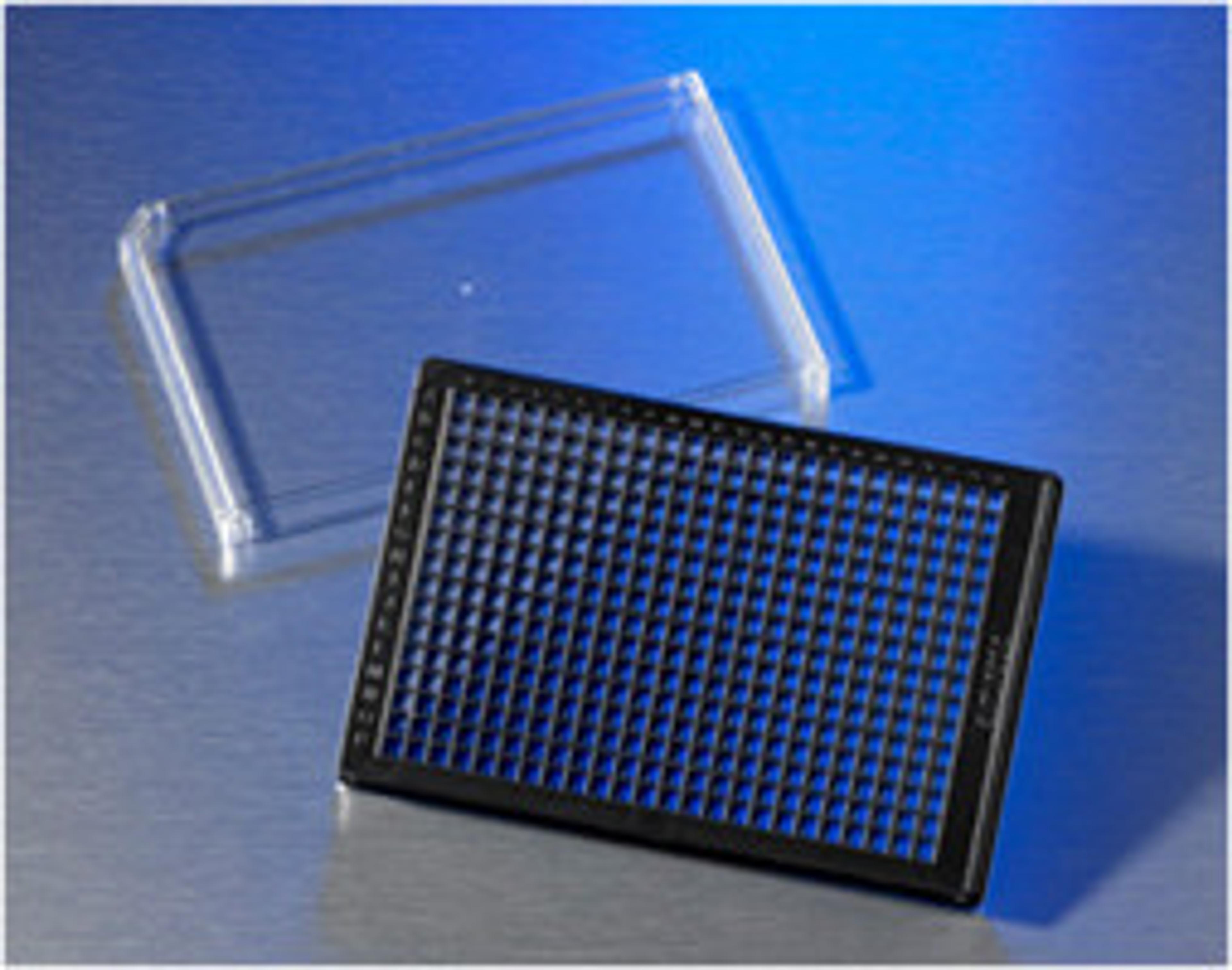
Corning® 384-well Black/Clear Round Bottom Ultra-Low Attachment Spheroid Microplate, Bulk Packed 10 per Bag, with Lid, Sterile
Corning Life SciencesUltra-Low Attachment microplates feature a covalently bound hydrogel layer that effectively inhibits cellular attachment Surface minimizes protein absorption, enzyme activation and cellular activation Surface is noncytotoxic, biologically inert and nondegradable Sterilized by gamma irradiation Black wall microplates have low background fluorescence, minimal light scatter and reduced crosstalk Opaque walls to prevent well-to-well crosstalk Can be used for both top and bottom reading instruments Bulk packed 10 per bag Novel well geometry aids formation of spheroids in center of well Optically clear round bottom with black opaque microplate body
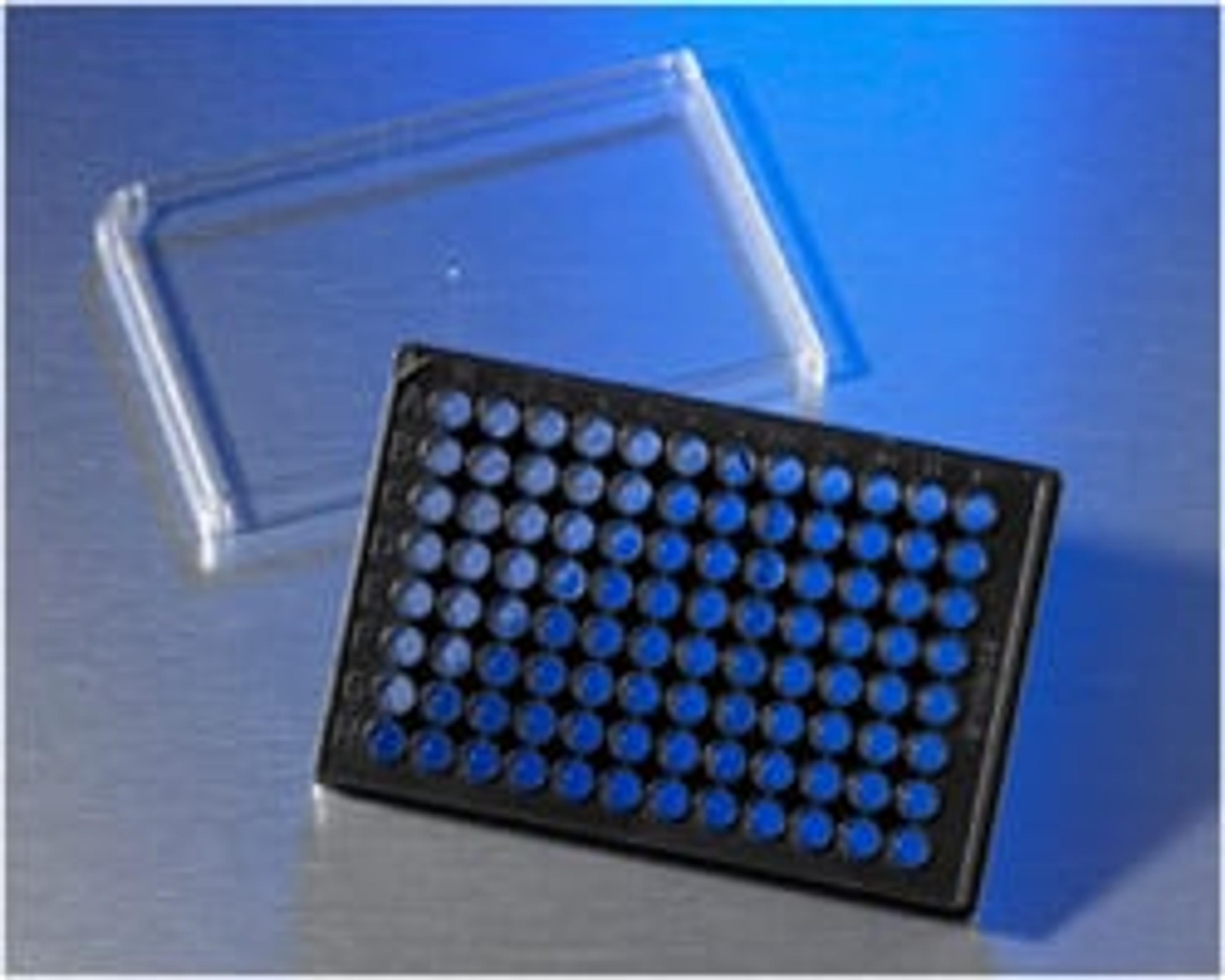
Corning® 96-well Black/Clear Round Bottom Ultra-Low Attachment Surface Spheroid Microplate, Bulk Packed, with Lid, Sterile, 10/Bag
Corning Life SciencesUltra-low attachment surface with covalently bonded hydrogel that minimizes cell attachment, protein absorption, enzyme activation and cellular activation The surface is noncytotoxic, biologically inert and nondegradable Round bottoms with 300 µL total volume Recommended working volumes of 0.075 to 0.30 mL Sterilized by gamma radiation Novel well geometry aids formation of spheroids in center of well Optically clear round bottom with black opaque microplate body
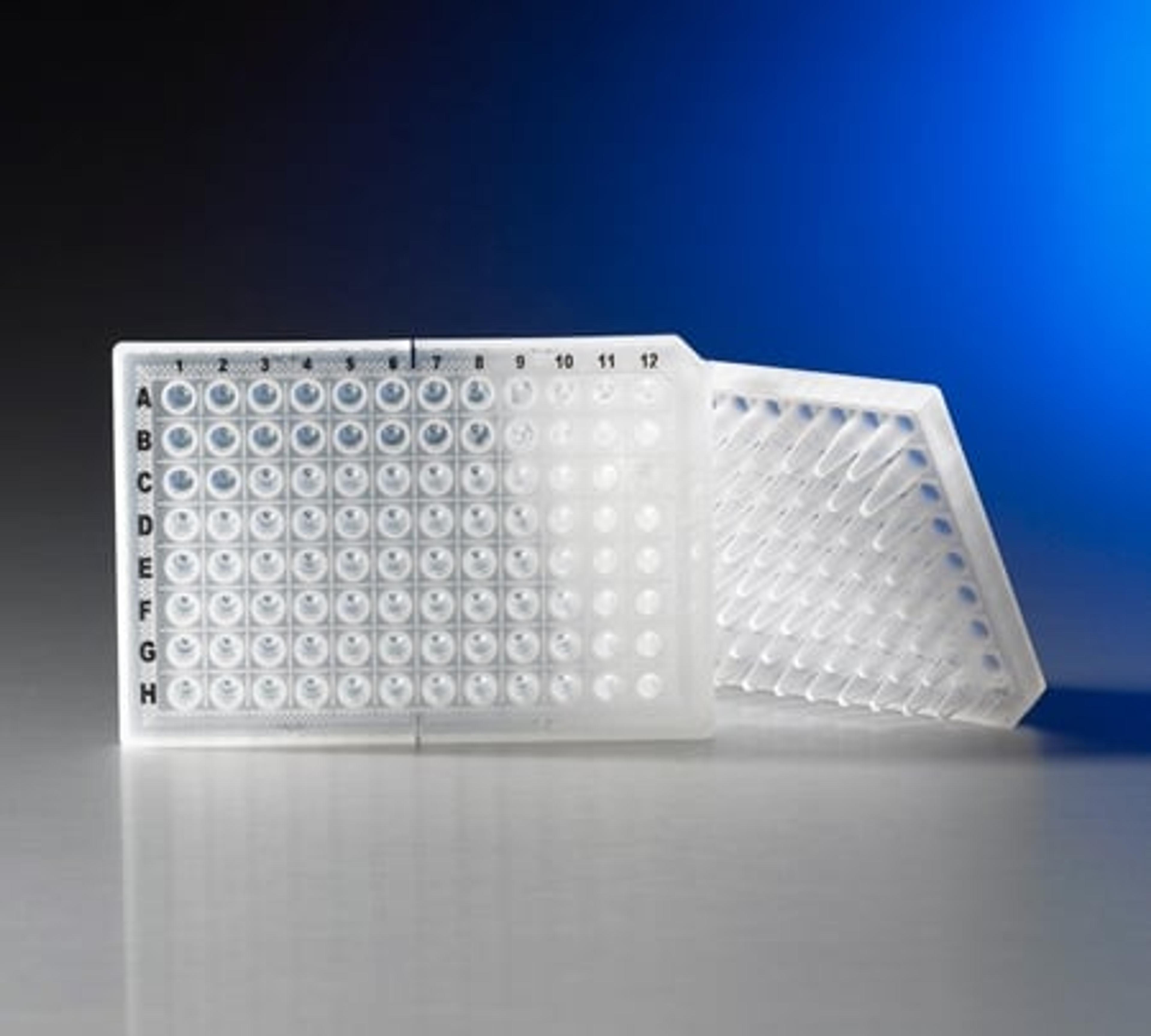
Axygen® 96-well Automation Compatible Polypropylene PCR Microplate, Half Skirt, Clear, Nonsterile
Corning Life SciencesAxygen® automation-compatible PCR microplate features a rigid frame with a small split that sustains heat transferring during and post thermal cycling without distorting its shape. The polypropylene plate also features raised rims around the wells to provide tight sealing to minimize heat evaporation. Compatible with most major thermal cyclers, sequencers, and automation platforms, the plate provides optimal performance for downstream applications, including high throughput screening.Remains flat during and post thermal cyclingRaised well rims help reduce heat evaporationClear wells, visible grid for easy sample loading and trackingUltra-thin and consistent wall thickness for easy and consistent heat transferSuitable for standard and real-time PCRSingle notch cornerSBS footprintManufactured from polypropyleneRNase-/DNase-freeNonpyrogenicNonsterileCompatible with major automation platforms, thermal cyclers, and sequencers